
Smart plugs make your appliances more energy-savvy by allowing you to control them remotely and schedule their operation. With automation features, you can turn devices off when not in use or set routines, saving energy and reducing costs. They work seamlessly with voice assistants like Alexa or Google Assistant, making everyday tasks easier. If you want to learn how to optimize your home’s energy use and boost convenience, you’ll find helpful tips as you explore further.
Key Takeaways
- Smart plugs enable remote control and scheduling of appliances, improving energy efficiency and reducing waste.
- Integration with voice assistants allows effortless automation and hands-free operation of devices.
- Automating routines, like turning off unused appliances, helps save energy and lowers utility bills.
- Smart plugs facilitate smart home ecosystems, enabling seamless automation of lighting, heating, and other devices.
- Monitoring power consumption through smart plugs promotes conscious energy use and supports eco-friendly habits.
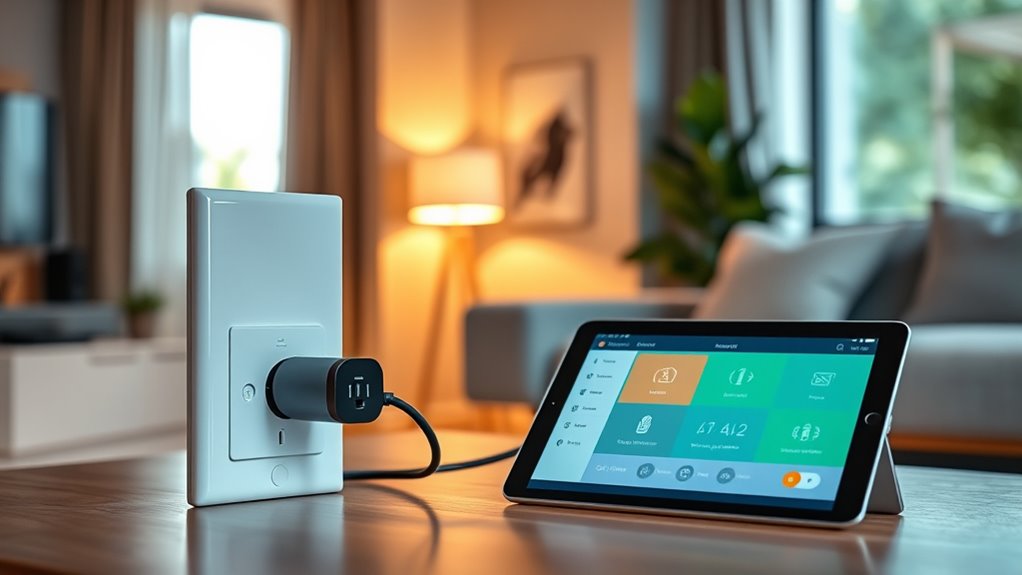
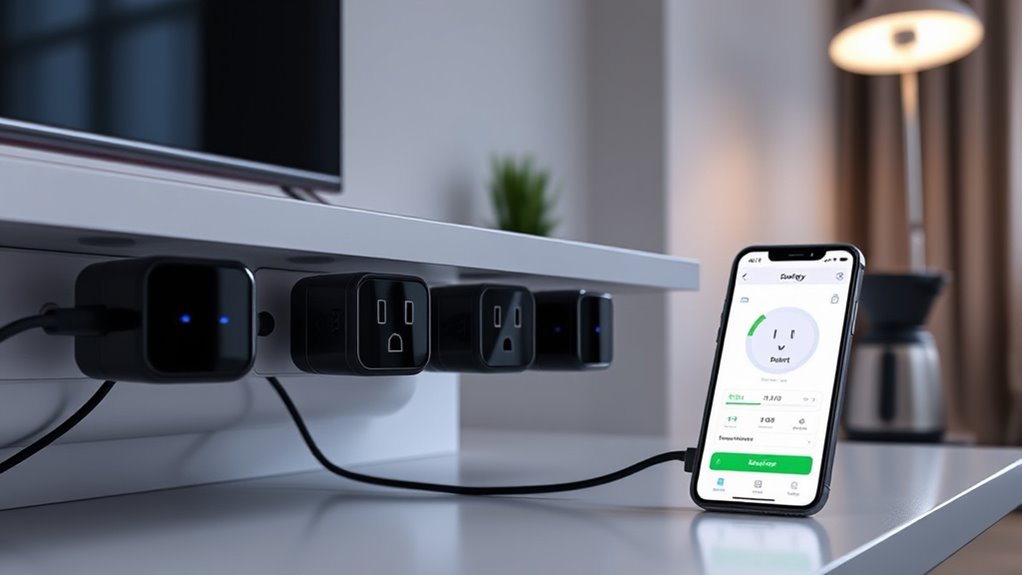
Smart plugs are a simple yet powerful way to bring automation into your home. They allow you to control your appliances and devices with ease, making your living space more energy-efficient and convenient. One of the biggest advantages of using smart plugs is improving your home’s energy efficiency. By connecting devices like lamps, coffee makers, or even small appliances, you can monitor and manage their power consumption more effectively. Instead of leaving devices plugged in and running unnecessarily, you can turn them off remotely when they’re not in use. This prevents energy waste and helps lower your electricity bills over time.
With smart plugs, you gain the ability to control your appliances from anywhere. Whether you’re at work, running errands, or lying in bed, you can switch devices on or off with just a tap on your smartphone or through voice commands if they’re compatible with virtual assistants like Alexa or Google Assistant. This remote control feature offers not only convenience but also peace of mind. Imagine forgetting to turn off a space heater or an iron; with a smart plug, you can shut it down remotely, reducing the risk of accidents or energy drain. It’s a simple step that adds a layer of safety and efficiency to your daily routine.
Setting up a smart plug is straightforward, and many models integrate seamlessly with your existing smart home ecosystem. Once connected, you can schedule devices to turn on or off at specific times, aligning their operation with your daily schedule. For example, you could set your coffee maker to start brewing just before you wake up or schedule your lights to turn off automatically when you go to bed. These automations help optimize energy use, ensuring that devices aren’t consuming power when they’re not needed. This level of control makes it easier to develop energy-conscious habits without sacrificing comfort.
Furthermore, smart plugs can be incorporated into broader automation routines, creating a smarter, more responsive home environment. You can set your living room lamps to turn on when you arrive home or have your devices shut down when you leave the house. All of these features work together to ensure your appliances are used efficiently, reducing unnecessary energy consumption. Additionally, understanding the contrast ratio of your projector can significantly improve your home cinema experience by providing deeper blacks and brighter whites, which is crucial for enjoying dark scenes with clarity. In the end, smart plugs empower you to manage your home’s energy use actively, saving money and contributing to a greener lifestyle. They’re a small upgrade with a big impact, making your everyday routines more efficient and effortless.
Frequently Asked Questions
Are Smart Plugs Compatible With All Appliance Types?
Smart plugs aren’t compatible with all appliance types due to appliance compatibility and smart plug limitations. You’ll find they work well with lamps, chargers, and small devices, but struggle with high-power appliances like refrigerators or ovens. Always check the wattage ratings and compatibility details before buying. Keep in mind, some appliances with complex controls or motors may not respond properly, limiting the smart plug’s effectiveness.
How Secure Are Smart Plugs Against Hacking?
Smart plugs are generally secure if you follow best practices, as only about 15% of IoT devices face vulnerabilities. They use Wi-Fi security measures like data encryption to protect your network. To stay safe, regularly update your device firmware, use strong passwords, and enable two-factor authentication. These steps help prevent hacking attempts and keep your connected appliances secure, giving you peace of mind in your smart home.
Can Smart Plugs Be Used Remotely Without Internet?
Yes, some smart plugs offer remote access with offline functionality, but most require an internet connection for full control. If a smart plug supports local control, you can operate it remotely without internet, usually through a local app or hub. However, without internet, your options are limited, and you might only be able to control the plug when you’re connected to the same Wi-Fi network. Always check the device’s features before purchasing.
Do Smart Plugs Require a Hub or Bridge?
Smart plugs typically don’t require a hub or bridge, making setup simple and flexible. You can control them via voice commands, smartphone apps, or automation schedules, and many models offer energy monitoring features to track power usage. This means you can easily turn devices on or off remotely, optimize energy efficiency, and integrate with voice control systems without needing extra hubs or bridges, simplifying your smart home experience.
What Is the Typical Lifespan of a Smart Plug?
A typical smart plug lasts about 2 to 5 years, depending on usage and build quality. To maximize energy efficiency and device longevity, you should avoid overloading the plug and ensure proper ventilation. Regularly update its firmware and handle it carefully during installation and removal. By maintaining your smart plug well, you’ll extend its lifespan and keep your energy management effective and reliable over time.
Conclusion
By integrating smart plugs into your home, you can reduce energy consumption by up to 12%, saving money and helping the environment. Automation makes it simple to control appliances remotely and create energy-efficient schedules. With over 30 million smart home devices sold worldwide in 2023, it’s clear that more people are embracing smarter, eco-friendly living. Start small with smart plugs today, and watch how effortless it becomes to cut costs and minimize your carbon footprint.