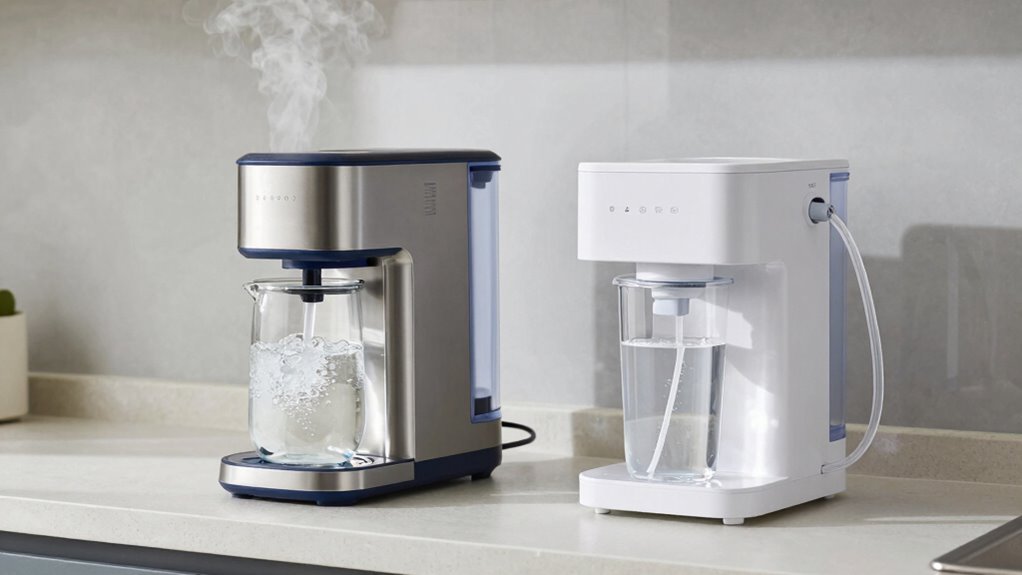
Choosing between a water distiller and a reverse osmosis system depends on your specific water issues. If you need ultrapure, mineral-free water and want to remove every contaminant, a distiller might be best. If you prefer clean water with some minerals for taste and health, an RO system could work better. To find out which solution fits your needs, explore how each system operates and their key differences in performance.
Key Takeaways
- Choose a distiller for maximum removal of pathogens, organic chemicals, and to produce neutral pH water with no minerals.
- Opt for an RO system if you want high purity with the option to remineralize for better taste and health benefits.
- Consider distillers for simple maintenance and long-term reliability, while RO systems require regular filter replacements.
- Use distillers when water source contains heavy metals or pesticides that require heat-based removal; choose RO for broader contaminant filtration.
- Match your choice to your water quality needs, taste preferences, and mineral content requirements for an effective solution.
How Do Water Distillers and Reverse Osmosis Systems Work?
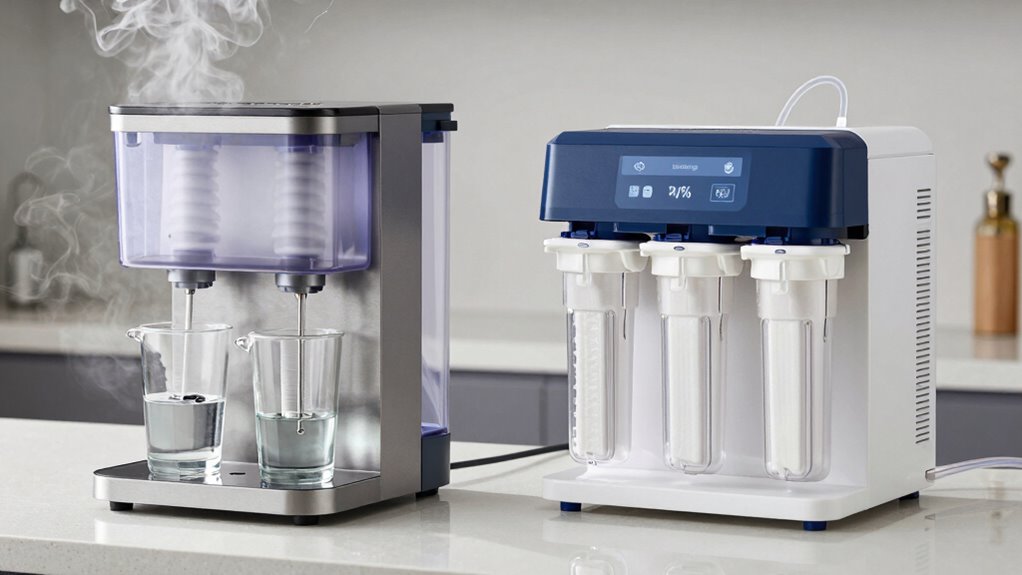
Water distillers and reverse osmosis systems both work to remove impurities from water, but they do so through different processes. A water distiller heats water until it turns into vapor, then collects and condenses the steam back into liquid. This process effectively removes contaminants, resulting in high water purity. Conversely, an RO system forces water through a semi-permeable membrane under pressure. This membrane traps impurities, allowing only clean water to pass through. The system’s efficiency depends on factors like membrane quality and maintenance, but both methods are designed to produce pure water. While distillers rely on heat to separate impurities, RO systems use pressure and filtration. Understanding these mechanisms helps you choose the best option based on water purity needs and system efficiency. Additionally, factors such as energy consumption and maintenance requirements can influence your decision between the two methods. Efficiency of each method can vary depending on usage and water quality, so evaluating your specific needs is important. Moreover, the cost implications of operating and maintaining each system may impact your long-term choice. Being aware of contaminant types that each system can effectively remove can further guide your selection process.
What Water Quality Problems Can Distillers and RO Systems Address?
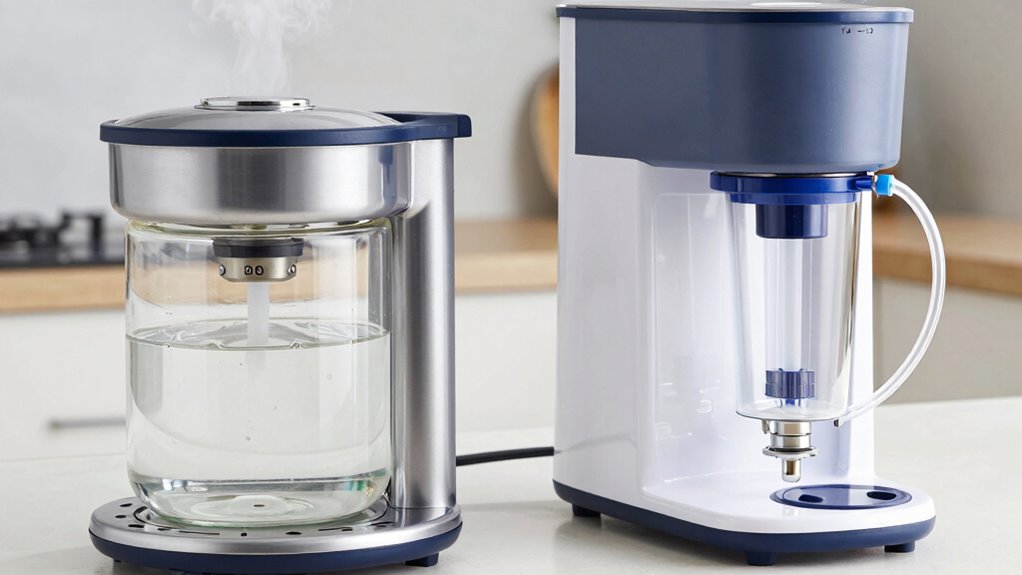
Both distillers and reverse osmosis systems effectively remove a wide range of contaminants from your water, improving its safety and taste. They can also adjust mineral content, helping you achieve the desired water quality. Understanding their specific contaminant removal capabilities helps you choose the right system for your needs. For example, contaminant removal capabilities are crucial when selecting between these systems, as they determine which pollutants can be effectively eliminated. Incorporating automotive performance parts like flywheels and engine upgrades can enhance your vehicle’s overall performance and efficiency. Additionally, proper maintenance and filter replacement are essential to ensure ongoing effectiveness of these systems, aligning with best practices in air purifier maintenance dos and don’ts. Regularly monitoring water quality through testing methods helps maintain optimal system performance and safety, and being aware of system lifespan can help you plan for replacements before issues arise.
Contaminant Removal Capabilities
Distillers and reverse osmosis (RO) systems are effective at removing a wide range of contaminants that can compromise water quality. They excel at eliminating pathogens, bacteria, and viruses, providing microbial control that guarantees safe drinking water. Both systems also reduce organic chemicals, heavy metals, and pesticides, improving overall purity. While distillers typically produce water with a neutral pH, they can help with pH balancing by removing acidic or alkaline contaminants. RO systems are particularly adept at filtering out dissolved solids that affect water’s taste and safety. However, they may require post-treatment for ideal pH levels. Additionally, understanding the contaminant removal capabilities of each system helps in selecting the most suitable solution for your specific water quality concerns. Overall, both technologies address critical water quality issues by thoroughly removing harmful substances, making your water safer and cleaner for everyday use.
Mineral Content Adjustment
While distillers and reverse osmosis systems excel at removing harmful contaminants, they also impact the mineral content of your water. This can lead to water that’s too pure, lacking essential minerals like calcium and magnesium. To address this, mineral adjustment and water remineralization are necessary. Some systems incorporate mineral cartridges or post-treatment steps to restore these beneficial minerals, improving taste and health benefits. Here’s a quick comparison:
| System | Mineral Adjustment | Water Remineralization | Common Methods |
|---|---|---|---|
| Water Distiller | No | Usually not | Mineral drops or cartridges |
| Reverse Osmosis | Not standard | Optional | Mineral filters or additives |
| Mineral Cartridges | Yes | Yes | In-line mineral filters |
| Post-Remineralization | Yes | Yes | Mineral drops or cartridges |
| Both Systems | Variable | Variable | Custom mineral solutions |
Understanding these options helps you choose the right system for mineral content.
Which System Is Better at Removing Contaminants and Heavy Metals?
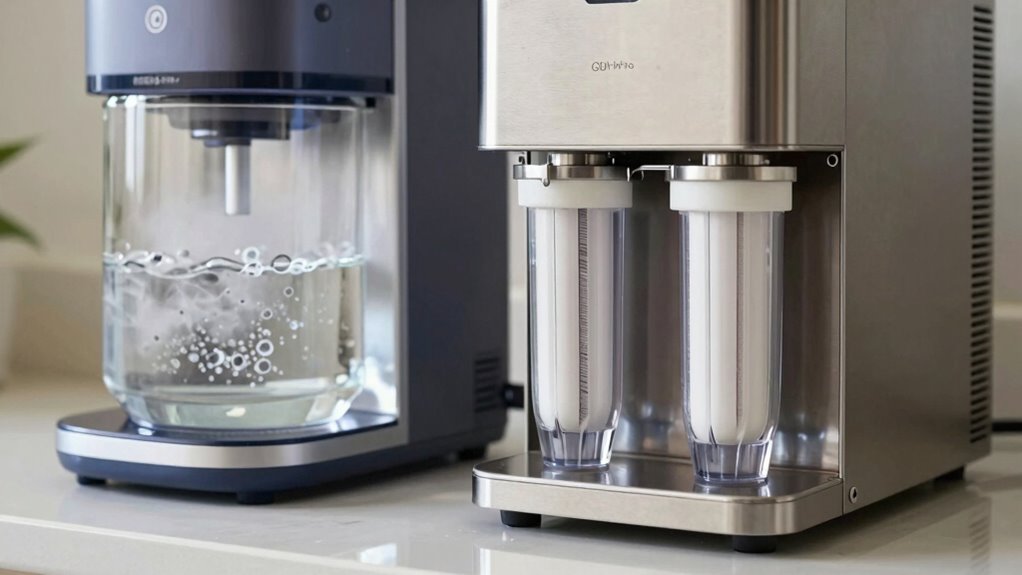
When it comes to removing contaminants and heavy metals from water, understanding the strengths of each system is essential. A water distiller effectively eliminates most heavy metals, bacteria, viruses, and organic contaminants through boiling and condensation, ensuring bacteria removal and a clean, contaminant-free output. Reverse osmosis (RO), on the other hand, uses a semi-permeable membrane to filter out a broad range of impurities, including heavy metals and chemicals, with high precision. While distillers don’t typically impact pH balancing, some mineral content remains, which can influence pH levels. RO systems excel at removing bacteria and other microorganisms, providing safer water for sensitive individuals. Additionally, water filtration technology continues to advance, offering even more effective solutions for clean drinking water. Modern innovations also improve contaminant removal efficiency, making these systems more capable than ever before. For instance, the integration of advanced filtration materials enhances the removal of specific contaminants. Recent developments in membrane technology have significantly increased the effectiveness of RO systems, further broadening their capabilities. Moreover, new developments in system maintenance ensure these filtration units remain efficient over time. Overall, both systems are effective, but for heavy metals and bacteria removal, RO offers a more extensive filtration.
How Do Distilled and RO Water Differ in Taste and Mineral Content?
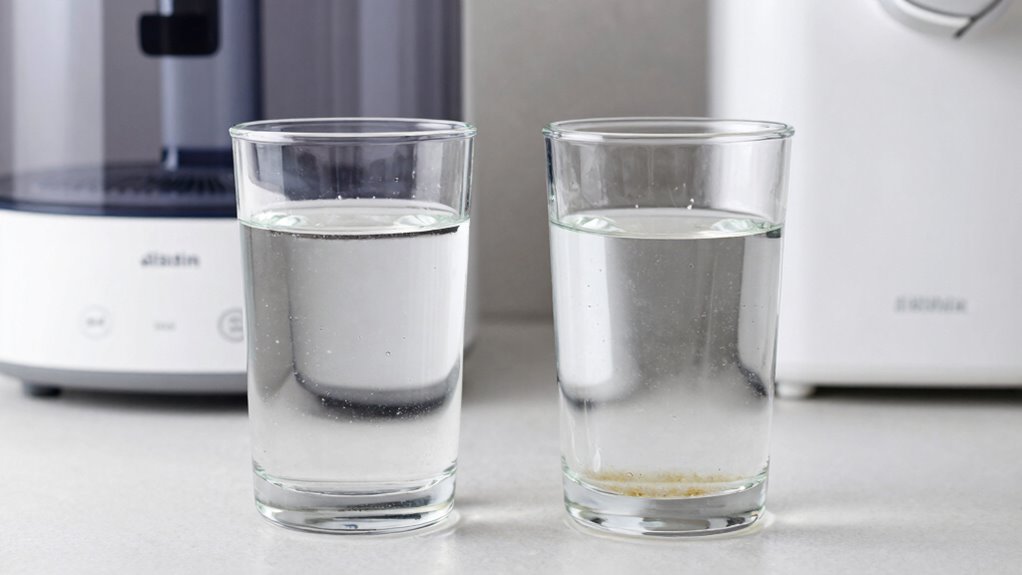
The taste and mineral content of distilled and reverse osmosis water differ markedly due to their filtration processes. You’ll notice a distinct taste difference: distilled water tends to be very neutral and flat, lacking minerals that add subtle flavor. In contrast, RO water often retains some mineral variation, depending on the system’s filtration stage, which can influence its taste. Additionally, understanding water filtration methods can help you determine which system better suits your preferences. Both systems effectively remove impurities but differ in how much mineral content remains, which is important for water quality considerations. The specific filtration stages used in each system also impact the final mineral profile of the water. Exploring mineral retention can help you understand how each process affects the health benefits and flavor of the water.
Are Water Distillers or RO Systems More Cost-Effective and Easier to Maintain?
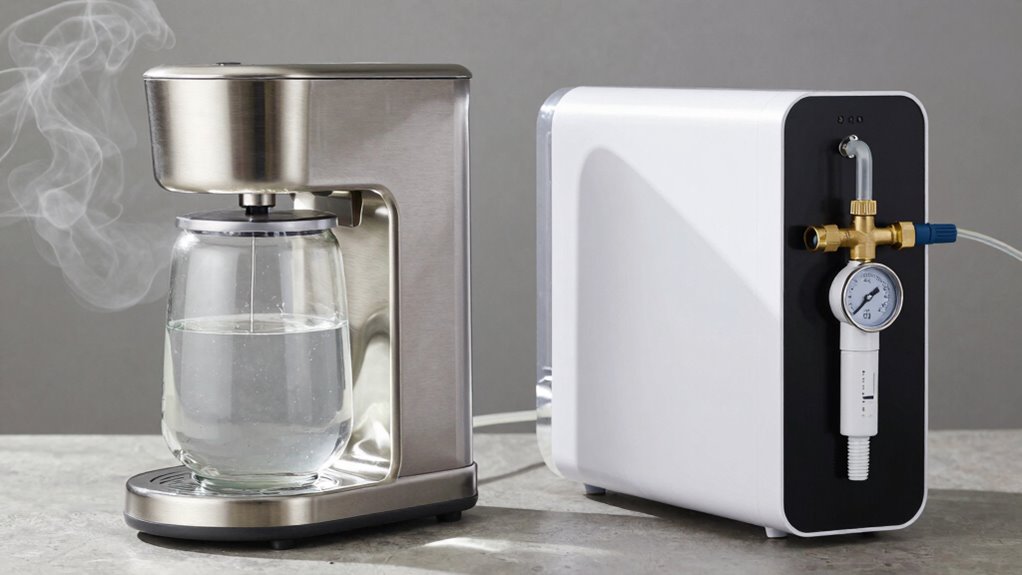
When comparing water distillers and RO systems, your main concerns are upfront costs and ongoing maintenance. You’ll find that distillers often have higher initial prices but require less regular upkeep, while RO systems might be more affordable initially but need filter replacements and occasional repairs. Considering these factors helps you decide which option aligns best with your budget and maintenance preferences. Additionally, understanding the security features of each system can impact long-term reliability and peace of mind. Evaluating the technology differences can also help you choose a solution that fits your specific water quality needs and environmental considerations. For example, some systems include automatic shutoff mechanisms that prevent overuse or damage, enhancing durability and safety.
Initial Investment Costs
Initial investment costs for water distillers and reverse osmosis (RO) systems can vary considerably, impacting your overall budget and installation process. A water distiller generally requires a higher upfront cost due to its complex technology and larger size. Conversely, an RO system often has a lower initial cost and easier installation. When considering cost comparison, keep in mind:
- Equipment price and size
- Complexity of installation process
- Space requirements
- Potential need for additional filters or components
While distillers tend to be pricier initially, they require minimal ongoing expenses. RO systems typically cost less upfront but might need replacements and maintenance sooner. Your choice depends on balancing initial investment with long-term affordability and ease of setup.
Maintenance and Upkeep
Maintaining water distillers and reverse osmosis (RO) systems involves different costs and efforts, which can influence your long-term expenses. Water distillers typically require minimal ongoing maintenance but need regular cleaning procedures to prevent mineral buildup. Their filter lifespan is generally longer, reducing replacement frequency. In contrast, RO systems often have multiple filters that need frequent replacement, usually every 6 to 12 months, depending on water quality. Regular cleaning is essential to maintain ideal performance and prevent clogging. While distillers may have higher initial costs, their upkeep tends to be simpler and less costly over time. RO systems, though more complex, can be more cost-effective if filters are replaced on schedule. Consider your capacity for maintenance and long-term costs when choosing between the two.
Who Should Choose a Water Distiller, and Who Benefits Most From RO?
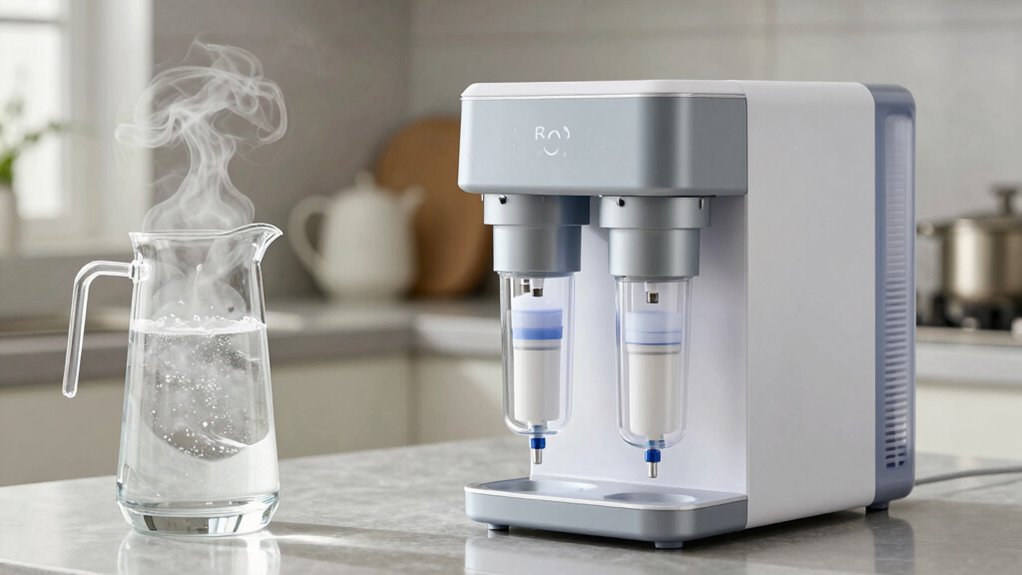
Choosing between a water distiller and reverse osmosis system depends on your specific water purification needs. If you prioritize pure water with a neutral water taste and consistent mineral balance, a distiller may suit you best. It effectively removes contaminants and leaves behind minerals, ensuring clarity and safety. Conversely, if you want to retain beneficial minerals for better water taste and health, RO systems are more appropriate. They produce mineral-rich water while eliminating impurities. Consider these factors:
- Water taste preferences
- Mineral balance needs
- Source water quality
- Desired purity level
A distiller is ideal for those who want ultra-pure water without minerals, while RO benefits those seeking clean, mineralized water for daily consumption. Your choice depends on your health priorities and taste preferences.
How Do You Decide Which Water Purification System Is Right for Your Home?
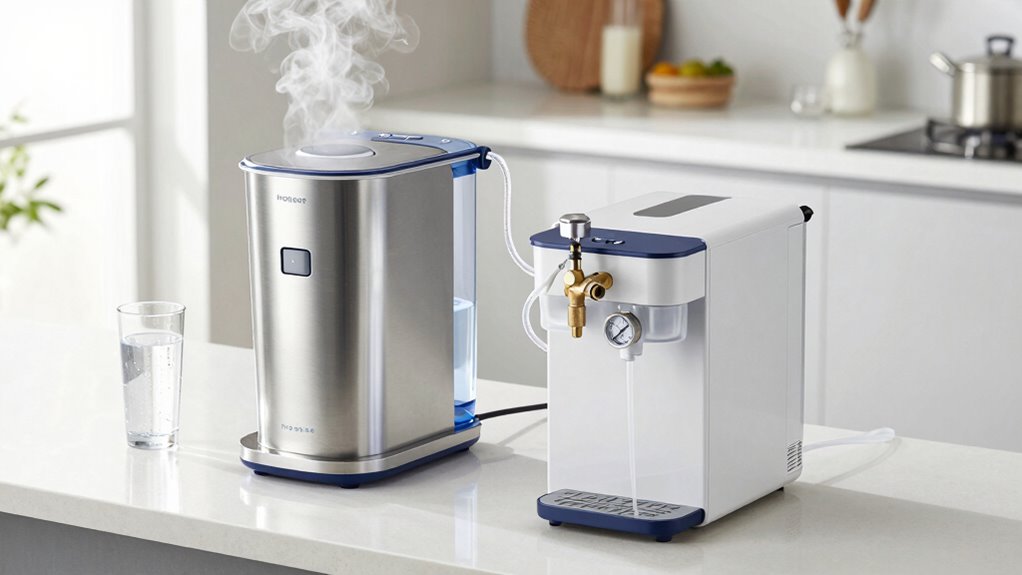
Deciding which water purification system is right for your home involves evaluating your specific needs and preferences. Consider the water temperature at which you’ll use the purified water; some systems, like distillers, produce hot water, while RO units primarily supply cold water. Think about filter longevity—distillers generally require less frequent maintenance, but RO filters may need regular replacement to maintain effectiveness. If you prefer a system that handles a variety of contaminants and offers long-lasting filters, reverse osmosis could be ideal. Conversely, if you want a simple, reliable process for removing impurities without frequent filter changes, a water distiller might suit you better. Assess your water quality, usage habits, and maintenance willingness to choose the system that best matches your household’s needs.
Frequently Asked Questions
How Long Does Each System Typically Last Before Needing Replacement?
You can expect your water distiller to last about 10 to 15 years with proper system maintenance, while reverse osmosis units typically last 2 to 5 years before needing replacement. Regular maintenance helps extend their lifespan, but replacement costs vary—distillers generally cost more upfront but last longer, whereas RO systems are cheaper initially but may require more frequent replacements of filters and membranes. Keep up with maintenance to save on long-term costs.
Can Both Systems Remove Microorganisms Effectively?
Both systems can effectively remove microorganisms with proper system maintenance. Water distillers use boiling to kill bacteria, viruses, and other microbes, guaranteeing microbial removal. Reverse osmosis also filters out microorganisms through fine membrane separation. However, regular maintenance, such as replacing filters and cleaning components, is essential for peak microbial removal. By staying on top of system maintenance, you can ensure your water remains safe and contaminant-free.
Are There Environmental Impacts Associated With Each System’s Waste?
You should consider the environmental impacts of each system’s waste. Water distillers produce minimal waste, mainly concentrated minerals, which you can sometimes repurpose, reducing ecological footprint. Reverse osmosis systems generate a significant amount of wastewater, which can strain local water resources and increase your environmental waste footprint. If minimizing ecological footprint matters to you, a distiller might be the better choice, but proper disposal of reverse osmosis waste is essential.
How Much Space Does Each System Require for Installation?
You’ll find that water distillers typically need less installation space, often fitting on a countertop with minimal setup requirements. Reverse osmosis systems usually require more space, often needing under-sink installation with additional room for tanks and filters. Consider your available setup requirements and installation space carefully; if space is limited, a distiller might be more suitable, while ROs are better for larger setups.
Do They Require Any Special Water Pre-Treatment Before Use?
Think of your water as a garden needing just the right nutrients. For water distillers, you typically don’t need special pre-treatment—just guarantee the water is relatively clean to prevent mineral buildup. Reverse osmosis systems, however, benefit from pre-filtration to extend their lifespan and reduce maintenance frequency. Poor water quality can lead to more frequent filter changes and system upkeep, so checking your water beforehand saves you time and hassle.
Conclusion
Choosing between a water distiller and a reverse osmosis system is like selecting the perfect brush for your canvas—each offers unique strokes. Think of your water needs as the guiding palette, shaping your choice. Whether you seek pure, mineral-free clarity or a balanced taste with some minerals, the right system will transform your tap into a crystal-clear stream. Trust your instincts, and let your home’s water be a invigorating masterpiece.