
Hard water is the biggest hidden enemy when making espresso at home. It causes mineral buildup in your machine, leading to clogs, poor heat transfer, and inconsistent flavors. If you notice scale or taste issues, your water is probably hard. To fix this, you need to test your water and consider installing a softening system or using filtered water. Keep your water quality in check to keep your espresso perfect—learn how to do it right here.
Key Takeaways
- Hard water causes mineral buildup, clogging espresso machine components and reducing performance.
- Mineral deposits impair heat transfer and water flow, leading to inconsistent extraction and poor flavor.
- Signs include cloudy shots, calcium deposits, and reduced water flow, indicating hard water problems.
- Installing water softeners or reverse osmosis filters effectively reduces mineral content and prevents scale.
- Regular maintenance and water testing are essential to keep water hardness in check and protect your espresso machine.
What Is Water Hardness and Why Does It Matter for Espresso?
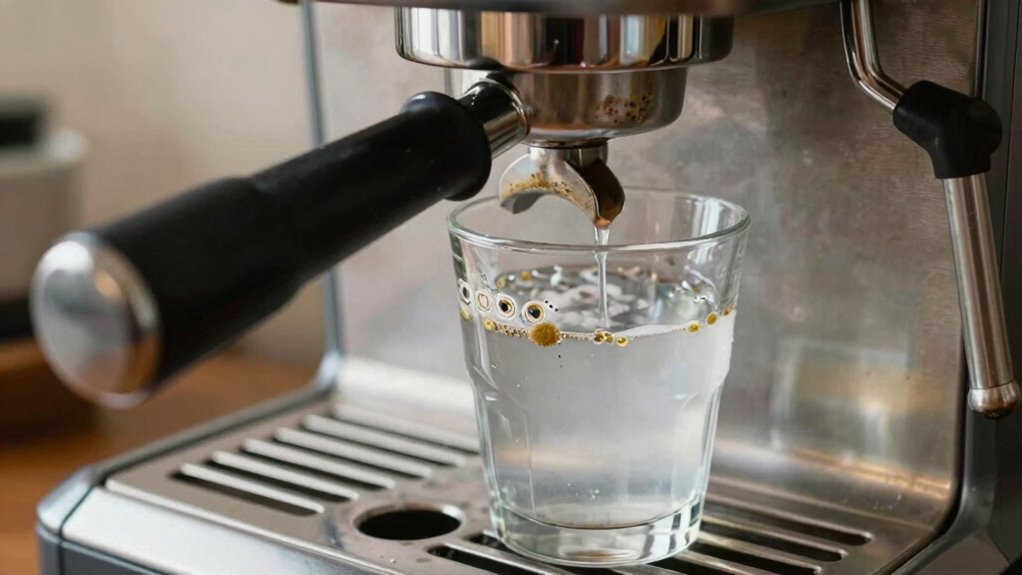
Water hardness refers to the amount of dissolved minerals, mainly calcium and magnesium, in your water. These minerals typically come from natural sources and are often present as calcium carbonate. The mineral content affects how your water interacts with coffee equipment and your espresso’s quality. Hard water contains higher concentrations of calcium carbonate, which can lead to mineral buildup in your espresso machine’s boiler and filters. This buildup can affect water flow, temperature stability, and extraction consistency. Understanding water hardness helps you identify if your water needs softening or treatment. Using water with the right mineral balance ensures your espresso tastes ideal and prevents damage to your equipment. In short, knowing the mineral content in your water is key to maintaining the best espresso quality. Proper water mineral balance is essential for optimal espresso extraction and machine longevity. Additionally, monitoring and managing water hardness can prolong the lifespan of your espresso machine by reducing the risk of mineral deposits that impair its function. Regular testing of your water’s mineral content can help you stay ahead of potential issues and ensure consistent espresso quality. A comprehensive understanding of water chemistry can further optimize your brewing process and preserve your machine. Being aware of water quality issues allows you to take preventive measures before problems occur.
How Hard Water Can Ruin Your Espresso and What You Can Do About It
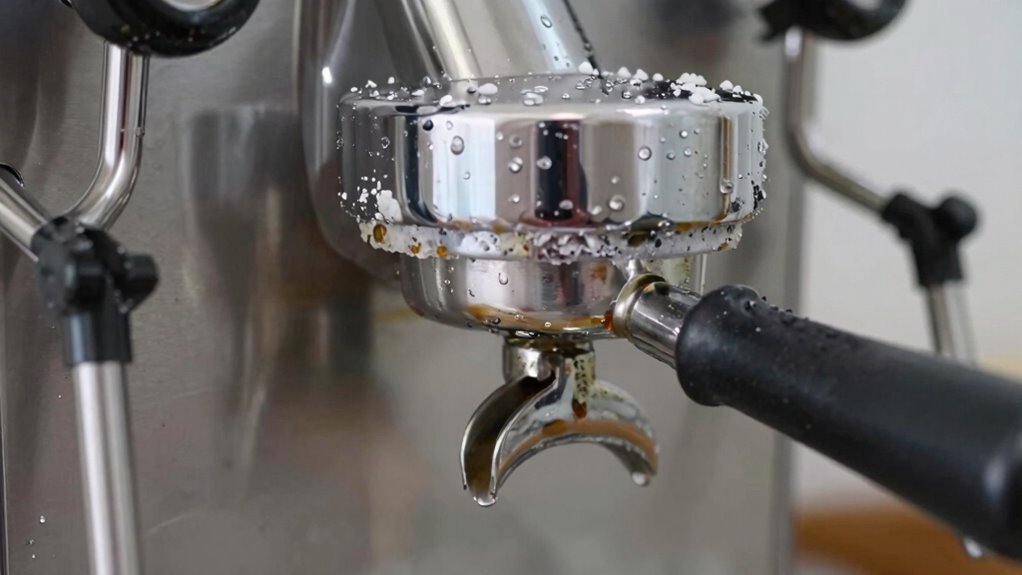
Hard water causes mineral buildup in your espresso machine, which can clog ports and affect flavor. Over time, this buildup worsens, leading to reduced performance and costly repairs. Using water softening solutions helps prevent these issues and keeps your espresso tasting its best. Regularly maintaining your machine and understanding the importance of filter replacement can further extend its lifespan and ensure optimal brewing quality. Additionally, understanding water hardness levels can help you better manage the mineral content in your water supply. Monitoring water quality regularly can help you identify when softening treatments are needed to maintain optimal brewing conditions.
Mineral Buildup Effects
Over time, mineral buildup from hard water can clog your espresso machine’s components, leading to poor extraction and inconsistent flavor. Mineral deposits, such as calcium and magnesium, accumulate inside boiler tubes, filters, and valves, reducing water flow and heat transfer. This buildup not only hampers the machine’s performance but also shortens its lifespan. To prevent these issues, you need to focus on buildup prevention by regularly descaling your machine and using filtered or softened water. Ignoring mineral deposits allows them to harden and form stubborn blockages that are difficult to remove, ultimately ruining your espresso. Staying proactive with cleaning routines helps maintain peak performance, ensures consistent taste, and prolongs your machine’s longevity. Proper care is essential to keep mineral deposits in check. Additionally, understanding water hardness levels can help you select the best water treatment options for your espresso setup, especially since high mineral content can accelerate scale formation in your machine’s internal parts. Implementing water quality management strategies can significantly reduce mineral buildup and extend your machine’s lifespan. Using appropriate water treatment methods can significantly reduce mineral buildup and extend your machine’s lifespan. Regularly monitoring and adjusting your water quality based on water mineral content can further safeguard your equipment from unnecessary damage.
Water Softening Solutions
Since mineral deposits from hard water can quickly clog your espresso machine and affect its performance, it’s essential to contemplate water softening solutions. Reducing water mineralization prevents calcium deposits that cause scale buildup and flavor issues. Here are four effective options:
- Use a water softener: Install an ion-exchange system to remove calcium and magnesium ions. These systems are widely regarded as the most reliable method for water mineral removal in residential settings.
- Employ reverse osmosis filters: These eliminate most mineral content, reducing hardness. Reverse osmosis also improves overall water quality by removing impurities beyond just minerals. Regular maintenance of filters ensures consistent water quality and optimal performance.
- Add descaling agents: Use vinegar or commercial descalers periodically to dissolve calcium deposits. Regular descaling helps maintain optimal performance and extends the lifespan of your machine.
- Switch to bottled or filtered water: Choose water with low mineralization specifically formulated for espresso machines. This is especially practical for those living in areas with very hard water or limited access to home filtration options.
Implementing these solutions helps protect your machine, ensures better espresso quality, and prolongs its lifespan by minimizing calcium deposits. Regularly monitoring your water’s hardness levels can also help you determine when to apply these solutions effectively. Utilizing water testing kits can make it easier to keep track of your water quality and take timely action.
Signs Your Water Might Be Hard and Causing Brewing Problems
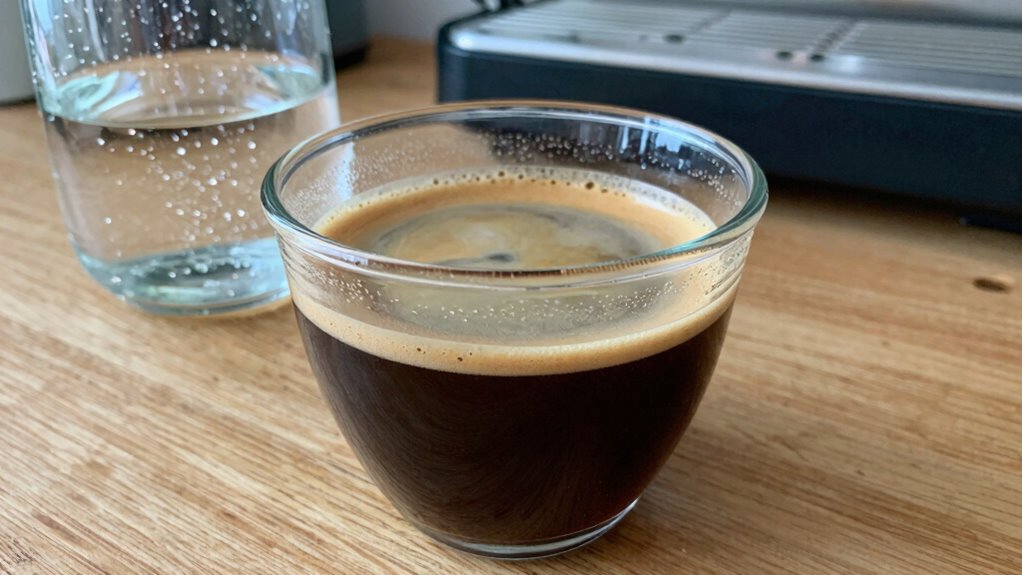
If your espresso comes out cloudy or lacks clarity, hard water might be the culprit. You may also notice mineral buildup on your machine’s parts over time. These signs indicate that your water quality could be causing brewing issues. Additionally, filter sizing/flow problems can exacerbate these issues if your system isn’t properly configured to handle your water’s hardness. Properly maintaining your water treatment system can help optimize performance parts like your espresso machine and prevent mineral buildup. Ensuring your water treatment system aligns with industry standards for water quality can further protect your equipment and improve your brewing results.
Cloudy Espresso Results
Cloudy espresso can be a clear sign that your water is hard and causing brewing issues. Hard water can interfere with the extraction, leading to cloudy, dull results. Here are key signs to watch for:
- Unclear or milky appearance in your espresso shot, indicating mineral deposits affecting clarity.
- Inconsistent crema quality, which can result from mineral buildup disrupting brew temperature stability.
- Altered grinder consistency, as hard water can cause coffee oils and minerals to clog grinder burrs.
- Difficulty maintaining proper brew temperature, since minerals influence water heating efficiency, impacting extraction and clarity.
- Additionally, water testing can help determine if mineral content is contributing to these brewing problems and guide proper treatment.
If you notice these signs, hard water may be the culprit, affecting your espresso’s appearance and flavor. Addressing water hardness can restore clarity and consistency to your brew.
Excess Mineral Buildup
Excess mineral buildup is a common sign that your water may be hard and causing brewing issues. You might notice white or chalky calcium deposits on your espresso machine’s components, especially around the boiler or steam wand. Mineral scaling can also form inside water reservoirs and pipes, reducing efficiency and heat transfer. These deposits disrupt water flow and heat consistency, leading to inconsistent extraction and a bitter or weak brew. When calcium deposits accumulate, they signal high mineral content in your water. Ignoring this buildup can cause your machine to work harder, increase energy costs, and shorten its lifespan. To keep your espresso tasting its best, addressing mineral scaling early and preventing calcium deposits is essential. Regular maintenance and water softening systems can help reduce mineral buildup and extend your machine’s longevity, while using essential oils for respiratory health may support preventive measures by promoting overall system health. Additionally, understanding the water hardness levels in your area can help you take proactive steps to protect your equipment.
How to Test Your Water Hardness at Home
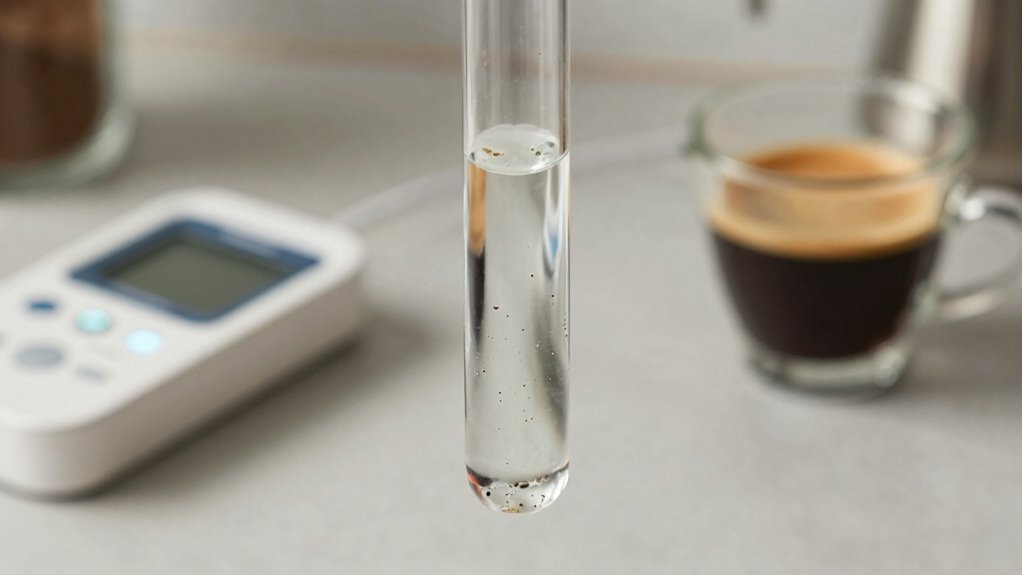
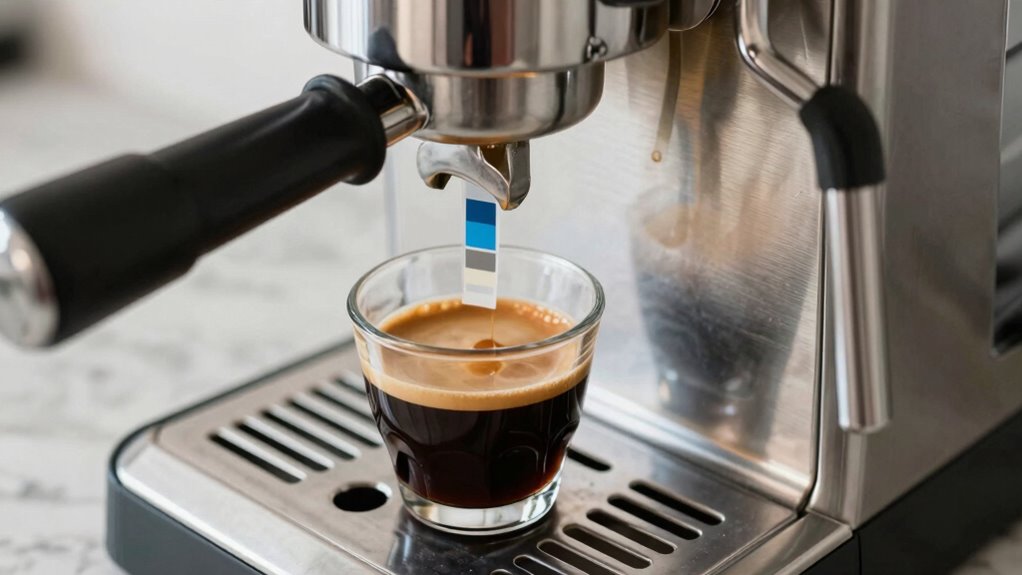
Testing your water hardness at home is simple and requires just a few basic tools. First, get a water test kit designed for hardness testing, which often includes test strips or drops. Next, follow these steps:
- Collect a sample of water in a clean container.
- Dip the test strip or add drops as instructed.
- Wait the recommended time for the color to develop.
- Compare the result to the color chart to determine hardness levels.
While testing, also observe the pH levels, as water pH can influence mineral solubility. Keep in mind that water pH affects how minerals interact, but the primary focus is on hardness. Regular testing ensures your water isn’t contributing to espresso issues caused by mineral buildup.
What Do Your Water Test Results Mean for Your Coffee?
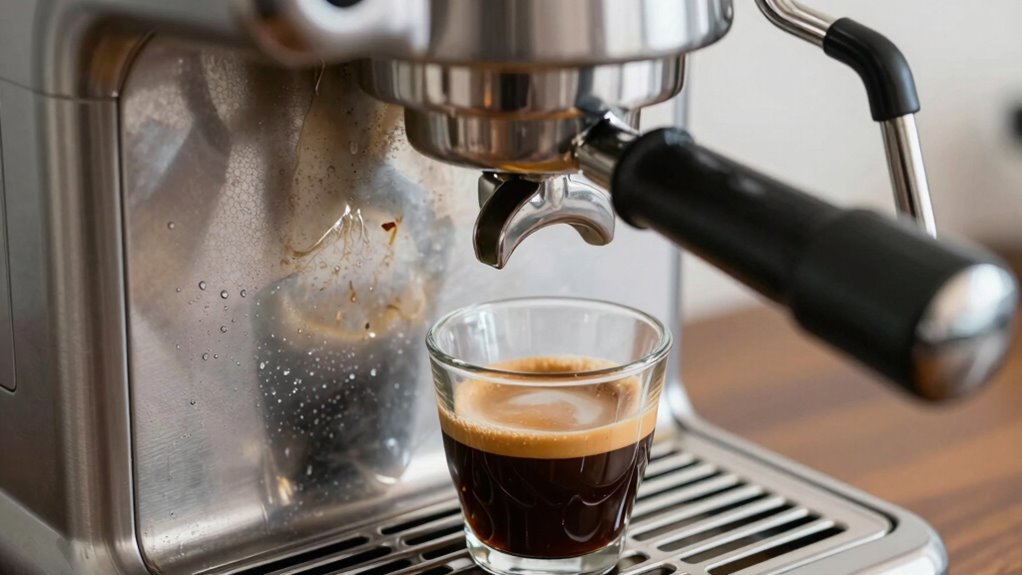
Your water test results tell you a lot about how your coffee will taste. If the mineral levels are off, it can affect extraction and flavor. Knowing this helps you adjust your water composition for the perfect brew every time.
Water Composition Impacts
Understanding what your water test results mean for your coffee is essential because water quality directly influences extraction and flavor. The composition impacts how your espresso develops and can cause issues if not managed. For example:
- High calcium levels can lead to calcium scale buildup, clogging your machine and altering water flow.
- Low mineral content may cause under-extraction, resulting in weak, flat flavors.
- Excessive ion exchange can soften water too much, stripping essential minerals necessary for proper extraction.
- Balancing mineral levels ensures ideal flavor and prevents equipment damage. Properly adjusting water chemistry helps minimize calcium scale formation and maintains consistent extraction. By understanding your water’s composition, you can fine-tune your approach—whether through filtration or mineral adjustments—to improve your espresso’s quality and longevity of your equipment.
Adjusting for Optimal Brew
Once you know your water’s mineral levels, you can make targeted adjustments to enhance your brew. Understanding water mineralization helps you fine-tune your water for the best extraction and flavor. If mineral levels are too high, you might reduce calcium and magnesium or use a water filter to soften the water. Conversely, if mineral content is too low, adding minerals back in can improve extraction. Pay attention to your water’s pH balance, aiming for a slightly alkaline range around 7 to 8, which promotes proper extraction and prevents bitterness. Adjusting for excellent brew isn’t just about removing hardness but creating the right environment for your espresso. Regular testing and small tweaks ensure your water supports consistent, high-quality coffee every time.
Easy Ways to Reduce Water Hardness for Better Espresso
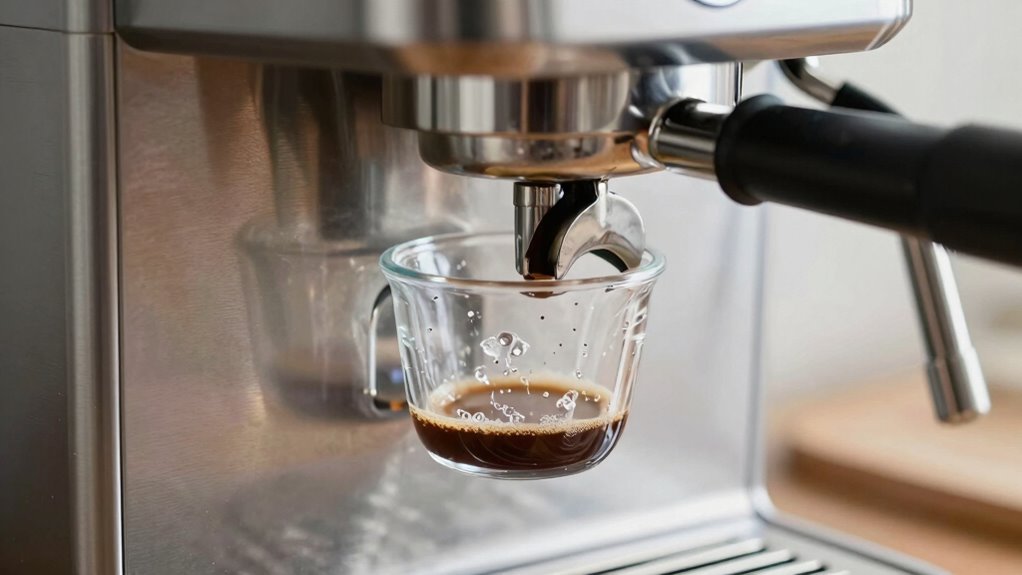
Hard water can substantially impact the quality of your espresso, causing mineral buildup and dull flavors. To improve your shot, try these easy methods:
- Use filtered water to reduce minerals that affect brew temperature and extraction.
- Adjust your coffee grind to a slightly coarser setting, minimizing mineral interference with flow.
- Regularly descale your espresso machine, preventing mineral buildup from hard water.
- Monitor your water’s hardness level and consider adding a water conditioner or softener if needed.
These simple steps help maintain ideal brew temperature and ensure your water’s mineral content doesn’t dull flavors or clog your machine. By managing water hardness, you’ll enjoy richer, more vibrant espresso shots every time.
Choosing the Best Water Softening System for Your Kitchen
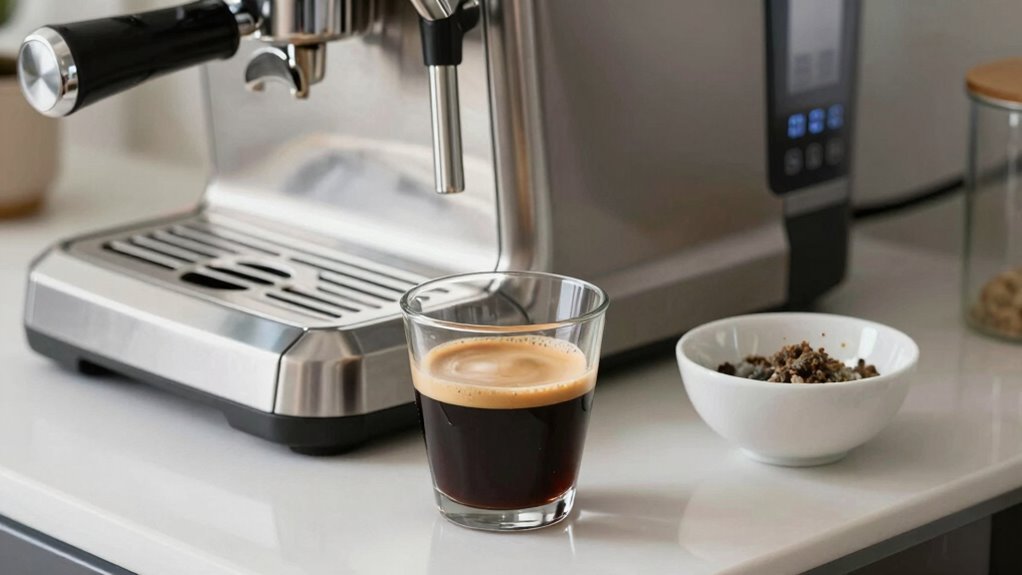
Selecting the right water softening system is vital if you want consistently great espresso and to protect your machine from mineral buildup. Look for systems that prioritize effective water filtration and mineral removal, reducing calcium and magnesium levels that cause hardness. Reverse osmosis units and ion exchange filters are popular options, as they effectively soften water by removing minerals before it reaches your espresso machine. Consider your water source, budget, and space constraints when choosing a system. A good water softener not only improves taste but also minimizes scale buildup, extending your machine’s lifespan. Make certain the system is easy to maintain and compatible with your water supply. Investing in the right water softening system is a key step toward flawless espresso and a longer-lasting machine.
Maintaining Water Quality for Consistent, High-Quality Coffee
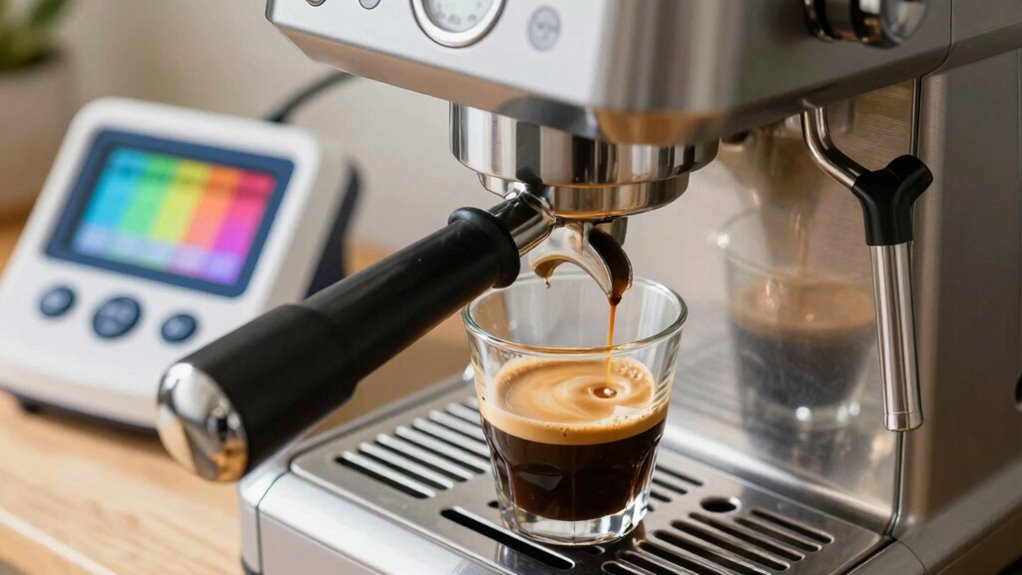
To guarantee your coffee remains consistently high-quality, maintaining ideal water quality is essential. Good water preserves coffee bean freshness and ensures your grinder calibration stays accurate. Here’s how to keep water in top shape:
- Regularly test your water’s mineral content to prevent scaling and maintain proper extraction.
- Use filtered or softened water to avoid deposits that can dull flavors and harm your equipment.
- Clean your espresso machine frequently to remove mineral buildup that impacts water flow.
- Monitor water temperature and pH levels, ensuring they stay within perfect ranges for flavor extraction.
Quick Fixes to Lower Water Hardness When You Need Them
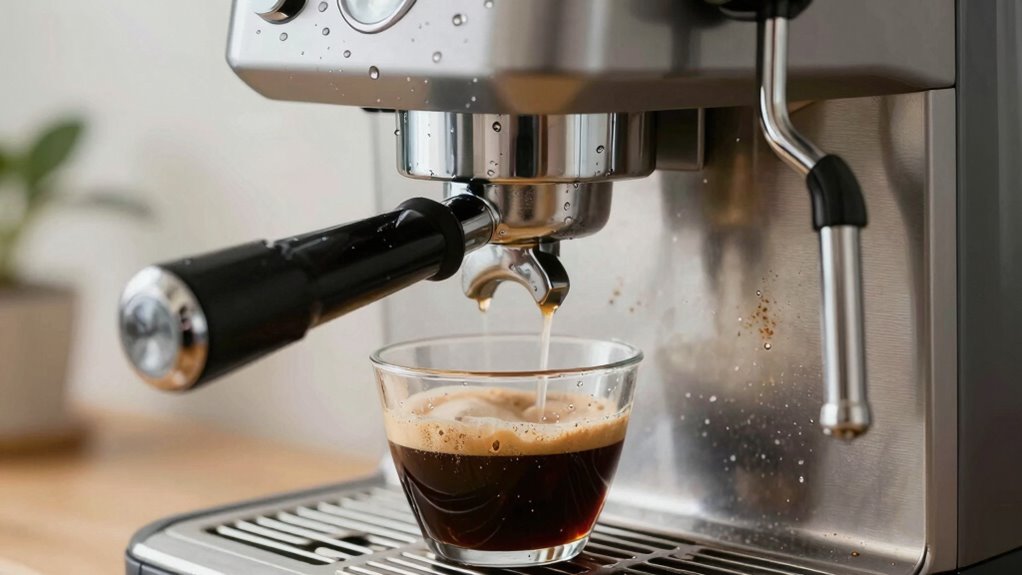
When you notice water hardness affecting your espresso quality, quick adjustments can make a significant difference. To reduce calcium deposits and lower mineral content temporarily, use bottled or filtered water with lower mineral levels. You can also dilute your tap water with distilled water to decrease hardness without waiting for a long-term solution. Running a descaling solution through your machine can quickly dissolve existing calcium buildup, improving water flow and extraction. Additionally, installing a portable water softener or using pre-filter pitchers can help manage mineral content on the spot. These quick fixes won’t eliminate the root cause but can improve your espresso shot immediately, preventing bitter flavors caused by mineral buildup and ensuring a smoother, more balanced brew.
Long-Term Solutions to Keep Water Hardness in Check
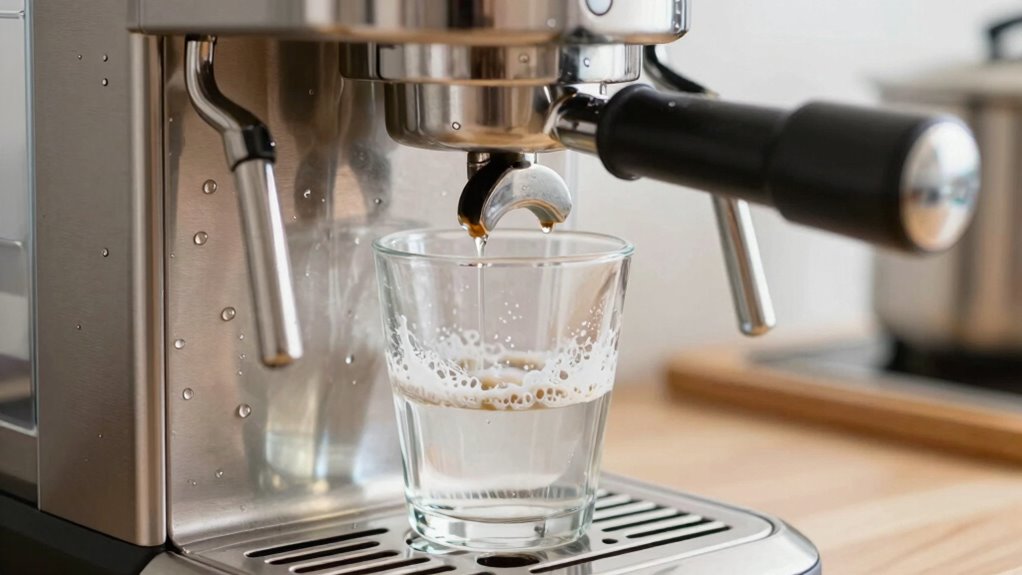
Implementing long-term solutions is essential for consistently maintaining perfect water quality for your espresso machine. Effective water treatment and mineral management help prevent scale buildup and guarantee ideal extraction. Consider these strategies:
- Install a high-quality water softener to reduce calcium and magnesium levels.
- Use a reverse osmosis system to remove impurities and minerals altogether.
- Regularly test your water to monitor hardness levels and adjust treatment methods.
- Maintain and replace filters as recommended to ensure ongoing water quality.
Frequently Asked Questions
How Often Should I Test My Water Hardness at Home?
You should test your water hardness levels at home every three to six months to keep your espresso tasting great. Regular water testing helps you monitor the hardness levels and catch any changes early. If your area has hard water, more frequent tests are prudent. Keeping an eye on your water’s hardness ensures your espresso machine stays in top shape and your drinks taste consistently excellent.
Can Bottled or Filtered Water Help Reduce Water Hardness?
While bottled or filtered water can reduce some impurities, they often don’t lower water hardness considerably. Filtered water may remove chlorine and sediments, but minerals like calcium and magnesium remain, which contribute to hardness. Bottled water varies—some brands are soft, others aren’t. To truly combat water hardness, you might need a specific water softening system, rather than relying solely on bottled or filtered options.
What Are the Long-Term Health Effects of Hard Water?
Hard water can lead to health risks like skin irritation and dry skin due to mineral buildup. Over time, mineral accumulation in your body may increase the risk of kidney stones or other health issues. While moderate consumption isn’t usually harmful, prolonged exposure to high mineral levels can strain your organs. It’s wise to monitor your water quality and consider treatment options to reduce mineral content for better long-term health.
Does Water Hardness Affect Other Appliances Besides My Espresso Machine?
Think of water hardness as a silent thief stealing time from your appliances. It impacts more than just your espresso machine, causing mineral buildup that hampers appliance maintenance and shortens lifespan. Hard water leaves deposits in dishwashers, washing machines, and water heaters, reducing efficiency and increasing energy costs. To protect your investments, monitor water quality impact and consider water softening solutions—saving money and extending appliance longevity.
Are There Natural Ways to Soften Water Without Chemicals?
Yes, you can naturally soften water through filtration methods like installing a natural filtration system that uses charcoal or bio-filtration, which can help reduce hardness minerals. Additionally, mineral balancing techniques, such as adding food-grade mineral blends, can help manage water hardness without chemicals. These approaches improve your water quality for brewing espresso and protect your appliances, ensuring better taste and longevity without relying on chemical treatments.
Conclusion
Just like a clear mountain stream promises pure, vibrant coffee, fixing your water hardness guarantees your espresso stays rich and flawless. Don’t let hidden minerals dull your brew or turn your kitchen into a battleground. Take control now—test, soften, and maintain your water. Remember, every great barista knows that a smooth cup starts with the right foundation. Your perfect espresso awaits—make it happen today, and savor the artistry in every sip.