In your electric composter, you can add kitchen scraps like fruit peels, coffee grounds, and vegetable leftovers, which decompose quickly and add nutrients. However, avoid tossing in meat, dairy, oily foods, bones, or processed items, as they can cause odors, pests, or damage the machine. To keep everything running smoothly, use proper layering and balance green and brown waste. Keep exploring to discover more tips for maintaining an efficient composting system.
Open a free Amazon Business account
Business pricing, bulk buying and tax-exempt orders.
As an affiliate, we earn on qualifying purchases.
Key Takeaways
- Suitable items include fruit peels, coffee grounds, vegetable scraps, and other organic kitchen waste.
- Avoid throwing in meat, dairy, oily foods, bones, cooked leftovers, and non-organic materials.
- Use dry leaves and shredded paper as brown materials to balance green waste and promote decomposition.
- Do not overload the composter beyond recommended guidelines to prevent malfunctions and odors.
- Regularly clean filters and check airflow systems to maintain proper operation and prevent system damage.
electric compost bin for kitchen waste
As an affiliate, we earn on qualifying purchases.
As an affiliate, we earn on qualifying purchases.
How Do Electric Composters Work and What Are Their Benefits?
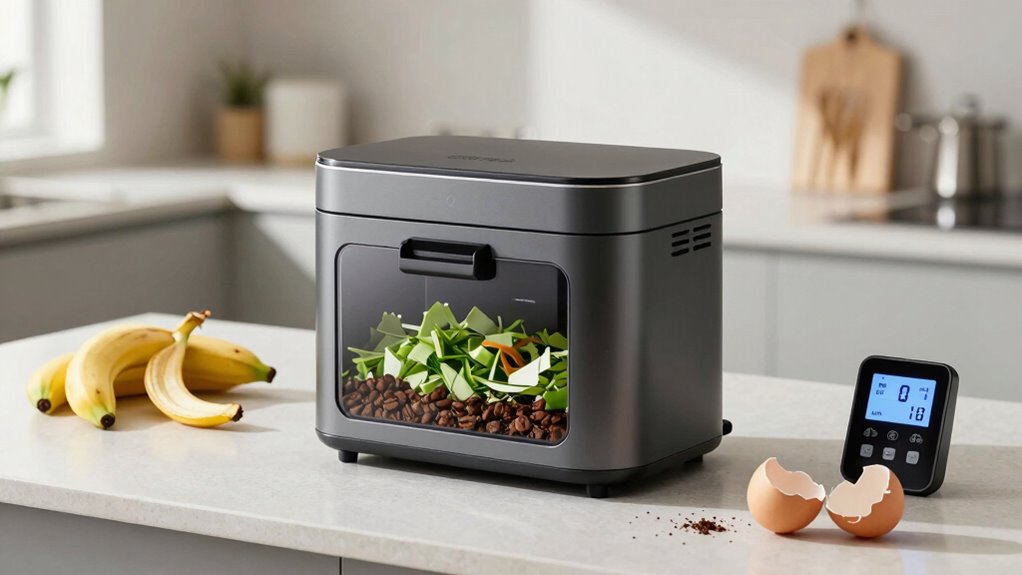
Electric composters work by accelerating the natural decomposition process through controlled heat, moisture, and aeration. This method speeds up how quickly organic waste turns into nutrient-rich compost. While they do consume electricity, their energy use is typically low and efficient, making them an eco-friendly choice. The composting process happens faster than traditional methods because the device maintains ideal conditions, ensuring microorganisms break down waste efficiently. With electric composters, you don’t have to worry about odors or pests, since the environment inside remains controlled. Many models also incorporate automatic shut-off features to enhance safety and conserve energy. Additionally, their controlled environment helps reduce emissions and odors, making them a more sustainable option for home composting. By using electricity intelligently, these devices help you turn kitchen scraps into compost quickly and conveniently. They often include smart technology that allows for monitoring and adjusting the process remotely, further optimizing efficiency. Proper maintenance and understanding what can be composted are also essential for optimal operation, as highlighted in composting guidelines. Incorporating energy-efficient systems can further improve their sustainability and reduce overall power consumption. Overall, electric composters streamline composting, saving time and effort while supporting sustainable waste management.
automatic countertop composting machine
As an affiliate, we earn on qualifying purchases.
As an affiliate, we earn on qualifying purchases.
What Kitchen Waste Is Suitable for Electric Composting?

You can compost a variety of kitchen waste in an electric composter, making it a convenient way to handle everyday scraps. Suitable items include:
- Fruit peels, such as banana skins or citrus rinds, which break down quickly and add valuable nutrients. Rapid decomposition is a key benefit of composting these materials efficiently.
- Coffee grounds, which are rich in nitrogen and help accelerate composting.
- Vegetable scraps, like carrot tops or onion peels, that decompose fast and enrich your compost. Incorporating proper composting techniques can further improve the quality and speed of your composting process. Using appropriate waste types is essential for maintaining a balanced compost and preventing issues such as odors or pests.
Avoid meat, dairy, and oily foods, as they can attract pests and cause odors. Stick with these kitchen wastes for efficient composting and nutrient-rich results. Electric composters make it easy to turn everyday scraps into usable compost, reducing waste and supporting your garden. Effective composting practices ensure you maximize the benefits of your electric composter.
compact electric food waste disposer
As an affiliate, we earn on qualifying purchases.
As an affiliate, we earn on qualifying purchases.
What Items Should I Avoid Putting in My Electric Composter?
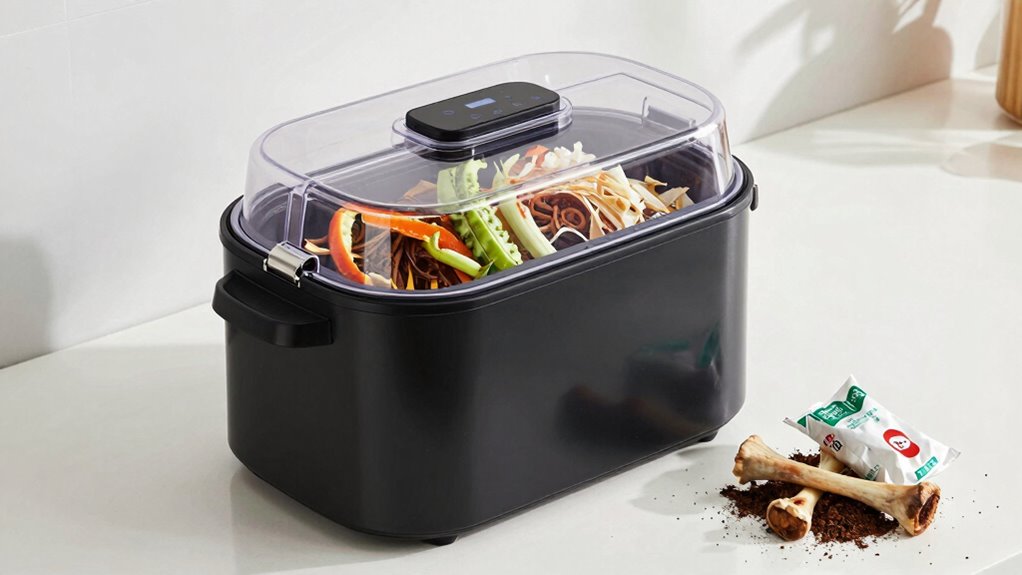
While electric composters offer a convenient way to recycle kitchen waste, certain items can cause problems if added. Avoid meat, dairy, oily foods, and cooked leftovers, as they can create unpleasant odors and attract pests, threatening food safety and pest prevention. These items decompose slowly and may disrupt the composting process, leading to unpleasant smells or spoilage. Additionally, adding bones or greasy scraps can clog the system or cause malfunctions. Always steer clear of non-organic materials like plastics, metals, or treated wood, which won’t break down and could damage your composter. Incorporating environmentally friendly materials such as paper scraps or plant-based waste can enhance the composting process without harming the system. Properly managing compostable waste is essential to avoid system blockages and ensure efficient decomposition. Using appropriate waste segregation techniques helps maintain a healthy composting environment. Regularly monitoring your compost system can also prevent system malfunctions and promote faster composting. For optimal performance, it’s important to stay within recommended composting guidelines and avoid overloading the unit. By keeping these items out, you guarantee a safe, odor-free composting experience while maintaining food safety and pest prevention.
smart electric composting system
As an affiliate, we earn on qualifying purchases.
As an affiliate, we earn on qualifying purchases.
How Can I Prepare and Layer Waste for Faster Composting?
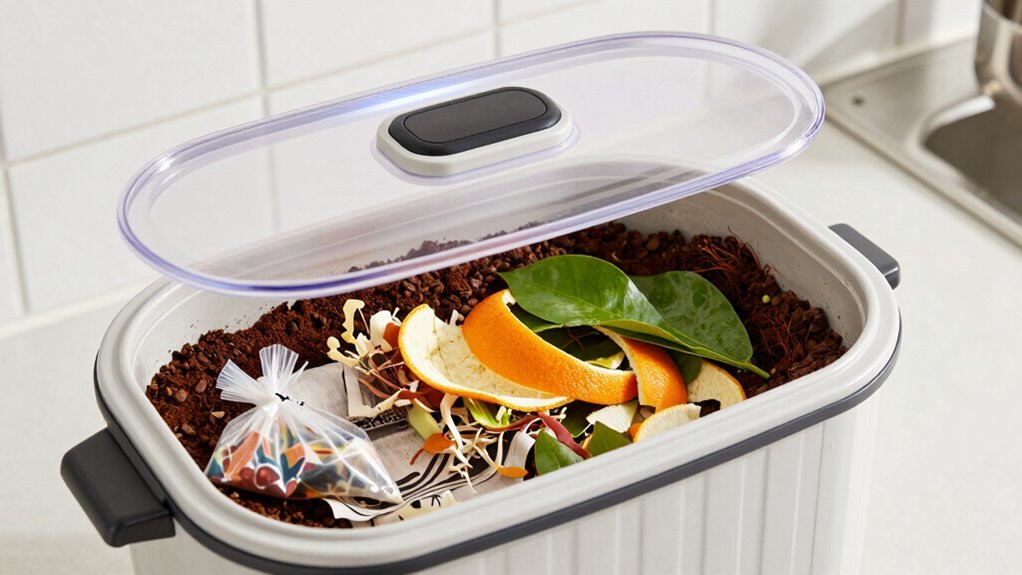
Preparing and layering waste properly can greatly speed up the composting process in your electric composter. Start with a solid compost bin setup by placing coarse materials like small branches or shredded paper at the bottom to improve airflow. Next, add waste in layers, following these steps:
Proper layering of waste accelerates composting in your electric composter.
- Leaf layering: Mix in dry leaves to balance moisture and add carbon.
- Green waste: Incorporate kitchen scraps like vegetable peels and coffee grounds.
- Brown materials: Cover green waste with dry materials such as shredded paper or leaves to promote decomposition.
Alternate these layers to maintain airflow and moisture levels. Proper leaf layering and compost bin setup ensure your waste breaks down faster, reducing the overall composting time and enhancing nutrient-rich compost. Additionally, maintaining the correct moisture and aeration levels is crucial for optimal composting efficiency, which can be supported by understanding waste layering techniques to optimize decomposition conditions.
Troubleshooting Common Problems and Maintaining Your Electric Composter
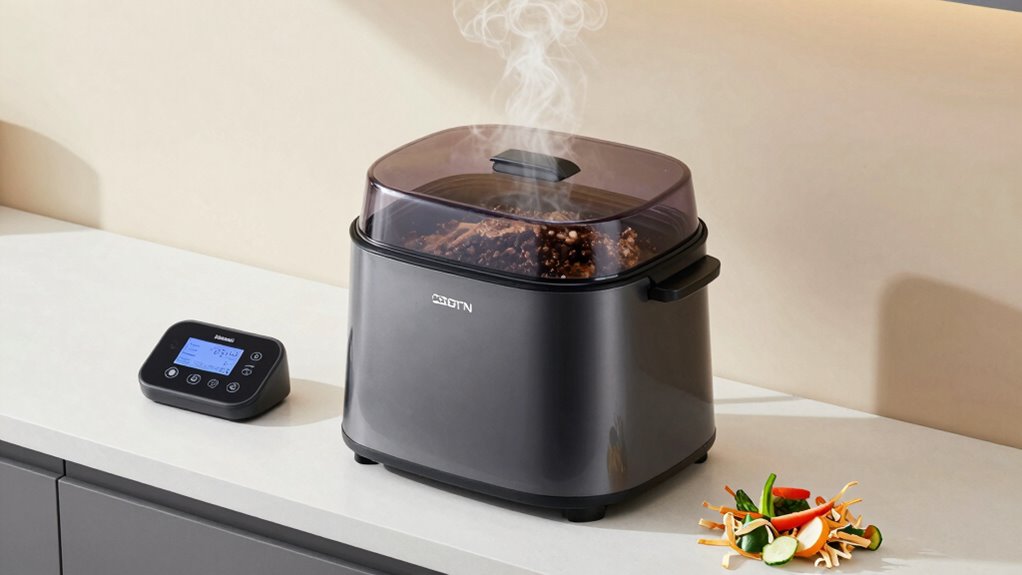
To keep your electric composter working efficiently, it is vital to identify and fix common problems promptly and perform regular maintenance. One common issue is composting odors, which can occur if waste isn’t balanced or if the unit isn’t cleaned regularly. To prevent odors, ensure you’re adding the right mix of browns and greens and emptying the bin when full. Regular maintenance tips include cleaning the filter, checking for blockages, and monitoring moisture levels. If the composter isn’t processing waste properly, verify that the lid seals correctly and that the fan is functioning. Addressing these issues promptly helps avoid malfunctions and keeps your compost fresh. Proper waste disposal practices also play a crucial role in maintaining a healthy composting environment. Additionally, inspecting the airflow system periodically ensures optimal ventilation and reduces odors. Ensuring that the composter’s filter and fan are functioning correctly is essential for consistent performance. Regularly reviewing your composting guidelines can help you optimize the process and prevent common issues. Proper maintenance routines and timely troubleshooting are essential for sustained composting success. Consistent upkeep guarantees your electric composter operates smoothly and produces quality compost efficiently.
Frequently Asked Questions
Can I Compost Pet Waste in an Electric Composter?
You shouldn’t compost pet waste in an electric composter because of pet waste concerns and electric composter limitations. Most electric composters aren’t designed to handle pet waste safely, as it can contain bacteria that aren’t fully eliminated during the process. Plus, it may cause odors or damage your composter. To stay safe and sanitary, dispose of pet waste separately through designated waste disposal methods instead of adding it to your electric composter.
Is It Safe to Compost Cooked Food Scraps?
Did you know that about 60% of food waste in households could be composted? Yes, you can compost cooked food scraps, but you should be cautious about cooked food safety. Composting cooked scraps is safe if you maintain proper temperatures and avoid adding oils, dairy, or meats, which can attract pests. Properly composted cooked food reduces waste and enriches soil, making it a smart choice when done correctly.
How Long Does It Take for Compost to Be Ready?
You’ll see compost readiness typically within 2 to 6 months, depending on your composting timeline and conditions. To accelerate the process, turn your compost regularly and maintain proper moisture levels. Hotter temperatures and balanced green and brown materials also help. Keep an eye out for dark, crumbly soil, which signals that your compost is ready to use. Patience and proper care ensure a rich, nutrient-dense end product.
Are There Any Odors Associated With Electric Composting?
Yes, electric composters can produce odors if not properly managed. To prevent this, make certain your unit has effective odor control features and good ventilation systems. Regularly empty and clean the composter, and avoid overloading it with smelly waste like meat or dairy. Proper maintenance and airflow help keep odors at bay, making your composting experience clean and odor-free.
Can I Use Compost From the Electric Composter in My Garden?
Imagine your garden as a hungry friend waiting for a nourishing meal. Yes, you can use compost from your electric composter in your garden, enriching your soil with essential compost nutrients. I’ve seen lush vegetables flourish when gardeners like you blend fresh compost into garden soil. Just make certain the compost is fully broken down, so it boosts your plants without any surprises. Your garden will thank you!
Conclusion
Now that you know what to toss and what to avoid, your electric composter will work like a charm—no need for a medieval alchemist’s touch. Keep an eye on your layers, troubleshoot early, and enjoy eco-friendly waste reduction right in your kitchen. Remember, even the most advanced models can’t turn everything into gold, but with proper care, you’ll be well on your way to greener living. So, get composting—your future garden will thank you!
Fall Picks
fall essentials
As an affiliate, we earn on qualifying purchases.