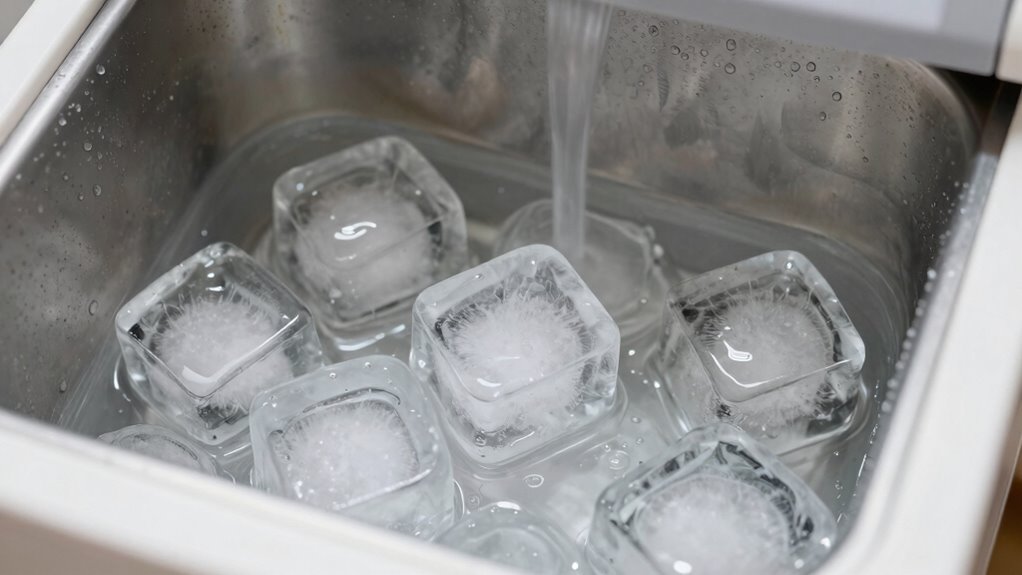
If your ice tastes funny, it’s likely caused by clogged filters, mold, bacteria, or mineral buildup inside your ice maker. Over time, filters can trap impurities, leading to off-flavors, and deposits can develop from hard water, affecting taste and appliance performance. Regular cleaning, filter replacement, and descaling help prevent these issues. Proper maintenance is key to ensuring fresh-tasting ice, so keep these tips in mind for better results if you want to learn more.
Key Takeaways
- Clogged or outdated filters can introduce impurities, affecting ice taste.
- Bacterial or mold buildup inside the ice maker causes unpleasant flavors and odors.
- Mineral deposits from hard water can lead to persistent off-tastes in ice.
- Lack of regular cleaning allows biofilm and residues to develop, impacting flavor.
- Poor water quality or supply issues contribute to strange or foul-tasting ice.
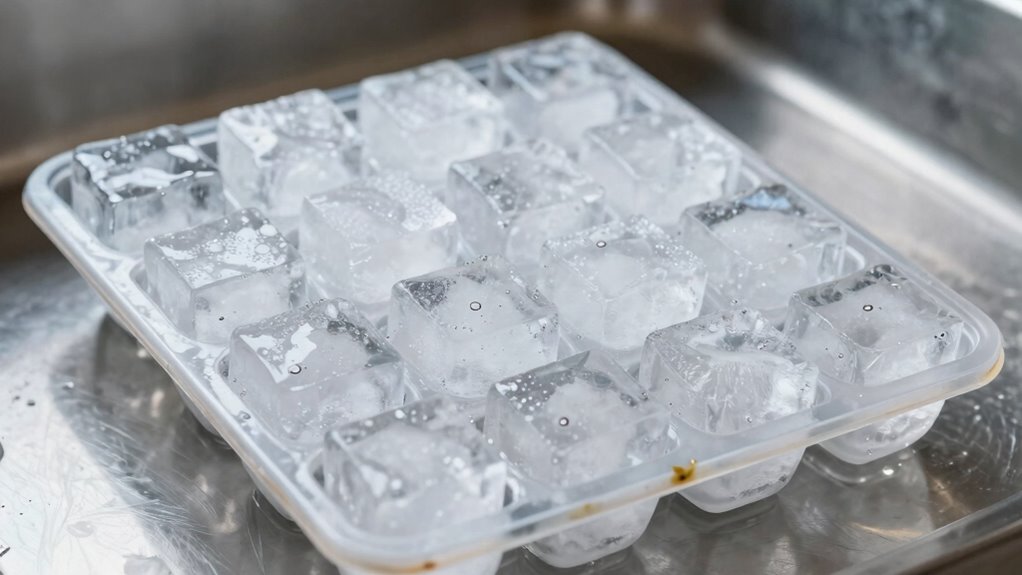
If your ice maker starts producing ice that tastes funny, it’s a sign that something’s off with your appliance or water supply. The first thing to check is your water filtration system. Over time, filters can become clogged with impurities, sediment, and mineral deposits, which can transfer unpleasant flavors to your ice. If you haven’t replaced your water filter recently, it’s likely the culprit. Regularly changing or upgrading your water filter guarantees that your water remains clean and your ice tastes fresh. Many appliances have a recommended filter replacement schedule—check your user manual and stick to it. Using high-quality filters designed for your specific ice maker can make a significant difference in ice flavor.
Check and replace your water filter regularly for fresh, great-tasting ice.
Beyond water filtration, your ice maker’s cleaning procedures play an essential role in maintaining good-tasting ice. Mold, bacteria, and mineral buildup can develop inside the machine if it’s not cleaned regularly. These deposits can impart off-putting tastes and odors to your ice, especially if your cleaning routines are infrequent or incomplete. To keep your ice tasting pure, establish a routine cleaning schedule. Unplug the machine, remove all ice, and clean the interior surfaces with a mixture of mild dish soap and warm water. Pay special attention to the ice bin, water reservoir, and any nooks and crannies where gunk can hide. Rinse thoroughly and dry all surfaces before refilling with fresh water and turning the machine back on. Remember, proper maintenance helps prevent bacteria and mineral buildup that can affect taste. Regular cleaning also prevents the formation of biofilm, which can harbor bacteria and cause foul flavors. Additionally, ensuring proper water quality can significantly impact the taste of your ice, especially in areas with hard water.
In addition to routine cleaning, consider descaling your ice maker if you notice mineral deposits or a persistent off-taste. Hard water areas tend to cause mineral buildup, which can be challenging to remove with regular cleaning alone. Use a descaling solution recommended by your manufacturer or a mixture of vinegar and water to break down deposits. Run the solution through the cycle, then rinse thoroughly with clean water to remove any residue. This process can restore the taste of your ice and extend the lifespan of your appliance. Ensuring your water supply is free of excessive minerals can also help mitigate this issue over time.

everydrop by Whirlpool Ice Filter, F2WC9I1, Single-Pack
- Brand Compatibility: Whirlpool, Maytag, KitchenAid, JennAir
- Suitable for Ice Makers: Used in 50 Ib ice machines
- Replacement Interval: Change every 9 months
As an affiliate, we earn on qualifying purchases.
As an affiliate, we earn on qualifying purchases.
Frequently Asked Questions
Can Water Quality Affect Ice Taste?
Yes, water quality definitely affects ice taste. If your water has contamination or mineral buildup, it can cause your ice to taste funny or off. Contaminants like chlorine or bacteria can alter flavor, while minerals like calcium or magnesium can leave a stale or metallic taste. Regularly cleaning your ice maker and using filtered water helps prevent these issues, ensuring your ice stays fresh and tastes good.
How Often Should I Clean My Ice Maker?
You should clean your ice maker every 3 to 6 months to maintain good ice quality. Regular cleaning helps prevent bacteria buildup and guarantees fresh-tasting ice. During cleaning, focus on ice storage areas and perform machine maintenance, like descaling and wiping down components. This routine keeps your ice maker running efficiently, prevents funny tastes, and extends its lifespan. Don’t forget to use food-safe cleaning solutions for best results.
Do Certain Foods Cause Ice to Taste Funny?
Certain foods can cause ice to taste funny because flavor contamination from strong-smelling or oily foods can seep into the ice. If you’ve recently stored or handled such items near your ice maker, food residue might cling to the machine’s parts, like shadows lingering after sunset. To prevent this, clean your ice maker regularly and keep strong-smelling foods away, ensuring your ice remains fresh and pure.
Can a Clogged Filter Cause Bad-Tasting Ice?
Yes, a clogged filter can cause bad-tasting ice. When your filter isn’t replaced regularly, it traps impurities that can affect the water in your ice mold. Over time, the build-up worsens, leading to off-flavors. To fix this, replace your filter promptly and clean your ice mold thoroughly. This simple step guarantees your ice tastes fresh and clean, preventing unpleasant flavors caused by a blocked filter.
Is It Safe to Drink Ice That Tastes Funny?
If your ice tastes funny, it’s best not to drink it. Flavor contamination from nearby chemicals or storage issues can cause off-flavors, making the ice unsafe to consume. Drinking contaminated ice might expose you to harmful bacteria or chemicals, so you should identify and fix the source of the problem—like cleaning your ice maker or improving storage conditions—before using or consuming the ice again.

ACTIVE Ice Machine Cleaner Maker Descaler – 32 fl oz (8 Uses) Nickel Safe Ice Maker Cleaner Solution – Compatible with Whirlpool 4396808, Scotsman,Manitowoc,Hoshizaki, GE Opal Cleaning Kit – USA Made
- Number of Uses: 8 uses per bottle
- Compatibility: Works with all ice makers
- Safe for Nickel: Nickel-safe descaling formula
As an affiliate, we earn on qualifying purchases.
As an affiliate, we earn on qualifying purchases.
Conclusion
So, savor the solution and stop the strange, sour, or stale taste from sneaking into your ice. Regularly rinse, sanitize, and scrutinize your ice maker to keep it clean and clear. By balancing basics and banishing bacteria, you’ll bring back the crisp, clean coolness you crave. Don’t let funky flavors foul your fun—foster fresh, fabulous ice every time. Keep it pristine, and enjoy icy indulgence without any unwanted oddities!

GE Profile Opal | Cleaning Supplies Kit for Opal Nugget Ice Maker | Ice Machine Cleaner Kit Includes (1) 5 oz Bottles of Cleaning Solution, (1) Cleaning Sponge
- Designed for Opal Nugget Ice Maker: Specially made for Opal ice maker
- Easy Cleaning Instructions: Use regularly for optimal performance
- Includes Cleaning Solution and Sponge: Contains 5 oz cleaning solution and sponge
As an affiliate, we earn on qualifying purchases.
As an affiliate, we earn on qualifying purchases.

ACTIVE Ice Machine Cleaner Maker Descaler – 24 Clean Tablets Compatible with Frigidaire, Opal, GE Profile, Kitchenaid, Nickel Safe Scale Remover for Countertop, Nugget Ice Makers – Bulk 1 Year Supply
- Universal Compatibility: Works with all ice maker types and brands
- Nickel-Safe Descaling: Made from food-grade citric acid, safe for metals
- Keeps Ice Clear and Fresh: Ensures crystal clear, great-tasting ice
As an affiliate, we earn on qualifying purchases.
As an affiliate, we earn on qualifying purchases.