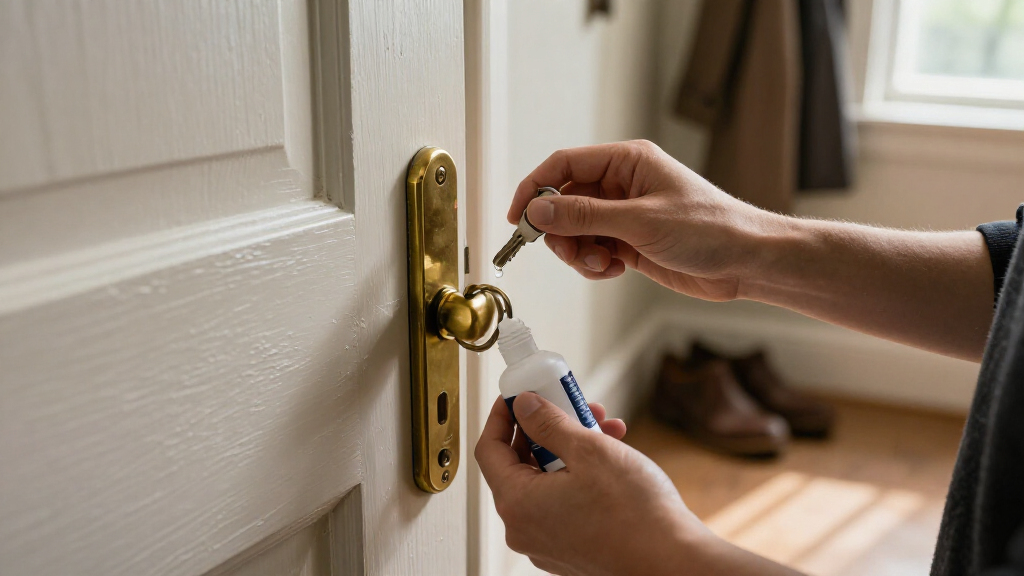

The best door lock lubricant for most households is 3-IN-ONE Lock Dry Lube, a practical choice for a dry-film application inside a lock cylinder. ABUS PS88 stands out for buyers who want a lock-specific spray, while the Master Lock PTFE option suits precise, small-scale application. The main tradeoffs are dry versus graphite formulas, controlled application versus broad spray coverage, and whether you need lubricant for locks alone or other hardware too. A large can may suit several locks, but a small applicator can help limit overspray and waste. Read on for the full comparison and a match for your lock and maintenance habits.

Get cleaning gear delivered free with Prime
- Fast, free delivery on millions of items
- Prime Video, Amazon Music and more included
- Member-only deals all year
Complete the kit


Key Takeaways
- Dry-film sprays lead the general-purpose picks: 3-IN-ONE Lock Dry Lube and ABUS PS88 are positioned ahead of broad-use products because their stated purpose is lock lubrication.
- Application control separates small-format options: Master Lock’s 0.25 fl oz container and Hillman‘s 3 g tube are better suited to targeted use than a large aerosol when only one or two locks need attention.
- Graphite is a distinct choice, not a universal upgrade: AGS Lock-Ease, AGS Mr. Zip, and Hillman give graphite-preferring buyers options, while the dry-film sprays serve a different approach.
- Broad-use products trade specialization for versatility: WD-40 Specialist Dry Lube and LIQUIDFIX can suit buyers maintaining more than lock cylinders, but their wider scope may be unnecessary for a lock-only task.
- Bundles and larger cans favor repeated upkeep: Houdini‘s two-can set and the 11 oz single can make more sense for frequent or multi-lock use than for someone who needs a one-time, precise application.
| ABUS PS88 Lock Lubricating Spray, 50 ml |  | Best for Lock-Specific Protection | Brand: ABUS | Model: PS88 | Volume: 50 ml | VIEW LATEST PRICE | See Our Full Breakdown |
| 3-IN-ONE Lock Dry Lube, 2.5 oz |  | Best for Flexible Application | Container type: Can | Form: Spray | Volume: 2.5 fluid ounces | VIEW LATEST PRICE | See Our Full Breakdown |
| Master Lock PTFE Lock Lubricant, 0.25 fl oz |  | Best for Precise Keyway Application | Model: 2300D | Material: PTFE | Container type: Syringe | VIEW LATEST PRICE | See Our Full Breakdown |
| 3-IN-ONE Lock Dry Lube Spray, 2.5 oz |  | Best Dry-Film Pick | Brand: 3-IN-ONE | Model: 12007 | Volume: 2.5 fluid ounces | VIEW LATEST PRICE | See Our Full Breakdown |
| WD-40 Specialist Dry Lube, 12.1 oz | 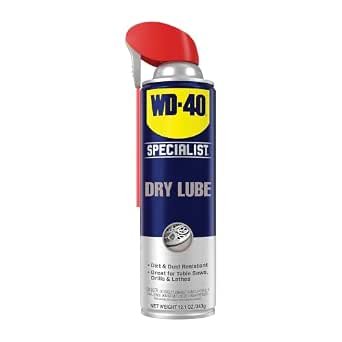 | Best for Larger Maintenance Jobs | Container type: Can | Form: Spray | Volume: 12.1 oz | VIEW LATEST PRICE | See Our Full Breakdown |
| AGS Lock-Ease Graphite Lock Lubricant Spray, 3 oz |  | Best Spray Graphite Pick | Form: Spray | Container: Can | Stated unit count: 3 ounces | VIEW LATEST PRICE | See Our Full Breakdown |
| AGS Mr. Zip Extra Fine Dry Graphite Lubricant, 1.76 oz |  | Best Portable Dry Powder | Brand: AGS Rust Solutions | Form: Powder | Container: Bottle | VIEW LATEST PRICE | See Our Full Breakdown |
| Houdini Lock Lube, 11 oz, Set of 2 |  | Best Two-Can Lock-Maintenance Set | Item form: Liquid | Container: Can | Number of items: 2 | VIEW LATEST PRICE | See Our Full Breakdown |
| LIQUIDFIX Door, Lock & Hinge Lubricant, 4 oz Dropper with 0.5 oz Needle Oiler |  | Best for Precise Application | Brand: LIQUIDFIX | Form: Liquid | Included components: 4 oz dropper bottle and 0.5 oz needle oiler | VIEW LATEST PRICE | See Our Full Breakdown |
| Qucship Door Hinge Lubricant Kit, 4 oz Bottle with 1 oz Needle Applicator |  | Best for Multi-Use Metal Hardware | Brand: Qucship | Item form: Liquid | Listed liquid volume: 5 fluid ounces | VIEW LATEST PRICE | See Our Full Breakdown |
| Houdini Lock Lube Professional Lubricant Spray, 11 oz |  | Best for Multi-Purpose Lock Maintenance | Brand: Houdini | Form: Spray | Volume: 11 fluid ounces | VIEW LATEST PRICE | See Our Full Breakdown |
| Hillman Graphite Lock Lubricant Tube, 3 g |  | Best for Precise Keyway Application | Container type: Tube | Material: Graphite | Compatible material: Metal | VIEW LATEST PRICE | See Our Full Breakdown |
| door lock lubricant | Form | Compatible material | Item weight | Brand |
|---|---|---|---|---|
| ABUS PS88 Lock Lubricating Spr | Spray | Metal | — | ABUS |
| 3-IN-ONE Lock Dry Lube | Spray | — | — | — |
| Master Lock PTFE Lock Lubrican | — | — | — | — |
| 3-IN-ONE Lock Dry Lube Spray | Spray | — | 2.5 ounces | 3-IN-ONE |
| WD-40 Specialist Dry Lube | Spray | Metal | — | — |
| AGS Lock-Ease Graphite Lock Lu | Spray | Metal | 5 ounces | — |
| AGS Mr. Zip Extra Fine Dry Gra | Powder | — | 2.56 ounces | AGS Rust Solutions |
| Houdini Lock Lube | — | — | — | — |
| LIQUIDFIX Door | Liquid | Metal | 5.44 ounces | LIQUIDFIX |
| Qucship Door Hinge Lubricant K | — | Metal | 150 g | Qucship |
| Houdini Lock Lube Professional | Spray | Metal | 11.84 ounces | Houdini |
| Hillman Graphite Lock Lubrican | — | Metal | 9.07 g | — |
More Details on Our Top Picks
ABUS PS88 Lock Lubricating Spray, 50 ml
ABUS PS88 is a focused choice for buyers who want one spray for door cylinders, padlocks, and other metal mechanisms. Its low-viscosity formula is described as loosening sticking parts while clearing dirt and helping protect against moisture, corrosion, and freezing—a broader protection brief than the friction reduction emphasized by Master Lock PTFE Lock Lubricant. The compact 50 ml can is easy to keep with lock-maintenance supplies, but it offers less volume than the 2.5 oz 3-IN-ONE Lock Dry Lube Spray. Its stated use is centered on locks and mechanisms, so it is less versatile for household lubrication jobs beyond that niche. I’d choose it for lock-focused upkeep where weather protection matters more than a dry, dust-repelling finish.
Pros:- Designed to loosen sticking locks and mechanisms.
- Helps clear dirt and reduce squeaking and wear.
- Provides stated protection against corrosion, moisture, and freezing.
- Suitable for door cylinders, padlocks, tools, and car locks.
Cons:- The 50 ml can holds less than the 2.5 oz 3-IN-ONE options.
- Its lock-and-mechanism focus makes it less suited to general-purpose lubrication.
Best for: Homeowners maintaining metal door cylinders and padlocks who want a compact spray with stated moisture and cold-weather protection.
Not ideal for: Buyers seeking a larger supply or a dry-film formula specifically intended to repel dust from locks and hinges.
- Brand:ABUS
- Model:PS88
- Volume:50 ml
- Form:Spray
- Container type:Can
- Compatible material:Metal
- Viscosity:Low
- Weight:0.06 kg
Our verdict“Choose ABUS PS88 for a compact, lock-focused spray when protection from moisture and freezing is a priority.”
3-IN-ONE Lock Dry Lube, 2.5 oz
3-IN-ONE Lock Dry Lube earns this spot for giving buyers two ways to apply a quick-drying formula: use the included straw for a narrow keyway or the wider spray for broader coverage. That flexibility is useful across home, automotive, marine, and commercial locks, while its clear, corrosion-protective film avoids the visible residue some buyers want to avoid. Compared with the smaller Master Lock PTFE pen oiler, this aerosol covers more varied jobs, but the pen offers more direct control for tiny openings. This formula is listed as compatible with metal, wood, and most plastics, with clear polycarbonate and polystyrene excluded. The aerosol format can still overspray if the straw is not used, and the heptane-based contents call for care around those incompatible plastics.
Pros:- Includes a straw for directing lubricant into narrow mechanisms.
- Quick-drying clear formula leaves a corrosion-protective film.
- Suitable for metal, wood, and most plastics.
- Listed for home, automotive, marine, commercial locks, and padlocks.
Cons:- Not suitable for clear polycarbonate or polystyrene.
- The aerosol can be less precise without the straw.
- Contains heptane, so material compatibility requires attention.
Best for: DIY homeowners and caretakers who maintain several kinds of locks and want both a narrow straw and broader spray coverage.
Not ideal for: Buyers who need a plastic-safe formula for clear polycarbonate or polystyrene, or who prefer a non-aerosol applicator.
- Container type:Can
- Form:Spray
- Volume:2.5 fluid ounces
- Viscosity:Low
- Compatible materials:Metal, wood, and most plastics; not clear polycarbonate or polystyrene
- Material:Heptane
- Uses:Home, automotive, marine, and commercial locks; padlocks
- Manufacturer:WD-40
Our verdict“Pick this 3-IN-ONE when you want one quick-drying aerosol for varied locks and adjustable application width.”
Master Lock PTFE Lock Lubricant, 0.25 fl oz
Master Lock PTFE Lock Lubricant stands apart from the aerosol picks with a small pen-oiler syringe made for placing lubricant at keyways and shackle openings. That controlled delivery can help limit overspray around a door, while the PTFE formula is intended to reduce friction and sticking and protect against dust, dirt, salt, moisture, rust, and corrosion. Its stated operating range of -40°F to 500°F is unusually broad in this lineup. Compared with the wider-coverage 3-IN-ONE Lock Dry Lube, it is more targeted but contains only 0.25 fluid ounces, so it suits occasional maintenance better than repeated use across many locks. The product also recommends application every three to six months, adding a maintenance interval to track.
Pros:- Pen oiler provides targeted application to keyways and shackle openings.
- PTFE formula is intended to reduce friction and sticking.
- Helps protect against dust, dirt, salt, moisture, rust, and corrosion.
- Stated temperature range spans -40°F to 500°F.
Cons:- The 0.25-fluid-ounce container is small for multiple locks or frequent upkeep.
- Recommended application every three to six months means periodic reapplication.
- Its narrow delivery is less convenient than aerosol sprays for broader mechanisms.
Best for: People maintaining a few door locks or padlocks who want controlled application directly at keyways and shackle openings.
Not ideal for: Property managers or households servicing many locks who need a larger-volume container or a broader spray pattern.
- Model:2300D
- Material:PTFE
- Container type:Syringe
- Viscosity:Low
- Liquid volume:0.25 fluid ounces
- Temperature range:-40°F to 500°F
- Flash point:500°F
- Properties:Non-toxic and biodegradable
Our verdict“Choose Master Lock PTFE when precise, low-mess application matters more than container capacity.”
3-IN-ONE Lock Dry Lube Spray, 2.5 oz
3-IN-ONE Lock Dry Lube Spray is the clearest choice here for buyers who want a dry finish rather than a protective film that may feel wet. Its PTFE dry lubricant is described as reducing friction while leaving a residue-free surface that helps repel dust and dirt, making it a practical fit for locks that collect debris. Unlike ABUS PS88, which emphasizes loosening and protection from moisture and freezing, this pick also covers hinges and padlocks and is framed for home, automotive, marine, and commercial use. The 2.5 oz can is smaller than the 12.1 oz WD-40 Specialist Dry Lube, but its stated uses are more directly centered on locks and hinges. One spec lists viscosity as 0W SAE J300, a notation that may not clarify performance for lock buyers.
Pros:- Dry, residue-free finish helps repel dust and dirt.
- PTFE formula is intended to reduce friction and help protect against rust.
- Suitable for locks, hinges, and padlocks.
- Listed for home, automotive, marine, and commercial settings.
Cons:- The 2.5-ounce can is limited for broad, repeated maintenance.
- The listed 0W SAE J300 viscosity notation may be unclear for lock use.
- Its dry finish may not match applications that call for a wet lubricant.
Best for: People who want a dry, dust-repelling PTFE finish for locks, padlocks, and nearby hinges.
Not ideal for: Buyers seeking a large can for frequent machinery or tool maintenance, or those who need a readily interpretable viscosity specification.
- Brand:3-IN-ONE
- Model:12007
- Volume:2.5 fluid ounces
- Form:Spray
- Material:Polytetrafluoroethylene (PTFE)
- Viscosity grade:0W SAE J300
- Item weight:2.5 ounces
- Recommended uses:Automotive, marine, and commercial
Our verdict“Choose this 3-IN-ONE spray when a dry, dust-resistant finish for locks and hinges matters more than high volume.”
WD-40 Specialist Dry Lube, 12.1 oz
WD-40 Specialist Dry Lube brings the largest stated volume in this batch, making it a better fit for maintaining multiple locks alongside tracks, tools, and machinery. It dries to a clean film that resists dirt and dust, reduces friction, and provides corrosion protection for metal parts. Compared with the 2.5 oz 3-IN-ONE Lock Dry Lube Spray, this can offers substantially more product and broader equipment uses; the 3-IN-ONE is the more lock-and-hinge-focused choice. WD-40 Specialist is listed for metal, so it is not the pick for buyers seeking broader stated material compatibility. Its dry-film design also rules it out where a wet lubricant is specifically needed. For a household or workshop maintaining several metal mechanisms, the larger format is the main advantage.
Pros:- 12.1 oz volume suits repeated or multi-item maintenance.
- Dries to a clean film that resists dirt and dust.
- Reduces friction on locks, tracks, tools, and moving machinery parts.
- Provides corrosion protection for metal parts and equipment.
Cons:- Designed for clean, dry lubrication rather than applications requiring a wet lubricant.
- Compatible material is listed as metal, limiting stated material versatility.
- The larger can may be unnecessary for someone servicing only one or two locks.
Best for: Workshop owners and property maintainers who service multiple metal locks, tracks, tools, or machinery and prefer a dry film.
Not ideal for: Buyers who only need a small amount for one door lock, need stated compatibility with non-metal materials, or require a wet lubricant.
- Container type:Can
- Form:Spray
- Volume:12.1 oz
- Compatible material:Metal
- Recommended uses:Automotive, industrial, lubrication, machinery maintenance, and tools
- Manufacturer:WD-40 Company
- Model number:301025
- Number of items:1
Our verdict“Choose WD-40 Specialist Dry Lube for larger maintenance jobs involving several metal locks and other moving parts.”
AGS Lock-Ease Graphite Lock Lubricant Spray, 3 oz
AGS Lock-Ease pairs graphite’s dry, dust-resistant coating with spray application, making it a practical choice when you want to treat a keyway without using an oil-based lubricant. Its moisture-resistant, non-freezing film is intended to help limit rust and wear, while the spray format can reach internal lock parts more easily than a loose powder such as AGS Mr. Zip. The tradeoff is less precise placement: spraying can leave graphite on nearby trim, so careful application matters. The listed size is also inconsistent—the title and unit count say 3 ounces, while the liquid-volume field says 1 fluid ounce. I’d choose this over Mr. Zip for reach and convenience, but not if exact fill volume or pinpoint control is your priority.
Pros:- Dry graphite film is designed to resist dust and grime buildup.
- Spray format can reach inside keyways and coat internal parts.
- Moisture-resistant film is intended to help protect against rust and wear.
- Non-freezing formula is suitable for cold-weather use.
Cons:- Spray application can leave black residue on nearby surfaces.
- The listed liquid volume conflicts with the 3-ounce title and unit count.
- Its broad range of suggested uses is less lock-specific than a dedicated lock product.
Best for: Homeowners who want dry graphite delivered by spray for sticky metal locks and other small mechanisms.
Not ideal for: People who need a precise, mess-minimizing application or rely on the listed volume to plan a large maintenance job.
- Form:Spray
- Container:Can
- Stated unit count:3 ounces
- Listed liquid volume:1 fluid ounce
- Item weight:5 ounces
- Compatible material:Metal
- Model number:LE5
Our verdict“Choose Lock-Ease if you want the reach of a graphite spray, but check the package size and apply carefully to avoid residue.”
AGS Mr. Zip Extra Fine Dry Graphite Lubricant, 1.76 oz
Mr. Zip is the compact, powder-form alternative for buyers who want dry graphite without carrying a spray can. Its extra-fine graphite is intended to reduce friction while leaving a film that repels dirt, a useful fit for locks that should not be treated with an oily lubricant. Compared with AGS Lock-Ease, the bottle is easier to tuck into a toolbox, but powder takes more care to place inside a keyway and can scatter during application. Black residue may also show on pale trim or hardware. The broad list of uses—including hinges, reels, bikes, and sliding doors—adds flexibility, though that versatility does not make it as straightforward to apply as a targeted spray. I’d pick it for portability and dry lubrication, not for fuss-free application.
Pros:- Dry graphite is designed to reduce friction without an oil-based film.
- Its dry coating is intended to repel dust and dirt.
- Compact plastic bottle fits easily in portable tool kits.
- Listed for locks and several other mechanical uses.
Cons:- Powder can be harder to apply neatly than a spray lubricant.
- Black graphite may leave visible marks on light surfaces.
- The product data gives the amount in both fluid ounces and a separate unit count, which may be less clear than a single package-size listing.
Best for: DIYers and maintenance workers who want a small bottle of dry graphite in a toolbox for occasional lock and mechanism upkeep.
Not ideal for: Anyone seeking a clean, controlled spray application or treating locks beside light-colored finishes.
- Brand:AGS Rust Solutions
- Form:Powder
- Container:Bottle
- Listed liquid volume:1.76 fluid ounces
- Item weight:2.56 ounces
- Material:Plastic
- Specific uses:Locks, hinges, fishing reels, bikes, guns, and sliding doors
Our verdict“Choose Mr. Zip for a portable dry graphite option, and choose Lock-Ease instead if spray delivery matters more than compact storage.”
Houdini Lock Lube, 11 oz, Set of 2
Houdini Lock Lube, Set of 2 is the lineup’s bulk-oriented option for maintaining multiple mechanical locks or keeping a spare can on hand. Its liquid formula is described as suitable for tight spaces and intended to help protect against rust, so it targets lock care more directly than multipurpose choices such as LIQUIDFIX Door, Lock & Hinge Lubricant. The two-can format is useful for a property with many locks, but the product data gives little guidance on application and does not specify compatibility across lock types. That leaves more uncertainty for buyers with a particular cylinder or mechanism in mind. Compared with the graphite options, this is a liquid rather than a dry powder or film, so it is not the pick for someone specifically seeking graphite lubrication. I’d favor it for repeated lock upkeep, provided its liquid format suits the hardware.
Pros:- Set includes two cans for maintaining more than one lock or keeping a spare.
- Liquid is described as suitable for lubricating locks in tight spaces.
- Designed to help protect mechanical locks from rust.
- Lock-focused use is clearer than the broad hardware lists on LIQUIDFIX and Qucship.
Cons:- Product information does not provide application instructions.
- Compatibility details for different lock types are not specified.
- Liquid format may not suit buyers seeking a dry graphite film.
Best for: Property managers and homeowners maintaining several mechanical locks who want two cans available for ongoing upkeep.
Not ideal for: Buyers who need clear lock-type compatibility or application directions, or who specifically want a dry graphite lubricant.
- Item form:Liquid
- Container:Can
- Number of items:2
- Total unit count:22 ounces
- Listed liquid volume:11 fluid ounces
- Material:Polytetrafluoroethylene
- Specific uses:Lubricating locks in tight spaces, protecting against rust, and maintaining smooth operation
Our verdict“Pick the two-can Houdini set for repeated mechanical-lock maintenance if you are comfortable with a liquid formula and limited compatibility guidance.”
LIQUIDFIX Door, Lock & Hinge Lubricant, 4 oz Dropper with 0.5 oz Needle Oiler
LIQUIDFIX earns its place for application control: the set pairs a larger dropper bottle with a needle oiler, letting buyers choose between general hardware care and targeting a small lock opening. That precision is an advantage over Houdini Lock Lube, whose supplied details do not describe an applicator or application method. The formula is listed to remain fluid down to -55°F, which suits outdoor hardware exposed to severe cold, and its stated uses extend to hinges, tracks, and garage door rollers. The tradeoff is that this is a liquid, not a dry graphite option like Mr. Zip, and the combined 4.5 fluid ounces may run short for extensive maintenance across a large property. I’d choose it when controlled placement and cold-weather operation matter more than a dry finish.
Pros:- Needle oiler supports targeted placement in small or hard-to-reach areas.
- Separate dropper bottle offers a second format for broader hardware applications.
- Listed to remain fluid down to -55°F (-48°C).
- Suitable for locks, hinges, sliding tracks, and garage door rollers.
Cons:- The combined 4.5-fluid-ounce supply may be limited for extensive maintenance.
- Liquid formula does not provide the dry graphite finish offered by Mr. Zip.
- Its wide range of hardware uses may be more than needed for buyers servicing only one lock.
Best for: Homeowners maintaining exterior locks and mixed door hardware who want a needle tip for targeted application and a dropper for broader jobs.
Not ideal for: Buyers who prefer dry graphite or need a large supply for maintaining many doors and mechanisms.
- Brand:LIQUIDFIX
- Form:Liquid
- Included components:4 oz dropper bottle and 0.5 oz needle oiler
- Total liquid volume:4.5 fluid ounces
- Item weight:5.44 ounces
- Lowest operating temperature:-55°F (-48°C)
- Compatible material:Metal
Our verdict“Choose LIQUIDFIX when precise application and cold-weather fluidity matter more than a dry formula or a larger maintenance supply.”
Qucship Door Hinge Lubricant Kit, 4 oz Bottle with 1 oz Needle Applicator
Qucship Door Hinge Lubricant Kit is a flexible choice for buyers who want one liquid lubricant for locks, hinges, bike chains, and other metal parts. Its twist-spout bottle and separate needle applicator provide two ways to reach hardware, while the stated -55°F freezing point suits cold-weather use. Compared with LIQUIDFIX, Qucship provides a 1-ounce needle applicator alongside a 4-ounce bottle, rather than a 0.5-ounce needle oiler; LIQUIDFIX, however, gives a specific lowest operating temperature. Qucship also lists rust inhibitors, but does not say how long the lubrication lasts. Its broad metal-focused applications are useful around a workshop, yet less compelling if you only need a dry, lock-specific product such as Mr. Zip. I’d choose it for varied metal hardware, not for a defined long-term lock-lubrication interval.
Pros:- Includes a 4-ounce twist-spout bottle and a 1-ounce needle applicator.
- Listed for locks, hinges, bike chains, and other mechanical parts.
- Contains rust inhibitors and is described as protecting against friction and wear.
- Stated freezing point of -55°F supports use in cold conditions.
Cons:- The description does not specify how long lubrication lasts.
- Applications and compatible material focus on metal components.
- Liquid formula is not a substitute for the dry graphite approach of AGS Mr. Zip.
Best for: DIYers who maintain locks alongside hinges, bike chains, and other metal mechanisms and want both a bottle spout and needle applicator.
Not ideal for: Lock owners seeking a dry graphite formula or clear information about how long each application lasts.
- Brand:Qucship
- Item form:Liquid
- Listed liquid volume:5 fluid ounces
- Item weight:150 g
- Viscosity grade:5W
- Freezing point:-55°F
- Compatible material:Metal
- Flash point:93°C
Our verdict“Choose Qucship for varied metal-hardware maintenance with a larger needle applicator, but skip it if you need dry graphite or a stated service interval.”
Houdini Lock Lube Professional Lubricant Spray, 11 oz
Houdini Lock Lube Professional is the broadest-use pick here: its greaseless spray lubricates locks while also serving hinges, latches, bearings, and switches. That makes it a better fit than Hillman Graphite Lock Lubricant for someone maintaining several kinds of metal hardware, not just keyed cylinders. The dielectric formula is also suited to use around electrical components, while moisture displacement helps protect metal from rust and corrosion.
The tradeoff is control. An 11-ounce spray can can reach tight spaces and help free a frozen lock, but it may be awkward when only a tiny amount is needed inside a keyway. Its listed compatibility is metal, so I would not assume it suits unspecified nonmetal parts. Choose it for varied hardware; choose Hillman for a small, direct application to a keyed mechanism.
Pros:- Greaseless formula avoids sticky buildup on treated metal parts.
- Dielectric properties suit use around electrical switches and electronic locks.
- Moisture displacement helps protect metal against rust and corrosion.
- Spray penetrates tight spaces and can help free frozen locks.
Cons:- The spray can is less precise than a tube or needle applicator for small keyways.
- Listed compatible material is metal, leaving suitability for other materials unspecified.
- Its broad hardware use may be unnecessary for buyers treating only a keyed lock.
Best for: Homeowners or property maintainers who lubricate metal locks, hinges, latches, and switches and want one greaseless spray for several jobs.
Not ideal for: People who need a small, precisely metered application for one keyway or need confirmed compatibility with nonmetal components.
- Brand:Houdini
- Form:Spray
- Volume:11 fluid ounces
- Item weight:11.84 ounces
- Viscosity:Low to medium
- Compatible material:Metal
- Formula:Greaseless, graphite-free, silicone-free, and petroleum-free
- Electrical properties:Dielectric
Our verdict“Choose Houdini for greaseless maintenance across metal locks and other hardware; pick Hillman when targeted graphite application to a keyed mechanism matters more.”
Hillman Graphite Lock Lubricant Tube, 3 g
Hillman Graphite Lock Lubricant is the focused choice for a keyed cylinder that needs dry lubrication rather than a general-purpose treatment. Its precision-tip tube directs graphite into a key slot with less overspray than Houdini Lock Lube Professional’s 11-ounce spray can. The dry powder leaves no sticky residue, helping avoid the tacky film that can catch dust and debris in a mechanism.
That narrow purpose is also its limitation. At 3 grams, the tube is better suited to occasional lock care than frequent or extensive maintenance, and it is not presented as a lubricant for hinges or switches. Compared with the more versatile Houdini, Hillman asks you to trade broad coverage for controlled application to keyed locks. It suits buyers who know they want graphite for a cylinder; those seeking one product for mixed hardware should choose a spray instead.
Pros:- Dry graphite formula leaves no sticky residue that can attract dust and debris.
- Precision tip directs powder into key slots.
- Designed for lock cylinders and key mechanisms, including door, padlock, car, and trunk locks.
Cons:- The 3 g quantity may run short for frequent or extensive use.
- Its stated application is keyed mechanisms, not general-purpose hardware lubrication.
- Graphite powder is a less versatile choice than Houdini Lock Lube Professional’s multi-surface spray.
Best for: People maintaining door, padlock, car, or trunk key cylinders who want a compact tube for direct, dry application.
Not ideal for: Buyers who need a lubricant for hinges or other hardware, want a larger supply for repeated jobs, or prefer a spray for broader coverage.
- Container type:Tube
- Material:Graphite
- Compatible material:Metal
- Contents:3 g
- Item weight:9.07 g
- Application:Lock cylinders and key mechanisms
Our verdict“Choose Hillman for precise, dry lubrication of keyed cylinders; skip it if you need a larger supply or one product for locks and surrounding hardware.”
How We Picked
I ranked these products by how directly their intended use matches door lock cylinders, then by application control, formula type, container size, and versatility. Lock-specific options received priority for a buyer whose main goal is a smoothly operating lock, while products with broader lubricant uses ranked lower unless their format or formula offered a clear advantage for a particular task.
The order also reflects the tradeoffs between aerosol coverage and precise dispensing, dry-film and graphite formulas, and small containers versus larger supplies. A product is not automatically a better lock lubricant because it serves hinges or other hardware too. I gave each pick a distinct role so readers can choose by the lock they have, the number of locks they maintain, and how much control they want during application.
| door lock lubricant | Form | Material |
|---|---|---|
| ABUS PS88 Lock Lubricating Spr | Spray | — |
| 3-IN-ONE Lock Dry Lube | Spray | Heptane |
| Master Lock PTFE Lock Lubrican | — | PTFE |
| 3-IN-ONE Lock Dry Lube Spray | Spray | Polytetrafluoroethylene (PTFE) |
| WD-40 Specialist Dry Lube | Spray | — |
| AGS Lock-Ease Graphite Lock Lu | Spray | — |
| AGS Mr. Zip Extra Fine Dry Gra | Powder | Plastic |
| Houdini Lock Lube | — | Polytetrafluoroethylene |
| LIQUIDFIX Door | Liquid | — |
| Qucship Door Hinge Lubricant K | — | — |
| Houdini Lock Lube Professional | Spray | — |
| Hillman Graphite Lock Lubrican | — | Graphite |
Factors to Consider When Choosing Best Door Lock Lubricants
Choosing a lubricant starts with the lock and the way you plan to apply it, not with can size alone. These broader checks can help prevent a product mismatch and reduce mess, repeat maintenance, or wasted lubricant.
Match the Formula to the Lock and Its Existing Lubricant
Start by checking the lock maker’s care instructions, especially for newer or specialized cylinders. Dry-film products and graphite are different approaches, and switching between formulas without knowing what is already inside can leave residue or create an unsuitable mix. If the lock has a known graphite-based maintenance history, a graphite product may be the more consistent choice. For an unknown household lock, a product explicitly labeled for locks is a safer starting point than a lubricant meant mainly for general hardware. Avoid assuming that any lubricant that frees a hinge is appropriate inside a cylinder.
Choose Application Control Before Can Size
A narrow tip, dropper, or small tube can make it easier to direct lubricant toward a keyway without coating the door or surrounding trim. Aerosols can be convenient when servicing several locks, but spray drift and excess product are easier to create. Buyers maintaining one sticky lock may get more practical control from a small-format option than from a large can. For multiple doors, a spray can may save time if its nozzle supports targeted application. The right format is the one that reaches the intended area with the least cleanup, not simply the one with the most contents.
Treat Graphite as a Purposeful Choice
Graphite products appeal to buyers who specifically want a dry powder lubricant, but powder can spill and leave visible traces if applied carelessly. A spray that dispenses graphite may be easier to direct than a loose powder or tube, though it still calls for restrained application. Do not assume graphite is better just because it is dry; the lock’s instructions and existing condition matter more. If the keyway is dirty, adding lubricant without addressing contamination may not solve the underlying problem. Use the smallest amount that the product directions call for and keep the keyway area protected from overspray.
Separate Cylinder Care From Hinge Maintenance
A door can feel difficult to operate because of a hinge, latch, alignment, or cylinder problem, and lubricant will not correct every cause. If the key turns smoothly but the door binds as it closes, check the door and hardware before treating the lock cylinder. Products marketed for doors, locks, and hinges can be convenient for routine household upkeep, but broad labeling does not mean every part needs the same treatment. Applying lubricant to the wrong component may hide the symptom without fixing the mechanical issue. Identify where resistance occurs before choosing a formula or applicator.
Balance Capacity Against How Often You Maintain Locks
Large cans and multipacks can suit property managers or households with many exterior locks, while a compact container is easier to store for occasional upkeep. A bigger supply is not a benefit if the product sits unused or its nozzle is awkward for precise work. Buyers should also think about where the lubricant will be stored and whether they prefer a tube, dropper, or aerosol. When comparing formats, consider the number of locks, access to the keyway, and how much overspray you can tolerate. Buy for your actual maintenance routine rather than choosing the largest package by default.
Frequently Asked Questions
Should I use graphite or a dry-film spray in my door lock?
Neither formula is the right choice for every lock, so check the lock maker’s instructions first. This roundup includes graphite options from AGS and Hillman as well as dry-film sprays such as 3-IN-ONE and ABUS. If you know what formula the lock has been maintained with, staying consistent is a sensible starting point. If you do not know, favor a product clearly intended for lock cylinders and follow its directions rather than mixing products. A lock that remains stiff after careful lubrication may need cleaning or repair instead.
Can I use a lubricant labeled for hinges inside a lock cylinder?
Not automatically. A product that works on hinges may be designed for a different application and may not be the best fit for the tight moving parts in a cylinder. LIQUIDFIX and Qucship offer broader door-hardware formats, but buyers should check the label for explicit lock-cylinder use before applying them inside a keyway. If the label or lock instructions do not support that use, choose a lock-specific product instead. Also diagnose the source of resistance: a binding hinge or misaligned door can feel like a lock problem.
Is a large aerosol can a poor choice if I only have one sticky lock?
Not necessarily, but it may be harder to control and leave more product unused. For a single lock, a small container such as the Master Lock PTFE lubricant or Hillman graphite tube may be easier to store and direct. A larger spray can makes more sense if you maintain several locks or want one product for recurring tasks. Check whether the package has an applicator that can reach the keyway precisely. Follow the label and use a limited amount rather than treating the cylinder as if more lubricant will work faster.
What should I do if the key still sticks after lubrication?
Do not keep adding lubricant without checking for another cause. Dirt, a worn key, a damaged cylinder, or a door that is out of alignment can all make a lock resist turning. Try a spare key if available and note whether the resistance happens with the door open as well as closed; that can help distinguish cylinder trouble from door alignment. Follow the lock maker’s cleaning and maintenance guidance before applying more product. If the key remains difficult to turn or risks breaking, a locksmith can inspect the cylinder.
Which format makes the most sense for maintaining several locks?
A spray can or multipack is usually more practical when you have several locks to service, especially if the nozzle allows targeted application. Houdini’s set of two and its larger single can are aimed at buyers who expect repeated use, while compact options are more suited to occasional spot maintenance. Consider whether the locks are close together, whether overspray is a concern, and how you will store the product. A larger supply does not remove the need to follow each lock’s care instructions. If the locks use different recommended formulas, one large container may not be the simplest answer.
Conclusion
For most buyers, I would start with 3-IN-ONE Lock Dry Lube as the best overall balance of lock-specific purpose and accessible format. Best value for repeated upkeep: Houdini’s two-can set is a sensible fit for several locks or ongoing maintenance, while its larger single can suits buyers who prefer one container. Best premium-style pick for a lock-focused routine: ABUS PS88 is the specialist option to shortlist. Best for beginners: Master Lock’s small PTFE container favors careful, limited application. For specific needs, choose AGS Lock-Ease, AGS Mr. Zip, or Hillman if you want graphite, and consider LIQUIDFIX or Qucship when broader door-hardware use matters. If you only service one lock, prioritize controlled application over volume; if you maintain many, compare larger formats and bundles.