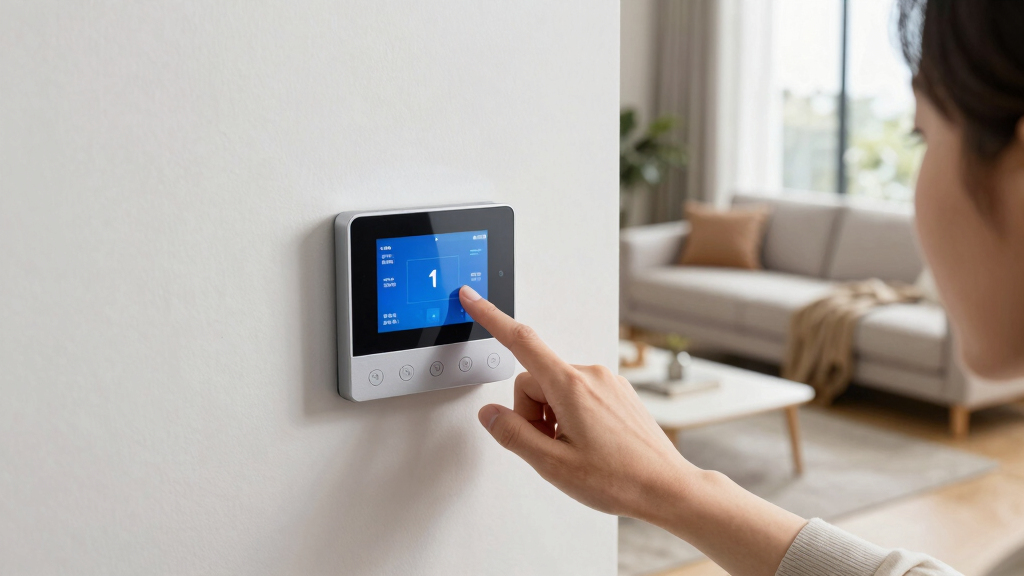

Choosing the best smart thermostat for a heat pump with sensors involves balancing compatibility, sensor integration, ease of use, and energy savings. The ecobee Smart Thermostat Premium stands out for its comprehensive sensor ecosystem and air quality monitoring, making it ideal for detailed control. The Google Nest Learning Thermostat (4th Gen, 2024) offers sophisticated learning capabilities and seamless sensor integration, perfect for those seeking automation. Meanwhile, models like the Sensi Touch 2 deliver straightforward installation and excellent value. The main tradeoffs often involve complexity versus simplicity, and upfront cost versus long-term savings. Continue reading for a detailed breakdown of these options and how to pick the right one for your needs.
Key Takeaways
- Sensor compatibility and placement are key to maximizing heat pump efficiency.
- Higher-priced models often bring advanced automation, better build quality, and broader integrations.
- Ease of installation varies; DIY-friendly options tend to be more affordable but may lack advanced features.
- Energy savings depend heavily on scheduling and sensor accuracy, making this a critical consideration.
- Premium options often include air quality monitoring and additional sensors, but may be overkill for simple setups.




More Details on Our Top Picks
ecobee Smart Thermostat Premium with Smart Sensor and Air Quality Monitor – Programmable Wifi Thermostat – Works with Siri, Alexa, Google Assistant, Black
This option stands out for its comprehensive feature set, including a built-in air quality monitor, occupancy sensing radar, and seamless integration with multiple voice assistants like Siri, Alexa, and Google Assistant. Compared to the Nest Learning Thermostat, it offers more sensors and air quality monitoring, making it ideal for optimizing comfort in larger or multi-room spaces. The included SmartSensor helps eliminate hot and cold spots, and the device’s compatibility with most HVAC systems, including heat pumps, ensures broad usability. However, its setup can be slightly more complex due to the additional components, and the premium materials increase its cost. The large, vibrant display and intuitive app control make it suitable for tech-savvy homeowners seeking maximum control and smart features. Keep in mind, the smart security and radar occupancy features require a subscription for full functionality, which adds to ongoing costs.
Pros:- Includes a smart sensor for room-specific temperature control
- Built-in air quality monitor with helpful alerts
- Seamless voice control with Siri, Alexa, and Google Assistant
- Large, cinematic display for easy reading
Cons:- Higher price point compared to simpler models like the Sensi Lite
- Requires a subscription for full security and occupancy sensing features
- Setup can be more complex, especially for C-wireless homes
Best for: Homeowners who want a premium, feature-rich thermostat with air quality monitoring and occupancy sensing.
Not ideal for: Casual users seeking a simple, no-fuss thermostat without extra sensors or air quality features.
- Controller Type:Wi-Fi, SmartSensor, Radar occupancy
- Additional Features:Air quality monitor, Live Doorbell View, Occupancy sensing
- Compatibility:Most 24VAC HVAC systems, heat pumps, boilers
- Display Type:Vibrant LCD
- Control Method:App, Voice
- Power Source:C-wire or Power Extender Kit included
Bottom line: Perfect for tech enthusiasts wanting a versatile, high-end thermostat that manages comfort and air quality in multiple rooms.
Google Nest Learning Thermostat (4th Gen, 2024) with Nest Temperature Sensor – Energy Saving Smart Thermostat – Compatible with Alexa, Apple HomeKit and Google Home App – Polished Gold
This pick makes the most sense for users who prefer a thermostat that learns your schedule over time, similar to the Nest Learning Thermostat, but with enhanced display size and intuitive usability. It’s notably better suited for those who want a sleek design and automatic adjustments based on outside weather, with the added benefit of using the Nest Temperature Sensor to fine-tune comfort in specific rooms. Compared to the ecobee Premium, this model emphasizes learning algorithms over additional sensors and air quality features, which might appeal to minimalists. Its compatibility with most 24V systems, including heat pumps, and no C-wire needed in many cases, makes installation straightforward. The main tradeoff is the lack of built-in air quality monitoring, and some users report occasional delays in learning new routines. It’s ideal for homeowners seeking a smart, automated system that reduces energy bills over time.
Pros:- Learns your schedule and adjusts automatically
- Larger, clearer display with Dynamic Farsight
- Works seamlessly with Google Home, Alexa, and Apple HomeKit
- Requires no C-wire in many installations
Cons:- Does not include built-in air quality sensors
- Relies heavily on learning algorithms, which may take time to optimize
- Subscription needed for some advanced features
Best for: People who want a smart, self-learning thermostat with a sleek design and energy-saving features.
Not ideal for: Homeowners seeking advanced air quality or occupancy radar features like ecobee offers.
- Controller Type:Wi-Fi, Learning algorithms
- Additional Features:Dynamic Farsight, Voice Assistant Compatibility
- Compatibility:Most 24V systems, heat pumps
- Display Type:Large, animated LCD
- Control Method:App, Voice
- Power Source:No C-wire needed in most cases
Bottom line: Best for users who want a smart, self-learning thermostat with a focus on simplicity and energy savings.
Honeywell Home X8S Smart Thermostat with Room Sensor, Video Doorbell Compatibility, IAQ Control, and Customizable Touchscreen Display, Black
This model excels for those who value integrated security, IAQ management, and a customizable touchscreen, making it ideal for tech-savvy users who want more than just temperature control. It’s a clear choice over simpler thermostats like the Sensi Lite for its compatibility with video doorbells such as Ring and First Alert, plus the ability to see and speak to visitors directly from the thermostat. The wireless Room Sensors help target comfort in specific zones, and the IAQ features support maintaining healthy indoor air quality, although additional HVAC accessories might be needed. The device’s sleek 5-inch display and customizable color schemes add to its appeal. On the downside, it requires a C-wire, and the extensive feature set can be overwhelming for users who want straightforward control. It’s most suitable for those wanting a comprehensive smart home ecosystem integration including video, IAQ, and occupancy features.
Pros:- Supports video doorbell intercoms and visitor view
- Wireless Room Sensors for zone-specific control
- Customizable touchscreen with color options
- Indoor air quality monitoring and control
Cons:- Requires a C-wire for installation
- Complex feature set may be overkill for basic needs
- Additional HVAC accessories may be necessary for full IAQ functionality
Best for: Smart home enthusiasts interested in security, IAQ, and room-specific comfort targeting.
Not ideal for: Homeowners seeking a simple, budget-friendly thermostat without extra integrations or sensors.
- Controller Type:Wi-Fi, Video Intercom, IAQ Control
- Additional Features:Video Doorbell Compatibility, Customizable Display
- Compatibility:Most 3H/2C systems, requires C-wire
- Display Type:5-inch Touchscreen
- Control Method:App, Touch
- Power Source:C-wire required
Bottom line: Ideal for homeowners wanting an integrated security, IAQ, and zone control system within a sleek touchscreen interface.
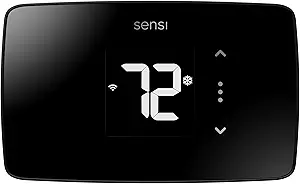
Sensi Lite Smart Thermostat, Programmable, WiFi, Easy DIY, Works With Alexa, ENERGY STAR Certified, ST25, Most Systems C-Wire Not Required, C-Wire needed with Heat/Cool Only & Heat Pump System – Black
This pick makes a compelling case for users who prioritize straightforward installation and value for money, especially with its detailed online setup guides and app-based control. It’s comparable to the ecobee Premium, but at a lower price point and with simpler features, making it well-suited for basic scheduling and remote control. The device’s compatibility with most HVAC systems, including heat pumps, and the optional C-wire support make installation accessible even for DIY enthusiasts. Its ENERGY STAR certification ensures energy savings, though it lacks the advanced sensors and air quality features found in higher-end options. The main tradeoff is the limited zone-specific control and absence of occupancy sensing, which may impact comfort in larger homes. Overall, it’s ideal for budget-conscious homeowners seeking reliable, easy-to-install smart control.
Pros:- Easy DIY installation with clear instructions
- Compatible with most HVAC systems, including heat pumps
- No C-wire needed for many systems
- Energy Star certified for efficiency
Cons:- Lacks advanced sensors and air quality monitoring
- Limited zone control without additional sensors
- No radar occupancy sensing or security features
Best for: Homeowners seeking a cost-effective, simple, DIY-friendly thermostat that covers basic scheduling and remote control.
Not ideal for: Users looking for zone-specific comfort, air quality monitoring, or advanced occupancy features.
- Controller Type:Wi-Fi, Programmable
- Additional Features:Energy Star, Easy DIY
- Compatibility:Most HVAC systems, heat pumps
- Display Type:LED
- Control Method:App, Voice
- Power Source:C-wire or no C-wire in many systems
Bottom line: Best for budget-minded homeowners wanting a straightforward, easy-to-install smart thermostat for basic control.
meross Smart Thermostat for Home, WiFi Thermostat Works with Matter, Alexa, Apple Home, Google Assistant, App & Voice Control, 7x24h Scheduling, Energy Saving, C-Wire Required
This model is tailored for homeowners who want broad smart home compatibility, including Matter, and robust scheduling features. It’s a step up from basic models like the Sensi Lite by offering extensive voice and app control, along with real-time energy usage tracking. Built to work with a variety of HVAC systems, including heat pumps, and requiring a C-wire for most setups, it suits those who want a reliable, integrated control hub. Compared to ecobee or Honeywell premium models, it lacks advanced IAQ or security features but compensates with seamless ecosystem integration via Matter, Alexa, Google, and Apple Home. Its straightforward installation and customizable weekly schedules make it ideal for users wanting flexible, ecosystem-wide smart control. The main tradeoff is its limited sensor and air quality features, which are more typical of budget options.
Pros:- Supports Matter for broad smart home compatibility
- Extensive scheduling options with 7x24h control
- Works with Alexa, Google, Apple Home, and SmartThings
- Reliable app and voice control
Cons:- C-wire required for most HVAC systems
- Limited sensors and IAQ features
- Basic display, lacks advanced visual customization
Best for: Homeowners wanting a versatile, ecosystem-compatible thermostat with flexible scheduling and remote app control.
Not ideal for: Those seeking advanced air quality monitoring, occupancy radar, or integrated security functions.
- Controller Type:Wi-Fi, Matter, Voice
- Additional Features:7x24h Scheduling, Energy Saving
- Compatibility:Most 24V systems, heat pumps, requires C-wire
- Display Type:LED
- Control Method:App, Voice
- Power Source:C-wire required
Bottom line: Ideal for users who want a flexible, ecosystem-integrated thermostat with detailed scheduling capabilities.
Honeywell Home T9 WIFI Smart Thermostat, Smart Room Sensor Ready, Touchscreen Display, Alexa and Google Assist
This Honeywell T9 stands out for its ability to add multiple smart room sensors, allowing precise temperature control across different zones, which makes it more adaptable than the Google Nest (4th gen) that primarily relies on a single sensor. Compared to the ecobee Smart Thermostat Enhanced, the T9 offers a more straightforward setup, especially with its compatibility with most heat/cool systems and its C-wire requirement that’s easier to verify before purchase. While the large touchscreen makes it user-friendly, the need for separate sensors and the absence of advanced learning features mean it’s better suited for households prioritizing zone control over intelligent scheduling. However, it does not work with electric baseboard heat and might require a C-wire, which can be a hassle for some installations. This model makes the most sense for users wanting simple multi-room focus and utility rewards integration, but those seeking deep learning or advanced IAQ features should consider ecobee or Nest options.
Pros:- Supports multiple smart room sensors for zone-specific comfort
- Large, intuitive touchscreen display
- Easy DIY setup with included power adapter
Cons:- Requires separate purchase of sensors (sold separately)
- No advanced learning or AI-driven scheduling
- Limited compatibility with electric baseboard heating
Best for: Homeowners who want to focus on comfort in multiple rooms and prefer a touchscreen interface with sensor expandability.
Not ideal for: Users who desire a fully autonomous learning thermostat or those with electric baseboard heating, which it does not support.
- Controller Type:Touchscreen
- Works With:Alexa, Google Assistant
- Power Source:C-wire required
- Display Type:Touchscreen
- Additional Features:Auto Home/Away, Sensor Ready
- System Compatibility:Most heat/cool systems
Bottom line: Best for households needing customizable multi-room temperature control with straightforward installation.
Google Nest Learning Thermostat (4th gen) + Nest Temperature Sensor (2nd gen) – Obsidian
This Nest Learning Thermostat excels at adapting to your routines, helping you save up to 31% on bills by learning your preferences over time, which makes it a superior choice for those who want a truly smart, self-adjusting device. Unlike the Honeywell T9, which relies on manual sensor placement, the Nest’s dynamic Farsight and larger display improve visibility from across the room, while its ability to operate without a C-wire in most cases simplifies installation. However, it lacks the multi-zone control that the Honeywell supports through separate sensors, making it less ideal for larger homes with distinct comfort zones. Additionally, its learning AI is more advanced than the ecobee Enhanced, but some users may find the absence of detailed energy reports a drawback. This pick makes the most sense for users seeking a sleek, self-learning thermostat that integrates effortlessly with Google or Apple smart home systems, but those with complex zoning needs should consider other options.
Pros:- Learns your schedule for automatic adjustments
- Large, bright display with Farsight technology
- No C-wire needed in most installations
Cons:- Limited multi-zone control without additional sensors
- Higher price point compared to basic models
- Less detailed energy usage reports
Best for: Consumers wanting a sleek, intelligent thermostat that adapts to their routines and integrates with Google or Apple ecosystems.
Not ideal for: Large households with multiple zones requiring dedicated room sensors, or users preferring manual control over automation.
- Controller Type:Learning, Touchscreen
- Works With:Google Assistant, Alexa, Apple HomeKit
- Power Source:No C-wire needed in most cases
- Display Size:60% larger display
- Additional Features:Farsight, Auto-Schedule
- System Compatibility:Most 24V systems, heat pump
Bottom line: Ideal for users seeking a self-learning thermostat with excellent smart home integration and sleek design.
Sensi Touch 2 Smart Thermostat with Touchscreen Color Display, 100 Years of Expertise, Programmable, Wi-Fi, Data Privacy, Easy DIY, Works with Alexa, Energy Star Certified, ST76W, C-Wire Required
This Sensi Touch 2 is praised for its straightforward installation process, reinforced by its long-standing reputation, making it an excellent choice for DIYers who want reliability. Compared with ecobee Enhanced, Sensi offers a more basic, yet highly functional, interface with the added benefit of compatibility with many HVAC systems due to its C-wire requirement. It supports room sensors, but unlike the Nest or ecobee, it lacks advanced learning features or occupancy sensing, which limits automation capabilities. The app provides detailed usage reports, but the lack of AI-driven scheduling means users must set their preferences manually. Its energy savings claims are supported by certification, but it might not be as flexible for homeowners seeking adaptive comfort features. This model suits users preferring proven reliability and simple setup without the need for complex automation.
Pros:- Proven brand with 100 years of expertise
- Easy DIY installation with guided app
- Supports multiple HVAC systems with C-wire
Cons:- Lacks advanced AI or occupancy sensing
- Limited zone control without room sensors
- Basic interface compared to ecobee or Nest
Best for: Homeowners seeking a dependable, easy-to-install thermostat with proven brand reliability and manual scheduling control.
Not ideal for: Tech-savvy users looking for AI-driven learning features or advanced occupancy sensing for automation.
- Controller Type:Touchscreen
- Works With:Alexa, Google Assistant
- Power Source:C-wire required
- Display Size:4.3 inches
- Additional Features:Auto Schedule, Data Reports
- System Compatibility:Most HVAC systems
Bottom line: Great for users wanting a reliable and simple thermostat with proven performance and easy DIY setup.
ecobee Smart Thermostat Enhanced – Programmable Wifi Thermostat – Works with Siri, Alexa, Google Assistant – Energy Star Certified – Smart Home
This ecobee Smart Thermostat Enhanced earns its place as the best for advanced features, with its ability to learn your preferences, monitor indoor humidity, and support multiple sensors, which surpasses the basic scheduling of the Honeywell T9 and the simple automation of the Honeywell or Sensi. Its built-in radar occupancy sensors preheat or precool your home, ensuring comfort upon arrival, but it does require a hardwired connection, similar to the Honeywell and Sensi models, making installation potentially more involved. Compared with the Nest, ecobee offers more detailed HVAC performance reports and better humidity management, but lacks the seamless self-learning AI of the Nest. The Power Extender Kit and compatibility with most systems make it flexible, though the higher price might be a consideration. This model is ideal for those who want a smart, feature-rich thermostat that optimizes comfort and energy efficiency with minimal manual input.
Pros:- Learns personal preferences and schedules
- Monitors humidity for better IAQ control
- Supports multiple sensors for zone-specific comfort
Cons:- Requires hardwired installation
- Higher cost compared to simpler models
- No circulation fan mode
Best for: Tech-savvy homeowners seeking a feature-rich, energy-efficient thermostat with comprehensive system monitoring.
Not ideal for: Users who prefer simple, plug-and-play solutions without needing advanced HVAC management or detailed reports.
- Controller Type:Programmable, Touchscreen
- Works With:Siri, Alexa, Google Assistant
- Power Source:Hardwired
- Display Size:4 inches
- Additional Features:Humidity Monitoring, AI Learning
- System Compatibility:Most HVAC including heat pump
Bottom line: Perfect for users who want a highly capable, intelligent thermostat that maximizes comfort and energy savings.
Honeywell Home Smart Thermostat, Conventional/Heat Pump Compatibility, WiFi Thermostat for Home, X2S, Gray
This Honeywell model stands out for its broad compatibility with both conventional and heat pump systems, making it a flexible choice for many homes. Compared with the Sensi Touch 2, it offers Matter certification, ensuring easier interoperability across smart home platforms, which is a major advantage. Its customizations—humidity, filter reminders, display settings—enhance comfort and maintenance, although the need for a C-wire may complicate installation in some older homes. The scheduled programming and auto-away features contribute to energy savings, but the setup process can be more complex than simpler models. Overall, this thermostat makes the most sense for homeowners seeking reliable smart features with extensive system support, willing to handle a slightly more involved installation.
Pros:- Matter Certified for broad smart home platform compatibility
- Supports both conventional and heat pump systems
- Custom humidity and filter reminders for maintenance
Cons:- Requires a C-wire, which may need an adapter in older homes
- Installation can be more complex and time-consuming
Best for: Homeowners with existing heat pump or conventional HVAC systems who want reliable, platform-agnostic control.
Not ideal for: Renters or those with incompatible wiring who prefer a straightforward, no-hassle installation.
- Compatibility:Conventional/heat pump systems
- Connectivity:WiFi + Matter certified
- Display:Customizable screen
- Control:Smartphone app, voice control
- Wiring:C-wire required
- Energy Saving:Scheduled programming, auto-away
Bottom line: This thermostat is ideal for users who want versatile system support and reliable smart home integration, accepting a more involved setup process.
Honeywell Home X8S Smart Thermostat with Room Sensor, Video Doorbell Compatibility, IAQ Control, and Customizable Touchscreen Display, White
This Honeywell model excels in delivering targeted comfort through its included wireless room sensors, allowing users to prioritize specific areas, which sets it apart from the Sensi Touch 2. Its sleek 5″ touchscreen display offers clarity and style, while IAQ controls enhance indoor air quality, though system compatibility is limited to certain heat pump configurations. The ability to see and speak to visitors via doorbell compatibility adds convenience, making it suitable for tech-savvy users. Compared to the Sensi Touch 2, it offers more room-specific control but requires additional sensors for full benefit, which could increase costs. This pick makes the most sense for those seeking precise comfort zoning and integrated smart home features in a flexible package.
Pros:- Includes wireless room sensor for zone-specific comfort
- Supports video doorbell intercom and IAQ control
- Customizable touchscreen with vibrant display
Cons:- Requires additional sensors for full zoning benefits
- Limited compatibility with some HVAC systems
- Higher overall cost with sensors and accessories
Best for: Homeowners wanting zone-specific temperature control and integrated smart home features including doorbell communication.
Not ideal for: Users with basic heating setups or who prefer simple, single-zone thermostats without additional sensors or features.
- Display:5-inch touchscreen
- Room Sensors:Wireless, up to 200ft range
- Compatibility:Up to 3 heat/2 cool heat pump systems
- Features:Video doorbell, IAQ control
- Connectivity:WiFi, app control
- Installation:Requires C-wire
Bottom line: Perfect for those who need precise room control and integrated home features, accepting added complexity and cost for zoning benefits.
Sensi Touch 2 Smart Thermostat with Touchscreen Color Display, 100 Years of Expertise, Programmable, Wi-Fi, Data Privacy, Easy DIY, Works with Alexa, Energy Star Certified, ST76, C-Wire Required
This Sensi Touch 2 stands out for its straightforward DIY setup, guided by an intuitive app, making it ideal for users who prefer a simple upgrade. Unlike the Honeywell X8S, it doesn’t support advanced room sensors but offers reliable programming and remote control, with a focus on data privacy. Its energy-saving features help reduce HVAC costs by about 23%, and the 100-year HVAC expertise backing it adds confidence in its durability. The model’s main tradeoff is the lack of zoning capabilities, which limits targeted comfort, but for basic home control, it’s a cost-effective, highly trustworthy option.
Pros:- Easy DIY installation with app guidance
- Reliable WiFi control and scheduling
- Strong privacy protection and data security
Cons:- No support for room sensors or zoning
- Limited advanced IAQ features
- Requires C-wire in some setups
Best for: Homeowners seeking an easy-to-install, privacy-focused smart thermostat with reliable remote control and energy savings.
Not ideal for: Those wanting multi-zone control or advanced IAQ and sensor integrations.
- Display:Color touchscreen
- Connectivity:WiFi + app control
- Compatibility:Most HVAC systems, C-wire required
- Energy Savings:Approximately 23%
- Privacy:Data protection prioritized
- Installation:DIY with app guidance
Bottom line: Ideal for users prioritizing simple, private, and reliable smart control without zoning or sensor complexities.
Sensi Smart Thermostat, 100 Years Of Expertise, Wi-Fi, Data Privacy, Programmable, Easy DIY Install, Works With Alexa, Energy Star Certified, Mobile App, ST55
The Sensi ST55 is well-suited for homes without a common wire, offering an easy DIY install with minimal fuss, especially for those who value data privacy. Its straightforward design, with physical buttons, makes it feel familiar compared to more touchscreen-heavy models like the Honeywell X8S. While it doesn’t include advanced zoning or IAQ controls, it provides reliable scheduling and remote access, helping users achieve about 23% energy savings. Its main tradeoff is the limited feature set compared to higher-end thermostats, but for basic comfort and privacy, it’s a solid choice.
Pros:- No C-wire required in most cases
- Simple installation with physical controls
- Strong privacy protections and app control
Cons:- Limited zoning and IAQ features
- Basic display and control options
- Fewer customization options than more advanced models
Best for: Homeowners with no C-wire, seeking privacy, and straightforward scheduling without complex features.
Not ideal for: Those wanting advanced IAQ controls or multi-zone temperature management.
- Connectivity:WiFi + mobile app
- Compatibility:Most HVAC systems, no C-wire needed
- Display:Physical buttons
- Energy Savings:About 23%
- Control:Remote via app, voice compatible
- Installation:DIY, no C-wire required
Bottom line: Best suited for users who need a simple, privacy-focused thermostat compatible with most homes without C-wire wiring.
How We Picked
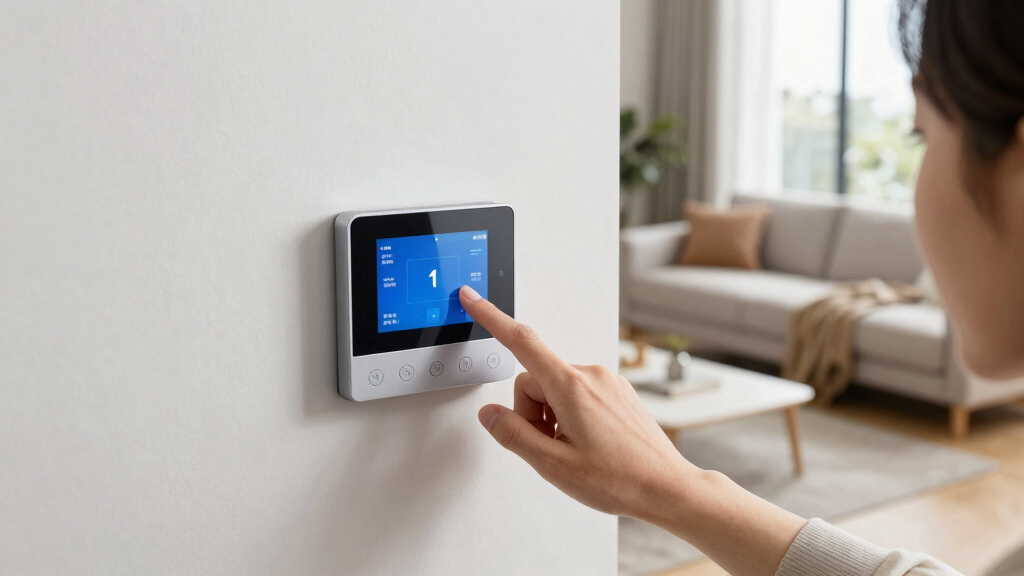
These thermostats were evaluated based on their compatibility with heat pumps, especially those relying on sensors for zone control. We prioritized products with proven sensor integration, intuitive user interfaces, and reliable connectivity. Build quality, ease of installation, and smart features like automation and voice control also influenced rankings. Price was considered relative to features, ensuring options suitable for different budgets. Ultimately, the products are ordered to reflect overall performance, value, and suitability for heat pump systems with sensors, from most comprehensive to more straightforward, budget-friendly choices.Factors to Consider When Choosing Best Smart Thermostat For Heat Pump With Sensors
When choosing the best smart thermostat for a heat pump with sensors, it’s vital to consider how well the device interacts with sensors, its compatibility with your existing system, and ease of use. Additional factors like energy savings, automation features, and integration with smart home systems can significantly influence your comfort and utility bills. Being aware of common pitfalls, such as insufficient sensor placement or overly complex setups, can help you avoid costly mistakes. This guide highlights key considerations to help you make an informed decision that balances features with your home’s specific needs.Sensor Compatibility and Placement
For heat pumps, sensors are essential for zone control and energy efficiency. Ensure the thermostat supports multiple sensors and that these sensors can be placed in strategic locations to accurately reflect room conditions. Poor sensor placement can lead to uneven heating or cooling, reducing comfort and increasing energy costs. Choose a thermostat that offers flexible sensor integration and easy setup. Models with wireless or smart sensors generally provide more versatility and better coverage, especially in larger or multi-zone homes.
System Compatibility and Ease of Installation
Verify your heat pump’s specifications and confirm the thermostat’s compatibility before purchasing. Some thermostats require a C-wire, while others can work without it, but this may affect setup complexity. DIY installation is appealing, but it’s critical to understand your system’s wiring and requirements. Selecting a model with clear setup instructions or remote support can save time and frustration. Compatibility with your voice assistants and smart home ecosystem is also worth considering for seamless integration.
Automation, Scheduling, and Learning Capabilities
Effective automation features can reduce energy waste and increase comfort. Thermostats with learning capabilities adapt to your routines, which is especially useful for heat pumps that depend on precise control. Look for models that support detailed scheduling and can adjust based on sensor data. However, more complex automation might require a learning curve; assess whether you prefer a plug-and-play device or one with customizable options.
Energy Savings and Monitoring
Energy efficiency is a key reason for upgrading to a smart thermostat. Features like detailed energy reports, remote adjustments, and adaptive scheduling help optimize usage. Sensors can improve accuracy, but only if they’re properly calibrated and placed. Keep in mind that higher upfront costs for advanced models can be offset by long-term savings, especially if the device effectively reduces your heating and cooling bills. Be wary of models that promise savings without offering actionable insights.
Price, Value, and Additional Features
While premium thermostats offer extensive features like air quality monitoring and multiple sensors, budget models can still deliver core functionality with easy installation. Consider what features are truly necessary for your home, and avoid paying for extras you won’t use. Check for compatibility with your existing smart home devices to maximize value. Remember, a more expensive device isn’t always better if it exceeds your actual needs — balance features with affordability for the best overall value.
Frequently Asked Questions
Can I use a smart thermostat with my existing heat pump system?
Most modern smart thermostats are compatible with heat pumps, but it’s important to verify specific model compatibility with your system. Many thermostats require a C-wire connection for reliable operation, especially with heat pumps that have multiple stages. If your system lacks a C-wire, some models offer power-stealing capabilities or come with adapters. Checking the manufacturer’s compatibility list before purchase can prevent installation issues and ensure smooth operation.
Do sensors improve the efficiency of a heat pump?
Yes, sensors allow for zone-specific temperature control, which can significantly improve a heat pump’s efficiency by avoiding unnecessary heating or cooling in unoccupied rooms. Proper placement of sensors ensures more accurate readings, leading to better system responses and energy savings. However, ineffective placement or poor sensor quality may negate these benefits. Investing in a thermostat with reliable sensors and proper placement strategies is key to maximizing efficiency gains.
Is a learning thermostat worth the extra cost?
Learning thermostats can offer convenience and energy savings by automatically adapting to your routines. They are especially useful if you prefer minimal manual adjustments and want your system to optimize itself over time. On the other hand, they tend to be more expensive and may require a learning period. If you’re comfortable with manual control or have a straightforward schedule, a simpler model might provide better value without the added complexity.
How important is smart home integration for a heat pump thermostat?
Smart home integration enhances convenience, allowing you to control your heat pump remotely and automate it with other devices like voice assistants or security systems. If you already have a smart home ecosystem, choosing a compatible thermostat ensures seamless operation. For homes without existing smart systems, it’s less critical but can still add value through remote access and automation features. Compatibility and ease of integration should be checked before purchasing.
Should I prioritize a premium model or a budget option?
Deciding between premium and budget models depends on your specific needs and budget. Premium thermostats typically include advanced sensors, better build quality, and more automation options, which can lead to greater energy savings and convenience. Budget options, however, may cover the essential features required for basic control and sensor integration, making them suitable for simpler setups or tighter budgets. Consider your home’s size, your automation preferences, and long-term savings when making this choice.
Conclusion
For the most comprehensive control and smart features, the ecobee Smart Thermostat Premium is ideal for tech-savvy homeowners seeking detailed sensor integration and air quality monitoring. The Google Nest Learning Thermostat (4th Gen) strikes a balance of automation and simplicity, perfect for those who want a learning system without fuss. Budget-conscious buyers will find the Sensi Touch 2 provides reliable features at an affordable price. Beginners and those with straightforward heat pump setups should prioritize models with easy installation and basic sensor support. Ultimately, your choice should align with your system complexity, automation needs, and budget constraints.