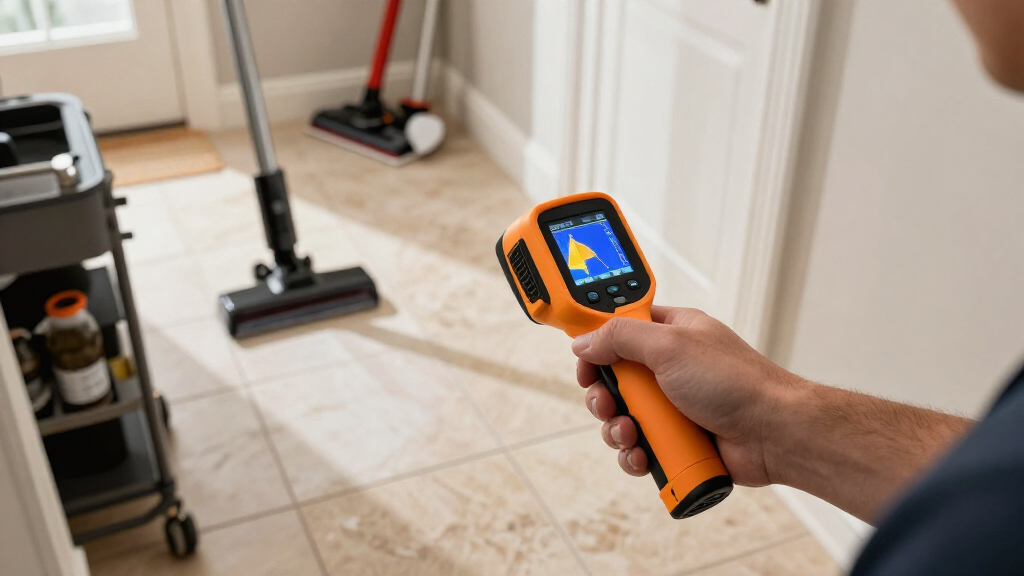
The best thermal imaging camera overall in this lineup is the Thermal Master Thor002, whose 512 × 384 resolution makes it a strong fit for users who need to distinguish finer thermal details. For professional reporting, the FLIR E6 Pro stands out for its Ignite cloud workflow, while the FLIR C5 offers a compact option with Wi-Fi and MSX image detail. The main tradeoffs are resolution, image-enhancement tools, portability, and whether you need a dedicated handheld device or a specialized camera for a phone or boat. A higher resolution can reveal smaller patterns, but it does not replace sound inspection technique or appropriate temperature range and accuracy for the job. Continue reading for the full breakdown and help matching a camera to your work.

Get cleaning gear delivered free with Prime
- Fast, free delivery on millions of items
- Prime Video, Amazon Music and more included
- Member-only deals all year
Complete the kit


Key Takeaways
- Resolution separates the detail-focused options. The Thermal Master Thor002 lists 512 × 384 native resolution, while the HSFTOOLS P2W advertises 640 × 480 Super Resolution; those figures describe different approaches and should not be treated as directly equivalent.
- Professional workflow is its own buying priority. The FLIR E6 Pro adds Ignite cloud features, while the FLIR E6-XT and C5 bring Wi-Fi to distinct commercial and compact formats.
- Visual context can matter as much as pixel count. Models such as the HSFTOOLS F2VW and HF96V combine thermal and visual imaging, while FLIR MSX adds visual detail to the C5’s thermal presentation.
- Some cameras solve narrow problems rather than general inspection. The FLIR M232 is a marine pan-tilt camera, and the FLIR Edge is designed to work with a smartphone, so neither is a direct substitute for a standard handheld.
- Entry-level convenience involves tradeoffs. The TOPDON TC004 Mini, FOXWELL HT280, and Klein Tools TI250 offer more approachable handheld formats, but buyers should compare their display, workflow, and measurement needs against higher-detail or more connected models.
| Klein Tools TI250 Rechargeable Thermal Imaging Camera |  | Best for Straightforward Troubleshooting | Thermal resolution: Over 19,200 pixels | Temperature range: -4 to 752°F (-20 to 400°C) | Emissivity range: 0.01 to 0.99 | VIEW LATEST PRICE | See Our Full Breakdown |
| FLIR C5 Compact Thermal Imaging Camera with Wi-Fi and MSX |  | Best for Visual Documentation | Thermal resolution: 160 × 120 pixels (19,200 pixels) | Temperature range: -20 to 400°C (-4 to 752°F) | Image modes: Infrared, visual, MSX, picture-in-picture | VIEW LATEST PRICE | See Our Full Breakdown |
| Flagfront YXI96 Handheld Thermal Camera, 240 × 240 Resolution |  | Best for Rugged, High-Heat Scanning | Thermal resolution: 240 × 240 | Refresh rate: 25 Hz | Temperature range: -4 to 1,022°F | VIEW LATEST PRICE | See Our Full Breakdown |
| Thermal Master Thor002 Handheld Thermal Camera, 512 × 384 Resolution |  | Best for Detailed Field Inspections | Thermal resolution: 512 × 384 | Thermal sensitivity: 40mK | Refresh rate: 25Hz | VIEW LATEST PRICE | See Our Full Breakdown |
| AccuMEMS TT27D Dual-Lens Wi-Fi Thermal Camera |  | Best Compact Feature Set | Thermal resolution: 640 × 480, AI-upscaled | Visual camera: 2 MP | Frame rate: 25 Hz | VIEW LATEST PRICE | See Our Full Breakdown |
| HSFTOOLS F2VW Thermal Camera with Visual Camera |  | Best for Detailed Inspection Workflows | Native infrared resolution: 256 × 192 | Enhanced imaging resolution: 640 × 480, AI-enhanced | Visual camera: 2 MP | VIEW LATEST PRICE | See Our Full Breakdown |
| HSFTOOLS HF96V Thermal Camera with Visual Camera and Laser Pointer |  | Best for Rugged, Long-Shift Inspections | Thermal resolution: 96 × 96; enhanced to 240 × 240 with super resolution | Visible camera resolution: 640 × 480 | Temperature range: -4°F to 1022°F | VIEW LATEST PRICE | See Our Full Breakdown |
| FLIR E6-XT Commercial Thermal Imaging Camera with Wi-Fi |  | Best for Commercial Building Diagnostics | Thermal resolution: 240 × 180 pixels | Temperature range: -20°C to 550°C (-4°F to 1022°F) | Image technology: MSX | VIEW LATEST PRICE | See Our Full Breakdown |
| FLIR M232 Pan-Tilt Marine Thermal Camera, 320 × 240, 9 Hz |  | Best Marine-Mounted Thermal Camera | Resolution: 320 × 240 | Video refresh rate: 9 Hz | Pan and tilt: 360° continuous pan; +110° to −90° tilt | VIEW LATEST PRICE | See Our Full Breakdown |
| TOPDON TC004 Mini Thermal Imaging Camera |  | Best Compact Camera for Routine Checks | Thermal resolution: 128 × 128; enhanced to 240 × 240 with TISR | Field of view: 40° × 30° | Refresh rate: 25 Hz | VIEW LATEST PRICE | See Our Full Breakdown |
| HSFTOOLS P2W Wi-Fi Thermal Camera with 640 × 480 Super Resolution |  | Best for Connected, Image-Rich Inspections | Thermal detector: 256 × 192 | Super-resolution output: 640 × 480 | Visual camera: 8 MP | VIEW LATEST PRICE | See Our Full Breakdown |
| AccuMEMS GT14S Thermal Imaging Camera with Thermometer Mode |  | Best for Long-Runtime Temperature Checks | Temperature range: -4°F to 1022°F | Thermal sensitivity: NETD < 50 mK | Temperature resolution: 0.05°C | VIEW LATEST PRICE | See Our Full Breakdown |
| FLIR E6 Pro Thermal Imaging Camera with Wi-Fi and Ignite Cloud |  | Best for Professional FLIR Workflows | Infrared resolution: 240 × 180 | Frame rate: 9 Hz or less | Display: 3-inch LCD | VIEW LATEST PRICE | See Our Full Breakdown |
| FLIR Edge Wireless Thermal Imaging Camera for Smartphones |  | Best Compact Smartphone Add-On | Native infrared resolution: 80 × 60 | Enhanced resolution: 240 × 180 | Connectivity: Bluetooth | VIEW LATEST PRICE | See Our Full Breakdown |
| FOXWELL HT280 Thermal Imaging Camera with 2.8-Inch LCD |  | Best for Long Inspection Sessions | Display: 2.8-inch, 320 × 240 LCD | Enhanced thermal image resolution: Up to 260 × 260 with TISR | Thermal sensitivity: 50 mK | VIEW LATEST PRICE | See Our Full Breakdown |
| thermal imaging camera | Temperature range | Weight | Thermal resolution |
|---|---|---|---|
| Klein Tools TI250 Rechargeable | -4 to 752°F (-20 to 400°C) | 8.6 ounces | Over 19,200 pixels |
| FLIR C5 Compact Thermal Imagin | -20 to 400°C (-4 to 752°F) | 190 g | 160 × 120 pixels (19,200 pixels) |
| Flagfront YXI96 Handheld Therm | -4 to 1,022°F | — | 240 × 240 |
| Thermal Master Thor002 Handhel | -4 to 1,022°F | 3.12 pounds | 512 × 384 |
| AccuMEMS TT27D Dual-Lens Wi-Fi | -4 to 932°F | 8 ounces | 640 × 480, AI-upscaled |
| HSFTOOLS F2VW Thermal Camera w | -4°F to 1022°F | — | — |
| HSFTOOLS HF96V Thermal Camera | -4°F to 1022°F | — | 96 × 96; enhanced to 240 × 240 with super resolution |
| FLIR E6-XT Commercial Thermal | -20°C to 550°C (-4°F to 1022°F) | 1.27 pounds | 240 × 180 pixels |
| FLIR M232 Pan-Tilt Marine Ther | — | 3.8 kg | — |
| TOPDON TC004 Mini Thermal Imag | -4°F to 842°F (-20°C to 450°C) | 1.03 pounds | 128 × 128; enhanced to 240 × 240 with TISR |
| HSFTOOLS P2W Wi-Fi Thermal Cam | -4°F to 752°F | — | — |
| AccuMEMS GT14S Thermal Imaging | -4°F to 1022°F | 240 g | — |
| FLIR E6 Pro Thermal Imaging Ca | — | 1.3 pounds | — |
| FLIR Edge Wireless Thermal Ima | — | 5.28 ounces | — |
| FOXWELL HT280 Thermal Imaging | -10°C to 500°C (14°F to 932°F) | — | — |
More Details on Our Top Picks
Klein Tools TI250 Rechargeable Thermal Imaging Camera
The Klein Tools TI250 is a practical choice for electricians, maintenance staff, and homeowners who need to spot temperature differences without a complicated setup. Its over 19,200 pixels, adjustable emissivity, crosshairs, and temperature alarms support routine checks across different surfaces, while USB-C image transfer makes it easier to save findings. Compared with the FLIR C5, it skips Wi-Fi, visual imaging, and MSX overlays, so interpreting a thermal scene may take more care; in return, its controls and feature set stay focused on measurement. The non-removable battery is a real limitation for long days away from charging, and its temperature range tops out at 752°F. I’d choose it for basic building and equipment inspections, not for visual documentation-heavy work or very high-heat applications.
Pros:- Over 19,200 pixels help distinguish hot and cold areas during routine checks.
- Adjustable emissivity supports readings from different surface materials.
- Temperature alarms and crosshairs help locate and monitor specific points.
- USB-C transfer, included case, and compact 8.6-ounce body support portable inspections.
Cons:- The built-in battery is non-removable, limiting quick power swaps in the field.
- Its maximum temperature reading is 752°F, below the 1,022°F range listed for the Flagfront YXI96 and Thermal Master Thor002.
- It lacks the visual camera and MSX image modes found on the FLIR C5.
Best for: Electricians, home inspectors, and maintenance workers who want adjustable thermal readings and simple USB-C file transfer for routine troubleshooting.
Not ideal for: Inspectors who need Wi-Fi reporting, a visible-light camera, or a replaceable battery for extended field work.
- Thermal resolution:Over 19,200 pixels
- Temperature range:-4 to 752°F (-20 to 400°C)
- Emissivity range:0.01 to 0.99
- Color palettes:3
- Image transfer:USB-C
- Memory:32GB
- Battery:Built-in rechargeable, non-removable
- Weight:8.6 ounces
Our verdict“Choose the TI250 for portable, measurement-focused troubleshooting, but pick the FLIR C5 if visual context and wireless reporting matter more.”
FLIR C5 Compact Thermal Imaging Camera with Wi-Fi and MSX
The FLIR C5 makes thermal findings easier to interpret and share, pairing a 160 × 120 thermal sensor with a 5 MP visual camera, MSX detail enhancement, and picture-in-picture mode. That combination helps identify where a temperature anomaly sits in a room or on a piece of equipment, rather than leaving the viewer with a thermal image alone. Its Wi-Fi and FLIR Ignite workflow also suits inspectors who prepare reports or send evidence to clients. Compared with the Klein TI250, the C5 offers more visual context and wireless sharing, but the Klein provides adjustable emissivity and a simpler measurement-first approach. The C5’s fixed focus limits flexibility, especially for close subjects, and its macro range starts at 0.3 m. I’d favor it for documentation, not for users who need close-up focusing control.
Pros:- MSX overlays visual details on thermal images to make faults easier to locate.
- Wi-Fi and FLIR Ignite support image uploads, reporting, and sharing.
- Infrared, visual, MSX, and picture-in-picture modes provide flexible documentation.
- Compact 190 g design includes a 5 MP visual camera and waterproof construction.
Cons:- Fixed focus limits control over sharpness at different working distances.
- Macro focus begins at 0.3 m, restricting close-up inspection.
- Unlike the Thermal Master Thor002, it does not list video recording or a 1,022°F upper temperature limit.
Best for: Building inspectors, HVAC technicians, and contractors who need thermal images with visual context and a straightforward path to share reports.
Not ideal for: Users who frequently inspect very close objects or want adjustable focus and emissivity controls.
- Thermal resolution:160 × 120 pixels (19,200 pixels)
- Temperature range:-20 to 400°C (-4 to 752°F)
- Image modes:Infrared, visual, MSX, picture-in-picture
- Visual still resolution:5 MP
- Video resolution:1080p
- Display:3.5-inch LCD
- Connectivity:Wi-Fi
- Weight:190 g
Our verdict“Pick the C5 when visual context and shareable reports matter more than close-focus flexibility or a higher temperature ceiling.”
Flagfront YXI96 Handheld Thermal Camera, 240 × 240 Resolution
The Flagfront YXI96 stands apart from the Klein TI250 and FLIR C5 with a stated 240 × 240 resolution, a wider 1,022°F upper temperature limit, and a 50° field of view. That mix suits broader scans of equipment and surfaces where a conventional 752°F ceiling may fall short. Its IP54 protection and 6.6-foot drop resistance also make it a more field-oriented pick than the compact, documentation-focused C5. High- and low-temperature alarms, adjustable distance and emissivity, and six stated palettes add useful inspection controls. The product data names only five of those six palettes, so the palette list is unclear, and the stated accuracy of within 2% needs context about measurement conditions. I’d shortlist it for rougher indoor or outdoor work, but not for buyers who need polished wireless reporting.
Pros:- 240 × 240 resolution gives it more stated thermal pixels than the Klein TI250 and FLIR C5.
- Temperature range reaches 1,022°F for hotter inspection targets.
- IP54 protection and stated 6.6-foot drop resistance suit demanding field conditions.
- High- and low-temperature alarms, adjustable emissivity, and a 50° field of view aid scanning.
Cons:- The listed palette names account for only five of the six stated options.
- No Wi-Fi or image-transfer method is specified in the provided product data.
- The accuracy claim is stated as within 2% without further measurement conditions.
Best for: Tradespeople and maintenance crews scanning equipment or building systems in dusty, damp, or high-temperature work areas.
Not ideal for: Inspectors who need Wi-Fi file sharing, detailed visual-light overlays, or clearly documented palette options.
- Thermal resolution:240 × 240
- Refresh rate:25 Hz
- Temperature range:-4 to 1,022°F
- Temperature accuracy:Within 2%
- Field of view:50°
- Color palettes:Six stated; five palette names listed
- Protection:IP54 dust and water resistance
- Drop resistance:Up to 6.6 feet
Our verdict“Choose the YXI96 for rugged scanning and a higher temperature ceiling, but look to the FLIR C5 for stronger image-sharing tools.”
Thermal Master Thor002 Handheld Thermal Camera, 512 × 384 Resolution
The Thermal Master Thor002 is the strongest fit here for buyers who want a higher-resolution thermal image and recording tools in a field-ready handheld unit. Its 512 × 384 sensor and 40mK sensitivity offer substantially more image detail than the 240 × 240 Flagfront YXI96, which can help separate nearby temperature patterns. A 2MP visible camera, six measurement points, photo and video recording, and USB or Wi-Fi transfer round out a useful inspection workflow. The 5,000mAh battery is listed for up to 10.5 hours, while IP54 protection and 2-meter drop resistance add field durability. The tradeoff is bulk: at 3.12 pounds, it is far heavier than the 8-ounce AccuMEMS TT27D. Its ±3.6°F accuracy also calls for care when precise readings matter.
Pros:- 512 × 384 thermal resolution and 40mK sensitivity provide more image detail than the Flagfront YXI96.
- Six measurement points support comparisons across several areas of a scene.
- USB and Wi-Fi transfer, plus photo and video recording, aid documentation.
- IP54 protection, 2-meter drop resistance, and up to 10.5 hours of listed battery life suit field use.
Cons:- At 3.12 pounds, it is considerably heavier than the AccuMEMS TT27D and may tire users during extended handheld scans.
- Temperature accuracy is specified as ±3.6°F.
- Its larger body is less convenient for pocket carry than the FLIR C5.
Best for: Building and equipment inspectors who need detailed thermal images, multiple measurement points, and photo or video records during longer field visits.
Not ideal for: Users who prioritize a lightweight pocketable camera or need a stated accuracy tighter than ±3.6°F.
- Thermal resolution:512 × 384
- Thermal sensitivity:40mK
- Refresh rate:25Hz
- Temperature range:-4 to 1,022°F
- Temperature accuracy:±3.6°F
- Display:3.5-inch, 640 × 480 IPS
- Battery:5,000mAh lithium-ion; up to 10.5 hours
- Connectivity:USB, Wi-Fi
- Weight:3.12 pounds
Our verdict“Choose the Thor002 when thermal detail and recording matter more than low weight and easy pocket carry.”
AccuMEMS TT27D Dual-Lens Wi-Fi Thermal Camera
The AccuMEMS TT27D packs a broad set of inspection features into an 8-ounce body: a 2MP visual camera, touchscreen, LED light, Wi-Fi, and five viewing modes. Its listed 640 × 480 thermal resolution is AI-upscaled, so buyers should not read that figure as native sensor resolution; the stated NETD below 40mK is another useful detail when comparing thermal sensitivity. Compared with the heavier Thermal Master Thor002, the TT27D is far easier to carry and adds nine palettes, while the Thor002 lists native 512 × 384 resolution and a longer stated battery runtime. The AccuMEMS also lists three-point measurement and alarms in its feature summary, but its specified accuracy is ±3.6°F. I’d favor it for portable, app-connected inspections, not buyers who require clearly stated native resolution.
Pros:- Compact 8-ounce design is much easier to carry than the 3.12-pound Thermal Master Thor002.
- Visual, Thermal, Fusion, PIP, and Blending modes combine thermal and visible context.
- Wi-Fi supports app-based streaming and remote control.
- Touchscreen, built-in LED light, nine palettes, and storage for over 5,500 files make field use more self-contained.
Cons:- The 640 × 480 thermal resolution is AI-upscaled, rather than specified as native sensor resolution.
- Temperature accuracy is listed as ±3.6°F.
- The 4GB storage figure and more-than-5,500-file capacity are provided without file-size details.
Best for: Mobile inspectors and technicians who want a lightweight camera with visual and thermal modes, Wi-Fi app features, and on-device controls.
Not ideal for: Buyers who need a clearly specified native thermal resolution or prioritize documented measurement accuracy over portability and features.
- Thermal resolution:640 × 480, AI-upscaled
- Visual camera:2 MP
- Frame rate:25 Hz
- NETD:<40 mK
- Temperature range:-4 to 932°F
- Temperature accuracy:±3.6°F
- Viewing modes:Visual, Thermal, Fusion, PIP, Blending
- Connectivity:Wi-Fi
- Weight:8 ounces
Our verdict“Pick the TT27D for a compact, feature-rich inspection camera, but choose the Thor002 if native thermal resolution and a stated long runtime matter more.”
HSFTOOLS F2VW Thermal Camera with Visual Camera
The F2VW is the strongest fit here for inspectors who want thermal readings and visible context in the same handheld tool. Its 256 × 192 native detector is a step up from the HF96V’s 96 × 96 sensor, while the 2 MP visual camera and four viewing modes help connect a heat pattern to the actual pipe, panel, or building surface. AI-assisted anomaly detection, temperature alarms, and Wi-Fi sharing add useful support for documenting follow-up work. The advertised 640 × 480 image is AI-enhanced, not the detector’s native resolution, so buyers should not treat it as equivalent to a higher-resolution sensor. At 2.07 pounds, it is also heavier than the HF96V and the compact TOPDON TC004 Mini. Choose it for richer inspection context, not the lightest carry or lab-grade measurement certainty.
Pros:- 256 × 192 native thermal resolution outpaces the HF96V’s 96 × 96 detector
- Visual camera and four image modes help identify the source of a heat pattern
- Wi-Fi, temperature alarms, and AI-assisted anomaly detection support inspection documentation
- ¼-inch tripod mount and built-in LED flashlight add practical setup and lighting options
Cons:- 640 × 480 imaging is AI-enhanced rather than native thermal resolution
- At 2.07 pounds, it is heavier than the HF96V and TOPDON TC004 Mini
- Specified accuracy of ±3.6°F or ±2% limits confidence in close-tolerance readings
Best for: Building inspectors and maintenance technicians who need thermal images paired with visible details and shareable inspection records
Not ideal for: Buyers who prioritize a lightweight camera or need greater native thermal resolution than 256 × 192
- Native infrared resolution:256 × 192
- Enhanced imaging resolution:640 × 480, AI-enhanced
- Visual camera:2 MP
- Display:3.2-inch LCD
- Temperature range:-4°F to 1022°F
- Thermal sensitivity:Below 40 mK
- Image modes:Visual, thermal, fusion, and picture-in-picture
- Connectivity and storage:Wi-Fi; 16 GB
Our verdict“Choose the F2VW if inspection context and image-sharing tools matter more than a lighter body or higher native detector resolution.”
HSFTOOLS HF96V Thermal Camera with Visual Camera and Laser Pointer
The HF96V makes more sense for field work where endurance and durability matter more than fine thermal detail. Its base detector is only 96 × 96, with super resolution enhancing images to 240 × 240; that puts it behind the F2VW’s native 256 × 192 sensor for distinguishing smaller heat patterns. In return, this model combines thermal and visible imaging with a laser pointer, automatic hot/cold/center tracking, and up to 11 hours of battery life. IP54 protection and a stated 6.6-foot drop-test rating suit routine job-site handling better than a delicate indoor-only tool. Image and video capture plus 4 GB storage cover basic records, though the F2VW offers more storage. This is a practical, tough-minded pick for broad troubleshooting, not detailed diagnostics where native resolution is the priority.
Pros:- Up to 11 hours of operation supports extended field shifts
- IP54 protection and a 6.6-foot drop-test rating suit job-site use
- Thermal and visible cameras, laser pointer, and automatic temperature tracking combine several inspection tools
- Stores images and video, with capacity stated as over 30,000 images or 14 hours of video
Cons:- 96 × 96 native thermal resolution is substantially lower than the F2VW’s 256 × 192
- 240 × 240 output relies on super resolution rather than a native detector at that resolution
- Specified temperature accuracy is ±3.6°F
Best for: Service technicians and contractors who need a durable handheld camera for long shifts, basic thermal surveys, and visible-light documentation
Not ideal for: Inspectors who need to resolve small hot spots or want a higher native thermal resolution than 96 × 96
- Thermal resolution:96 × 96; enhanced to 240 × 240 with super resolution
- Visible camera resolution:640 × 480
- Temperature range:-4°F to 1022°F
- Temperature accuracy:±3.6°F
- Thermal sensitivity:Below 50 mK
- Field of view:50°
- Battery life:Up to 11 hours
- Protection:IP54; 6.6-foot drop test
- Storage:4 GB
Our verdict“Pick the HF96V for long, rough field shifts and basic surveys, but choose the F2VW when finer native thermal detail matters more.”
FLIR E6-XT Commercial Thermal Imaging Camera with Wi-Fi
The FLIR E6-XT is the more focused choice for commercial troubleshooting: its 240 × 180 thermal resolution provides a defined image for locating patterns in building systems, and MSX adds visible edges that can make those patterns easier to identify. Compared with the HSFTOOLS HF96V, it offers a much higher stated thermal resolution without relying on a 96 × 96 base sensor, though it lacks the HF96V’s stated long battery runtime and drop protection. Wi-Fi and FLIR Ignite cloud connectivity help move images into a storage and sharing workflow, while the included hard case supports transport. The F2VW offers a visual camera and more viewing modes, so it may suit users who want broader on-device inspection features. The E6-XT’s plastic construction and rechargeable-battery dependence are practical tradeoffs for a straightforward commercial camera.
Pros:- 240 × 180 thermal resolution exceeds the HF96V’s 96 × 96 native detector
- MSX adds visible detail to thermal images for easier interpretation
- Wi-Fi and FLIR Ignite support image storage, editing, and sharing
- Includes a hard transport case and a multi-region charger
Cons:- Plastic construction may be less reassuring for frequent rough-site handling
- Rechargeable operation depends on keeping the battery charged
- Does not list the F2VW’s separate visual camera or four image modes
Best for: Building engineers and commercial maintenance teams who want a dedicated thermal camera with MSX image context and cloud-based file handling
Not ideal for: Buyers seeking a ruggedness rating, a stated long runtime, or a built-in visible camera with multiple combined display modes
- Thermal resolution:240 × 180 pixels
- Temperature range:-20°C to 550°C (-4°F to 1022°F)
- Image technology:MSX
- Connectivity:Wi-Fi and FLIR Ignite cloud connectivity
- Battery:Rechargeable lithium-ion
- Weight:1.27 pounds
- Dimensions:3.7 × 9.6 × 5.5 inches
- Warranty:2 years parts and labor; 10 years thermal detector
Our verdict“Choose the E6-XT for commercial inspections that benefit from 240 × 180 thermal images and FLIR’s connected workflow, rather than extra camera modes or ruggedness features.”
FLIR M232 Pan-Tilt Marine Thermal Camera, 320 × 240, 9 Hz
The FLIR M232 is not a handheld inspection camera; it earns its place for boaters who need a mounted thermal view after dark. Its 320 × 240 resolution, continuous 360° pan, and adjustable tilt let a compatible helm display scan around the vessel for people, obstacles, or other boats. That purpose separates it from the handheld E6-XT, which is built for close-up building diagnostics rather than navigation. H.264 IP video can integrate with compatible multifunction displays, and the IP67 rating suits exposure to marine conditions. The tradeoff is a fixed installation: this camera needs wired 12 V power and networked video, so it is not a portable option for home inspections. Its 9 Hz refresh rate is also a limitation for rapidly changing scenes, and buyers should verify display compatibility before choosing it.
Pros:- 320 × 240 resolution and 360° continuous pan support broad marine scanning
- Adjustable tilt helps direct the view toward useful areas around the vessel
- H.264 IP video can connect with compatible multifunction displays
- IP67 waterproof rating is suited to outdoor marine installation
Cons:- 9 Hz refresh rate may be limiting for fast-moving scenes
- Requires wired video integration and 12 V power rather than handheld operation
- At 3.8 kg, it is a substantial fixed-installation unit
Best for: Boat owners with compatible multifunction displays who need a mounted thermal camera for night-time situational awareness
Not ideal for: Home inspectors, handheld-tool buyers, or boaters who need wireless installation or a higher stated refresh rate
- Resolution:320 × 240
- Video refresh rate:9 Hz
- Pan and tilt:360° continuous pan; +110° to −90° tilt
- Zoom:2× digital
- Field of view:24° × 18°
- Video output:H.264 IP video
- Power:Corded electric; 12 V; 3 W
- Protection:IP67
- Weight:3.8 kg
Our verdict“Choose the M232 for a compatible boat display and mounted night vision; skip it if you need a portable camera for inspections.”
TOPDON TC004 Mini Thermal Imaging Camera
The TOPDON TC004 Mini stands out for buyers who want a portable camera that can stay close at hand. Its 1.03-pound body is lighter than the F2VW, and IP54 protection plus stated 2-meter drop resistance make it a sensible companion for routine checks around a home, workshop, or service vehicle. The 128 × 128 detector is enhanced to 240 × 240 with TISR, so it offers more native detail than the HF96V’s 96 × 96 sensor but less than the F2VW’s 256 × 192 detector. Preset temperature alerts can trigger photo capture, and storage holds up to 8,000 images. Its 15-hour stated runtime is a useful advantage over the HF96V’s 11 hours. Tradeoffs include a lower maximum temperature than several cameras here and no charging head in the package.
Pros:- Compact 1.03-pound design is easier to carry than the F2VW
- TISR enhances the 128 × 128 sensor output to 240 × 240
- Up to 15 hours of runtime exceeds the HF96V’s stated 11 hours
- IP54 protection, 2-meter drop resistance, and automatic photo capture support field use
Cons:- Enhanced 240 × 240 output does not change the native 128 × 128 sensor resolution
- Maximum temperature of 842°F is lower than the 1022°F range listed for the F2VW and HF96V
- Charging head is not included
Best for: Homeowners, electricians, and mobile maintenance workers who want a light, protected camera for routine temperature checks and photo records
Not ideal for: Commercial inspectors who need the F2VW’s higher native resolution, a visual camera, or temperature readings above 842°F
- Thermal resolution:128 × 128; enhanced to 240 × 240 with TISR
- Field of view:40° × 30°
- Refresh rate:25 Hz
- Temperature range:-4°F to 842°F (-20°C to 450°C)
- Temperature accuracy:±3.6°F or ±2%
- Storage:512 MB eMMC; up to 8,000 photos
- Battery life:Up to 15 hours
- Protection:IP54; drop resistance up to 2 meters
- Weight:1.03 pounds
Our verdict“Pick the TC004 Mini for portable routine checks and long runtime, but choose a higher-resolution camera for detailed inspection work.”
HSFTOOLS P2W Wi-Fi Thermal Camera with 640 × 480 Super Resolution
The P2W is a strong fit for inspectors who want thermal readings paired with visible scene context and easy file sharing. Its 256 × 192 thermal detector feeds a 640 × 480 super-resolution output, while the 8 MP visual camera supports five viewing modes, including fusion and picture-in-picture. That gives it more ways to document a finding than the simpler FOXWELL HT280, which emphasizes onboard storage and longer battery life instead. Wi-Fi, temperature tracking, configurable alerts, and analysis tools make the P2W better suited to organized inspection workflows than a basic spot-check camera. The tradeoff is that its 640 × 480 figure is processed output, not native detector resolution, and its up to four-hour battery life trails the FOXWELL’s eight hours. IP54 protection and drop testing add useful jobsite resilience, but do not remove the need to plan around charging.
Pros:- Five image modes combine thermal and visual context for documenting anomalies
- Wi-Fi supports sharing and connections to app and PC software
- Temperature tracking and configurable high/low alerts help flag unusual readings
- IP54 protection and a 6.6-foot drop test suit demanding inspection environments
Cons:- Four-hour maximum battery life may require recharging during extended inspection days
- 640 × 480 is super-resolution output from a 256 × 192 thermal detector
Best for: Home inspectors and maintenance technicians who want visual-thermal overlays, alerts, and wireless sharing in a single handheld camera
Not ideal for: Users who need long shifts between charges or require native 640 × 480 thermal detector resolution
- Thermal detector:256 × 192
- Super-resolution output:640 × 480
- Visual camera:8 MP
- Display:3.5-inch touchscreen
- Frame rate:25 Hz
- Temperature range:-4°F to 752°F
- Connectivity and storage:Wi-Fi; 16 GB eMMC
- Battery life:Up to 4 hours
- Protection:IP54; 6.6 ft drop tested
Our verdict“Choose the P2W if connected reporting and multiple thermal-visual views matter more than longer battery runtime or native high-resolution sensing.”
AccuMEMS GT14S Thermal Imaging Camera with Thermometer Mode
The GT14S makes the most sense for buyers who move between scanning a broad area and checking a specific temperature. Its 50° field of view helps cover more of a scene at once, while a separate thermometer mode, adjustable emissivity, and temperature alarms support targeted readings. The standout practical advantage is up to 14 hours of battery life, far beyond the four-hour ratings listed for the HSFTOOLS P2W and FLIR E6 Pro. That makes it appealing for lengthy rounds where charging access is limited. The compromises are a sparse resolution specification—the supplied data does not list a thermal detector resolution—and readings can depend on setting emissivity and distance appropriately for the material. Compared with the feature-rich P2W, it offers fewer documented image and connectivity tools; its strength is sustained, straightforward measuring rather than connected reporting.
Pros:- Thermal imaging and point-and-shoot thermometer modes serve different checking tasks
- Up to 14 hours of stated battery life supports long inspection rounds
- Lightweight 240 g body with a non-slip grip
- Adjustable emissivity, distance, and temperature alarms provide measurement controls
Cons:- Thermal detector resolution is not specified in the supplied product data
- Measurement accuracy can depend on correctly setting emissivity and distance
- The listed features do not include Wi-Fi or a visual camera for image documentation
Best for: Facilities staff and field technicians who need a lightweight thermal scanner for extended rounds and occasional point temperature checks
Not ideal for: Buyers who need a stated detector resolution, visual-thermal image modes, or wireless file-sharing features
- Temperature range:-4°F to 1022°F
- Thermal sensitivity:NETD < 50 mK
- Temperature resolution:0.05°C
- Field of view:50°
- Color palettes:7
- Weight:240 g
- Battery capacity:2500 mAh
- Battery life:Up to 14 hours
- Warranty:1 year
Our verdict“Pick the GT14S for long shifts and basic temperature checks, but choose a better-documented imaging model if resolution and image-sharing tools are priorities.”
FLIR E6 Pro Thermal Imaging Camera with Wi-Fi and Ignite Cloud
The E6 Pro is the lineup’s clearest fit for professionals who value FLIR’s image workflow and service coverage over a faster refresh rate or a newer resolution claim. Its 240 × 180 infrared resolution, focus-free operation, and radiometric JPEG support make it a practical handheld tool for recording and reviewing inspection findings. Wi-Fi and Ignite cloud connectivity give it a more established sharing path than the USB-only FOXWELL HT280, while its waterproof design adds reassurance for work in wet conditions. There are real limits: the stated frame rate is 9 Hz or less, fixed focus offers less flexibility than an adjustable-focus design, and 2× digital zoom does not add optical detail. Its four-hour battery life is also shorter than the AccuMEMS GT14S’s listed 14 hours. I would choose it for a FLIR-centered documentation workflow, not for fast-moving scenes or extended shifts.
Pros:- Wi-Fi and FLIR Ignite cloud connectivity support a connected documentation workflow
- Radiometric JPEG files preserve measurement information for later review
- Waterproof design is suited to wet inspection environments
- Includes a battery, media case, and USB supply/charger
Cons:- Frame rate is 9 Hz or less, limiting suitability for rapidly changing scenes
- Fixed focus provides less flexibility for varying inspection distances
- Four-hour battery life is shorter than the AccuMEMS GT14S listing
Best for: Building inspectors and service teams already using FLIR Ignite who need radiometric image files and a rugged handheld imager
Not ideal for: Technicians scanning fast-changing scenes, needing adjustable focus, or working long shifts without access to charging
- Infrared resolution:240 × 180
- Frame rate:9 Hz or less
- Display:3-inch LCD
- Focus:Focus-free, fixed focus
- Digital zoom:2×
- Battery life:4 hours
- Weight:1.3 pounds
- Water resistance:Waterproof
- Warranty:2 years parts and labor on camera; 10 years on detector
Our verdict“Choose the E6 Pro if FLIR cloud documentation and radiometric files matter more than high frame rate, adjustable focus, or long runtime.”
FLIR Edge Wireless Thermal Imaging Camera for Smartphones
The FLIR Edge is the most portable choice here for buyers who want thermal imaging without carrying a dedicated handheld camera. It pairs over Bluetooth with iOS and Android phones or tablets, and its wireless format can help reach around obstructions or into tight spaces. Vivid IR upscaling raises the displayed image to 240 × 180 from an 80 × 60 native sensor, while MSX enhancement adds visible detail to the thermal view. That makes it easier to interpret than a bare low-resolution image, but it does not match the P2W’s 256 × 192 detector or its dedicated touchscreen and visual camera modes. The Edge is also limited to two hours of battery life, and its accuracy statement applies only within specified unit and scene temperatures. I’d pick it for occasional, phone-based checks—not as a replacement for a longer-running inspection camera.
Pros:- Bluetooth connection works with compatible iOS and Android devices
- Compact 5.28-ounce design can reach into tight spaces and around corners
- Vivid IR upscaling and MSX enhancement add context to thermal images
- Designed to withstand drops from up to 2 meters
Cons:- Native infrared resolution is 80 × 60; 240 × 180 is enhanced output
- Two-hour battery life restricts longer inspection sessions
- Stated temperature accuracy depends on specified unit and scene temperature ranges
Best for: Homeowners and mobile technicians who want a pocketable thermal accessory that works with a compatible smartphone
Not ideal for: Inspectors who need long operating time, higher native thermal resolution, or readings outside the stated accuracy conditions
- Native infrared resolution:80 × 60
- Enhanced resolution:240 × 180
- Connectivity:Bluetooth
- Compatibility:iOS and Android devices
- Temperature accuracy:±3°C or ±5%
- Battery life:2 hours
- Weight:5.28 ounces
- Water resistance:Water resistant
- Warranty:2–10 thermal camera warranty
Our verdict“Choose the FLIR Edge for portable, phone-based spot checks, but favor the P2W or FOXWELL HT280 for longer dedicated-camera inspections.”
FOXWELL HT280 Thermal Imaging Camera with 2.8-Inch LCD
The HT280 is a practical choice for technicians who want a self-contained camera that can keep recording through a workday. Its 25 Hz frame rate supports smoother viewing than the FLIR E6 Pro’s listed 9 Hz-or-less rate, and the 50° × 50° field of view covers a useful area during building checks. TISR processing produces images up to 260 × 260 from the listed 320 × 240 LCD, while on-screen high, central, and low readings plus adjustable alerts help direct attention to temperature anomalies. Storage for over 20,000 images or videos and up to eight hours of battery life make it better suited to extended documentation than the P2W. The tradeoffs are USB-based transfer rather than the P2W’s Wi-Fi, Windows-only analysis software, and a tripod that must be supplied separately. Its enhanced image figure is processed output, not the detector resolution.
Pros:- 25 Hz frame rate supports smoother live inspection than the FLIR E6 Pro’s listed rate
- Up to eight hours of battery life supports longer inspection sessions
- Stores over 20,000 images or video recordings
- Adjustable alerts and high, central, and low readings help locate temperature anomalies
Cons:- Analysis software is not compatible with Mac
- Image transfer uses USB rather than the P2W’s Wi-Fi connection
- Tripod is compatible but not included
Best for: Building maintenance technicians who need a dedicated camera for extended rounds, plentiful local recording, and Windows-based analysis
Not ideal for: Mac users, buyers who need Wi-Fi sharing, or teams that require a tripod in the box
- Display:2.8-inch, 320 × 240 LCD
- Enhanced thermal image resolution:Up to 260 × 260 with TISR
- Thermal sensitivity:50 mK
- Frame rate:25 Hz
- Temperature range:-10°C to 500°C (14°F to 932°F)
- Temperature accuracy:±3.6°F or ±2%
- Field of view:50° × 50°
- Storage capacity:Over 20,000 images or video recordings
- Battery life:Up to 8 hours
Our verdict“Choose the HT280 for long, locally recorded inspections, but pick the P2W if wireless sharing and multiple visual-thermal modes matter more.”
How We Picked
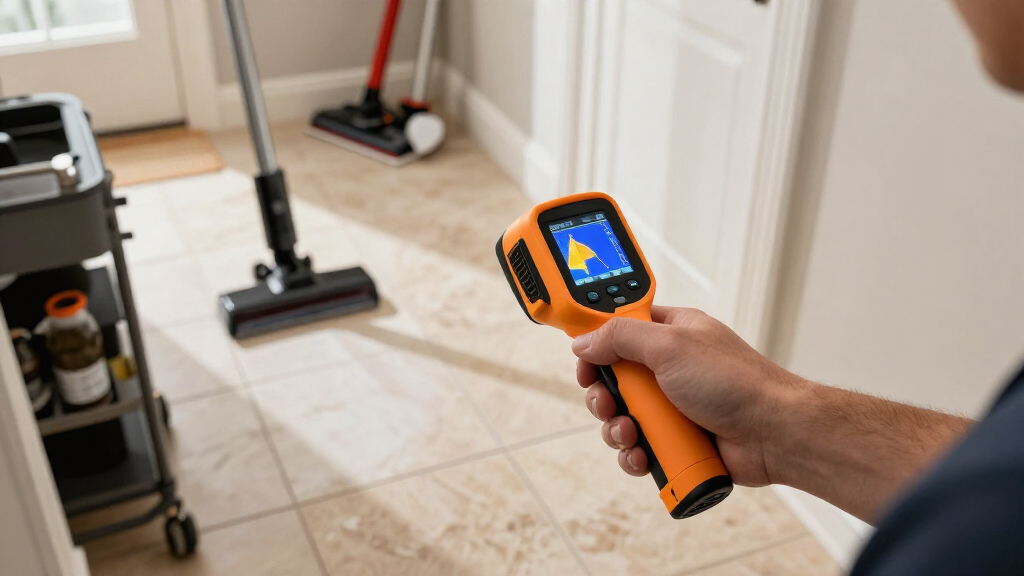
I organized these 15 cameras around the work a buyer needs to do: locating temperature differences, interpreting the scene, recording or sharing findings, and carrying the device on the job. I gave weight to stated thermal resolution, visual-camera or image-enhancement features, connectivity, display and handheld design, and specialization. A camera that combines useful detail with a practical workflow ranks ahead of one whose appeal depends on a narrow use case; a marine unit or smartphone accessory can still be the right choice, but only for buyers whose setup fits it.
The ranking also reflects limits in comparing unlike specifications. Native thermal resolution, advertised super-resolution output, image enhancement, and visual-camera overlays are not interchangeable measures, so I treated them as separate tools rather than assuming one number tells the whole story. Since the lineup includes several models with limited specification detail here, I avoid claiming unprovided accuracy, temperature range, battery life, or durability. Before choosing, buyers should verify those figures against the manufacturer documentation for their intended job.
Factors to Consider When Choosing Best Thermal Imaging Cameras
Choosing a thermal camera is less about finding the biggest specification and more about matching the camera’s output to a decision you need to make. I would start with the smallest thermal feature you must detect, then consider how you will document it, where you will use the device, and whether its temperature measurement limits fit the task.
Match Resolution to the Target, Not the Headline
Thermal resolution determines how many sensor pixels represent a scene, which affects how clearly small or distant temperature patterns appear. A higher native resolution can help when inspecting fine components, narrow insulation gaps, or targets viewed from farther away. But a camera’s advertised super-resolution output may be processed from a lower native sensor resolution, so check both figures before comparing models such as the Thor002 and P2W. Also consider the camera’s field of view and how close you can safely get; a dense sensor with a wide view may still leave a small target represented by few pixels. Avoid paying for extra resolution if your work is simply locating broad hot or cold areas at close range. For repeatable inspections, a clear, consistent image and a suitable measurement range can matter more than a headline pixel count.
Separate Thermal Detail From Visual Context
A thermal image shows surface temperature patterns, not a normal photograph of the object. Visual cameras, image blending, or detail-enhancement systems can help identify which wire, pipe, or building feature corresponds to a hot spot. Those additions improve interpretation, but they do not add the same information as more thermal sensor pixels. Before buying, ask whether you need to recognize the object later, compare thermal patterns, or simply locate an anomaly on site. If reports go to clients or colleagues, visual context can reduce confusion and follow-up work. If you only need a quick screening tool, a simpler thermal-only view may be enough.
Check Measurement Limits and Emissivity Controls
A thermal camera can show a useful pattern while still giving a misleading temperature reading if the target surface is reflective or the settings do not suit the material. Emissivity adjustment, reflected-temperature settings, stated accuracy, and the camera’s temperature range matter for measurement-led work. Shiny metal is a common source of error because it can reflect surrounding heat rather than emit a representative surface reading. Compare the manufacturer’s specifications with the temperatures and materials you expect to inspect, and do not assume that every camera in this roundup is suitable for high-temperature or precision tasks. If a reading will guide safety, maintenance, or compliance decisions, verify it with an appropriate measurement method. A visual hot spot is a clue to investigate, not proof of an underlying fault.
Choose a Workflow You Will Actually Use
Wi-Fi, smartphone pairing, and cloud services can shorten the path from finding an issue to sharing it, but they also add setup and compatibility questions. A connected camera is useful if your routine includes saving images, annotating findings, or sending reports from the field. A standalone screen may be simpler when connectivity is unreliable or when the camera is shared among workers. Phone-based models can reduce the amount of equipment you carry, yet they depend on a compatible phone and a workflow that works with its operating system and case. Check whether image storage, export formats, account requirements, and software access suit your workplace before choosing by connectivity alone. The smoothest workflow is the one that fits your reporting habits rather than the one with the longest feature list.
Account for Portability, Mounting, and Environment
A handheld camera, a phone attachment, and a fixed or pan-tilt marine camera serve different physical setups. Think about whether you will carry the unit all day, use gloves, operate it one-handed, mount it, or leave it installed on a vessel. Screen size and button layout can affect speed in the field, while a compact body may be easier to pack but less comfortable for long inspection sessions. Marine use also calls for checking installation, power, environmental protection, and compatibility with the vessel’s display system; a handheld camera is not a like-for-like replacement. For any model, verify operating-temperature and ingress-protection specifications rather than inferring ruggedness from appearance. Buying for the environment you actually work in can prevent a capable sensor from becoming an impractical tool.
Decide When More Capability Is Worth It
Paying for a more capable camera makes sense when extra detail, report handling, or specialized installation will change the quality or speed of your work. A contractor who documents many inspections may gain more from connected reporting than from a sensor upgrade they rarely use. A homeowner doing occasional checks may prefer a straightforward handheld camera and spend time learning how to interpret thermal patterns correctly. Specialized cameras can be excellent choices when their format matches the job, but their extra complexity may not help general troubleshooting. Compare the full set of capabilities you will use, including maintenance, software access, and accessories, rather than treating a single premium feature as a reason to upgrade. If you cannot name the task that benefits from the added feature, a simpler model may be the better fit.
Frequently Asked Questions
Is a higher-resolution thermal camera always the better choice?
No. More native thermal pixels can make small or distant temperature patterns easier to separate, but the benefit depends on target size, distance, field of view, and how you will use the image. A super-resolution label should not be assumed to mean the same thing as a higher native sensor resolution. For broad home checks or quick screening, a more modest camera may provide enough information. If you need to inspect small components or create detailed records, compare native resolution and image tools together. Check the camera’s measurement specifications too, since resolution alone does not establish temperature accuracy.
Can I use a thermal camera to find hidden leaks or wiring problems?
A thermal camera can help locate temperature patterns associated with a suspected leak or electrical issue, but it cannot see through walls or confirm the cause by itself. Moisture, airflow, sunlight, insulation, and recent equipment use can all affect what appears on screen. Use thermal imaging to narrow down areas for further inspection, then confirm findings with an appropriate test or visual check. For electrical work, follow safe working procedures and do not treat a thermal image as a substitute for electrical testing. A camera with useful visual context can help document where a pattern appeared, but interpretation remains part of the job.
Should I choose a smartphone thermal camera or a dedicated handheld?
A smartphone attachment makes sense when low bulk and easy image sharing matter more than having a fully separate device. It also ties your workflow to phone compatibility, battery state, operating-system support, and any app or account requirements. A dedicated handheld is often more convenient when the camera is used frequently, passed between workers, or operated in conditions where phone handling is awkward. Think about whether you need a persistent on-device display and controls, or whether phone-based viewing fits your routine. The FLIR Edge is the specialist phone-connected option in this lineup, while the other handheld models suit buyers who want a separate camera body.
Do Wi-Fi and cloud features matter if I only inspect occasionally?
They matter most when images need to move quickly into reports, work orders, or shared records. For occasional personal checks, local viewing and straightforward image storage may be sufficient, and added connectivity can introduce setup steps you rarely use. For teams, a connected workflow can reduce manual transfers and make findings easier to share, but check the app, account, export, and service requirements first. The FLIR E6 Pro is the lineup’s clearest cloud-workflow pick, while Wi-Fi-equipped models offer other connected approaches. Decide based on how often you document and hand off findings, not simply on whether a camera has wireless features.
What should I verify before using a camera for temperature measurements?
Check the specified temperature range, stated accuracy, emissivity controls, and any settings for reflected temperature or distance. Confirm that the surface material and expected temperature fall within the camera’s suitable measurement conditions. Reflective surfaces can produce readings that represent surrounding heat rather than the surface itself, so use care with polished metals and similar materials. For safety-critical, regulated, or precision work, follow the manufacturer’s procedures and confirm readings with an appropriate instrument. Thermal images are valuable for spotting differences, but the measurement needs context before it can support a firm decision.
Conclusion
For the broadest mix of thermal detail and handheld use, I would start with the Thermal Master Thor002 as best overall; buyers seeking a more accessible everyday format can compare the Klein Tools TI250 or TOPDON TC004 Mini for value, after checking measurement specifications and workflow needs. The FLIR E6 Pro is my best premium choice for users who will make use of its Ignite cloud workflow, while the FLIR C5 is a strong beginner-friendly pick for someone who wants a compact camera with Wi-Fi and MSX detail. For more specialized work, choose the FLIR M232 for marine installation or the FLIR Edge for smartphone-based use; those formats are not substitutes for a general handheld camera. If visual identification is your priority, compare the HSFTOOLS F2VW and HF96V, and if you need higher advertised detail, examine the Thor002 and P2W specifications side by side. My final advice is to select by target size, measurement requirements, and reporting routine before paying for features your work will not use.