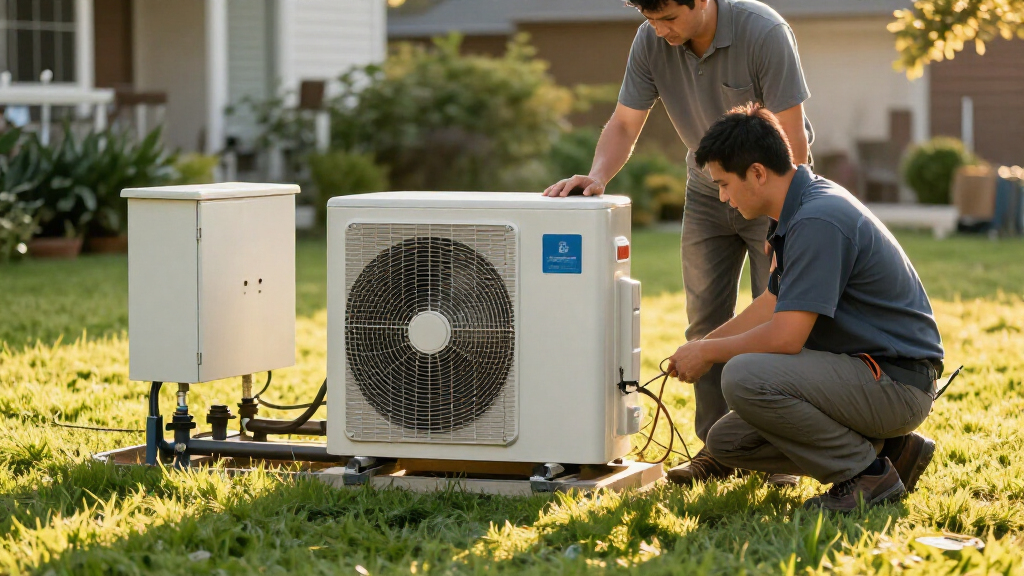
Choosing the right information source is the first step toward a successful geothermal installation. I have analyzed three distinct resources that serve very different purposes for homeowners and professionals alike. Geo Power stands out as the best starting point for those focused on energy savings and basic comfort principles. For those needing a rigorous academic foundation, Geothermal Heat Pump and Heat Engine Systems offers the deepest theoretical coverage. Meanwhile, Geothermal Heating and Cooling by Steve Kavanaugh remains the definitive guide for system design specifics.

Get cleaning gear delivered free with Prime
- Fast, free delivery on millions of items
- Prime Video, Amazon Music and more included
- Member-only deals all year
The main tradeoff here is between accessibility and technical depth. You cannot expect a book written for engineers to simplify utility bills, nor can you expect a consumer guide to provide the load calculations required for installation. My goal is to help you identify which of these three resources matches your current stage in the geothermal journey, whether you are researching costs or designing a loop field.
Complete the kit


Key Takeaways
- Geo Power is ideal for homeowners prioritizing financial analysis and basic operational understanding.
- Geothermal Heat Pump and Heat Engine Systems provides the necessary thermodynamic theory for engineering students.
- Steve Kavanaugh’s Geothermal Heating and Cooling is the industry standard for detailed system design protocols.
- None of these resources replace a professional load calculation, but they inform the conversation with contractors.
- Technical books require a background in physics or engineering to fully utilize their data tables and equations.
| Geo Power: Stay Warm, Keep Cool and Save Money with Geothermal Heating & Cooling |  | Best for Homeowners Focused on Financial Viability | ASIN: 1936555581 | Topic: Geothermal heating and cooling | Target Audience: Homeowners | VIEW LATEST PRICE | See Our Full Breakdown |
| Geothermal Heating and Cooling: Design of Ground-Source Heat Pump Systems |  | Best for Professional System Design | ASIN: B01JXPCFQE | Author: Steve Kavanaugh | Publication Date: 2014-12-15 | VIEW LATEST PRICE | See Our Full Breakdown |
| Geothermal Heat Pump and Heat Engine Systems: Theory and Practice |  | Best for Theoretical Understanding | ASIN: B01IGAJXE4 | Series: Wiley-ASME Press Series | Topic: Theory and Practice | VIEW LATEST PRICE | See Our Full Breakdown |
| geothermal heat pump | ASIN | Topic | Target Audience | Technical Depth |
|---|---|---|---|---|
| Geo Power: Stay Warm | 1936555581 | Geothermal heating and cooling | Homeowners | Introductory |
| Geothermal Heating and Cooling | B01JXPCFQE | System Design | Professionals | Advanced |
| Geothermal Heat Pump and Heat | B01IGAJXE4 | Theory and Practice | Students/Researchers | Advanced Academic |
More Details on Our Top Picks
Geo Power: Stay Warm, Keep Cool and Save Money with Geothermal Heating & Cooling
Geo Power is the most accessible entry point in this lineup, specifically tailored for those who need to justify the investment. Unlike the other two titles, which lean heavily into engineering, this book speaks the language of household budgets. It breaks down how geothermal systems interact with indoor comfort and, more importantly, how they impact long-term utility expenses. I find this resource particularly useful for individuals who are in the early research phase and need to understand the return on investment before contacting contractors.
Compared with Geothermal Heat Pump and Heat Engine Systems, this title avoids complex thermodynamic equations in favor of practical explanations. It does not attempt to teach you how to design a loop field; rather, it explains why the loop field matters for your wallet. The writing style is approachable, making it suitable for readers with no prior HVAC background. However, this simplicity is a tradeoff. If you are looking for detailed installation diagrams or load calculation worksheets, you will find them lacking here.
The book’s strength lies in its holistic view of energy savings. It contextualizes geothermal technology within the broader landscape of home energy efficiency. For a homeowner trying to decide between a high-efficiency gas furnace and a geothermal unit, this book provides the framework to make that comparison. It is less about the mechanical specifics and more about the economic logic of switching to ground-source energy.
Pros:- Clear focus on financial benefits and energy savings.
- Accessible language for non-technical readers.
- Explains comfort benefits alongside cost analysis.
- Helpful for initial feasibility assessments.
Cons:- Lacks detailed technical design data.
- No installation guides or schematics.
- Limited coverage of troubleshooting procedures.
Best for: Homeowners researching cost savings and basic system benefits.
Not ideal for: Engineers or contractors needing design calculations and technical specifications.
- ASIN:1936555581
- Topic:Geothermal heating and cooling
- Target Audience:Homeowners
- Focus:Energy Savings
- Technical Depth:Introductory
- Format:Book
- Utility:Financial Analysis
Our verdict“This pick makes the most sense for buyers who need to convince themselves or a spouse that the high upfront cost is justified by long-term savings.”
Geothermal Heating and Cooling: Design of Ground-Source Heat Pump Systems
Steve Kavanaugh’s Geothermal Heating and Cooling is widely recognized as a cornerstone text for anyone involved in the actual design of ground-source heat pump systems. This is not a book for casual reading; it is a working manual for professionals who need to calculate heat transfer rates, loop lengths, and fluid dynamics. Compared with Geo Power, which discusses savings in broad strokes, this title provides the mathematical rigor required to size a system correctly. An undersized system will fail, and this book helps prevent that outcome through detailed design protocols.
The content is dense and highly technical. It covers the intricacies of horizontal versus vertical loops, soil thermal properties, and pipe sizing. I find this resource indispensable for contractors and engineers who must adhere to strict building codes and performance standards. While Geothermal Heat Pump and Heat Engine Systems covers the theoretical underpinnings, Kavanaugh’s work focuses on the application of those theories to real-world installations. It bridges the gap between abstract physics and the practical reality of drilling a borehole.
However, this technical density is also its primary drawback for the average consumer. A homeowner attempting to DIY a geothermal system would likely be overwhelmed by the load calculation examples and engineering charts. This book assumes a certain level of familiarity with HVAC principles. It is the tool you use when you are ready to break ground, not when you are just thinking about the concept.
Pros:- Authoritative source on system design specifics.
- Detailed coverage of loop field configurations.
- Includes practical design examples and calculations.
- Respected by industry professionals.
Cons:- Highly technical and difficult for beginners.
- Not suitable for basic consumer research.
- Assumes prior HVAC engineering knowledge.
Best for: HVAC professionals, engineers, and serious DIYers with technical backgrounds.
Not ideal for: Homeowners looking for simple installation tips or basic cost breakdowns.
- ASIN:B01JXPCFQE
- Author:Steve Kavanaugh
- Publication Date:2014-12-15
- Topic:System Design
- Target Audience:Professionals
- Technical Depth:Advanced
- Format:Book
- Utility:Engineering Design
Our verdict“This model is better suited to professionals who require precise design data to ensure system efficiency and compliance.”
Geothermal Heat Pump and Heat Engine Systems: Theory and Practice
Part of the Wiley-ASME Press Series, Geothermal Heat Pump and Heat Engine Systems offers a comprehensive look at the thermodynamic principles governing these technologies. This title distinguishes itself by covering both heat pumps and heat engines, providing a broader scientific context than the other two options. Where Geothermal Heating and Cooling focuses on how to build a system, this book focuses on why the system works. It delves into the fundamental laws of energy transfer, which is critical for anyone looking to innovate or deeply understand system limitations.
I find this resource most valuable for students and researchers who need to grasp the underlying physics. It is less prescriptive than Kavanaugh’s design guide and more analytical. The text explores the efficiency limits of various configurations and compares geothermal systems against other renewable energy sources. For a homeowner, this level of detail might seem excessive, but for an engineer optimizing a custom installation, understanding the theoretical practice can lead to more efficient designs.
The main drawback is its academic tone. It lacks the consumer-friendly advice found in Geo Power and the direct design steps found in Kavanaugh’s guide. It is a reference book for understanding the science, not a manual for turning a wrench. If your goal is to quickly understand how to save on your electric bill, this book will feel like overkill. But if you want to understand the coefficients of performance and heat exchange mechanics, this is the definitive choice.
Pros:- Covers both heat pumps and heat engines.
- Deep theoretical foundation in thermodynamics.
- Part of a reputable academic press series.
- Provides context for system efficiency limits.
Cons:- Highly academic and dry reading.
- Lacks practical installation instructions.
- Not focused on consumer financial aspects.
Best for: Engineering students, researchers, and innovators in energy systems.
Not ideal for: Contractors needing quick design rules or homeowners seeking simple answers.
- ASIN:B01IGAJXE4
- Series:Wiley-ASME Press Series
- Topic:Theory and Practice
- Target Audience:Students/Researchers
- Technical Depth:Advanced Academic
- Format:Book
- Utility:Scientific Research
- Scope:Heat Engines & Pumps
Our verdict“This option stands out for readers who prioritize scientific accuracy and theoretical depth over practical application.”
How We Picked
I selected these three titles based on their reputation within the HVAC and renewable energy sectors. My selection criteria focused on authoritative authorship, the balance between theory and practice, and the specific utility each book offers to different reader types. I looked for resources that are frequently cited in industry forums and professional training materials.
I excluded general home improvement books that touch on geothermal only briefly. Instead, I focused on texts dedicated entirely to ground-source heat pump systems. I evaluated each title based on how well it addresses the primary pain points of geothermal adoption: high upfront costs, complex installation requirements, and long-term maintenance expectations. This approach ensures that every recommendation serves a clear purpose in the decision-making process.
| geothermal heat pump | Topic | Target Audience | Technical Depth | Utility |
|---|---|---|---|---|
| Geo Power: Stay Warm | Geothermal heating and cooling | Homeowners | Introductory | Financial Analysis |
| Geothermal Heating and Cooling | System Design | Professionals | Advanced | Engineering Design |
| Geothermal Heat Pump and Heat | Theory and Practice | Students/Researchers | Advanced Academic | Scientific Research |
Factors to Consider When Choosing Best Geothermal Heat Pumps
Selecting the right geothermal resource depends entirely on your current knowledge level and your immediate goals. I have broken down the decision process into three key factors: technical depth, practical application, and financial focus.Assessing Your Technical Background
If you have no background in physics or HVAC, you should avoid titles that rely heavily on equations. Geothermal Heat Pump and Heat Engine Systems and Geothermal Heating and Cooling assume you understand terms like enthalpy, coefficient of performance, and fluid dynamics. If these terms are unfamiliar, Geo Power is the safer choice. It translates complex mechanics into plain English, allowing you to participate in conversations with contractors without needing an engineering degree. My advice is to start with the accessible option and move to the technical ones only if you decide to pursue a deeper understanding or a professional career in the field.
Defining Your Primary Goal
Are you trying to save money, or are you trying to design a system? This distinction is critical. If your primary goal is to lower utility bills, Geo Power aligns best with that objective by focusing on ROI and comfort. If your goal is to install a system, you need the design specifics found in Steve Kavanaugh’s work. If your goal is to understand the science for academic or innovation purposes, the Wiley-ASME title is unmatched. Misaligning your goal with the resource will result in frustration; a homeowner will drown in equations, while an engineer will find the consumer guide superficial.
Understanding the Installation Reality
Regardless of which book you choose, none of them replace a professional site assessment. Geothermal systems rely on specific soil conditions, water table levels, and local geology. A book can teach you the theory of loop design, but only a site test can tell you if your soil has the necessary thermal conductivity. I recommend using these resources to educate yourself so you can ask better questions during contractor consultations. For example, knowing the difference between horizontal and vertical loops from Geothermal Heating and Cooling allows you to challenge a contractor’s recommendation if it seems financially or physically impractical for your property.
Frequently Asked Questions
Can I install a geothermal heat pump myself using these books?
While Geothermal Heating and Cooling provides detailed design information, self-installation of a geothermal system is rarely recommended for the average person. The process involves heavy machinery for drilling or trenching, complex electrical connections, and precise refrigerant handling. Even with a technical guide, the risk of improper loop sizing or refrigerant leaks is high. These books are best used to verify that your contractor’s proposal is sound, rather than to guide a DIY installation. The physical labor and specialized equipment required make professional installation the standard for safety and warranty compliance.
Which book is best for calculating my potential energy savings?
Geo Power is the most direct resource for understanding energy savings. It focuses on the financial aspects of geothermal adoption, explaining how ground-source systems compare to conventional HVAC in terms of operating costs. However, it does not provide a universal calculator because savings depend heavily on local electricity rates, climate zones, and home insulation levels. Use this book to understand the variables that affect your savings, then request a custom projection from a local installer who can input your specific utility rates and house size into professional modeling software.
Is the theory in ‘Geothermal Heat Pump and Heat Engine Systems’ relevant for homeowners?
For most homeowners, the deep theoretical coverage in this Wiley-ASME title is not directly relevant to daily operation or basic purchasing decisions. It is designed for engineers and students who need to understand the thermodynamic limits and efficiencies of the technology. Unless you are planning to modify system components, troubleshoot complex thermodynamic issues, or pursue a career in HVAC engineering, you will likely find the content too abstract. It is a reference for the ‘why’ behind the technology, not the ‘how’ for a homeowner.
Do these books cover maintenance and repair?
Coverage of maintenance varies by title. Geo Power offers basic insights into system longevity and comfort maintenance, suitable for homeowners who want to know what to expect over the years. Geothermal Heating and Cooling may include troubleshooting steps for design-related issues, but it is primarily a design guide, not a service manual. Detailed repair procedures for specific pump models or control boards are typically found in manufacturer-specific manuals rather than general books. Always keep the OEM manual for your specific heat pump unit handy for warranty and repair purposes.
Are there specific climate zones where geothermal is not recommended?
Geothermal systems are generally effective in most climate zones because they leverage the stable temperature of the earth, rather than the fluctuating air temperature. However, books like Geothermal Heating and Cooling discuss how soil type and geology can impact feasibility more than air climate. For instance, rocky terrain may increase drilling costs significantly, making the system less financially viable in certain areas, even if the climate is suitable. The decision is often more about local ground conditions and utility rate structures than about whether it is too hot or too cold outside.
Conclusion
To wrap up my analysis, the right choice depends on where you stand in the geothermal process. If you are a homeowner trying to justify the cost and understand the basics, Geo Power is the most practical investment. It respects your time and focuses on the financial logic that drives the decision.
If you are a professional or a highly skilled DIYer involved in the actual design and layout of the system, Geothermal Heating and Cooling by Steve Kavanaugh is the essential tool. It provides the technical rigor needed to ensure the system performs as expected.
Finally, if you are a student or researcher seeking to understand the scientific principles and broader applications of geothermal energy, Geothermal Heat Pump and Heat Engine Systems offers the depth and academic credibility required for that level of study. Choose the resource that matches your current need, and use it to inform a smarter, more confident conversation with your installation team.
Evergreen bestsellers Picks

Ninja Prestige Smart XL Pro Cook System 10-in-1 Air Fryer and Countertop Oven, Stainless Steel, DT551

KitchenAid Artisan 5-Qt Tilt-Head Stand Mixer, Cardamom

De'Longhi Classic Signature Espresso Machine with Adjustable Milk Frother
As an affiliate, we earn on qualifying purchases.