Choosing the right roof insulation involves balancing thermal performance, environmental impact, and installation difficulty. Many homeowners are moving away from spray foam due to cost, off-gassing concerns, or DIY complexity. I have curated this list of foam-free roof insulation solutions that prioritize ease of use and material safety. My top pick for most residential attics is the Owens Corning R-19 Unfaced Fiberglass Batt Insulation because it offers a proven R-value and easy fit for standard 2×6 framing. For those prioritizing eco-friendliness and non-irritating materials, the Frost King CF1 Recycled Denim Multi-Purpose Insulation stands out as a gentle, sustainable alternative. If your primary goal is reflecting radiant heat in metal buildings or pole barns, the Metal Building Insulation Roll provides a unique reflective barrier that traditional batts cannot match. Each option serves a distinct structural need, and understanding these differences is key to selecting the right product for your specific climate and building type.

Get cleaning gear delivered free with Prime
- Fast, free delivery on millions of items
- Prime Video, Amazon Music and more included
- Member-only deals all year
Complete the kit


Key Takeaways
- Fiberglass batts remain the industry standard for cost-effective, high-R-value insulation in standard residential framing.
- Recycled denim insulation offers a non-irritating, eco-friendly alternative but requires careful thickness management for adequate thermal resistance.
- Radiant barrier rolls are specialized for reflecting heat in metal structures and should not be viewed as a direct substitute for thick thermal batts in cold climates.
- Unfaced insulation requires a separate vapor barrier strategy to prevent moisture accumulation in the roof assembly.
- Proper fit between framing members is critical for effectiveness, making batts with flexible sizing easier to install than rigid boards.
| RecPro RV Fiberglass Insulation |  | Best for Recreational Vehicles and Small Cabins | Thickness: 2.25 inches | Width: 15 inches | Length: 67 feet | VIEW LATEST PRICE | See Our Full Breakdown |
| Frost King CF1 Recycled Denim Multi-Purpose Insulation |  | Best Eco-Friendly and Non-Irritating Option | Material: 100% recycled denim | Dimensions: 48 x 16 x 1 inches | Weight: 9.6 ounces | VIEW LATEST PRICE | See Our Full Breakdown |
| Owens Corning R-19 Unfaced Fiberglass Insulation Batts |  | Best Overall for Standard Residential Attics | Brand: Owens Corning | Material: Fiberglass | R-value: R-19 | VIEW LATEST PRICE | See Our Full Breakdown |
| Owens Corning R-19 Unfaced Fiberglass Batt Insulation, 128 sq. ft. |  | Best Value for Large Area Coverage | Brand: Owens Corning | Material: Fiberglass | Coverage: 128 sq. ft. | VIEW LATEST PRICE | See Our Full Breakdown |
| Metal Building Insulation Roll, Pole Barn Insulation Rolls |  | Best for Reflective Heat Blocking in Metal Structures | Weight: 5.8 pounds | Dimensions: 600″ L x 48″ W | Thickness: 3 millimeters | VIEW LATEST PRICE | See Our Full Breakdown |
| foam-free roof insulation | Thickness | Coverage | Material | Dimensions |
|---|---|---|---|---|
| RecPro RV Fiberglass Insulatio | 2.25 inches | 83.75 SqFt | Fiberglass | — |
| Frost King CF1 Recycled Denim | — | — | 100% recycled denim | 48 x 16 x 1 inches |
| Owens Corning R-19 Unfaced Fib | 6.5 inches | 77.5 square feet | Fiberglass | 93 x 15 inches |
| Owens Corning R-19 Unfaced Fib | 6.5 in. | 128 sq. ft. | Fiberglass | 96 in. L x 24 in. W |
| Metal Building Insulation Roll | 3 millimeters | 200 square feet | — | 600" L x 48" W |
More Details on Our Top Picks
RecPro RV Fiberglass Insulation
This insulation is specifically engineered for the unique constraints of recreational vehicles, where space is limited and weight matters. Unlike the bulky batts designed for residential attics, this unfaced R-7 roll is thinner at 2.25 inches, allowing it to fit within the narrow cavities of RV walls and ceilings. I find this product ideal for mild climates where extreme cold is not a primary concern. Compared to the Owens Corning R-19, this option provides less thermal resistance but offers greater flexibility for irregular shapes. The large coverage area of 83.75 square feet per roll reduces the number of seams, which are common points of thermal bridging in small vehicles. However, its lower R-value means it is not suitable for homes in northern regions. It serves as a lightweight, cost-effective solution for mobile living spaces where heavy, thick insulation would compromise payload capacity or interior space.
Pros:- Lightweight and flexible, ideal for irregular RV cavities.
- Large roll size minimizes seams and installation time.
- Unfaced design allows for custom vapor barrier integration.
Cons:- Low R-7 rating limits effectiveness in extreme temperatures.
- Requires separate vapor barrier for moisture protection.
Best for: RV owners and tiny home builders needing lightweight, flexible insulation for mild climates.
Not ideal for: Homeowners in cold climates or those requiring high R-values for residential attics.
- Thickness:2.25 inches
- Width:15 inches
- Length:67 feet
- Coverage:83.75 SqFt
- Material:Fiberglass
- R-Value:R-7
- Facing:Unfaced
Our verdict“A specialized solution for mobile structures that prioritizes fit and weight over maximum thermal resistance.”
Frost King CF1 Recycled Denim Multi-Purpose Insulation
If you are sensitive to fiberglass itch or prioritize sustainability, this recycled denim insulation is a compelling choice. Made from 100% post-consumer denim, it is soft to the touch and does not require gloves, goggles, or a mask during installation. This stands in stark contrast to the Owens Corning fiberglass options, which typically demand full protective gear to prevent skin and respiratory irritation. While the denim is comfortable to handle, its thermal performance is lower per inch of thickness. At only 1 inch thick, this batt is best suited for small gaps, pipes, or supplemental insulation rather than primary roof insulation in cold zones. I recommend it for interior applications where air quality and ease of handling are paramount. It also excels at sound dampening, making it a dual-purpose material for walls and ceilings where noise reduction is desired alongside mild thermal benefits.
Pros:- Non-irritating and safe to handle without protective gear.
- Made from 100% recycled materials.
- Effective for sound dampening and cushioning.
Cons:- Thin profile limits thermal resistance.
- May not fit standard deep attic cavities effectively.
Best for: DIYers sensitive to fiberglass, eco-conscious builders, and small gap filling.
Not ideal for: Primary roof insulation in climates with significant heating or cooling needs.
- Material:100% recycled denim
- Dimensions:48 x 16 x 1 inches
- Weight:9.6 ounces
- Quantity:1 batt
- Recommended Uses:Insulation, cushioning, noise dampening
- Irritation Level:Non-irritating
Our verdict“The most user-friendly and sustainable option for light-duty insulation and noise control.”
Owens Corning R-19 Unfaced Fiberglass Insulation Batts
This product represents the gold standard for residential roof insulation, offering a reliable R-19 thermal resistance that meets building codes in many regions. The 6.5-inch thickness is perfectly calibrated for 2×6 framing, ensuring a snug fit that minimizes air gaps. Compared to the RecPro RV insulation, this option provides significantly higher thermal performance, making it suitable for year-round living spaces. The fiberglass material is treated to resist moisture absorption, which is critical in attics where condensation can occur. However, the unfaced design means it lacks a built-in vapor barrier, requiring a separate moisture control strategy. I find the batts easy to cut and they recover their shape well, filling irregular spaces effectively. This is the go-to choice for homeowners seeking a balance of cost, performance, and availability for standard home construction or retrofit projects.
Pros:- High R-19 rating for effective thermal control.
- Snug fit for standard 2×6 framing.
- Moisture-resistant and sound-absorbing.
Cons:- Requires separate vapor barrier installation.
- Can cause skin and respiratory irritation during handling.
Best for: Homeowners with 2×6 framed attics seeking proven thermal performance.
Not ideal for: Applications requiring a built-in vapor barrier or non-irritating materials.
- Brand:Owens Corning
- Material:Fiberglass
- R-value:R-19
- Facing:Unfaced
- Thickness:6.5 inches
- Dimensions:93 x 15 inches
- Coverage:77.5 square feet
- Quantity:8 batts
Our verdict“The most versatile and effective choice for standard residential roof insulation projects.”
Owens Corning R-19 Unfaced Fiberglass Batt Insulation, 128 sq. ft.
Similar to its sibling, this product offers the same R-19 thermal resistance but is packaged for efficiency in larger projects. The 128 square feet of coverage per pack is significantly more than the Owens Corning R-19 Unfaced Fiberglass Insulation Batts with 77.5 square feet, making it a better value for insulating entire roofs or large attic spaces. The batts are designed to cut easily and fit between studs, maintaining the same moisture-resistant and sound-dampening properties. I appreciate the larger dimensions (24 by 96 inches), which reduce the number of seams needed in wide-open attic areas. While it shares the same drawbacks as the smaller pack—namely the need for a separate vapor barrier and the irritation potential of fiberglass—its bulk packaging makes it the practical choice for contractors or DIYers tackling substantial square footage. It is less suited for small, patchy repairs where excess material would be wasted.
Pros:- High coverage area per pack reduces packaging waste.
- Consistent R-19 performance for 2×6 framing.
- Easy to cut and fit into wall and floor cavities.
Cons:- Lacks integrated vapor barrier.
- Requires protective gear during installation.
Best for: Large-scale residential insulation projects and contractors.
Not ideal for: Small repairs or projects with limited square footage.
- Brand:Owens Corning
- Material:Fiberglass
- Coverage:128 sq. ft.
- Quantity:5 batts
- Dimensions:96 in. L x 24 in. W
- Thickness:6.5 in.
- Design:Unfaced
- Framing Fit:2×6 framing
Our verdict“The most cost-effective high-performance option for insulating large residential areas.”
Metal Building Insulation Roll, Pole Barn Insulation Rolls
This product operates on a different principle than traditional thermal batts. Instead of trapping air to resist conduction, it uses a 95% radiant barrier foil to reflect heat. This makes it exceptionally effective in metal buildings, pole barns, and RVs where radiant heat gain is the primary cooling challenge. Compared to the Frost King CF1 Recycled Denim, this roll is much thinner at 3 millimeters, yet it can significantly reduce interior temperatures in summer by reflecting solar radiation. I recommend it as a supplemental layer or for structures where thick batts are impractical due to space constraints. However, it has a low R-value for conductive heat transfer, so it is not a standalone solution for cold winters. The flexibility of the EPE foam core allows it to conform to uneven surfaces, but correct foil orientation is critical for performance. It is the best choice for climate-specific applications where radiant heat is the dominant factor.
Pros:- Blocks up to 95% of radiant heat.
- Thin and flexible for easy installation.
- Fire-rated and non-toxic.
Cons:- Low R-value for conductive heat transfer.
- Requires precise orientation for effectiveness.
Best for: Metal buildings, pole barns, and RVs in hot climates.
Not ideal for: Residential attics requiring high conductive thermal resistance.
- Weight:5.8 pounds
- Dimensions:600″ L x 48″ W
- Thickness:3 millimeters
- Coverage:200 square feet
- Material Type:Aluminum, EPE Foam, Vinyl Film
- Radiant Barrier:95% Reflective Foil
Our verdict“A specialized radiant barrier that excels in metal structures but lacks thermal mass.”
How We Picked
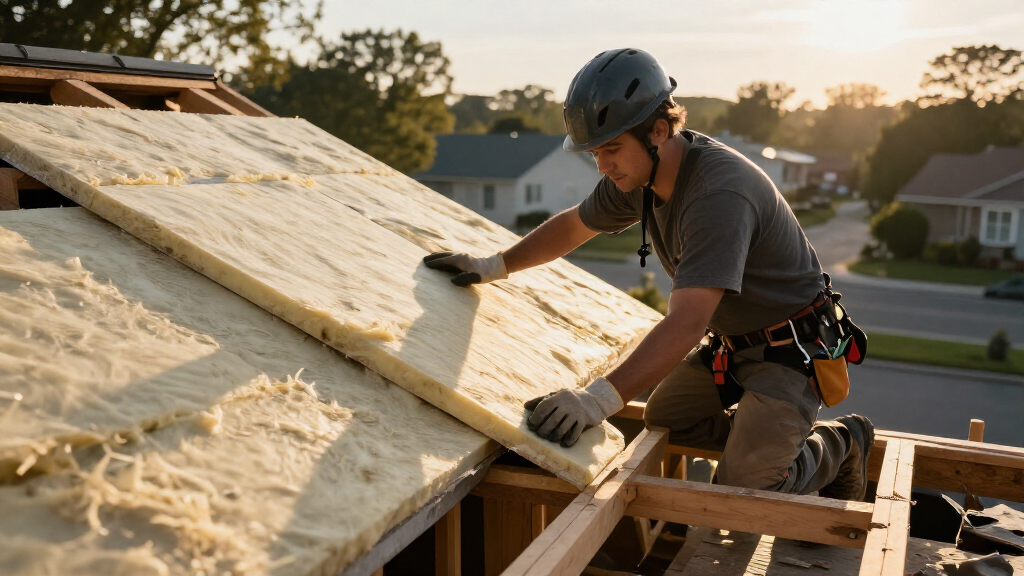
I selected these products based on their suitability for roof and attic applications, material composition, and ease of installation for both DIYers and professionals. I focused specifically on foam-free options to address common concerns regarding chemical exposure and specialized installation equipment. My evaluation criteria included thermal resistance (R-value), material sustainability, moisture resistance, and versatility across different building types. I compared standard fiberglass batts against emerging eco-friendly alternatives like recycled denim and specialized radiant barriers to provide a broad spectrum of choices. I also considered the practicality of handling each material, noting which products require protective gear and which can be installed with minimal preparation. This approach ensures that the recommendations cover a range of budgets, skill levels, and environmental priorities without compromising on safety or performance.
Factors to Consider When Choosing Best Foam-free Roof Insulation
Selecting the right foam-free insulation requires matching the material properties to your specific structural and environmental needs. The following factors should guide your decision-making process.Understanding Thermal Resistance (R-Value)
The R-value measures a material’s resistance to heat flow. Higher R-values indicate better insulation. For most residential attics in the US, an R-value between R-30 and R-60 is recommended, often achieved by layering multiple batts. The Owens Corning R-19 products provide a solid base, but you may need to double-layer them to meet modern energy codes. In contrast, the Metal Building Insulation Roll has a very low R-value for conduction but excels at reflecting radiant heat. If you live in a hot, sunny climate with a metal roof, the reflective properties may offer more comfort per inch of thickness than traditional fiberglass. Always check local building codes for minimum R-value requirements before purchasing.
Material Safety and Handling
Fiberglass is a proven insulator but can cause skin, eye, and respiratory irritation. Installing it requires gloves, long sleeves, goggles, and a mask. If you have allergies, asthma, or are installing insulation in a finished living space where dust control is difficult, consider recycled denim insulation. It is non-irritating and can be handled bare-handed. This safety advantage comes at the cost of higher material price and lower thermal performance per inch. For professional contractors or those comfortable with safety gear, fiberglass remains the most cost-effective option. For DIYers prioritizing comfort and ease, denim or mineral wool (not listed here but similar) are superior choices.
Moisture Control and Vapor Barriers
Most roof insulation requires a vapor barrier to prevent warm, moist air from condensing inside the insulation, which can lead to mold and structural damage. The Owens Corning and RecPro products listed here are unfaced, meaning they do not include a vapor barrier. You must install a separate plastic sheeting or use a product with a built-in kraft paper facing (not included in this list) if your climate zone requires it. The Metal Building Insulation Roll includes vinyl and foil layers that can act as a partial vapor retarder, but its effectiveness depends on sealing the seams with tape. Improper moisture management can ruin insulation effectiveness and damage the roof structure, so this factor is as important as the R-value itself.
Fit and Installation Ease
Insulation works best when it fits snugly without gaps or compression. The Owens Corning batts are designed for standard 2×6 framing, making them easy to install in most modern homes. However, older homes or custom builds may have irregular cavity depths. In these cases, flexible rolls like the RecPro RV insulation or the Metal Building Roll are easier to cut and customize. Batts can lose effectiveness if compressed, so ensure the thickness matches the cavity depth. For complex shapes, pipes, or tight corners, the Frost King denim can be torn or cut easily without creating dust clouds, making it ideal for detail work and patching.
Frequently Asked Questions
Can I use foam-free insulation in a hot climate?
Yes, foam-free insulation is highly effective in hot climates, especially when radiant heat is a concern. Products like the Metal Building Insulation Roll are specifically designed to reflect solar radiation, which is a major heat source in warm regions. Traditional fiberglass batts like the Owens Corning R-19 also work well by slowing conductive heat transfer, keeping the interior cooler. In hot climates, proper ventilation of the attic is also critical to prevent heat buildup. Using a combination of reflective barriers and high-R-value batts can provide the best results, addressing both radiant and conductive heat sources effectively.Do I need a vapor barrier with unfaced insulation?
In many climate zones, yes. Unfaced insulation like the Owens Corning and RecPro products does not have a built-in vapor barrier. Without a vapor barrier, warm moist air from the living space can travel through the insulation and condense on the cooler roof sheathing, leading to mold and rot. You may need to install a separate plastic vapor barrier on the warm side of the insulation. Check your local building codes, as requirements vary by region. In some cases, closed-cell foam or specific vapor-permeable house wraps can manage moisture without a traditional plastic sheet, but for standard fiberglass, a barrier is often necessary.Is recycled denim insulation as effective as fiberglass?
Recycled denim, such as the Frost King CF1, has a similar R-value per inch to fiberglass (approximately R-3 to R-4 per inch). However, it is often sold in thinner batts, which limits its total thermal resistance in standard cavities. Its main advantage is not thermal superiority but ease of handling and environmental sustainability. It does not itch, making it safer for DIYers without protective gear. For maximum thermal performance in a standard roof cavity, fiberglass or mineral wool are generally more cost-effective. Denim is best used for supplemental insulation, soundproofing, or in spaces where fiberglass irritation is a prohibitive factor.Can I install these insulations myself?
Yes, all the products listed are designed for DIY installation. Fiberglass batts require careful handling with protective gear to avoid irritation and ensure a snug fit. Recycled denim is the easiest to install as it requires no protective equipment and can be cut with scissors or a utility knife. Radiant barrier rolls are also simple to staple or glue in place, but attention to seam sealing is required for maximum effectiveness. While installation is straightforward, working in an attic involves physical risks such as falling through ceiling drywall or heat exhaustion, so proper safety precautions and lighting are essential regardless of the material chosen.How long does foam-free roof insulation last?
Foam-free insulation materials like fiberglass, mineral wool, and denim are durable and can last the lifetime of the building if properly maintained. They do not degrade or off-gas significantly over time like some foams might. However, their effectiveness can be compromised by moisture saturation, pest infestation, or physical damage. Fiberglass can settle over time if not properly supported, reducing its R-value. Denim is resistant to pests and mold if kept dry. Radiant barriers can lose reflectivity if the foil becomes oxidized or dirty. Regular inspections of the attic for moisture leaks or pest activity are recommended to ensure the insulation continues to perform as intended.Conclusion
Selecting the best foam-free roof insulation depends entirely on your specific building type, climate, and personal priorities. For the majority of homeowners with standard residential attics, the Owens Corning R-19 Unfaced Fiberglass Batt Insulation offers the best balance of performance, cost, and ease of availability. It is a proven solution that meets modern energy standards when installed correctly. If you are working on a metal building, pole barn, or RV in a hot climate, the Metal Building Insulation Roll provides a specialized radiant barrier that traditional materials cannot replicate. For those who prioritize health, sustainability, and ease of handling over maximum R-value, the Frost King CF1 Recycled Denim is an excellent choice for supplemental insulation and noise control. Finally, for mobile applications or small cabins with limited space, the RecPro RV Fiberglass Insulation fits where standard batts cannot. Evaluate your framing depth, climate zone, and moisture control needs before making your final decision to ensure a comfortable and energy-efficient home.
Black Friday Picks

Philips Hue Play Gradient Light Tube, Large, Black
As an affiliate, we earn on qualifying purchases.