The best makeup air system depends on how much air your range hood exhausts, how the replacement air is controlled, and whether the installation is residential or commercial-scale. I’d put the Zephyr MUA010A first for a compatible Zephyr hood, while the Broan MD10TU stands out for sensor-controlled operation and the Awoco 6-inch system for a filtered, lower-airflow setup. These options are not interchangeable: some are hood-specific kits or dampers, while others are powered supply fans built for much larger airflow. Check compatibility and installation requirements before choosing. Read on for the full comparison and guidance on matching a system to your project.

Get cleaning gear delivered free — and shop member deals
- Fast, free delivery on millions of items
- Access to Prime Big Deal Days deals on October 6–7
- Prime Video, Amazon Music and more included
Complete the kit


Key Takeaways
- Product type matters as much as airflow: this lineup includes hood-specific kits, dampers, gravity vents, and powered supply fans, so the headline airflow alone cannot determine fit.
- The Zephyr MUA010A ranks first for a defined use case: its stated compatibility with Zephyr hoods up to 1200 CFM makes it the clearest match for owners of those hoods, but it is not a universal choice.
- The Broan MD10TU adds automatic control rather than a supply fan: its pressure sensor kit and motorized damper can suit projects that need hood-linked makeup-air control, subject to system design.
- Low-airflow filtered options serve a different scale: the Awoco unit’s 100 CFM rating and MERV13 filter position it apart from the 2400 CFM and 1 HP rooftop fan options.
- Installation scale separates the rooftop picks: the 26-inch, 2400 CFM downblast unit and the 16-inch modular 1 HP fan call for more planning than a small ducted or damper-based system.




| makeup air system | Weight | Voltage | Airflow capacity | Wattage |
|---|---|---|---|---|
| Zephyr MUA010A 10-Inch Round M | 7.5 pounds | 24 volts | — | — |
| Roof Mount Direct Drive Makeup | — | 115V | 2400 CFM | 250 watts |
| Awoco 6-inch Vent Make-Up Air | 10.5 pounds | — | 100 CFM | 3W / 7W / 18W |
| Economy Make Up Air Unit | 28 pounds | — | 750 CFM | — |
| Broan MD10TU Motorized Univers | 6.7 pounds | — | — | 10 watts |
| 16” Modular Rooftop Make-Up Ai | — | 110V | — | — |
More Details on Our Top Picks
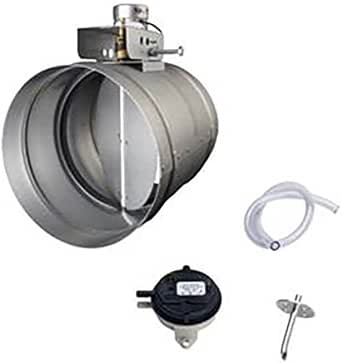
Zephyr MUA010A 10-Inch Round Make-Up Air Kit for Zephyr Range Hoods up to 1200 CFM
I’d shortlist the Zephyr MUA010A for buyers matching a compatible Zephyr range hood with a straightforward, passive makeup-air kit. Its 10-inch galvanized-steel backdraft damper is specified for hoods up to 1200 CFM, giving it a much higher stated hood capacity than the Broan MD10TU listing, which does not provide a CFM rating. Unlike the Awoco 6-inch system, this kit does not offer a filter or three selectable speeds; it is a simpler duct-and-damper component rather than a powered, adjustable air-supply system. The tradeoff is a narrow installation fit: it is designed for horizontal orientation, and the unit is manufacturer-refurbished with only a 90-day limited hardware warranty. I’d verify hood compatibility and mounting direction before choosing it.
Pros:- Specified for Zephyr range hoods up to 1200 CFM
- Galvanized-steel damper construction
- Includes original accessories
- Horizontal round-duct configuration is clearly specified
Cons:- Limited to horizontal installation
- Refurbished condition may involve wear details not provided
- 90-day limited hardware warranty is shorter than many buyers may want
Best for: Owners of compatible Zephyr range hoods up to 1200 CFM who need a horizontal, 10-inch round makeup-air damper.
Not ideal for: Buyers seeking a new unit, vertical installation, variable airflow, or a longer warranty; also skip it if your hood or duct setup is not compatible.
- Duct shape:Round
- Top diameter:10 inches
- Bottom diameter:13 inches
- Material:Galvanized steel
- Voltage:24 volts
- Configuration:Backdraft damper
- Installation direction:Horizontal
- Weight:7.5 pounds
- Warranty:90-day limited hardware warranty
Our verdict“Choose this refurbished kit for a compatible Zephyr hood and horizontal duct run, but skip it if you need flexible mounting or a longer warranty.”
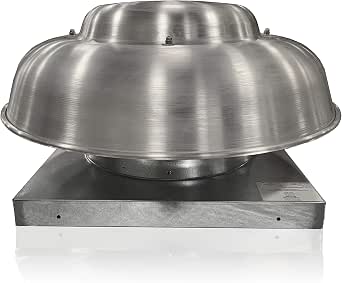
Roof Mount Direct Drive Makeup Air Unit – 26-inch Downblast Supply Fan, 1/3 HP 115V, 2400 CFM
For projects where a residential damper kit would be undersized, I’d put this 2400 CFM roof-mounted fan in a separate commercial category. It offers far more stated airflow than the Economy Make Up Air Unit EMUA10 at 750 CFM, and its direct-drive, 1/3 HP motor actively supplies outdoor air rather than relying on gravity. The roof-mount design and weather-resistant aluminum and alloy-steel construction suit outdoor installation, while ETL listing is a useful safety qualification. That capacity comes with important limits: it is a single-speed unit, and the listing gives no variable control or remote. Compared with the smaller Awoco 100 CFM system, this is a much larger-scale choice, not a quiet, adjustable option for ordinary home kitchen balancing. I’d match it to a properly sized commercial ventilation plan.
Pros:- Stated airflow capacity of 2400 CFM
- Roof-mounted design keeps the supply fan outdoors
- Aluminum and alloy-steel construction is specified as weather-resistant
- ETL listed
Cons:- Single-speed operation limits airflow adjustment
- Outdoor roof installation may require project-specific planning
- No remote control or variable-speed option is specified
Best for: Commercial kitchens or facilities needing a roof-mounted outdoor supply fan with a stated capacity of 2400 CFM.
Not ideal for: Homeowners seeking a compact, low-airflow, adjustable system, or buyers without a suitable roof installation and ventilation plan.
- Airflow capacity:2400 CFM
- Fan diameter:26 inches
- Motor power:1/3 HP
- Voltage:115V
- Speed:1100 rpm
- Wattage:250 watts
- Mounting type:Roof mount
- Materials:Aluminum and alloy steel
- Certification:ETL listed
Our verdict“Pick this fan for high-volume commercial roof supply, not for a home setup that needs quieter, lower, or adjustable airflow.”
Awoco 6-inch Vent Make-Up Air (MUA) System with 3 Speeds, 100 CFM, MERV13 Filter, Energy Saving, HVI Certified
The Awoco 6-inch system is the most home-focused powered option here: it pairs a stated 100 CFM airflow with a MERV 13 filter, an ECM motor, and three speeds. That makes it more adjustable and filtration-oriented than the passive Zephyr MUA010A damper, while its much lower airflow separates it from commercial choices like the EMUA10 and the 2400 CFM roof fan. The listed 43–45 dB noise range and 3W/7W/18W power levels give buyers useful details for planning everyday operation, though actual suitability still depends on the home and exhaust system. Its 6-inch wall-mounted format requires a suitable wall location, and the filter needs periodic replacement. I’d choose it for controlled residential air supply, not for a high-capacity commercial application.
Pros:- Three speeds allow more airflow choice than passive damper units
- MERV 13 filter is specified
- Low listed power draw of 3W, 7W, and 18W
- Listed noise level is 43–45 dB
Cons:- 100 CFM capacity is far below the commercial fans in this roundup
- Requires wall-mount space
- Filter replacement is a recurring maintenance task
Best for: Homeowners wanting a compact, filtered makeup-air supply with three speed settings for kitchen or general house ventilation.
Not ideal for: Commercial operators needing hundreds or thousands of CFM, or homeowners without wall space or a plan for periodic filter replacement.
- Duct size:6 inches
- Airflow capacity:100 CFM
- Power:120V/60Hz
- Wattage:3W / 7W / 18W
- Noise level:43–45 dB
- Filter:MERV 13
- Mounting:Wall mount
- Weight:10.5 pounds
- Certifications:Energy Star, HVI, Title 24 CA, ETL, cETL
Our verdict“Choose the Awoco for filtered, adjustable residential airflow, but look to a higher-capacity commercial unit for demanding exhaust loads.”
Economy Make Up Air Unit (EMUA10) Non-Motorized Gravity Vent
I’d choose the EMUA10 when a commercial project calls for a high-capacity, non-motorized intake or pressure-relief vent rather than powered supply. Its stated 750 CFM capacity sits between the Awoco’s 100 CFM residential airflow and the 2400 CFM roof-mounted fan, but the comparison is not one-for-one: the EMUA10 relies on gravity, so it does not offer the active drive or speed control of the larger fan. Spun aluminum construction is designed to resist rust, and the choice of roof or wall mounting gives it more placement flexibility than the roof-only unit. Buyers need to source the roof curb or wall bracket separately, however, and the listing provides little detail on noise or airflow control. I’d favor it for straightforward commercial intake, not for installations requiring precise, powered delivery.
Pros:- Stated capacity of 750 CFM
- Non-rusting spun-aluminum housing
- Can be roof- or wall-mounted
- Can serve fresh-air intake or pressure-relief use
Cons:- Non-motorized design offers less precise airflow control than the 2400 CFM powered fan
- Roof curb or wall-mount bracket is not included
- Noise performance is not specified
Best for: Commercial property owners or contractors seeking a passive 750 CFM intake or pressure-relief vent with roof or wall mounting options.
Not ideal for: Buyers who need motor-driven, controllable airflow, detailed noise specifications, or a mounting bracket included with the unit.
- Airflow capacity:750 CFM
- Housing material:Spun aluminum
- Mounting options:Roof or wall mounted
- Application:Commercial
- Weight:28 pounds
- Color:Stainless Steel
- Operation:Non-motorized gravity vent
Our verdict“Choose the EMUA10 for durable, passive commercial ventilation where mounting hardware and the lack of powered control are acceptable.”
Broan MD10TU Motorized Universal Make-Up Air Damper with Pressure Sensor Kit, 10-inch
The Broan MD10TU is a strong fit for buyers who want a damper that opens automatically as an exhaust system creates pressure demand. Its pressure sensor and motorized operation offer more active response than the Zephyr MUA010A, which is a refurbished backdraft damper intended for horizontal installation. Broan also lists wall or ceiling mounting and compatibility with various range hood and ventilation setups, giving it broader placement options than the Zephyr kit. But this is still a 10-inch damper, not a high-volume fan: unlike the Awoco 100 CFM system, the listing provides no airflow figure, filter, or multiple speed settings. Installation calls for low-voltage wiring and a specialized connector, which may make it less straightforward for a DIY buyer. I’d pick it for automatic damper response, not as a complete powered air-supply unit.
Pros:- Pressure sensor supports automatic damper operation
- Wall or ceiling mounting is listed
- Motorized design is more responsive than a passive damper
- One-year limited warranty
Cons:- No airflow capacity is provided
- Low-voltage wiring and a specialized connector can complicate installation
- Indoor use only
Best for: Homeowners with a compatible range hood or exhaust system who want a motorized 10-inch damper with pressure-sensor activation.
Not ideal for: Buyers needing a complete supply fan, published CFM capacity, outdoor use, or an installation that avoids low-voltage wiring.
- Size:10 inches
- Mounting type:Wall mount or ceiling mount
- Duct pressure sensor:Yes
- Motor type:Brushless
- Wattage:10 watts
- Material:Alloy steel
- Indoor/outdoor use:Indoor
- Weight:6.7 pounds
- Warranty:1-year limited
Our verdict“Choose the Broan for automatic indoor damper control with a compatible exhaust system, but not when you need a complete or capacity-rated supply fan.”
16” Modular Rooftop Make-Up Air Fan with Filters, 1 HP
I’d place this rooftop fan on the list for buyers who need substantially more airflow than a compact residential make-up air system can supply. Its 2,875 CFM capacity and 1 HP motor suit commercial or industrial exhaust-replacement jobs, while the galvanized steel housing is built for outdoor exposure. The removable aluminum mesh filter also gives maintenance crews a straightforward way to clean the intake.
Compared with the Awoco 6” Vent Make-Up Air System, this is a much higher-capacity, rooftop-oriented option, not a small-room or low-airflow solution. That scale comes with constraints: it runs on 110V single-phase power, cannot be used with a speed controller, and the provided details don’t specify noise or energy use. I’d skip it for projects that need variable airflow or documented acoustic performance.
Pros:- 2,875 CFM capacity supports high-volume commercial and industrial applications
- Galvanized steel housing is suited to weather-exposed rooftop installation
- Removable aluminum mesh filter simplifies routine cleaning
- ETL certification provides a stated safety certification
Cons:- Cannot be used with a speed controller, limiting airflow adjustment
- Requires a 110V single-phase supply
- Noise level and energy-efficiency figures are not provided
Best for: Commercial kitchen and industrial facility operators replacing large volumes of exhaust air who can accommodate a 16-inch rooftop fan and fixed-speed operation.
Not ideal for: Homeowners or installers needing adjustable airflow, a compact indoor unit, or published noise and energy-efficiency data.
- Diameter:16 inches
- Airflow:2,875 CFM
- Motor power:1 HP
- Voltage:110V
- Phase:Single phase
- Speed:1,720 RPM
- Housing material:Galvanized steel
- Certification:ETL
Our verdict“Choose this fan for high-volume rooftop make-up air where fixed-speed operation and a 110V supply fit the project.”

How We Picked
I compared these six products by the job each is designed to do, rather than treating every listing as a complete, interchangeable makeup-air system. The main criteria were stated airflow or hood compatibility, whether the product moves air or only controls an opening, filtration, control method, and the likely complexity of installation. I also weighed how clearly each option fits a recognizable buyer need, from a compatible residential range hood to a large rooftop ventilation project.
The ranking favors products with a clear application and useful information for matching them to a system. The Zephyr MUA010A leads because its stated hood compatibility gives it a defined role; the Broan MD10TU and Awoco follow for sensor control and filtered low-volume supply, respectively. The larger rooftop fans rank lower for general readers because their high-capacity format may exceed residential needs and requires careful project planning. The gravity vent and the other rooftop unit remain relevant for narrower installation requirements, but buyers should verify system design, local code, and compatibility before purchase.
Factors to Consider When Choosing Best Makeup Air Systems
Before comparing specifications, I’d identify what the system must do in your home or building. A makeup-air setup may need to provide air, open a path for incoming air, or coordinate with an exhaust hood; a product that handles one part may not provide the others. The following checks can help prevent mismatched airflow, added installation work, or a purchase that does not meet local requirements.
Match Makeup Air to Exhaust Demand
Start with the range hood or exhaust fan’s rated airflow and the conditions under which it operates, not the largest number printed on a makeup-air listing. A system that supplies too little replacement air may not address pressure problems, while a much larger supply fan can create drafts and add unnecessary complexity. Ask an HVAC professional to account for duct losses, building tightness, and how often the exhaust runs. Avoid assuming that a product’s maximum CFM equals the airflow your installation will deliver. The Zephyr kit’s stated compatibility is a useful example of why hood-specific matching can matter. For other products, confirm the intended airflow range with the manufacturer or installer.
Tell a Damper, Vent, and Fan Apart
A motorized damper opens an air path, but it does not necessarily push air into the building; a powered supply fan actively moves air. A gravity vent relies on pressure differences and may not provide controlled, consistent airflow in every condition. This distinction affects both performance expectations and the equipment your project still needs. A common mistake is buying a damper or passive vent while assuming it is a complete powered makeup-air solution. Before ordering, ask which components are included, what activates them, and whether your design needs a fan, ductwork, or additional controls. That check is particularly useful when comparing products from different categories, as this roundup does.
Check Hood Compatibility and Controls
Some systems are designed around a specific hood brand or a particular control signal, while others are presented as more universal. Confirm the hood model, wiring requirements, sensor compatibility, and any minimum or maximum airflow limits before purchase. A pressure sensor can help coordinate makeup air with exhaust operation, but its presence does not remove the need to size and install the rest of the system correctly. Do not infer compatibility from a matching duct diameter alone. If the hood and makeup-air components come from different manufacturers, have the installer confirm how they will communicate and operate together. This is often more useful than choosing a product based only on its feature list.
Plan for Filtration, Heating, and Comfort
Incoming air can affect comfort, indoor air quality, and energy use, especially when the system runs in cold or hot weather. A filter such as the Awoco unit’s MERV13 option may capture particles, but filtration also adds a maintenance task and can affect airflow as it loads. Consider whether your design needs tempered or heated air; a filter alone does not condition incoming air. Unfiltered or poorly located intake air may bring in dust, odors, or outdoor contaminants. Ask where the intake will sit, how accessible the filter is, and how the system behaves during extended operation. These decisions can change the real-world suitability of a product even when its airflow rating appears appropriate.
Treat Rooftop Capacity as a Project Requirement
The rooftop fans in this lineup are a different scale from the smaller damper and ducted options, and their stated capacities do not make them automatic upgrades. Roof structure, weather exposure, electrical supply, duct routing, noise, and service access all affect whether a rooftop unit is a practical fit. A large fan may suit a commercial or high-exhaust project, but it can be excessive for an ordinary residential hood. Confirm that the building’s electrical and structural plans support the unit before selecting it. Ask about weather protection, filter access, and maintenance clearance, not just airflow and motor size. Professional installation planning matters more as equipment capacity and placement demands increase.
Verify Code, Permits, and Installation Scope
Makeup-air rules vary by location and may depend on the exhaust system’s capacity, fuel-burning appliances, and building layout. Do not assume that a listed product automatically satisfies local code or that a kit removes the need for a permit. Have a qualified contractor check applicable requirements, pressure effects, and the relationship between the hood and other exhaust equipment. Clarify who supplies the ductwork, wiring, controls, and any air tempering components before comparing project options. A lower-complexity product can still require substantial work if the home lacks a suitable intake route. Getting the installation scope confirmed first can prevent buying a component that cannot be used as planned.
Frequently Asked Questions
Can I use the Zephyr MUA010A with a range hood from another brand?
The listing describes the MUA010A as a kit for Zephyr range hoods up to 1200 CFM, so I would not assume it works with another brand. Compatibility may depend on the hood’s controls, wiring, and required airflow, not just the duct size. Check the exact hood model against Zephyr’s documentation and ask the manufacturer or installer about any cross-brand use. If you have a non-Zephyr hood, compare a control-compatible universal option such as the Broan MD10TU, while verifying what additional equipment your system needs. A claimed fit should be confirmed before purchase.
Is a motorized makeup-air damper enough, or do I need a supply fan too?
A motorized damper opens or closes an air path; it does not necessarily move air by itself. Whether natural pressure can bring in enough air depends on the exhaust system, duct layout, and building conditions. If your design requires actively supplied airflow, a powered fan may be needed, along with suitable controls and ductwork. Ask an HVAC professional to determine whether the damper is a component in a larger system or a complete solution for your application. Do not compare a damper’s opening size directly with a fan’s CFM rating.
How do I choose between a 100 CFM unit and a high-capacity rooftop fan?
Begin with the exhaust airflow your makeup-air system needs to address, then check the intended application and delivered airflow of each product. The Awoco is listed at 100 CFM, while the rooftop options are described at much larger scale; those ratings point to different project types rather than a simple good-better-best ladder. A high-capacity fan may be unsuitable for a small kitchen, and a low-volume unit may not meet the needs of a powerful exhaust hood. Have the airflow calculation account for ductwork and system pressure. Choose based on the design requirement, not on selecting the largest available figure.
Does a MERV13 filter mean the incoming air is heated or conditioned?
No. A MERV13 filter addresses particle filtration; it does not, by itself, heat, cool, or temper incoming air. The Awoco listing highlights filtration, but buyers still need to check how outdoor air will affect comfort in their climate. If tempered air is needed, ask whether the system includes that function or whether separate equipment and controls are required. Filter maintenance also matters because a loaded filter can restrict airflow. Confirm both the filtration plan and the temperature-control plan with the installer.
Do I need professional installation for a makeup-air system?
Many installations involve more than mounting a unit: they can require duct sizing, electrical work, hood controls, roof penetrations, and code checks. A small damper or kit may have a simpler scope than a rooftop fan, but its compatibility and airflow still need verification. Local rules can also affect when makeup air is required and how it must operate. I’d ask a qualified HVAC contractor to review the hood, building, and proposed product before ordering. For rooftop equipment or unfamiliar controls, professional planning is especially important.
Conclusion
For a compatible Zephyr hood, my best overall pick is the Zephyr MUA010A, since its stated application is clearer than a generic airflow claim. The best value for a lower-airflow, filtered setup is the Awoco 6-inch system, provided 100 CFM suits the design and its filtration needs match the project. I’d choose the Broan MD10TU as the best control-focused option when a motorized damper and pressure sensor fit the system plan; it is also the most approachable choice for buyers who want a defined control component, not a standalone fan. For large, professionally planned projects, the 16-inch modular rooftop fan is the premium-scale candidate, while the 26-inch downblast unit suits buyers whose design calls for its stated 2400 CFM format. The EMUA10 gravity vent is for projects specifically suited to passive airflow. Match the product to the exhaust demand and installation design, and confirm the complete system before buying.
Halloween Picks
halloween
As an affiliate, we earn on qualifying purchases.