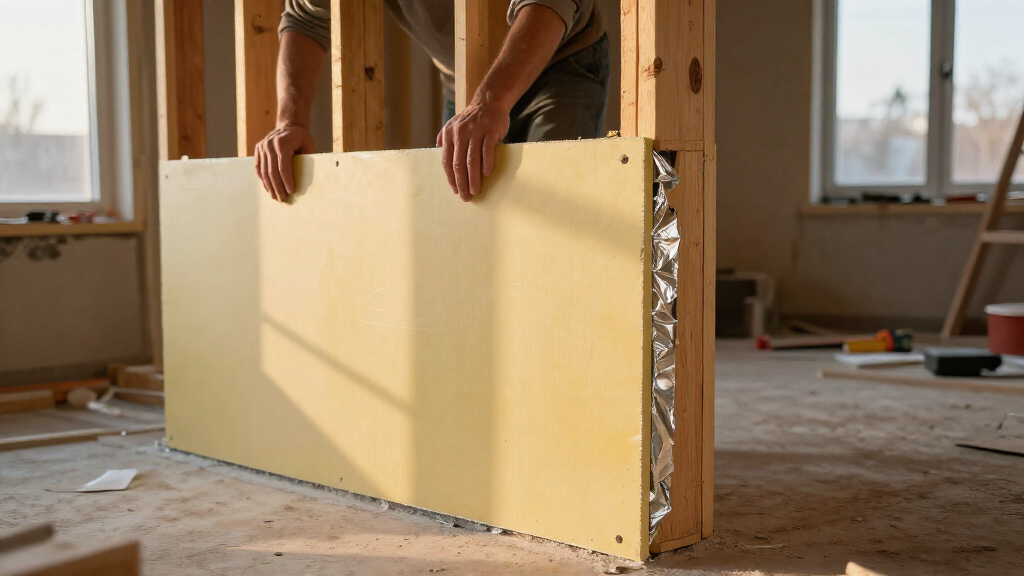
When you need to insulate existing walls without tearing them open, the Vega Bond Open-Cell Injection Foam Insulation Kit stands out as the best overall pick because it flows into closed cavities through small holes and expands to fill gaps. For a more straightforward DIY route, the BEEST FullStop Spray Foam Kit covers large open areas with minimal equipment, while the DAP Wall and Cavity Foam is better suited for sealing cracks and small voids rather than whole-wall coverage. The main tradeoff in this category is between open-cell injection foam, which is easier to install but has a lower R-value per inch, and closed-cell spray foam, which is denser but requires careful application. Keep reading to see how these options compare and which one fits your project.

Get cleaning gear delivered free with Prime
- Fast, free delivery on millions of items
- Prime Video, Amazon Music and more included
- Member-only deals all year
Complete the kit


Key Takeaways
- Injection foam kits like the Vega Bond are the only true retrofit solution for closed walls without major demolition.
- Fiberglass batts, while affordable, only make sense if you already have walls open—they cannot be installed into existing cavities.
- Open-cell foam is more forgiving for DIY than closed-cell because it expands less aggressively and is easier to trim.
- The self-adhesive foam wallpaper offers minimal thermal resistance and is better suited for sound dampening or draft reduction than actual insulation.
- The DAP can is a gap filler, not a wall insulation solution—don’t expect it to raise R-value across a whole wall.
| Owens Corning R-13 Pink Kraft Faced Fiberglass Insulation Roll 15 in. x 32 ft. (3) |  | Best for Standard 2×4 Wall Cavities | R-value: R-13 | Thickness: 3.5 inches | Dimensions: 384 in. L x 15 in. W | VIEW LATEST PRICE | See Our Full Breakdown |
| DAP Wall and Cavity Foam with Wide Spray Applicator, Off-White, 20 oz |  | Best for Targeted Air-Sealing | Can size: 20 oz | Material: Polyurethane foam | R-value: 4.1 at 1 in. (ASTM C518) | VIEW LATEST PRICE | See Our Full Breakdown |
| Maasechs 5 mm Self-Adhesive Thermal Foam Wallpaper Roll, 19.7 in x 16.4 ft |  | Best for Finished-Wall Surface Upgrades | Material thickness: 5 mm | Dimensions: 19.7 in. x 16.4 ft | Coverage: About 26.9 sq. ft. | VIEW LATEST PRICE | See Our Full Breakdown |
| BEEST FullStop Spray Foam Insulation Kit, 120 Board Feet |  | Best Complete Kit for Irregular Cavities | Foam type: Moisture-cured hybrid polyurethane | Coverage: Up to 120 board feet | R-value: 8.24 at 2-inch thickness | VIEW LATEST PRICE | See Our Full Breakdown |
| Owens Corning R-19 Unfaced Fiberglass Insulation, 15 x 93 in, 77.5 sq. ft. |  | Best for Deeper 2×6 Wall Cavities | R-value: R-19 | Thickness: 6.5 inches | Dimensions: 93 x 15 in. | VIEW LATEST PRICE | See Our Full Breakdown |
| Vega Bond Open-Cell Injection Foam Insulation Kit, 100 cu. ft. |  | Best for Sealed Wall Cavities | Brand: Vega Bond | Model: VG-100 | Coverage: 100 cubic feet | VIEW LATEST PRICE | See Our Full Breakdown |
| Owens Corning RU41 Pink Fiberglass Insulation |  | Best for Accessible, Sound-Conscious Projects | Brand: Owens Corning | Model: RU41 | Material: Fiberglass | VIEW LATEST PRICE | See Our Full Breakdown |
| insulation for existing wall | R-value | Dimensions | Material | Coverage |
|---|---|---|---|---|
| Owens Corning R-13 Pink Kraft | R-13 | 384 in. L x 15 in. W | Fiberglass | — |
| DAP Wall and Cavity Foam with | 4.1 at 1 in. (ASTM C518) | — | Polyurethane foam | — |
| Maasechs 5 mm Self-Adhesive Th | — | 19.7 in. x 16.4 ft | — | About 26.9 sq. ft. |
| BEEST FullStop Spray Foam Insu | 8.24 at 2-inch thickness | — | — | Up to 120 board feet |
| Owens Corning R-19 Unfaced Fib | R-19 | 93 x 15 in. | Fiberglass | 77.5 sq. ft. |
| Vega Bond Open-Cell Injection | 4.4 per inch | 18 in. L × 14 in. W | — | 100 cubic feet |
| Owens Corning RU41 Pink Fiberg | — | 93 × 23 inches | Fiberglass | — |
More Details on Our Top Picks
Owens Corning R-13 Pink Kraft Faced Fiberglass Insulation Roll 15 in. x 32 ft. (3)
For an existing wall that is open for renovation and uses standard 2×4 framing, this R-13 fiberglass roll is the most direct fit in this group. Its 3.5-inch thickness suits those cavities, while the kraft facing helps simplify placement compared with the unfaced Owens Corning R-19 batts, which need deeper framing and a separate moisture-control plan. The roll format can be cut to suit cavity lengths, and the product is also described as helping reduce sound transmission. The main limitation is access: it is not a practical way to insulate a finished wall without opening it. It is also sized for 2×4 applications, so buyers with deeper or unusual framing should look at a different option rather than compressing the material.
Pros:- R-13 rating is suited to standard 2×4 wall cavities.
- Kraft facing is included, unlike the Owens Corning R-19 unfaced batts.
- Roll format can be cut to fit wall sections.
- Described as helping reduce noise transmission.
Cons:- Requires access to the wall cavity, so it is not a simple retrofit for intact finished walls.
- Designed primarily for 2×4 framing and may need modification for other cavity sizes.
- Facing does not make it a fit for every wall assembly; moisture-control needs depend on the assembly.
Best for: Homeowners opening standard 2×4 walls during remodeling who want faced fiberglass batts for cavity insulation.
Not ideal for: People insulating finished walls without removing drywall, or owners of 2×6 walls who need insulation sized for deeper cavities.
- R-value:R-13
- Thickness:3.5 inches
- Dimensions:384 in. L x 15 in. W
- Pack count:3
- Facing:Kraft faced
- Material:Fiberglass
- Recommended use:Residential or commercial walls and roofs
Our verdict“Choose this roll when your renovation exposes standard 2×4 cavities and you want faced fiberglass sized for them.”
DAP Wall and Cavity Foam with Wide Spray Applicator, Off-White, 20 oz
This can is better suited to sealing gaps and irregular spots than insulating an entire existing wall. Its wide spray pattern and flow-control trigger give more control across openings than the Maasechs peel-and-stick roll, while the closed-cell polyurethane foam can address air leakage around cavities and other interior surfaces. DAP lists an R-value of 4.1 per inch, but the 20-ounce can is not a substitute for a full-wall insulation system. It also cures on a schedule that depends on conditions: tack-free time is listed as 7–12 minutes, with full cure taking about four hours. Compared with the larger BEEST kit, this is a smaller, simpler choice for localized work, though it does not provide the same kit-scale coverage.
Pros:- Wide spray pattern and flow-control trigger support more controlled application.
- Closed-cell foam helps seal air and moisture pathways.
- Listed R-value is 4.1 at 1 inch.
- Suitable for interior use on wood, masonry, metal, and drywall.
Cons:- A single 20-ounce can is suited to localized work rather than whole-wall coverage.
- Application temperature is limited to 40°F–120°F.
- Full cure time varies with thickness, temperature, and humidity.
Best for: DIYers sealing isolated wall-cavity gaps, penetrations, or other accessible interior spots with a controlled spray applicator.
Not ideal for: Homeowners trying to insulate whole wall cavities in one pass or working outside the listed 40°F–120°F application range.
- Can size:20 oz
- Material:Polyurethane foam
- R-value:4.1 at 1 in. (ASTM C518)
- Application temperature:40°F to 120°F
- Tack-free time:7–12 minutes
- Full cure time:About 4 hours, depending on conditions
- Applicator:Wide spray pattern with flow-control trigger
- Intended use:Interior air sealing and insulation
Our verdict“Pick DAP for small, accessible air leaks where its controlled spray matters more than broad cavity coverage.”
Maasechs 5 mm Self-Adhesive Thermal Foam Wallpaper Roll, 19.7 in x 16.4 ft
Unlike the Owens Corning batts, this peel-and-stick foam roll goes on the room side of a finished wall, so it can cover minor marks and unevenness without opening the cavity. That convenience comes with a different level of insulation: at just 5 mm thick, it is a surface treatment, not a replacement for cavity insulation such as the R-13 roll. The matte white, wipe-clean finish also gives it a decorative and practical role, and the listed coverage is about 26.9 square feet. It needs a smooth, clean, dry surface, and the edges require firm pressing to reduce lifting. I would choose it for a modest comfort and appearance update, not for buyers seeking a substantial increase in wall-cavity thermal resistance.
Pros:- Peel-and-stick backing avoids separate adhesive.
- Can conceal cracks, stains, and uneven surface marks.
- Waterproof, stain-resistant surface can be wiped clean.
- Installs over a finished wall without opening the cavity.
Cons:- At 5 mm thick, it is not comparable to cavity insulation for thermal performance.
- Requires a smooth, clean, dry surface for adhesion.
- Edges may lift unless pressed firmly during installation.
Best for: Renters or homeowners seeking a low-disruption surface covering for a clean, smooth wall with minor blemishes.
Not ideal for: Buyers who need substantial thermal resistance, have rough or damp walls, or are already opening walls for proper cavity insulation.
- Material thickness:5 mm
- Dimensions:19.7 in. x 16.4 ft
- Coverage:About 26.9 sq. ft.
- Finish:Matte white
- Installation:Self-adhesive peel and stick
- Surface care:Waterproof, stain-resistant; wipe clean with a damp cloth
- Recommended uses:Thermal and sound insulation; covering wall imperfections
Our verdict“Choose this roll for a quick finished-wall refresh with modest insulation benefits, not as a substitute for cavity insulation.”
BEEST FullStop Spray Foam Insulation Kit, 120 Board Feet
For a project involving numerous awkward gaps or hard-to-reach areas, the BEEST kit offers more of a complete setup than DAP’s single-can option: it includes six foam cans, an applicator gun, cleaner, and protective gear. The hybrid polyurethane foam bonds to several common building materials, and the listed R-8.24 at 2 inches makes it a more substantial targeted fill than a thin surface layer such as Maasechs wallpaper. Its stated coverage is up to 120 board feet, though actual coverage depends on application conditions and foam expansion. The temperature window is a notable constraint: BEEST recommends applying between 68°F and 77°F. This kit makes sense for a prepared, accessible project, but its limited application range and spray-foam handling make it less forgiving than fiberglass batts.
Pros:- Includes six cans, applicator gun, cleaner, gloves, goggles, and coverall.
- Bonds to wood, metal, drywall, concrete, and brick.
- Listed R-8.24 at 2-inch thickness.
- Designed to fill gaps and reduce air leakage and heat transfer.
Cons:- Recommended application temperature is limited to 68°F–77°F.
- Actual coverage depends on conditions and foam expansion.
- Requires careful application and protective gear, unlike placing fiberglass batts.
Best for: DIY renovators with accessible, irregular cavities or gaps who want a multi-can kit and have control over application conditions.
Not ideal for: Anyone working outside 68°F–77°F, insulating a large uninterrupted wall with batts, or uncomfortable handling expanding spray foam.
- Foam type:Moisture-cured hybrid polyurethane
- Coverage:Up to 120 board feet
- R-value:8.24 at 2-inch thickness
- Recommended application temperature:68°F–77°F
- Fire performance:ASTM E84; Flame Spread Index 0, Smoke Developed Index 120; Class A criteria
- Included components:6 foam cans, applicator gun, cleaner, gloves, goggles, and coverall
- Compatible materials:Wood, metal, drywall, concrete, and brick
Our verdict“Choose BEEST for accessible, irregular areas when you can meet its narrow temperature window and want a ready-to-use kit.”
Owens Corning R-19 Unfaced Fiberglass Insulation, 15 x 93 in, 77.5 sq. ft.
Among the fiberglass choices here, these R-19 batts suit deeper framing rather than the standard 2×4 cavities targeted by the R-13 roll. At 6.5 inches thick, they are intended for 2×6 framing and can also be used in floors and attics, giving them a broader application range when a renovation includes more than walls. Each bag contains eight 15-by-93-inch batts covering 77.5 square feet. The tradeoff is the unfaced design: unlike the kraft-faced R-13 product, these batts do not include a vapor barrier, so the wall assembly needs a separate moisture-control approach. They also require open access to the cavity, which rules them out as a simple finished-wall retrofit. For deeper framing, though, they are a better fit than forcing a thinner batt into the space.
Pros:- R-19 rating and 6.5-inch thickness suit 2×6 framing.
- Eight batts cover 77.5 square feet per bag.
- Can be used in walls, floors, and attics.
- Batts are described as easy to cut and able to recover quickly.
Cons:- Unfaced construction provides no vapor barrier.
- Too thick for standard 2×4 cavities without modification.
- Requires open wall access rather than installation through an intact finished wall.
Best for: Homeowners renovating open 2×6 walls who need thicker fiberglass batts and already have a plan for moisture control.
Not ideal for: Owners of standard 2×4 walls or finished walls that cannot be opened, and buyers who need facing included with the insulation.
- R-value:R-19
- Thickness:6.5 inches
- Dimensions:93 x 15 in.
- Coverage:77.5 sq. ft.
- Batts per bag:8
- Facing:Unfaced; no vapor barrier
- Material:Fiberglass
- Recommended uses:Thermal insulation for walls, floors, and attics
Our verdict“Choose these batts for open 2×6 walls when you want R-19 fiberglass and will handle moisture control separately.”
Vega Bond Open-Cell Injection Foam Insulation Kit, 100 cu. ft.
For an existing wall that can’t be opened up, Vega Bond’s slow-rise injection foam is the most directly targeted option in this pair. Its gun, hose, nozzles, and extended tube are meant to place foam inside a closed cavity, while the 2–4 minute rise gives it time to expand without the rapid buildup associated with faster foams. The stated R-4.4 per inch, air sealing, and sound absorption address more than heat loss alone. Unlike the Owens Corning RU41 fiberglass, this kit can reach a cavity without removing drywall, but that convenience comes with a narrower use case: it is not for open-surface spraying, and results depend on careful injection and cavity access. Its lightweight open-cell foam also differs from denser insulation options, so it is best for targeted retrofit work rather than every wall project.
Pros:- Designed to fill existing closed wall cavities without removing drywall
- Slow 2–4 minute rise helps limit pressure during expansion
- Provides stated R-4.4 per inch along with air sealing and sound absorption
- Extended tube can reach behind existing fiberglass insulation
Cons:- Not intended for open spraying on walls or ceilings
- Injection requires cavity access and careful placement
- Open-cell foam is lightweight, which may not suit buyers seeking denser insulation
Best for: Homeowners insulating accessible, closed wall cavities who want to avoid removing drywall and can follow an injection process carefully
Not ideal for: DIYers seeking a simple cut-and-fit product for exposed framing, or anyone without suitable access points to the wall cavities
- Brand:Vega Bond
- Model:VG-100
- Coverage:100 cubic feet
- Foam type:Open-cell, slow-rise injection foam
- Rise time:2–4 minutes
- R-value:4.4 per inch
- Dimensions:18 in. L × 14 in. W
- Included components:Spray gun, hose, 8 nozzles, gloves, goggles, cleaner, extended injection tube
Our verdict“Choose this kit for a closed-wall retrofit where avoiding drywall removal matters more than having a straightforward batt installation.”
Owens Corning RU41 Pink Fiberglass Insulation
Owens Corning RU41 makes the most sense when a wall cavity is already exposed or can be opened for installation. The unfaced fiberglass is described as easy to cut and install, and it can help control both heat and sound. That hands-on fit makes it a simpler choice than the Vega Bond injection kit, which is designed for closed cavities but requires injection access and careful placement. RU41’s limitation is the same feature that keeps it flexible: it has no facing, so it does not provide a built-in vapor retarder, and the supplied data does not state an R-value. Its listed 0.25-inch thickness also gives buyers less sizing information for planning a wall retrofit than the specified R-19 Owens Corning product in this roundup. I’d choose it for accessible areas, not as a blind fill for finished walls.
Pros:- Unfaced fiberglass can be cut to fit accessible spaces
- Designed to help control heat and sound
- Simpler to place in exposed cavities than an injection-foam system
- Soft-to-the-touch material is described as easy to handle and install
Cons:- Unfaced construction does not include a built-in facing
- Not suited to filling closed wall cavities without opening the wall
- Provided product data does not state an R-value
Best for: DIY renovators or contractors working with exposed wall cavities who want cut-to-fit fiberglass for thermal and sound control
Not ideal for: Homeowners trying to insulate finished, closed walls without removing drywall, or buyers who need a stated R-value and faced product
- Brand:Owens Corning
- Model:RU41
- Material:Fiberglass
- Finish:Unfaced
- Thickness:0.25 inches
- Dimensions:93 × 23 inches
- Weight:18 pounds
- Recommended uses:Thermal insulation and acoustical control
Our verdict“Pick RU41 for an exposed wall cavity where straightforward cutting and sound control matter more than closed-wall installation.”
How We Picked
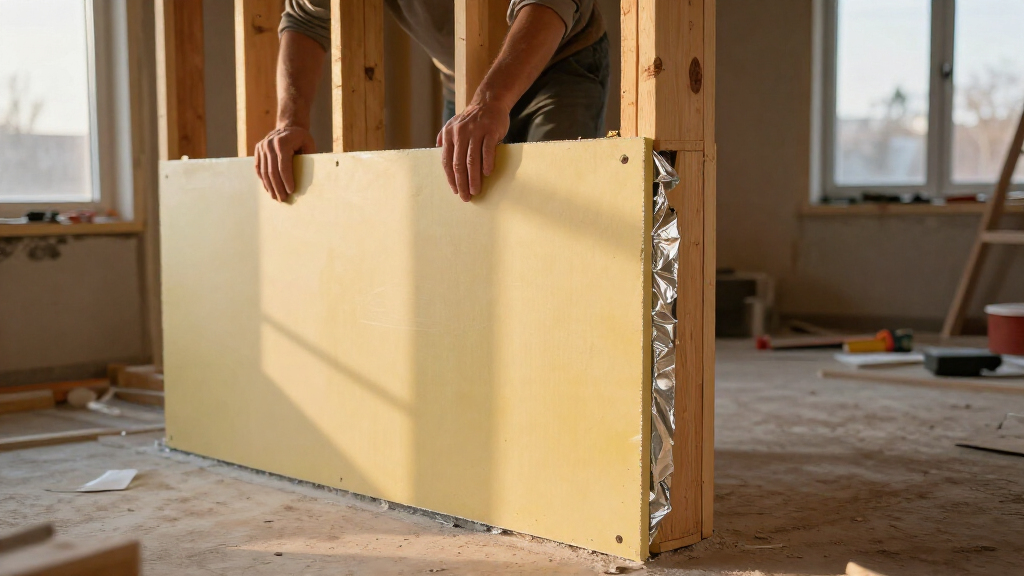
I evaluated each product based on its ability to insulate existing walls without requiring full demolition. The primary criteria were R-value per inch, ease of installation into closed cavities, coverage area, DIY friendliness, and whether the product actually functions as insulation rather than a gap sealant or surface treatment. I also considered how each option handles moisture, air sealing, and the practical challenges of retrofitting—like drilling access holes and ensuring even distribution.
The ranking logic prioritizes products that are specifically designed for retrofit applications. Injection foam leads because it can fill an entire wall cavity from small access points. Spray foam kits follow when you have open walls or large accessible cavities. Blown-in fiberglass is a solid value alternative. Traditional batts rank lower for this use case because they require open walls. Gap fillers and foam wallpaper fall to the bottom because they don’t provide meaningful whole-wall insulation.
| insulation for existing wall | Material |
|---|---|
| Owens Corning R-13 Pink Kraft | Fiberglass |
| DAP Wall and Cavity Foam with | Polyurethane foam |
| Maasechs 5 mm Self-Adhesive Th | — |
| BEEST FullStop Spray Foam Insu | — |
| Owens Corning R-19 Unfaced Fib | Fiberglass |
| Vega Bond Open-Cell Injection | — |
| Owens Corning RU41 Pink Fiberg | Fiberglass |
Factors to Consider When Choosing Best Insulation For Existing Walls
Choosing insulation for existing walls goes beyond picking a product with a high R-value. You need to think about how the material will be installed, how it interacts with moisture, and whether it actually fits your wall construction. Here are the factors that matter most when comparing your options.
Understand R-Value and Wall Cavity Depth
R-value measures thermal resistance, but more isn’t always better if your wall cavity is shallow. A 2×4 wall typically accommodates R-13 to R-15, while 2×6 walls can handle R-19 to R-21. Injection foam kits often advertise R-values per inch, so you can calculate the total for your specific cavity. If you have a shallow cavity, a high-R closed-cell foam might be overkill and could cause the drywall to bulge if it expands too much. Measure your stud depth before choosing a product.
Open-Cell vs. Closed-Cell Foam
Open-cell foam is softer, expands less aggressively, and is easier to trim, making it a better choice for DIY injection projects. Closed-cell foam is denser, provides a vapor barrier, and has a higher R-value per inch, but it requires more precision and often professional equipment. For existing walls, open-cell is usually the safer bet because it can flow into irregular gaps without exerting too much pressure on the drywall. Closed-cell is better for basements or areas with moisture concerns, but it’s harder to retrofit.
Installation Methods: Injection, Spray, and Blown-In
Injection foam uses a two-part liquid that expands inside the cavity, filling every nook. Spray foam kits are similar but are applied to open surfaces, so they work best when you have access to the cavity—like during a renovation. Blown-in insulation uses loose fiberglass or cellulose that is blown through holes, which is a common retrofit method but doesn’t seal air leaks as effectively as foam. Your choice depends on whether your walls are open or closed, and how much air sealing you need.
DIY vs. Professional Installation
Some products are designed for homeowners, while others require professional equipment and training. Injection foam kits like the Vega Bond are DIY-friendly but require careful mixing and a steady hand. Spray foam kits can be messy and have a learning curve. Blown-in insulation often needs a rental machine and two people. If you’re not comfortable with these processes, hiring a professional may be worth the cost. The foam wallpaper and gap-filling cans are the easiest to apply but offer the least benefit.
Air Sealing vs. Insulation
Insulation slows heat transfer, but air leaks can undermine its performance. Many retrofit products also act as air barriers, which is a major advantage. Injection foam and closed-cell spray foam seal gaps as they expand, while blown-in fiberglass does not. If your walls have wiring, outlets, or other penetrations, foam-based solutions are better at stopping drafts. The DAP can is strictly for sealing small gaps—it won’t add meaningful R-value to a whole wall.
Moisture and Vapor Barriers
Moisture can ruin insulation and cause mold. Closed-cell foam acts as a vapor barrier, which is helpful in humid climates but can trap moisture if the wall assembly isn’t designed correctly. Open-cell foam and fiberglass are vapor-permeable, allowing walls to breathe. In existing walls, you need to consider the climate and the presence of any existing vapor barriers. Injection foam is generally safe because it fills the cavity without creating a continuous vapor barrier unless you use closed-cell.
Frequently Asked Questions
Can I inject foam into existing walls without removing drywall?
Yes, injection foam kits are designed for this exact purpose. You drill small holes—usually 1 to 2 inches in diameter—in the drywall between studs, then inject the foam through a nozzle. The foam expands to fill the cavity and then hardens. After the foam cures, you patch the holes with drywall compound. This method works best with open-cell foam because it expands less aggressively and is less likely to bow the drywall. Closed-cell injection foam is riskier because it expands with more pressure, which can crack or deform the wall.
How do I know if my wall cavity is suitable for injection foam?
First, check for obstructions like fire blocks, electrical wiring, or plumbing that might block the foam from filling the entire cavity. Use a stud finder to locate studs and map out the cavities. Also, inspect the condition of the drywall—if it’s loose or has existing damage, the pressure from foam could worsen it. You should also verify that there is no existing insulation that might interfere with the foam’s expansion. If the wall is already insulated, injection foam won’t add much value unless you remove the old material first.
What’s the difference between open-cell and closed-cell spray foam for existing walls?
Open-cell foam has a lower R-value per inch (around R-3.5 to R-4) but is softer and expands less, making it easier to control in a retrofit. It also allows moisture to pass through, which can help prevent trapped condensation. Closed-cell foam has a higher R-value (around R-6 to R-7 per inch) and acts as a vapor barrier, but it expands with much more force. That makes it difficult to inject into closed walls without risking damage. For most existing-wall projects, open-cell is the safer and more practical choice.
Is it worth using foam wallpaper as insulation?
Foam wallpaper, like the Maasechs product, is not real insulation. It’s a thin layer of foam, usually 5mm thick, that offers negligible thermal resistance—roughly R-0.2 or less. It can help reduce drafts and add a slight sound-dampening effect, but it won’t meaningfully lower your heating bills or improve comfort. If you’re looking for actual insulation, you need a product that fills the wall cavity. Foam wallpaper is better suited for temporary fixes or as a supplementary layer on interior walls, not as a replacement for proper insulation.
How much coverage do I need for a typical wall?
Coverage depends on the product and the size of your wall cavities. For example, a 100 cubic foot injection foam kit covers roughly 1,200 square feet at a 1-inch thickness, but you’ll need more if your walls are deeper. Measure the total square footage of wall area you want to insulate and multiply by the cavity depth to get cubic feet. Most kits list their coverage in board feet or cubic feet. It’s always better to overestimate slightly, because you can’t easily buy a partial refill for most kits.
Conclusion
If you want the best overall solution for insulating existing walls without tearing them open, the Vega Bond Open-Cell Injection Foam is my top pick—it fills cavities completely, seals air leaks, and is DIY-friendly. For the best value, consider the Owens Corning RU41 Blown-In Fiberglass if you have access to a blowing machine and want a cheaper alternative that still works in closed walls. The BEEST FullStop Spray Foam Kit is the best for beginners who have open walls and want a simple spray application, though it requires more cleanup. If you’re looking for a premium option with maximum R-value and moisture resistance, closed-cell spray foam from a professional is the way to go, but it’s not a DIY project. For specific needs like sealing small gaps or adding a draft barrier, the DAP can or the foam wallpaper can help, but they won’t replace real insulation.


