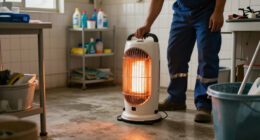

The best garage heater for most fixed workspaces in this lineup is the Mr. Heater Big Maxx 50,000 BTU, a strong fit for buyers who need substantial heat and can accommodate a gas-powered installation. The InoKraft 7,500W models stand out for electric heating, while the CTSC 5600W offers a simpler fan-forced option for a properly wired garage. The main tradeoffs are heating capacity, electrical or fuel requirements, installation effort, and whether you need to warm an entire garage or just a work area. Portable infrared choices offer more flexible, localized warmth but are not direct substitutes for high-output fixed heaters. Read on for how each option fits different garage setups and what to check before choosing.

Get cleaning gear delivered free with Prime
- Fast, free delivery on millions of items
- Prime Video, Amazon Music and more included
- Member-only deals all year
Complete the kit


Key Takeaways
- The Big Maxx is the lineup’s gas-powered, high-output choice; it suits buyers prioritizing whole-space heating who can manage gas installation and venting requirements.
- The two InoKraft 7,500W heaters serve different installation needs: choose the NEMA 14-50P version only if its plug matches a suitable outlet, and check the hardwired model against your wiring plan.
- The CTSC 5600W offers a middle ground in fixed electric heating, but its 240V requirement makes circuit compatibility a must-check before purchase.
- The Shinic two-packs favor targeted warmth over one powerful heat source; multiple units can help distribute heat, though their 120V format is not equivalent to high-wattage 240V heaters.
- The DR-238 and Buyplus are localized-heating options: infrared heat and portability can suit a person or task, but neither should be mistaken for a whole-garage heating system.


| garage heater | Heating coverage | Power | Mounting | Voltage |
|---|---|---|---|---|
| Mr. Heater Big Maxx 50,000 BTU | Up to 1,667 sq ft | 120 V AC | Ceiling mount | — |
| Dr. Infrared Heater DR-238 Ind | — | — | Wall or ceiling | 120 V |
| CTSC 5600W 240V Fan-Forced Gar | 560 sq ft / 52 sq m | 5,600 W | Ceiling or wall mount | 240 V |
| Shinic 2-Pack 120V Ceiling-Mou | 400–600 sq ft | 750 W or 1,500 W per heater | Ceiling-mounted | 120 V AC, 60 Hz |
| Shinic 2-Pack 120V Electric Ga | 300–400 sq ft | — | Ceiling mount | 120 V |
| Comfort Zone Hard-Wired Ceilin | Up to 1,250 sq. ft. | 7,500 W | — | 240 V |
| Buyplus 1500W Portable Outdoor | — | 1,500 W | — | — |
| InoKraft 7,500W Electric Garag | Up to 750 sq. ft. | 7,500 W | — | — |
| InoKraft 7,500W Electric Garag | Up to 750 sq. ft. | 7,500 W | Wall or ceiling | — |
More Details on Our Top Picks
Mr. Heater Big Maxx 50,000 BTU Forced-Air Unit Heater
I rank the Big Maxx first for buyers who need to heat a substantial garage or workshop: its 50,000 BTU forced-air output is rated for spaces up to 1,667 square feet, far beyond the smaller zones suited to the Shinic quartz heaters. Ceiling mounting keeps the floor clear, while included angle brackets and an NG-to-LP conversion kit give the installation some flexibility. It can vent vertically or horizontally, which may help when planning a suitable exhaust route. The tradeoff is that this is a fixed-installation heater, not a plug-in shortcut: it needs 120-volt power, proper venting, at least 10 feet of ceiling height, and 8 feet of clearance below. A thermostat is sold separately, too. Choose it for large, high-ceiling spaces; skip it for compact garages or renters.
Pros:- 50,000 BTU output is rated for spaces up to 1,667 square feet.
- Ceiling mounting keeps the floor open for vehicles and equipment.
- Includes ceiling brackets and a natural-gas-to-propane conversion kit.
- Supports vertical or horizontal venting.
Cons:- Requires at least 10 feet of ceiling height and 8 feet of clearance below.
- Venting and fuel setup make installation more involved than the plug-in Shinic heaters.
- Thermostat is sold separately.
Best for: Owners of large, high-ceiling garages, barns, or workshops who can arrange fuel, venting, and permanent ceiling installation.
Not ideal for: People with low ceilings, limited clearance, no suitable vent route, or a small garage that does not need high-output heat.
- Model:F260550
- Heat output:50,000 BTU
- Heating coverage:Up to 1,667 sq ft
- Fuel:Natural gas; includes NG-to-LP conversion kit
- Heating method:Forced air
- Mounting:Ceiling mount
- Power:120 V AC
- Vent options:Vertical or horizontal
- Minimum ceiling height:10 ft
Our verdict“Pick the Big Maxx for a large garage with the ceiling clearance and installation setup its powerful forced-air heating requires.”
Dr. Infrared Heater DR-238 Indoor and Outdoor Carbon Infrared Patio Heater
The DR-238 makes more sense for warming a person or work area than trying to heat an entire garage. Its carbon infrared heat is described as instant and odorless, so you can direct warmth toward a bench or seating spot without waiting for forced air to circulate. That makes it a different proposition from the CTSC 5600W fan-forced heater, which is aimed at heating a defined indoor space and offers thermostat control. The DR-238 instead runs from a standard 120-volt supply and can be mounted on a wall or ceiling for indoor or outdoor use. Its three settings and included remote add convenience, but there is no thermostat to regulate a target temperature. I would shortlist it for a frequently used work zone or sheltered patio, not as the sole heater for a cold, full-size garage.
Pros:- Infrared heat provides direct warmth without waiting for garage air to warm.
- Suitable for indoor and outdoor settings.
- Three heat settings allow a choice of output.
- Includes remote control and wall- or ceiling-mount brackets.
Cons:- No thermostat for maintaining a chosen room temperature.
- Mounting is required, so it is not a portable plug-in heater.
- Better suited to a targeted zone than heating a large garage evenly.
Best for: Garage users who want directed warmth at a workbench or seating area, plus a heater that can also serve a sheltered outdoor space.
Not ideal for: Buyers seeking whole-garage heating, automatic thermostat control, or an unmounted portable heater.
- Model:DR-238
- Heating method:Carbon infrared
- Heat settings:900 W, 1,200 W, 1,500 W
- Voltage:120 V
- Current:12.5 A
- Mounting:Wall or ceiling
- Dimensions:35 × 8 × 4 in
- Weight:8 lb
- Warranty:1-year limited
Our verdict“Choose the DR-238 for mounted, directed warmth in a work area or patio rather than whole-garage heating.”
CTSC 5600W 240V Fan-Forced Garage Heater
For a mid-size garage with a 240-volt circuit, the CTSC 5600W offers a more controlled approach than the infrared DR-238. Its digital thermostat, remote, and 1–10-hour timer let you set and manage heat without relying on a separate control, while adjustable airflow helps aim warmth around a work area. The stated coverage is 560 square feet, making it a more focused electric option than the much larger Mr. Heater Big Maxx, which is built for spaces up to 1,667 square feet and requires fuel and venting. This unit’s main catch is electrical: its 240-volt, 23.3-amp requirement and NEMA 6-30P plug rule out an ordinary 120-volt outlet, and professional installation is recommended. It also produces fan noise up to 58 dB. For the right circuit, its controls are a strong practical advantage.
Pros:- Digital thermostat and remote provide convenient heat control.
- Timer can be set from 1 to 10 hours.
- Adjustable mounting angle and airflow help direct heat.
- Overheat protection and UL certification are listed.
Cons:- Requires 240 V and a NEMA 6-30P connection rather than a standard household outlet.
- Professional installation may be needed.
- Fan noise can reach 58 dB.
Best for: Garage and workshop owners with a suitable 240-volt supply who want built-in temperature, timer, and airflow controls for a space up to 560 square feet.
Not ideal for: People with only standard 120-volt outlets, those unwilling to arrange suitable installation, or buyers who need a quiet heater.
- Power:5,600 W
- Voltage:240 V
- Current:23.3 A
- Heating output:19,096 BTU
- Heating coverage:560 sq ft / 52 sq m
- Mounting:Ceiling or wall mount
- Temperature range:50–95 °F
- Timer:1–10 hours
- Plug:NEMA 6-30P, 30 A
Our verdict“Choose the CTSC if your garage has the right 240-volt supply and you value thermostat and timer control over simple plug-in setup.”
Shinic 2-Pack 120V Ceiling-Mounted Electric Garage Heater
This two-heater Shinic set is the lineup’s straightforward choice for directing modest radiant heat to separate spots, such as a workbench and a vehicle bay. Each unit offers 750 W or 1,500 W, a built-in halogen work light, and up to 90 degrees of adjustment. Compared with the single DR-238, the two-pack gives you another heating point and light source; compared with the remote-equipped Shinic model, however, this version does not list remote control. Its 120-volt grounded plugs avoid the dedicated 240-volt supply needed by the CTSC, but the stated 12.5-amp current per heater still deserves attention when planning outlet use. Ceiling mounting is required, and radiant heat warms directly rather than circulating through a whole garage. The listed 400–600-square-foot coverage should not be read as a promise of even, room-wide heat from two small units.
Pros:- Two heaters can serve separate work or vehicle areas.
- Radiant quartz tubes direct heat toward people and objects.
- Built-in halogen work lights add task visibility.
- Each heater offers adjustable direction and five heat-and-light settings.
Cons:- Ceiling mounting is required, limiting placement flexibility.
- Indoor use only.
- Radiant output is less suited to warming garage air evenly than fan-forced models.
Best for: Garage owners who want two mounted radiant-heating points and work lights for separate task areas, with 120-volt outlets available.
Not ideal for: People who need portable or whole-room forced-air heat, cannot mount heaters overhead, or want remote operation.
- Quantity:2 heaters
- Power:750 W or 1,500 W per heater
- Voltage:120 V AC, 60 Hz
- Current:12.5 A
- Heating method:Radiant quartz
- Heating coverage:400–600 sq ft
- Mounting:Ceiling-mounted
- Adjustment:Up to 90°
- Safety features:Overheat auto-off, grounded three-prong plug, metal housing, ETL listed
Our verdict“Pick this Shinic two-pack for adjustable, task-focused heat and light in two indoor garage zones, not for whole-room temperature control.”
Shinic 2-Pack 120V Electric Garage Heater, Remote Control, Ceiling Mounted
This remote-equipped Shinic two-pack suits buyers who want ceiling-mounted radiant heat and lighting but would rather adjust settings from a distance. Its dual quartz tubes, five heating modes, and 90-degree adjustable mount make it easier to aim warmth toward a work area than a fixed-direction heater. Against the other Shinic two-pack in this roundup, the clearest distinction is the listed remote control; the other model instead specifies two heat levels per heater and coverage of 400–600 square feet. This version lists 300–400 square feet and does not specify a thermostat, so remote operation should not be mistaken for automatic temperature regulation. The 120-volt, 12.5-amp design avoids the CTSC’s 240-volt requirement, but this remains a mounted, indoor task heater—not a portable solution for warming a large garage evenly.
Pros:- Remote control allows setting changes without reaching the ceiling-mounted unit.
- Adjustable mount directs heat toward a chosen task area.
- Built-in halogen light supports work in dim garages.
- Grounded 120 V plug and overheat protection are listed.
Cons:- Ceiling mounting limits relocation and requires an appropriate installation point.
- No thermostat is listed, so remote control does not provide automatic temperature regulation.
- Listed coverage is 300–400 sq ft, making it a limited choice for large garages.
Best for: DIYers who work in a defined garage area and want remote-adjustable radiant heat, overhead lighting, and floor space left clear.
Not ideal for: Buyers who need thermostat-controlled whole-garage heat, portable placement, or coverage beyond the listed 300–400 square feet.
- Voltage:120 V
- Power settings:750 W and 1,500 W
- Amperage:12.5 A
- Heating coverage:300–400 sq ft
- Mounting:Ceiling mount
- Adjustable angle:90°
- Modes:5
- Safety features:Overheat protection, ETL listed, grounded three-prong plug
- Dimensions:11 × 24 × 5 in
Our verdict“Choose this Shinic set for remotely controlled radiant warmth and light in a mounted task zone, not as your main heater for a large garage.”
Comfort Zone Hard-Wired Ceiling-Mount Garage Space Heater, 7500W, 240V, Fan-Forced, Remote, Digital Thermostat, 12-Hour Timer (CZ230ER)
The Comfort Zone stands out for buyers who want high-output heat without giving up floor space. Its 7,500-watt fan-forced design is listed for areas up to 1,250 sq. ft., more coverage than the 750 sq. ft. ratings listed for the InoKraft heaters. Adjustable louvers help direct airflow toward a work area, while the remote, digital thermostat, and 12-hour timer make adjustments easier once the unit is mounted overhead. Heavy-gauge steel and overheat protection suit regular garage or workshop use. The tradeoff is installation: this is a hard-wired, heavy unit, not a plug-in choice, so many buyers will need an electrician or help mounting it. Compared with the plug-equipped InoKraft, it offers a larger stated coverage area but less convenient electrical setup.
Pros:- 7,500 watts with listed coverage up to 1,250 sq. ft.
- Ceiling mounting keeps floor and workbench areas clear.
- Remote, digital thermostat, adjustable louvers, and 12-hour timer support convenient heat control.
- Heavy-gauge steel construction and overheat protection.
Cons:- Requires hard-wired 240V installation rather than a standard outlet.
- Heavy construction can make mounting difficult without assistance.
- Its 12-hour timer offers a shorter scheduling window than the InoKraft heaters’ 1–24-hour timers.
Best for: Owners of large garages or workshops with a suitable 240V circuit who want ceiling-mounted heat and remote controls.
Not ideal for: Renters and DIY buyers seeking a portable or simple plug-in heater; hardwiring and mounting a heavy unit take planning and installation help.
- Power:7,500 W
- Voltage:240 V
- Heating coverage:Up to 1,250 sq. ft.
- Installation:Hard-wired ceiling mount
- Timer:12-hour programmable timer
- Controls:Remote control and digital thermostat
- Safety:Overheat protection and temperature sensor shutdown
- Construction:Heavy-gauge steel
Our verdict“Choose the Comfort Zone if you need a ceiling-mounted 7,500-watt heater with the roundup’s largest stated coverage, and can handle hard-wired installation.”
Buyplus 1500W Portable Outdoor Heater with Overheat Protection, Fast Heating, Non-Slip Base – Black
Unlike the fixed 7,500-watt Comfort Zone and InoKraft heaters, the Buyplus is a small, movable source of spot heat for a workbench, desk, or compact garage area. Its three modes—fan only, 750W, and 1,500W—let buyers choose between airflow and two heat levels, while the portable handle and non-slip base make repositioning straightforward. The maker lists coverage up to 200 sq. ft. and noise below 40 dB, a better fit for close-range comfort than for warming an entire multi-car garage. It also lacks a built-in thermostat, so it cannot automatically maintain a chosen temperature like the larger hard-wired models. The short installation path is its main advantage, but the limited output and coverage are real constraints for cold, open spaces.
Pros:- Portable design with a handle and non-slip base.
- Three modes: fan only, 750W, and 1,500W.
- Listed noise level below 40 dB.
- Self-resetting heat breaker provides overheat protection.
Cons:- Listed coverage is limited to 200 sq. ft.
- No built-in thermostat for automatic temperature control.
- A portable unit provides less area-wide heat than ceiling- or wall-mounted garage heaters.
Best for: People who need movable supplemental heat near a workbench or in a compact, enclosed garage area, and want to avoid hardwiring.
Not ideal for: Owners trying to heat a large or poorly insulated garage; its 1,500-watt output and listed 200 sq. ft. coverage are far below the fixed 7,500-watt options.
- Power:1,500 W
- Heating modes:Fan only, 750 W, 1,500 W
- Listed coverage:Up to 200 sq. ft.
- Dimensions:12 × 10 × 8 in.
- Power cord:7.8 ft.
- Noise level:Under 40 dB
- Safety:Self-resetting heat breaker
- Warranty:1 year
Our verdict“Pick the Buyplus for quiet, portable warmth in a small work area, not as the primary heater for a large garage.”
InoKraft 7,500W Electric Garage Heater
The InoKraft suits buyers who want a fixed 240V heater with several ways to direct and schedule heat. Its listed coverage is up to 750 sq. ft., making it a smaller-space match than the Comfort Zone, whose stated range reaches 1,250 sq. ft. Four modes—High, Low, ECO, and Fan Only—offer more operating choices than the Buyplus portable heater, and the 1–24-hour timer allows longer scheduling than the Comfort Zone’s 12-hour timer. Wall, ceiling, or hanging installation options can help fit the heater around a workshop layout, while adjustable louvers aim airflow where needed. The tradeoff is a hard-wired installation, with professional electrician installation recommended, plus a stated 65 dB noise level that may be noticeable during focused work.
Pros:- Four modes include High, Low, ECO, and Fan Only.
- Adjustable thermostat covers 40°F to 99°F.
- Timer can be set from 1 to 24 hours.
- Wall, ceiling, and hanging installation options keep floor space open.
Cons:- Hardwiring is required, and professional electrician installation is recommended.
- Listed coverage of up to 750 sq. ft. is less than the Comfort Zone’s stated 1,250 sq. ft.
- Listed 65 dB operating noise may be distracting in a quiet workspace.
Best for: Workshop owners with a 240V supply who want a hard-wired heater with wall or ceiling placement, multiple modes, and extended timer settings.
Not ideal for: Buyers without a suitable circuit, those who need a plug-in unit, or people who are sensitive to fan noise.
- Power:7,500 W
- Voltage and amperage:240 V; 31.25 A
- Heating coverage:Up to 750 sq. ft.
- Operating modes:High, Low, ECO, Fan Only
- Temperature range:40°F to 99°F
- Timer:1–24 hours
- Noise level:65 dB
- Installation:Hardwired; ceiling, wall, or hanging options
- Safety:Overheat protection with automatic shut-off
Our verdict“Choose this InoKraft for a fixed 750 sq. ft. workspace where mounting flexibility and a 24-hour timer matter more than plug-in convenience.”
InoKraft 7,500W Electric Garage Heater with NEMA 14-50P Plug
This InoKraft’s defining advantage is its included NEMA 14-50P plug and 8.2-foot cord, which can make connection more straightforward than the hard-wired Comfort Zone or the other hard-wired InoKraft model. It still calls for a 240V supply and professional installation, so “plug-in” does not mean it can run from a standard household outlet. The heater delivers 7,500 watts for listed coverage up to 750 sq. ft., with a digital thermostat, ECO mode, timer, and adjustable louvers for managing heat across a garage or workshop. Its feature set is close to the hard-wired InoKraft, but the cord and plug distinguish its electrical setup. Buyers should also account for the stated 65 dB noise level and the need for a compatible circuit.
Pros:- Includes an 8.2-foot cord with a NEMA 14-50P plug.
- 7,500-watt forced-air heat with listed coverage up to 750 sq. ft.
- Digital thermostat, ECO mode, and 1–24-hour timer.
- Adjustable louvers and wall or ceiling mounting options.
Cons:- Requires a compatible 240V supply and professional installation.
- Listed 65 dB noise level may be noticeable.
- Listed coverage is smaller than the Comfort Zone’s stated 1,250 sq. ft.
Best for: Garage owners who have or plan to install a compatible 240V NEMA 14-50 receptacle and want a 7,500-watt wall- or ceiling-mounted heater.
Not ideal for: Anyone expecting to use a standard household outlet, or buyers seeking a quiet, no-installation portable heater.
- Power:7,500 W
- Voltage and amperage:240 V; 31.25 A
- Heating coverage:Up to 750 sq. ft.
- Plug and cord:NEMA 14-50P; 8.2 ft.
- Temperature range:40°F–99°F
- Timer:1–24 hours
- Mounting:Wall or ceiling
- Noise level:65 dB
- Safety:Overheat protection and automatic shut-off
Our verdict“Choose this model over the hard-wired InoKraft if a compatible 240V receptacle and its plug-and-cord connection suit your installation plan.”

How We Picked
I ranked these heaters by how well their heating approach matches a typical garage need, then weighed the practical demands behind that performance. The main factors were stated heat output or electrical wattage, fixed versus portable use, fuel or circuit requirements, control features, and how easily the unit can serve a defined work area. A high output rating did not automatically put a model first: installation complexity and compatibility can make a powerful heater a poor fit for a particular garage.
The ranking gives priority to options with a clear role and a plausible path to heating the intended space. I placed the Big Maxx first for buyers needing substantial fixed heat, while the electric models follow according to their output and installation distinction. Lower-powered or portable options rank below them because their strengths are more localized. The two Shinic bundles and two InoKraft versions are compared by the practical difference in configuration, not treated as interchangeable products.
| garage heater | Mounting |
|---|---|
| Mr. Heater Big Maxx 50,000 BTU | Ceiling mount |
| Dr. Infrared Heater DR-238 Ind | Wall or ceiling |
| CTSC 5600W 240V Fan-Forced Gar | Ceiling or wall mount |
| Shinic 2-Pack 120V Ceiling-Mou | Ceiling-mounted |
| Shinic 2-Pack 120V Electric Ga | Ceiling mount |
| Comfort Zone Hard-Wired Ceilin | — |
| Buyplus 1500W Portable Outdoor | — |
| InoKraft 7,500W Electric Garag | — |
| InoKraft 7,500W Electric Garag | Wall or ceiling |
Factors to Consider When Choosing Best Garage Heaters
Choosing a garage heater starts with the space and the way you use it, not with the largest number on a box. I would first decide whether you need steady background warmth across the garage or comfort at one bench, then check what power and installation the building can support.
Match the heater to the space you need warm
Garage area alone does not tell the whole story: ceiling height, insulation, air leaks, and how often the door opens all affect heat loss. A heater sized for a sealed, insulated workspace may struggle in a drafty garage with a large overhead door. Avoid choosing solely by wattage or BTU figures without checking the manufacturer’s guidance for space and conditions. If you mostly work at one bench, localized infrared heat can be more practical than heating every corner. For frequent whole-garage use, improving weather seals may make a moderate heater more useful than buying a larger unit. Think about how quickly the space needs to recover after the door opens, too.
Check electrical service, fuel, and installation before buying
A heater’s power source can rule it in or out before its features matter. A 240V unit needs a compatible circuit, while a plug-in model requires an outlet that matches its specified plug and electrical load. Do not assume a NEMA 14-50P plug can go into any nearby receptacle, or that an existing circuit can safely support a high-wattage heater. Gas-fired units bring their own planning needs, including the manufacturer’s venting and fuel requirements. If you are unsure about circuit capacity, wiring, mounting, or fuel connections, ask a qualified professional before purchase. Installation constraints are a better reason to narrow the shortlist than to rely on an adapter or improvised setup.
Choose between whole-space heat and task-focused warmth
Fan-forced heaters move warm air around a space, which can make them a better match for general garage heating when correctly sized. Infrared heaters warm people and nearby surfaces more directly, so they can feel useful at a workstation without bringing the entire room to temperature. Portable units make it easier to aim warmth where needed, but their reach and output may not suit a large, cold garage. Multiple smaller heaters can spread warmth across separate work zones, yet they also require suitable outlets and safe placement. Decide whether your priority is room temperature, comfort at one location, or flexibility between tasks. That distinction prevents comparing very different heater types as though they offer the same result.
Treat mounting and clearances as part of the purchase
Ceiling-mounted heaters free up floor space, but they need a stable mounting location and enough clearance from stored items, vehicles, and combustible materials. Portable heaters avoid permanent installation but can be easier to bump, obstruct, or place too close to objects. Read the clearance instructions for the exact model and plan around where cords, tools, and vehicle doors will move. A heater positioned near a workbench may warm the user well while leaving the rest of the garage chilly. Consider airflow and the direction of heat before selecting a mounting point. If the safest location does not point toward the intended area, a different heater style may be a better fit.
Compare controls and operating habits, not just output
A thermostat can reduce guesswork by maintaining a set temperature, while a timer or remote can make routine use more convenient. Those features do not compensate for an undersized heater or an incompatible circuit, so treat them as usability improvements rather than proof of heating capacity. Ask whether you want the garage warm before entering or only while you are working; the answer affects how much control convenience matters. A simple portable heater may suit occasional, short sessions, while a fixed unit makes more sense when the space is used regularly. Check how the controls are accessed after installation, especially for ceiling-mounted units. Also review the manual for operating limits and routine care.
Frequently Asked Questions
Can a 120V garage heater warm an entire garage?
A 120V heater can add warmth, but whether it can heat an entire garage depends on the unit’s output, the space, and heat loss. The 120V Shinic bundles in this lineup are better understood as options for distributed or targeted warmth than as equivalents to the higher-wattage 240V models. In a large, poorly insulated garage, expectations should stay modest. For whole-space heating, compare the heater’s stated coverage with your room conditions and check whether the electrical supply supports a higher-output alternative. Sealing drafts can also improve comfort without changing the heater.
Should I choose the InoKraft model with a plug or the hardwired version?
Choose based on the electrical setup you already have and the installation you are prepared to arrange. The NEMA 14-50P version needs a compatible receptacle and a circuit suitable for the heater; the plug alone does not confirm that an outlet is appropriate. A hardwired unit may suit a permanent installation, but it calls for compatible wiring and potentially professional electrical work. Check the model’s instructions and have an electrician confirm the circuit if there is any uncertainty. Neither configuration is automatically easier or safer for every garage.
Is a gas garage heater better than an electric one?
Neither fuel type is universally better; the right choice depends on the garage and the available services. The Mr. Heater Big Maxx offers a high-output gas option, which can appeal to buyers seeking substantial fixed heat and who can meet its fuel and installation requirements. Electric models avoid gas connections but may call for a dedicated 240V circuit or other electrical work. Compare the installation rules, operating pattern, and electrical or fuel capacity at your property before choosing. If either system requires modifications, include those practical demands in your decision rather than comparing heater output alone.
Can an infrared patio heater replace a fan-forced garage heater?
It can serve a different job, but it is not a direct replacement in every garage. The DR-238 uses infrared heating, which is better suited to warming people or nearby surfaces than circulating warm air throughout a large space. A fan-forced heater is more aligned with general air heating when its output matches the room. If you work in one area and want direct warmth, infrared may be a sensible fit; if you want the whole garage warmer, compare coverage and output carefully. Follow the model’s indoor-use and placement instructions, since patio-style marketing does not remove the need for safe installation and clearances.
When does buying two smaller heaters make more sense than one larger unit?
Two units may suit a garage with separate work areas where one heater would leave a cold zone or blow heat in an unhelpful direction. The Shinic two-packs make that distributed approach possible, but their 120V format does not mean their combined heating is automatically equivalent to a high-output 240V heater. Check each unit’s electrical requirements and whether the available outlets and circuits can support simultaneous operation. Two heaters also mean more placement decisions and more equipment to manage. For one central work area, a single appropriately sized heater may be simpler; for distinct zones, multiple units can offer better coverage.
Conclusion
For the best overall high-output pick, I would start with the Mr. Heater Big Maxx if your garage can support a gas installation and you want substantial fixed heat. The best electric options are the InoKraft 7,500W models: choose the NEMA 14-50P version for a compatible outlet setup, or the hardwired version for a planned permanent installation. For best value in a straightforward fixed electric format, the CTSC 5600W is worth comparing when your 240V circuit and heating needs align. Buyers new to garage heaters may find the portable Buyplus simpler to position for occasional, localized warmth, while the DR-238 suits task-focused infrared heating. For spread-out work zones, look at the Shinic two-packs, but skip them if you need a single high-output whole-garage solution. My final choice would hinge on space, power access, and whether you need to heat the room or just your work area.
Halloween Picks
halloween
As an affiliate, we earn on qualifying purchases.