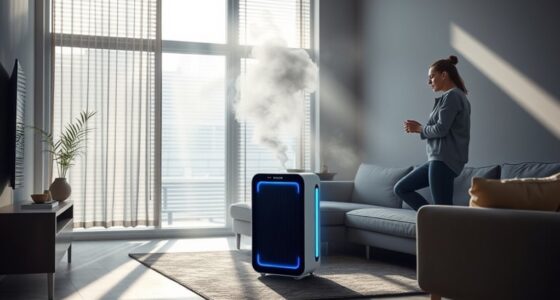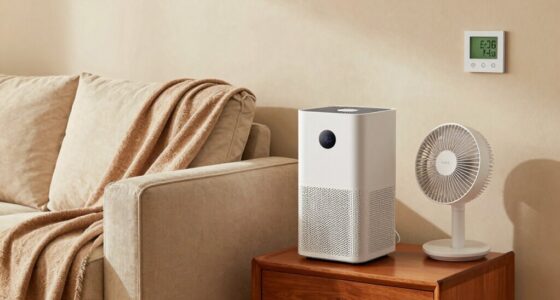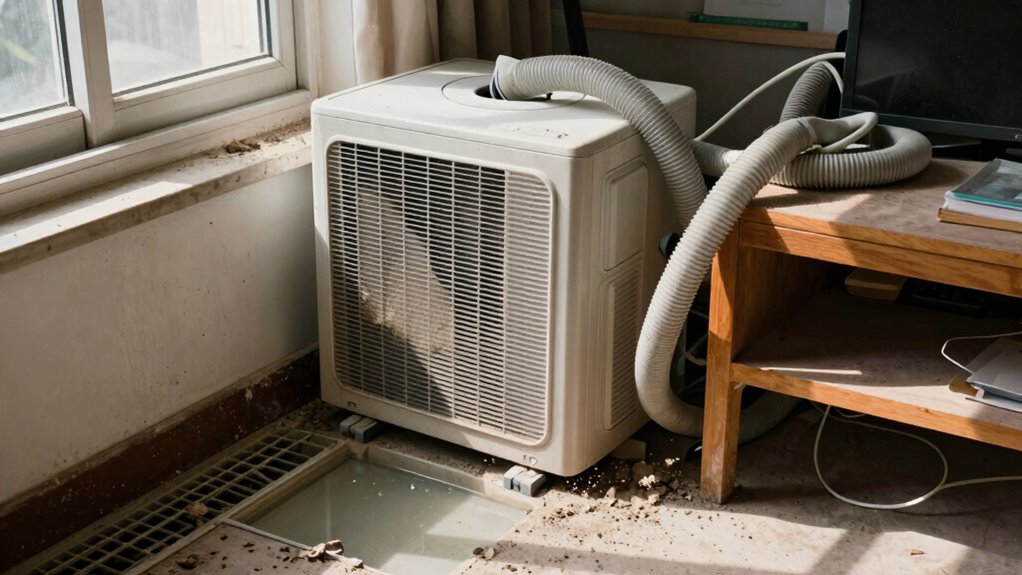

Many people make common mistakes with portable AC units that reduce efficiency and increase energy bills. These include placing the unit on uneven surfaces, blocking airflow vents, and not ensuring the exhaust hose fits securely. Ignoring proper venting and insulation also causes problems, while neglecting filter cleaning shortens the unit’s lifespan. If you keep these issues in mind and follow best practices, you’ll improve performance and save money. Keep going to learn more tips to avoid these pitfalls.

Get cleaning gear delivered free with Prime
- Fast, free delivery on millions of items
- Prime Video, Amazon Music and more included
- Member-only deals all year
Key Takeaways
- Improper installation, such as placing the unit on an uneven surface or blocking airflow vents.
- Incorrect venting setup, including insecure exhaust hoses or ill-fitting window kits.
- Neglecting regular filter cleaning, leading to restricted airflow and reduced efficiency.
- Running the AC continuously without proper temperature settings or breaks.
- Poor room insulation and ventilation, causing energy loss and increased strain on the unit.
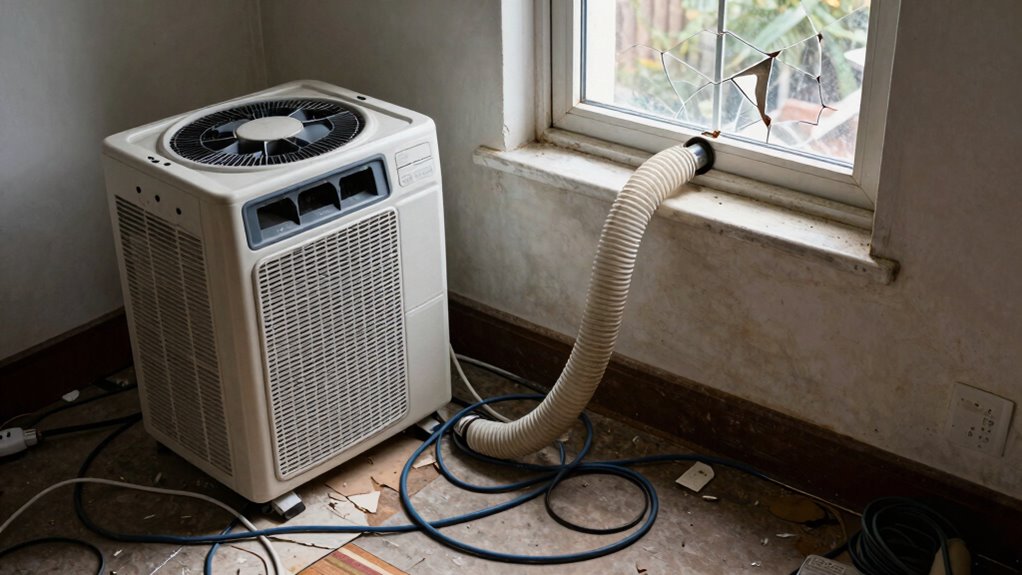
Portable AC units can be be a great way to cool your space, but many people make simple mistakes that reduce their effectiveness or even cause damage. One common mistake revolves around installation errors, which can considerably impact your unit’s performance. When setting up your portable AC, verify it’s placed on a flat, level surface and away from direct sunlight or heat sources. Incorrect placement can hinder airflow and strain the unit, leading to higher energy consumption and reduced cooling ability. Many overlook the importance of proper venting; failing to connect the exhaust hose securely or blocking airflow vents can cause the unit to work harder, wasting energy and increasing utility bills. You might also forget to check that the window kit fits snugly, allowing warm air to escape efficiently and preventing hot air from re-entering your cooled space.
Energy efficiency is another crucial aspect often neglected. A common mistake is leaving the portable AC running when it’s not needed or setting the thermostat too low. When you set the temperature too cold, the unit works overtime, consuming more energy and increasing wear and tear. Instead, set your thermostat to the highest comfortable temperature, typically around 75°F, to optimize energy use. Additionally, running the unit continuously without giving it breaks can lead to overheating and inefficiencies. Regularly cleaning or replacing filters also plays an essential role; dirty filters restrict airflow, forcing the compressor to work harder, which burns more energy and shortens the unit’s lifespan. Proper venting and placement are key factors in maximizing efficiency and preventing unnecessary strain on your portable AC. Ensuring your space has adequate insulation can significantly improve cooling performance and reduce energy costs. If your space isn’t well-insulated, cool air escapes quickly, making your portable AC less effective and causing it to run longer. Improving air sealing around windows and doors can help keep cooled air inside and reduce the workload on your unit. Additionally, maintaining proper airflow within the room by arranging furniture away from vents can help improve cooling efficiency. Furthermore, some people neglect to close curtains or blinds during the hottest parts of the day, allowing solar heat gain and making cooling less efficient. Paying attention to indoor temperature management and ventilation strategies can further enhance your unit’s performance and energy savings.
As an affiliate, we earn on qualifying purchases.
Frequently Asked Questions
How Often Should I Clean the Filters on My Portable AC?
You should clean the filters on your portable AC at least once a month. Regular filter maintenance guarantees peak airflow and cooling efficiency. If you use your unit more frequently or in a dusty environment, increase the cleaning frequency to every two weeks. Always follow the manufacturer’s instructions for cleaning and replacing filters. Proper filter maintenance helps prevent mold, odors, and unnecessary strain on your AC, extending its lifespan.
Can I Use a Portable AC Outdoors?
You can technically use a portable AC outdoors, but it’s not ideal. Most units lack outdoor insulation and weather resistance, making them vulnerable to rain, humidity, and temperature fluctuations. To protect your device, make sure it’s placed in a shaded, sheltered area and consider adding a weatherproof cover when not in use. Keep in mind, outdoor use can shorten the lifespan and reduce efficiency of your portable AC.
What Size Portable AC Do I Need for My Room?
Imagine fitting a cozy, perfectly tailored jacket—your portable AC size works best when it matches your room. For energy efficiency and lower noise levels, choose an AC with a BTU rating that suits your space; too small, and it strains, too large, and it wastes energy. Measure your room’s square footage, and opt for a unit with the right capacity to keep you comfortable without unnecessary noise.
Is It Safe to Leave a Portable AC Running Overnight?
Leaving a portable AC running overnight is generally safe if you follow manufacturer guidelines. However, consider energy consumption and noise levels, as continuous use increases electricity bills and may disturb your sleep. Make certain the unit is properly maintained, with filters cleaned regularly. Use sleep mode if available to minimize noise and energy use. Always monitor for any signs of malfunction to ensure safe, efficient operation overnight.
How Do I Troubleshoot Strange Noises From My Portable AC?
Imagine your portable AC humming softly, then suddenly, strange noises like rattling or squeaking interrupt the calm. To troubleshoot, check for vibration issues by ensuring the unit is level and stable; uneven surfaces cause rattling. Inspect the fan for debris or loose blades, which can cause unusual fan noise. Tighten any loose screws or parts, and clear out dust. Regular maintenance keeps your unit running smoothly and quietly.
portable air conditioner filter replacement
As an affiliate, we earn on qualifying purchases.
As an affiliate, we earn on qualifying purchases.
Conclusion
Avoiding these common mistakes is like steering your portable AC through a maze—stay on course, and it’ll cool your space like a gentle breeze on a summer day. Keep filters clean, vent hoses clear, and placement smart, so your unit works like a well-oiled machine. When you treat it right, your portable AC becomes a loyal companion, turning your hot, stuffy room into a cool oasis—your personal patch of paradise in the heat.
As an affiliate, we earn on qualifying purchases.
As an affiliate, we earn on qualifying purchases.
Fall Picks
fall essentials
As an affiliate, we earn on qualifying purchases.