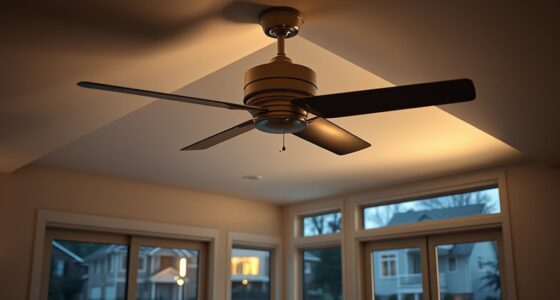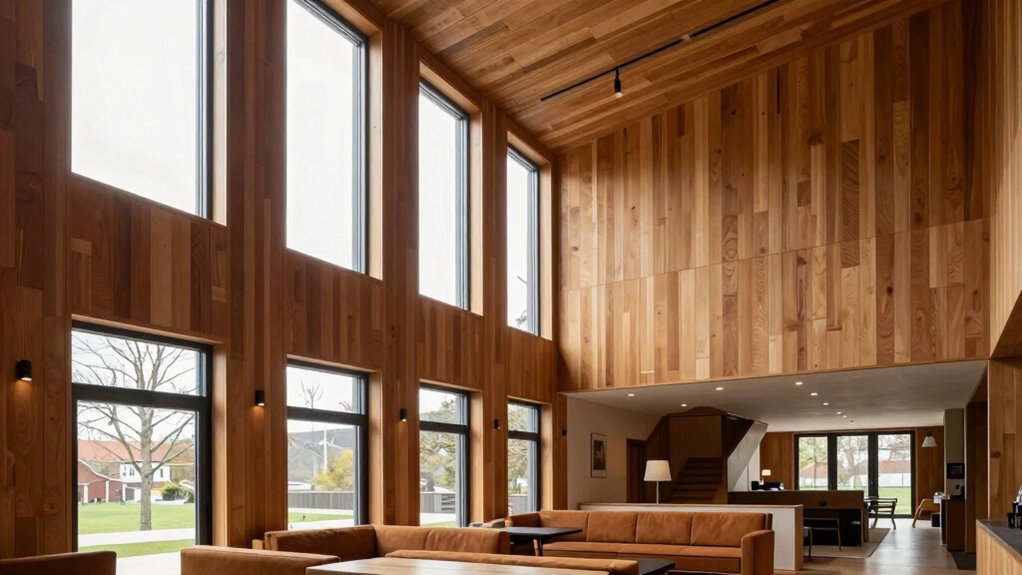

High ceilings can make heating and cooling more challenging because warm or cool air tends to stratify, creating uneven temperatures. Warm air rises in winter, leaving lower levels chilly, while cool air sinks in summer, making upper areas uncomfortable. To maintain comfort, you’ll need to adjust your HVAC system, add fans, or use special vents. Understanding these airflow patterns helps you optimize your system—keep exploring to learn more about managing high ceilings effectively.
Key Takeaways
- Higher ceilings cause warm or cool air to stratify, creating uneven temperature layers.
- Warm air rises in high ceilings during winter, leaving lower areas cooler.
- Cool air sinks in summer, leading to upper-level chilliness and inefficiency.
- Traditional HVAC systems struggle to evenly distribute air in tall-ceiling spaces.
- Effective airflow management, like fans and zoning, is essential to maintain comfort and efficiency.

The height of your ceiling can considerably influence how effectively your heating and cooling systems work. When ceilings are high, the warm or cool air doesn’t stay evenly distributed; instead, it creates thermal stratification. This means that warm air rises to the ceiling in winter, leaving the lower part of the room cooler, and cool air sinks in summer, making the upper areas uncomfortably chilly. As a result, your HVAC system has to work harder to maintain a consistent temperature throughout the space. The airflow patterns in rooms with high ceilings tend to be more complex, often leading to uneven heating and cooling. Without proper management, this can cause your system to run excessively, increasing energy consumption and costs.
Understanding how thermal stratification affects airflow patterns is key to developing an effective strategy. In rooms with tall ceilings, the heated or cooled air tends to form layers separated by temperature differences. This stratification makes traditional heating and cooling methods less efficient, as the air at the occupant level isn’t always at the desired temperature. To counteract this, you might need to adjust your system’s settings or add supplemental solutions like ceiling fans, which help circulate air and disrupt the stratification layers. By promoting better airflow, you can ensure that the temperature remains more uniform from floor to ceiling, improving comfort and reducing system strain. Additionally, incorporating air distribution systems designed for high-ceiling spaces can further optimize airflow and temperature control. Proper airflow management can also help prevent drafts and hot or cold spots, making the environment more comfortable overall. Furthermore, implementing zoning systems can target specific areas with tailored temperature controls, enhancing overall efficiency.
Another approach involves selecting HVAC equipment designed for high ceilings, such as low-profile vents that distribute air more evenly or zoning systems that target specific areas. These systems can be programmed to deliver more conditioned air at lower levels, compensating for the natural upward or downward movement of air in high-ceiling rooms. Proper thermal insulation and sealing become even more critical in these spaces, as gaps and poor insulation can exacerbate temperature differences and make thermal stratification worse. In fact, proper insulation can help contain heat or coolness at the desired levels, reducing the need for excessive HVAC operation. Strategic placement of vents can guide airflow more effectively.
In essence, a higher ceiling demands a tailored heating and cooling approach. Recognizing the effects of thermal stratification and understanding airflow patterns allows you to select the right equipment and strategies. Whether through fans, zoning, or specialized vents, your goal should be to create a balanced airflow that minimizes temperature disparities. By doing so, you’ll improve comfort, reduce energy bills, and ensure your HVAC system operates at peak efficiency, no matter how tall your ceilings are.
As an affiliate, we earn on qualifying purchases.
Frequently Asked Questions
How Does Ceiling Height Affect Indoor Air Quality?
Higher ceilings improve indoor air quality by enhancing air circulation and reducing pollutant dispersion, helping pollutants settle away from breathing zones. You’ll notice cleaner air because the increased space allows stale air and contaminants to rise and disperse more effectively. Conversely, lower ceilings can trap pollutants closer to occupants, potentially decreasing air quality. As a result, ceiling height directly influences how well air moves and pollutants disperse within your space.
Are There Specific Heating Systems Suited for High or Low Ceilings?
Yes, specific heating systems suit high or low ceilings. For high ceilings, you should consider duct placement that allows warm air to rise and circulate effectively, like high-mounted ductwork or radiant heaters. Insulation techniques, such as installing additional insulation or using radiant barriers, help retain heat. For low ceilings, compact systems like baseboard heaters or ductless mini-splits work well, maximizing efficiency and comfort without requiring extensive ductwork.
Can Ceiling Height Influence Energy Efficiency Over Time?
Yes, ceiling height can influence your energy efficiency over time. Higher ceilings often require better thermal insulation to prevent heat loss or gain, especially since warm air rises. Additionally, they impact acoustic performance, which can affect heating and cooling comfort. Proper insulation and design strategies help maintain consistent indoor temperatures, reducing your energy costs and improving overall efficiency, regardless of ceiling height.
How Does Ceiling Design Impact Ventilation Strategies?
You might be surprised to learn that high ceilings can improve ventilation, reducing indoor air pollution by up to 50%. Ceiling design impacts ventilation strategies by influencing air circulation patterns. For example, tall ceilings promote better airflow and help distribute fresh air more evenly. Additionally, thoughtful ceiling acoustics and lighting design can enhance comfort, making ventilation more effective and ensuring a healthier, more pleasant indoor environment.
What Are Cost Considerations for Altering Ceiling Height?
When altering ceiling height, you should do a thorough cost analysis to understand renovation expenses. Increasing ceiling height often raises costs due to additional materials, structural modifications, and labor. Conversely, lowering ceilings can reduce expenses but may affect space perception. Always consider future energy costs and potential savings to balance initial renovation expenses with long-term benefits. Proper planning guarantees you manage costs effectively while achieving your desired design.
HVAC zoning systems for large rooms
As an affiliate, we earn on qualifying purchases.
As an affiliate, we earn on qualifying purchases.
Conclusion
Understanding how ceiling height influences your heating and cooling strategies can truly transform your comfort level—it’s like having a secret weapon against energy waste! When you consider these factors, you’re not just saving money; you’re optimizing your entire living environment. So, don’t overlook the impact of those soaring ceilings or cozy low ones. Master this knowledge, and you’ll be reigning over a climate-controlled kingdom where comfort feels as effortless as breathing—no matter how high or low your ceilings soar!
air distribution vents for high ceilings
As an affiliate, we earn on qualifying purchases.
As an affiliate, we earn on qualifying purchases.
thermal insulation for tall rooms
As an affiliate, we earn on qualifying purchases.
As an affiliate, we earn on qualifying purchases.