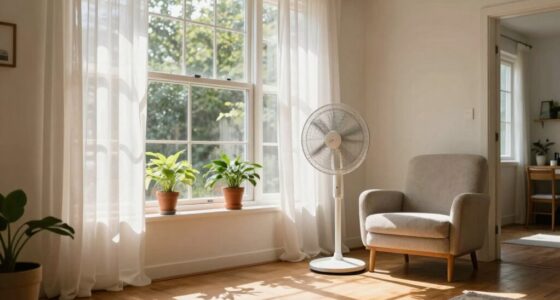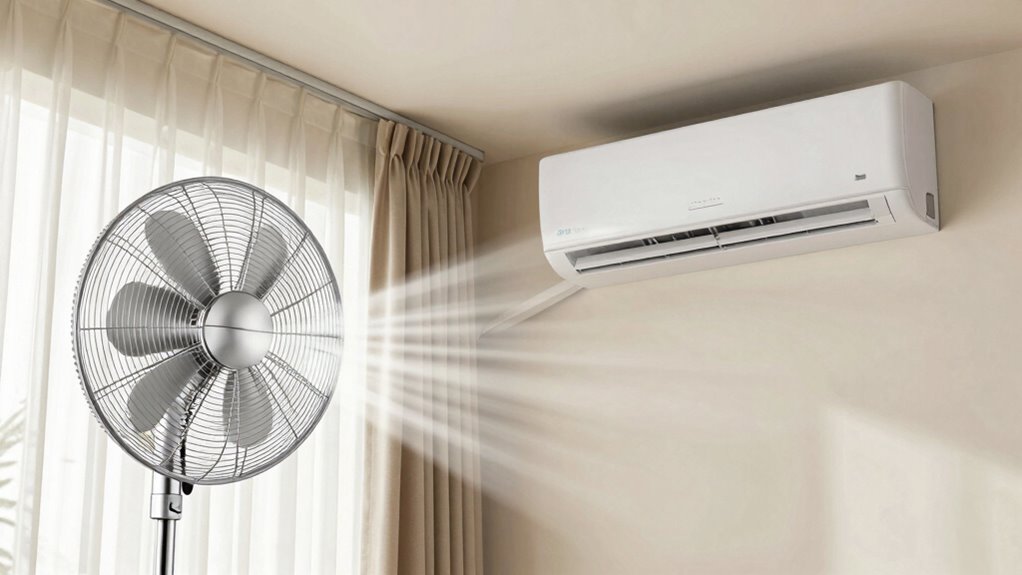
To use fans effectively with your air conditioning, run ceiling fans counterclockwise to push cool air downward and distribute it evenly. Use exhaust fans in kitchens and bathrooms to remove excess humidity and odors. Turn off fans when you leave a room to save energy, and set your AC to higher temperatures while fans circulate air. Regularly clean filters and fans to maintain air quality and efficiency. Staying coordinated with your systems helps keep your home comfortable and energy-efficient—learn more for even better results.

Get cleaning gear delivered free with Prime
- Fast, free delivery on millions of items
- Prime Video, Amazon Music and more included
- Member-only deals all year
Key Takeaways
- Use ceiling fans counterclockwise in summer to push cool air downward and improve circulation.
- Run fans with AC to evenly distribute cooled air and allow higher thermostat settings.
- Turn off fans when leaving a room to conserve energy and prevent unnecessary airflow.
- Regularly clean and maintain fans and ventilation systems for optimal performance and air quality.
- Use exhaust fans in kitchens and bathrooms to remove humidity, odors, and indoor pollutants.
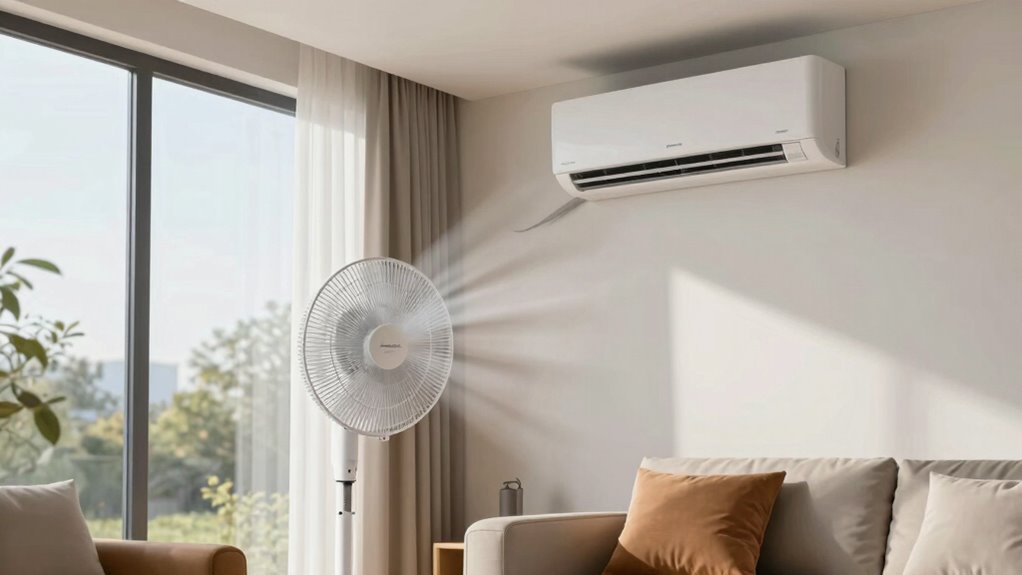
During hot weather, fans and air conditioning become essential tools for staying comfortable. To maximize their benefits, it’s important to use them correctly, focusing on energy efficiency and indoor air quality. When you run fans alongside your air conditioner, you help distribute cooled air more evenly throughout your space. This means you can set your AC to a higher temperature without sacrificing comfort, reducing energy consumption and lowering your utility bills. Keep in mind that ceiling fans should spin counterclockwise in the summer to push cool air downward, creating a breeze that makes the room feel cooler without actually lowering the temperature. This not only enhances your comfort but also improves energy efficiency by allowing your AC to work less. Proper circulation also plays a key role in preventing stagnant air and ensuring fresh airflow throughout your home. Additionally, consistent use of ventilation systems can help prevent indoor air from becoming stale or contaminated. Utilizing air exchange methods can further improve indoor air quality by bringing in more fresh air from outside. Regularly inspecting and maintaining your ventilation devices ensures they operate at peak performance, which is crucial for both energy efficiency and air quality.
Using fans properly also benefits indoor air quality. Proper circulation prevents stagnant air and reduces the buildup of indoor pollutants. When you use exhaust fans in the kitchen and bathroom, you remove excess humidity, mold spores, and odors, which can otherwise compromise air quality. If you have ceiling fans, make sure they are clean and free of dust, which can circulate allergens and worsen respiratory issues. Combining fans with your air conditioning can also improve ventilation, helping to bring in fresh air from outside and expel stale indoor air. This balance is key to maintaining a healthy environment, especially during hot weather when windows may be closed to keep the cool air in.
To optimize both energy efficiency and indoor air quality, consider using fans strategically. Turn off fans when you leave a room, as they only circulate air without cooling it. When you’re home, use fans to supplement your AC rather than replace it. This approach allows your AC to operate at a higher, more energy-efficient setting while still maintaining a comfortable temperature. Additionally, make sure your air filters are clean and replaced regularly. Dirty filters hinder airflow and can diminish indoor air quality, making it harder for your system to operate efficiently. Proper filter maintenance**** is essential for ensuring your HVAC system runs smoothly and provides clean air.
In essence, the right way to use fans with air conditioning involves thoughtful timing, proper maintenance, and understanding how each device impacts your home’s energy use and air quality. By doing so, you’ll enjoy a cooler, healthier home environment without wasting energy or compromising indoor air quality. Properly coordinated use of fans and AC not only keeps you comfortable but also helps you save money and breathe cleaner air during those scorching hot days.
As an affiliate, we earn on qualifying purchases.
Frequently Asked Questions
Can Fans Help Reduce Air Conditioning Energy Costs?
Yes, fans can help reduce your air conditioning energy costs by improving ventilation efficiency and circulating cool air more effectively. When used correctly, fans allow you to raise the thermostat setting slightly without sacrificing comfort. Just keep in mind, choosing fans with low noise levels guarantees they won’t disturb your peace. Properly using fans in tandem with your AC can make your home more energy-efficient and comfortable.
Should Fans Run Continuously With Air Conditioning?
You shouldn’t run fans continuously with your air conditioning, as it can cause increased noise levels and humidity issues. For example, a homeowner found that turning fans off when not needed improved humidity control and reduced noise. Instead, run fans only when you’re in the room to help circulate air, which saves energy and maintains comfort. This way, you balance humidity control and noise levels effectively.
What Fan Settings Are Best for Air-Conditioned Rooms?
For air-conditioned rooms, set your fan to a low or medium speed to balance air circulation and minimize fan noise. This setting helps distribute cooled air evenly without creating uncomfortable noise levels. Using a fan at a higher speed can increase noise, but it boosts air circulation, which can make the room feel cooler. Adjust the fan based on your comfort, ensuring good air movement without sacrificing peace and quiet.
How Do Fans Affect Indoor Air Quality?
Fans influence indoor air quality by improving air circulation, helping distribute cooled air evenly. However, they can also spread dust, allergens, and other particles if not cleaned regularly. To maintain good air quality, you should clean your fans often and consider using filters. Properly used fans boost comfort without compromising air quality, but neglecting maintenance might lead to increased dust distribution and reduced indoor air freshness.
Can Fans Cause Uneven Cooling in a Room?
Yes, fans can cause uneven cooling if ceiling fan placement isn’t ideal or if fan noise levels are distracting. If your ceiling fan is positioned too close to walls or in a corner, it won’t circulate air effectively, leading to hot spots. Also, high noise levels can make it uncomfortable to stay in a room, prompting you to turn the fan off, which worsens uneven cooling. Proper placement and quiet fans help maintain consistent temperatures.
energy-efficient exhaust fans for bathroom
As an affiliate, we earn on qualifying purchases.
As an affiliate, we earn on qualifying purchases.
Conclusion
Using fans with air conditioning is like a dance partner—when you work together, they keep your home comfortably cool. I once tried running the fan without AC, only to realize it circulated hot air, making things worse. Studies show that fans can save up to 40% on energy costs when used properly with air conditioning. So, next time you turn on your AC, remember to add a fan—together, they create a perfect breeze for your comfort.
As an affiliate, we earn on qualifying purchases.
As an affiliate, we earn on qualifying purchases.
Fall Picks
fall essentials
As an affiliate, we earn on qualifying purchases.