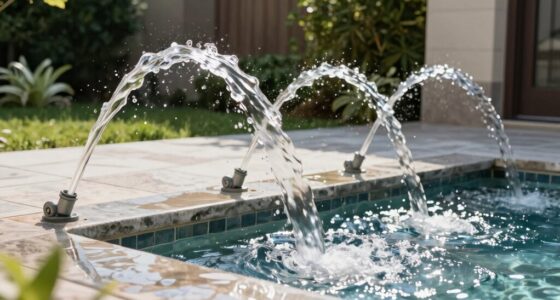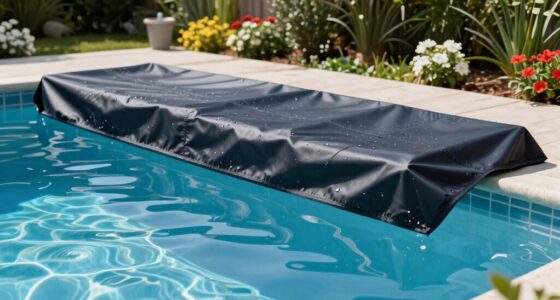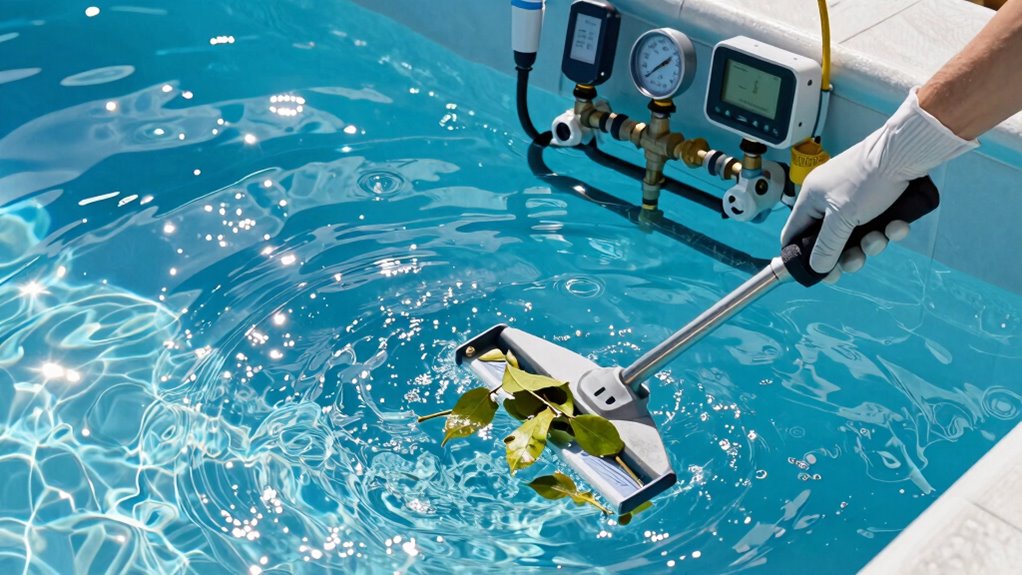

Cleaning a pool is about removing visible dirt, debris, and algae to keep the surface clear and appealing. Managing a pool system involves ongoing tasks like balancing chemicals, inspecting equipment, and monitoring performance to guarantee safety and efficiency. While cleaning gives instant visual results, managing the system keeps your pool safe, healthy, and running smoothly over time. If you want to understand how these efforts work together, keep exploring how proper maintenance makes a difference.

Get cleaning gear delivered free with Prime
- Fast, free delivery on millions of items
- Prime Video, Amazon Music and more included
- Member-only deals all year
Key Takeaways
- Pool cleaning focuses on removing debris and surface dirt for immediate visual appeal.
- Managing a pool system involves routine chemical testing and equipment inspections for ongoing safety and efficiency.
- Cleaning is reactive, addressing visible issues; management is proactive, preventing problems through scheduled maintenance.
- Equipment maintenance ensures proper functioning and extends lifespan, reducing costly repairs.
- A comprehensive approach combines cleaning and system management for long-term pool health and safety.
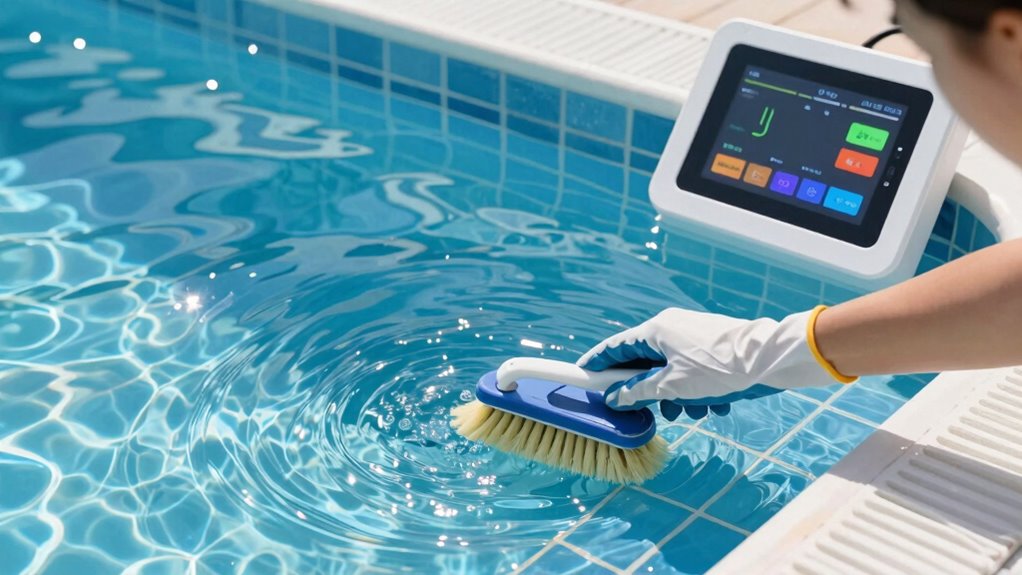
Are you unsure whether to focus on regular pool cleaning or invest in a complete pool system management plan? It’s a common dilemma, especially if you want to keep your pool sparkling and safe without spending all your free time on maintenance. Let’s break down the difference: cleaning a pool involves specific tasks like skimming debris, brushing the walls, and vacuuming the bottom. It’s about tackling visible dirt and keeping the surface clear. On the other hand, managing a pool system goes beyond surface-level chores. It involves maintaining the right chemical balance, ensuring your equipment operates efficiently, and monitoring system components to prevent issues before they escalate. Regular chemical testing is essential to keep your pool safe and properly balanced. When you focus solely on cleaning, you’re addressing the immediate appearance and cleanliness of your pool. You remove leaves, bugs, and dirt, and you keep the water clear. But if you neglect the chemical balance, your pool might look fine but still harbor algae or bacteria, which can pose health risks. Proper chemical management involves regularly testing the water’s pH, chlorine levels, alkalinity, and other essential parameters. This way, you prevent problems like green water or cloudy conditions, making sure your pool is not just clean-looking but safe to swim in. Equipment maintenance also plays a key role here. Your filters, pumps, and chlorinators need regular inspections and upkeep to ensure they’re functioning correctly. If they aren’t, even the cleanest pool can become a breeding ground for bacteria or develop equipment failure that leads to costly repairs. Investing in a thorough pool system management plan means taking a proactive approach. You set up routines for chemical testing and adjustments, schedule regular inspections of your equipment, and sometimes even incorporate automation systems that handle much of the work for you. This not only guarantees that your pool stays pristine but also extends the lifespan of your equipment and reduces unexpected breakdowns. It’s an all-encompassing approach that saves you time and money in the long run. Incorporating pool automation can further streamline your maintenance routine, making management even easier. In essence, while cleaning is essential for immediate visual appeal, managing your pool system ensures consistent health, safety, and efficiency. If you want a pool that’s always ready for enjoyment and doesn’t turn into a costly headache, considering a management plan might be your best move. It combines routine cleaning, vigilant chemical balancing, and equipment upkeep into a seamless strategy that keeps your pool in top shape year-round. Properly managed pools benefit from a comprehensive maintenance approach, which emphasizes the importance of both routine cleaning and system monitoring.
As an affiliate, we earn on qualifying purchases.
Frequently Asked Questions
How Often Should I Schedule Professional Pool Inspections?
You should schedule professional pool inspections at least once a year, especially before peak swimming seasons. During these inspections, the technician will check your pool chemical levels, guaranteeing proper balance for safety and clarity. They’ll also assess equipment maintenance, spotting any issues early. Regular inspections help prevent costly repairs, keep your pool safe, and ensure your filtration and chemical systems function efficiently throughout the year.
What Are the Signs of a Failing Pool Filtration System?
A failing pool filtration system is like a clogged artery—your pool’s health suffers. You’ll notice cloudy water, a strong chemical odor, or algae growth, signaling poor circulation. Equipment malfunction, such as noisy pumps or leaks, also indicates trouble. If your pool’s chemical balance is hard to maintain despite regular adjustments, it’s a sign the filter isn’t working effectively. Address these issues promptly to keep your pool clean and safe.
Can I Manage My Pool System Without Technical Knowledge?
You can manage your pool system without deep technical knowledge, but you’ll need to stay on top of pool chemical balance and equipment maintenance. Regularly test and adjust chemicals to keep water safe, and clean or inspect equipment like filters and pumps. While it’s manageable with some effort, learning basic pool management skills helps prevent issues and ensures your pool remains inviting and safe for everyone.
What Safety Precautions Are Necessary When Cleaning a Pool?
You must wear safety equipment like goggles, gloves, and a mask—because splashing chemicals can feel like an explosion! Always check the pool chemical balance before cleaning, as unbalanced chemicals can cause dangerous reactions. Keep a fire extinguisher nearby, and never mix chemicals. Ensuring proper safety precautions protects you from chlorine fumes, chemical burns, and slips. Stay alert, follow instructions, and prioritize your safety while cleaning your pool.
How Do Weather Changes Affect Pool Maintenance Routines?
Weather impact greatly influences your pool maintenance routines. During hot, sunny weather, you’ll need to check chlorine levels more often and run the filter longer to prevent algae growth. In cooler or rainy seasons, seasonal adjustments like covering the pool or reducing chemical use help maintain water quality. Sudden weather changes, such as storms, require quick actions like skimming debris and adjusting chemicals to keep your pool safe and clean.
As an affiliate, we earn on qualifying purchases.
Conclusion
Understanding the difference between cleaning your pool and managing its system is key to maintaining clear, safe water. Regular cleaning removes debris and algae, while system management ensures proper chemical balance and equipment function. Notably, pools that are well-managed with regular system checks and cleaning have 30% fewer chemical imbalances, leading to fewer maintenance issues and a more enjoyable swim. By balancing both aspects, you’ll keep your pool pristine and ready for use whenever you want.
As an affiliate, we earn on qualifying purchases.
As an affiliate, we earn on qualifying purchases.
Fall Picks
fall essentials
As an affiliate, we earn on qualifying purchases.