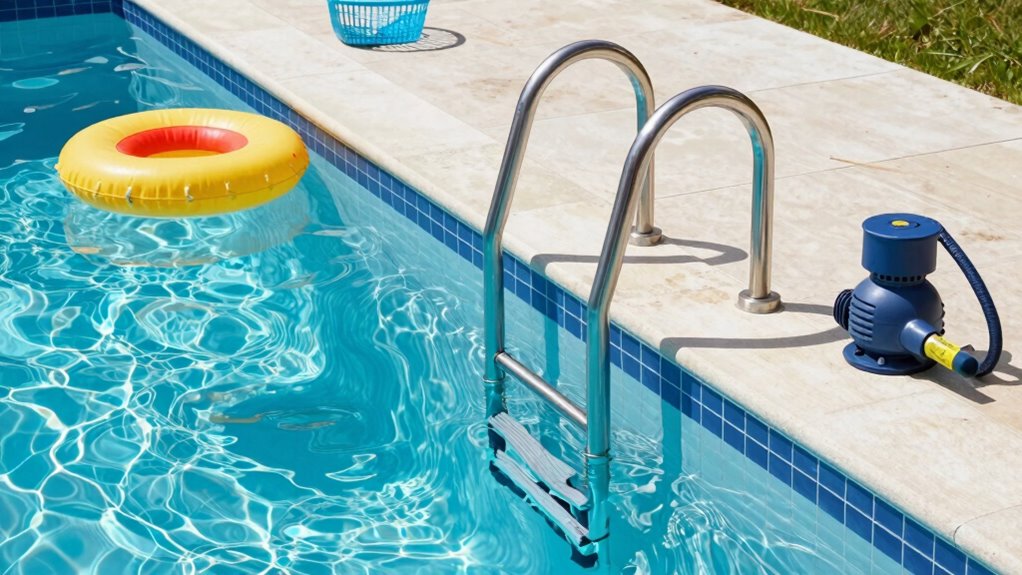
To explain pool equipment without scaring beginners, focus on simple functions and relatable analogies, like comparing the filtration system to lungs that keep the water fresh. Emphasize that maintenance is straightforward and helps protect your investment, not an overwhelming task. Keep instructions clear, and remind yourself that most issues are easy to fix with patience. If you stay relaxed and look at equipment as helpful tools, you’ll gain confidence—there’s always more to discover to make it even clearer.
Open a free Amazon Business account
Business pricing, bulk buying and tax-exempt orders.
As an affiliate, we earn on qualifying purchases.
Key Takeaways
- Use simple analogies, like comparing filters to lungs, to make equipment relatable and easy to understand.
- Focus on the equipment’s role in keeping the water clean and safe, not on technical details.
- Emphasize that maintenance is routine and straightforward, fostering confidence and reducing fear.
- Break down complex functions into basic concepts, encouraging questions and gradual learning.
- Highlight that proper equipment use enhances safety and enjoyment, making pool care a positive experience.
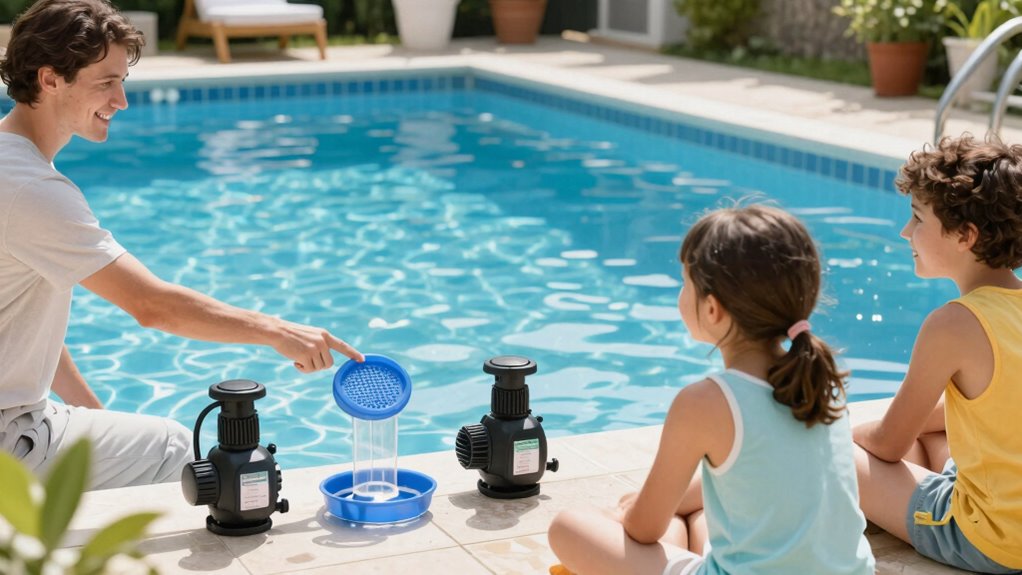
Explaining pool equipment to beginners can feel overwhelming, but it doesn’t have to be intimidating. When you start talking about pool systems, it’s easy to get caught up in technical jargon or details that might seem confusing. Instead, focus on the basics and how each piece of equipment plays a role in keeping the pool safe, clean, and enjoyable. For example, the pool’s filtration system is like its lungs—helping to circulate and filter the water so it stays clear. When you explain it this way, it becomes less about the mechanics and more about how it helps maintain a healthy swimming environment.
One of the most important concepts for beginners to grasp is chemical balance. It’s the foundation of good pool health and safety. You can tell them that maintaining proper chemical levels — like pH, chlorine, and alkalinity — is essential to prevent algae growth, bacteria, and cloudy water. Emphasize that these chemicals aren’t complicated; they’re just part of the routine to keep the water safe and pleasant. When they understand that regular testing and adjusting of chemicals is straightforward, they’re less likely to feel intimidating. Reinforce that chemical balance isn’t about perfection but about consistency—checking the water weekly and making small adjustments as needed. Additionally, understanding the importance of pool water testing helps them see it as a simple step towards safe swimming. Knowing how to interpret test results and make adjustments is part of basic pool maintenance****.
Talking about equipment maintenance is also key to easing fears. Reassure beginners that taking care of pool equipment isn’t a formidable chore but a simple part of owning a pool. Show them that routine maintenance, like cleaning filters and checking pumps, keeps everything running smoothly. Mention that most equipment comes with clear instructions or easy-to-understand labels, so they don’t have to be experts right away. Highlight that staying on top of maintenance prevents bigger issues later, saving time and money. When you frame it as a way to protect their investment and keep the pool safe, it becomes a positive, manageable task instead of a challenging one. Knowing that routine maintenance can be simple and straightforward encourages confidence and reduces anxiety.
Finally, remind them that they don’t need to learn everything overnight. Pool equipment is designed to be user-friendly, and most problems can be easily resolved with a little patience and guidance. Understanding the functions of pool systems can help them feel more in control and capable of troubleshooting minor issues. Encourage them to ask questions, read manuals, and seek advice when needed. By breaking down complex topics into simple, relatable ideas—like comparing filters to lungs or chemicals to health supplements—you help create confidence. When they see pool equipment as tools to enjoy their pool rather than obstacles to fear, their anxiety will subside, and they’ll feel empowered to care for their pool confidently. Remember, understanding basic pool system functions can make a significant difference in building their confidence.
pool filter system for beginners
As an affiliate, we earn on qualifying purchases.
As an affiliate, we earn on qualifying purchases.
Frequently Asked Questions
Can I Install Pool Equipment Myself or Do I Need a Professional?
You can install some pool equipment yourself if you’re comfortable with DIY projects, but for complex pool equipment types like pumps or filters, hiring a professional is often safer and more reliable. DIY installation can save money and give you a sense of achievement, but make certain you follow all safety guidelines and manufacturer instructions. If you’re unsure, consulting a professional guarantees proper setup and long-term performance.
How Often Should I Perform Maintenance on My Pool Equipment?
You should perform routine pool equipment maintenance at least once a month to keep everything running smoothly. Regularly check and adjust pool chemicals to prevent algae and bacteria growth, which can strain your equipment. Cleaning filters and inspecting pumps extend the equipment’s lifespan, saving you money in the long run. Consistent maintenance guarantees your pool stays safe, clean, and functional, making your swimming experience enjoyable and hassle-free.
Is Pool Equipment Noisy or Disruptive?
Pool equipment noise varies, but most modern systems operate quietly—around 60 decibels, comparable to a normal conversation. If you notice excessive noise, it could signal equipment disruption or a need for maintenance. Typically, well-maintained pool equipment should not be disruptive. Regular checks help make certain your pump and filter run smoothly, minimizing noise and keeping your pool area peaceful and enjoyable.
Are There Eco-Friendly Options for Pool Equipment?
Yes, there are eco-friendly options for pool equipment. You can opt for solar heating systems that harness sunlight to warm your pool efficiently and sustainably. Additionally, eco-friendly pumps use less energy, reducing your carbon footprint and saving you money on electricity bills. These options make maintaining your pool more environmentally conscious without sacrificing performance, giving you a greener, more sustainable swimming experience.
What Safety Precautions Should I Take With Pool Equipment?
You should always prioritize pool safety by regularly inspecting equipment hazards and ensuring all devices are properly maintained. Keep a close eye on electrical components, avoid leaving pool toys or accessories around, and never operate equipment when unsupervised. Installing safety covers and clear signage helps prevent accidents. Remember, ignoring pool safety not only risks injuries but also turns your relaxing swim into a potential hazard. Stay vigilant, and enjoy your pool responsibly.
As an affiliate, we earn on qualifying purchases.
Conclusion
So, now that you’re armed with the secret sauce to explain pool equipment without scaring off newbies, go ahead—dazzle them with your newfound wisdom. Just remember, no matter how complex it seems, it’s really just a fancy gadget that keeps your pool sparkling and your friends jealous. Keep it simple, keep it fun, and soon you’ll be the pool pro they all look up to—without the scary tech talk. Happy swimming!
As an affiliate, we earn on qualifying purchases.
As an affiliate, we earn on qualifying purchases.
Flea & tick season Picks
flea and tick prevention
As an affiliate, we earn on qualifying purchases.