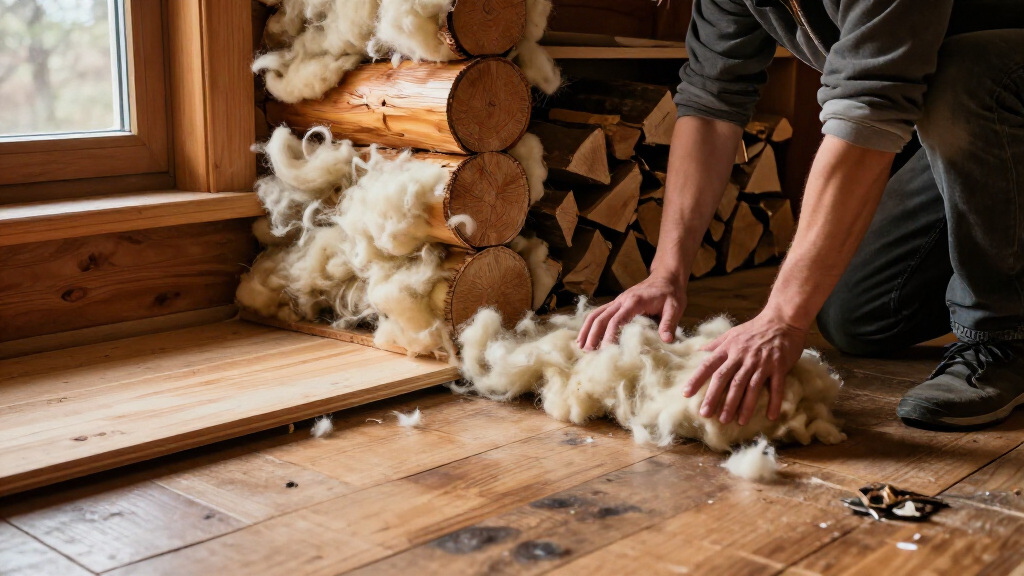
Choosing among the best log cabin insulation materials depends on whether you are insulating a framed wall, sealing a drafty joint, or adding a small amount of sound-dampening material. My leading choices serve different jobs: Owens Corning R-19 fiberglass batts are the clearest option for conventional 2×6 framing, Loctite Tite Foam Big Gaps targets cracks and openings that batts cannot seal neatly, and Frost King recycled-denim insulation suits smaller projects where comfortable handling and noise control matter.

Get cleaning gear delivered free with Prime
- Fast, free delivery on millions of items
- Prime Video, Amazon Music and more included
- Member-only deals all year
These products are not interchangeable, and none alone amounts to a complete log-cabin insulation system. A cabin’s solid-log walls behave differently from stud-framed walls: joints, settling, air leakage, moisture movement, and the existing wall assembly all affect the right approach. I rank these picks by how useful and clearly suited they are to a defined cabin task, not by treating their advertised insulation functions as equivalent. The main tradeoffs are coverage versus gap sealing, full-depth thermal insulation versus a thin multipurpose layer, and straightforward handling versus the need for protective practices or additional moisture planning.
Complete the kit


Key Takeaways
- Owens Corning R-19 is the strongest fit here for insulated 2×6 framed walls; its 6.5-inch batts and listed R-19 rating do not make them a direct treatment for exposed solid logs.
- Loctite Tite Foam is a targeted air-sealing product for gaps up to 3 inches, not a substitute for covering a full wall cavity with batts.
- Frost King recycled denim is only 1 inch thick, so I favor it for small insulation, cushioning, and sound-dampening tasks rather than primary cabin-wall insulation.
- The fiberglass product is unfaced, which leaves moisture-control decisions to the wall assembly and installation plan; it does not include a vapor barrier.
- For a log cabin, I would identify the construction type and address air leaks and moisture behavior before choosing insulation based on material alone.
| Owens Corning R-19 Unfaced Fiberglass Insulation – 77.5 sq ft, 15 in x 93 in, 6.5 in thick, suitable for 2×6 framing |  | Best Overall for 2×6 Framed Cabin Walls | Material: Fiberglass | Thermal resistance: R-19 | Thickness: 6.5 inches | VIEW LATEST PRICE | See Our Full Breakdown |
| Loctite Tite Foam Big Gaps Spray Foam Sealant – 12 fl oz |  | Best for Sealing Cabin Gaps and Cracks | Brand: Loctite | Model: 2975888 | Container size: 12 fluid ounces | VIEW LATEST PRICE | See Our Full Breakdown |
| Frost King No Itch Natural Cotton Multi-Purpose Insulation, 16 x 1 x 48-Inch |  | Best for Small Projects and Comfortable Handling | Material: 100% recycled denim | Dimensions: 16 x 48 inches | Thickness: 1 inch | VIEW LATEST PRICE | See Our Full Breakdown |
| log cabin insulation material | Material | Thickness | Brand |
|---|---|---|---|
| Owens Corning R-19 Unfaced Fib | Fiberglass | 6.5 inches | — |
| Loctite Tite Foam Big Gaps Spr | Polyurethane expanding foam sealant | — | Loctite |
| Frost King No Itch Natural Cot | 100% recycled denim | 1 inch | Frost King |
More Details on Our Top Picks
Owens Corning R-19 Unfaced Fiberglass Insulation – 77.5 sq ft, 15 in x 93 in, 6.5 in thick, suitable for 2×6 framing
For a cabin with conventional stud-framed walls or floors, Owens Corning R-19 fiberglass batts are the most complete insulation material in this group. Each batt measures 15 by 93 inches and is 6.5 inches thick, dimensions intended for 2×6 framing. The bag covers 77.5 square feet, giving the buyer a reasonably clear way to estimate material needs for a defined cavity-based project. Compared with the other picks, this is the only one designed to fill a broad framed area rather than close isolated openings or add a thin multipurpose layer.
The unfaced construction is useful when the wall assembly calls for a separate, deliberately selected moisture-control layer. It also means that buyers should not expect an attached vapor barrier to arrive with the batts. That is a meaningful distinction in cabins, where the existing wall layers, indoor humidity, outdoor conditions, and local building practice influence how moisture should be managed. I would not add a vapor-control layer by default without understanding the assembly; the product description itself leaves that decision open.
Its stated R-19 rating makes this the strongest primary-cavity option among the three, but the fit is specific: it suits 2×6 framing, not every solid-log wall. A log wall has no standard stud cavity to receive a batt unless the cabin has an interior or exterior framed layer. Compared with Loctite foam, Owens Corning covers much more area but cannot neatly seal a narrow, irregular crack on its own. Compared with Frost King denim, it provides a much thicker cavity fill, though it is less comfortable to handle directly.
Installation is relatively familiar for a framed-wall project, and the batts can be cut to fit. Still, fiberglass can irritate skin, so I would plan for suitable protective clothing and careful cleanup. Poorly fitted batts or compression can undermine the intended fit, while unsealed gaps around framing may still allow drafts. My ranking puts this first because its dimensions and R-value give it the clearest role as a main insulation layer in the right cabin assembly—not because it solves every cabin’s air-leak or moisture problem.
Pros:- R-19 rating and 6.5-inch thickness suit compatible 2×6 cavities.
- 77.5-square-foot bag coverage helps plan a defined framed-area project.
- Unfaced design leaves moisture-control choices to the wall assembly.
- Can be cut to fit framed walls, floors, and attic applications.
Cons:- No vapor barrier is included, so moisture-control planning remains a separate task.
- Fiberglass may irritate skin during handling and installation.
- Does not by itself seal irregular air leaks or fit a solid-log wall without a cavity.
Best for: Cabin owners insulating accessible 2×6 framed walls, floors, or attic areas who want a full-depth batt with a stated R-19 rating.
Not ideal for: Owners of exposed solid-log walls without a framed cavity, buyers seeking a built-in vapor barrier, or anyone who wants a non-irritating material that can be handled without protective precautions.
- Material:Fiberglass
- Thermal resistance:R-19
- Thickness:6.5 inches
- Batt dimensions:15 x 93 inches
- Coverage:77.5 square feet
- Number of batts:8
- Listed applications:Walls, floors, and attics
- Facing:Unfaced
Our verdict“I would choose these batts first for a properly planned 2×6 cabin assembly, but not as a direct wrap or sealant for solid logs.”
Loctite Tite Foam Big Gaps Spray Foam Sealant – 12 fl oz
Loctite Tite Foam Big Gaps earns its place as a targeted air-sealing option, not as a wall-insulation replacement. The expanding polyurethane foam is described for gaps and cracks up to 3 inches, making it more appropriate for irregular openings around penetrations, joints, and framing details than either a batt or a strip of denim. In a drafty cabin, small openings can be frustrating to address with sheet-like materials; this spray format can conform to shapes that would be awkward to pack with fiberglass.
Its ability to adhere to wood, concrete, brick, metal, PVC, and other listed surfaces gives it broader application flexibility than the two insulation materials in this comparison. The product is also described as water resistant, UV resistant, sandable, and paintable, with use listed for interior and exterior applications. Those attributes may help when a sealed area needs a finished surface, but they do not remove the need to select the right product for the location or follow its application instructions. The listing does not provide an R-value, so I would not compare it directly with the R-19 batt as a thermal rating.
Compared with Owens Corning, Loctite is better at closing a particular gap but covers nowhere near the same kind of broad wall area. It can complement a framed insulation project by sealing suitable openings, while the batt handles the cavity. Compared with Frost King denim, it is more capable of filling an irregular crack, but it is less forgiving to apply and cannot be treated as a removable or easily repositioned padding layer.
Careful application is the main tradeoff. Expanding foam can be messy when too much is applied, and the product description warns that handling requires care. I would use it selectively, protect nearby surfaces, and avoid assuming that one canister will address an entire cabin’s air leakage. Log structures can move and settle, so a rigid or unsuitable repair at a changing joint may not be the right response; inspect the joint and follow the manufacturer’s directions for the intended location. I rank this second because air sealing can make a meaningful difference to comfort, but the product’s role is narrow and it supplies no listed coverage or R-value for broad insulation planning.
Pros:- Expands to fill gaps and cracks up to 3 inches.
- Adheres to a range of listed materials, including wood, concrete, metal, and PVC.
- Sandable and paintable for a more finished appearance where appropriate.
- Can complement batts by targeting openings they do not seal.
Cons:- Over-application can be messy and requires careful handling.
- No R-value or broad-area coverage figure is supplied in the provided specifications.
- A gap sealant is not a substitute for cavity insulation or a complete log-wall strategy.
Best for: Cabin owners sealing discrete cracks or openings up to 3 inches around suitable building materials, especially where a batt cannot make a close fit.
Not ideal for: Anyone looking to insulate a large wall or roof area with one product, buyers who need a stated R-value, or those uncomfortable controlling an expanding spray during application.
- Brand:Loctite
- Model:2975888
- Container size:12 fluid ounces
- Item weight:16 ounces
- Form:Spray
- Material:Polyurethane expanding foam sealant
- Maximum stated gap:Up to 3 inches
- Color:White
- Listed surface compatibility:Wood, brick, concrete, metal, PVC, and more
Our verdict“I would use this foam for suitable isolated gaps, while relying on batts or a designed wall assembly for broad thermal coverage.”
Frost King No Itch Natural Cotton Multi-Purpose Insulation, 16 x 1 x 48-Inch
Frost King No Itch recycled-denim insulation is the most approachable material in this lineup for small, hands-on projects. Made from 100% recycled denim, it is listed at 16 by 48 inches and only 1 inch thick. The product is designed for insulation, cushioning, and noise dampening, so its usefulness reaches beyond filling a standard wall cavity. Its no-itch handling claim distinguishes it from Owens Corning fiberglass, which can irritate skin, and may appeal to buyers who prefer a material they can cut or tear without the same handling concern.
That convenience comes with a clear limit: one inch is not a full-depth wall batt. The dimensions and multipurpose description make it better suited to small spaces, padding, or sound-dampening tasks than to replacing a framed wall’s primary insulation. Compared with Loctite, denim can be cut and positioned as a soft layer but does not expand into a narrow, irregular opening. Compared with the Owens Corning batts, it is easier to handle but much thinner and offers no R-value in the supplied specifications.
The recycled material is a useful differentiator for buyers who want to reuse textile fiber, and the product is described as easy to cut or tear to fit varied spaces. That can help with modest projects where the exact dimensions need adjustment. But the fixed 16-by-48-inch format may mean more cutting or multiple pieces for an unusual area. Its bulkier profile compared with traditional foam insulation can also make it less convenient where space is tight.
I rank Frost King third not because it has no place in a cabin, but because its role is narrower than the other two for primary thermal insulation. It is the best pick here for a small comfort or sound-dampening job where comfortable handling matters more than depth. The description also says it is not suitable for high-temperature insulation, so I would keep it away from applications where that performance is required. Buyers planning to insulate a large framed wall should compare it with a full-depth batt instead; buyers sealing a drafty crack should look at a purpose-made sealant rather than treating a denim strip as an air barrier.
Pros:- Made from 100% recycled denim.
- Described as nonirritating and safe to handle without protective gear.
- Can be cut or torn for small custom-fit projects.
- Offers insulation, cushioning, and noise-dampening uses.
Cons:- At 1 inch thick, it is not a like-for-like replacement for the 6.5-inch R-19 batts.
- The 16-by-48-inch format may require cutting and multiple pieces for custom areas.
- Not listed for high-temperature insulation and can be bulkier than traditional foam.
Best for: Cabin owners handling a small insulation, cushioning, or noise-dampening project who want a recycled material that is described as nonirritating.
Not ideal for: Buyers needing full-depth insulation for a large wall or roof area, a stated thermal rating, high-temperature insulation, or a material that expands to seal irregular gaps.
- Material:100% recycled denim
- Dimensions:16 x 48 inches
- Thickness:1 inch
- Weight:9.6 ounces
- Brand:Frost King
- Model number:CF1
- Listed uses:Insulation, cushioning, and noise dampening
- Handling description:No-itch and nonirritating
Our verdict“I would choose Frost King for small, comfortable-to-handle projects and sound dampening, not as the main insulation layer in a cabin.”
How We Picked
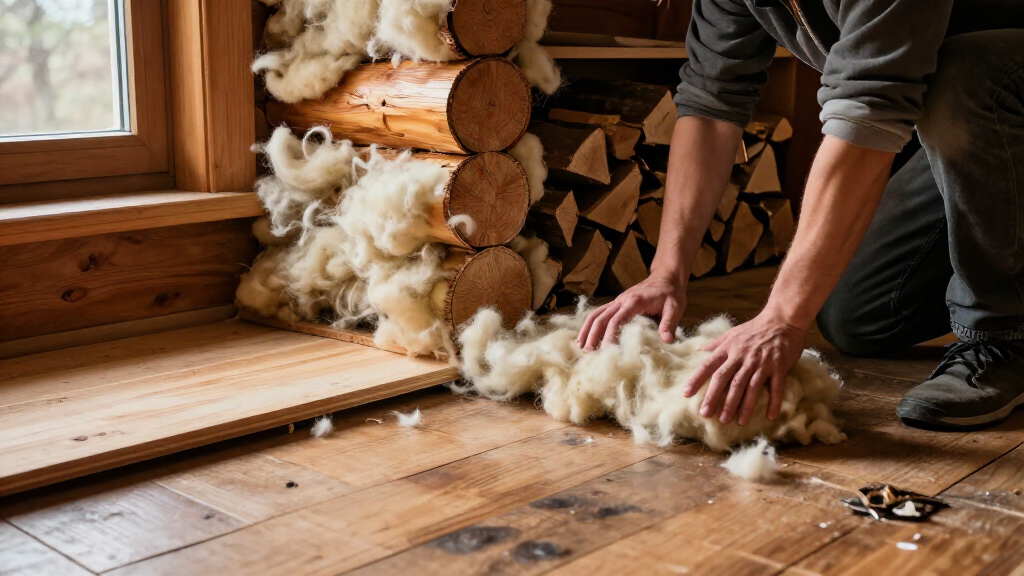
I compared these three products by matching their stated construction, dimensions, coverage or gap range, and intended use to common cabin projects. That matters because the lineup includes a full-depth batt, an expanding sealant, and a thin multipurpose denim layer. Ranking them as if they all insulate the same surface would give a misleading answer. My order reflects how clearly each option can serve a substantial, defined part of an insulation job while still acknowledging where it falls short.
Fit for the task carried the most weight. Owens Corning lists R-19 fiberglass batts sized for 2×6 framing, so I place it first for a framed wall or floor cavity that can accept those dimensions. Loctite earns a distinct role for sealing irregular cracks and gaps up to 3 inches, where a batt cannot form a reliable seal. Frost King is easy to handle and useful for cushioning or noise control, but its 1-inch thickness makes it a narrower choice for thermal insulation in a cabin.
I also weighed installation and material tradeoffs. The fiberglass batts are unfaced and may irritate skin during handling. The spray foam needs careful application because excess can create a mess, and cured foam is not a replacement for planned insulation across a broad area. Recycled denim avoids the itch associated with fiberglass, but its smaller dimensions require fitting and its limited thickness narrows its role. I did not treat listed material properties as proof that any product is suitable for every log wall, climate, or code requirement.
Finally, I considered how each product fits into a broader assembly. Cabins can have solid logs, framed interior walls, roof cavities, floors, and joints that each require different treatment. These recommendations are product-level starting points, not a substitute for checking local building guidance or the cabin’s moisture-control design. Where a product’s description does not provide a performance value or installation detail, I avoid filling that gap with an unsupported claim.
| log cabin insulation material | Brand |
|---|---|
| Owens Corning R-19 Unfaced Fib | — |
| Loctite Tite Foam Big Gaps Spr | Loctite |
| Frost King No Itch Natural Cot | Frost King |
Factors to Consider When Choosing Best Log Cabin Insulation Materials
Before choosing a material, I would identify exactly what is being insulated. These three products address different parts of a cabin: framed cavities, air-leaking openings, and small padded or sound-dampening areas. A product that suits one job may perform poorly when asked to do another.
Start with the wall construction
A cabin built from solid logs does not automatically have a 2×6 cavity for batts. Owens Corning’s dimensions make sense where the building has compatible framing, such as a framed interior wall, floor, or attic area. If the logs themselves form the exterior wall, the insulation plan must account for the wall’s existing construction and condition rather than assuming a standard stud-bay installation. I would also distinguish between insulating a roof or floor and changing the wall assembly; those projects involve different access and moisture considerations.
Match the product to the actual assembly before estimating how much material to buy. If you cannot identify the wall layers or how they manage moisture, check the building documentation or seek qualified local advice before enclosing the wall. The unfaced batts leave that design question open, which can be an advantage for a planned assembly but a drawback for anyone expecting a complete kit.
Separate air sealing from insulation
Fiberglass batts fill a framed cavity, but they should not be treated as a gap sealant. Loctite’s spray foam is intended for openings up to 3 inches and can address some discrete cracks that a batt would not close neatly. Frost King denim is a cut-to-fit layer for small tasks, not an expanding seal. Air leakage and cavity insulation are different problems, and a cabin may need both addressed in separate steps.
Inspect the source of a draft before applying material. A crack at a static opening may call for a different solution from a joint that moves as a log structure settles. Use spray foam only where its directions and the joint conditions suit the application, and avoid filling a large area simply because foam is convenient. For broader coverage, compare products designed for the assembly rather than relying on a canister intended for gaps.
Compare thermal performance fairly
Only the Owens Corning product in this lineup supplies an R-value: R-19. The listed rating makes it easier to compare with other cavity-insulation options, but it does not establish how a complete cabin wall will perform. The Loctite description supplies a maximum gap size, not an R-value, while the Frost King specifications provide a thickness but no thermal rating. I would not infer equal insulation performance from these products’ shared use of the word insulation.
Thickness is not a complete performance comparison. Material, installation fit, gaps, compression, and the surrounding assembly matter too. If a project requires a specific thermal target, compare documented performance for products intended for that exact application and confirm that the installed assembly can meet the target.
Plan for moisture and cabin conditions
Cabins can face changing temperatures, indoor humidity, wind exposure, and seasonal occupancy. An unfaced batt does not supply a vapor barrier, but adding a separate layer without understanding the wall can also create an unsuitable assembly. I would make moisture control part of the wall plan rather than treating it as an accessory to pick after the insulation is installed. Local climate and construction details should guide that decision.
Log joints can also move over time. A sealant that works in one opening may not suit a joint that repeatedly changes width, and no listed product here should be assumed to solve every leak or moisture issue. Follow the manufacturer’s location and application directions, and consult qualified help when the repair affects structural or moisture-sensitive areas.
Choose based on installation comfort and project scale
For broad framed cavities, the fiberglass package gives the clearest coverage figure and is designed for a specific framing depth, but installers should plan for possible skin irritation. Loctite is more targeted and needs controlled application; excess foam can be messy. Frost King is the easiest of these three to handle according to its no-itch description, but the small, 1-inch pieces can require substantial cutting and are not a full-depth wall solution.
Think about how much area you need to treat and whether the work is a one-time repair or part of a larger renovation. The right material for a handful of openings may not be an efficient choice for a whole cabin. Conversely, buying batts for a narrow irregular crack does not solve the fit problem that a purpose-made gap sealant is intended to address.
Frequently Asked Questions
Which of these three is best for a log cabin?
For a cabin with compatible 2×6 framed walls, floors, or attic spaces, I would start with the Owens Corning R-19 batts because they are the only option here designed as a full-depth cavity insulation with a stated R-value. Loctite is a better fit for isolated gaps, while Frost King is better suited to small projects and noise dampening. If the exterior walls are solid logs without a framed cavity, none of these should be assumed to be a complete wall-insulation solution.
Can I use fiberglass batts directly against solid log walls?
The Owens Corning batts are described for 2×6 framing, so I would not treat them as a direct-fit product for exposed solid logs. They may suit a framed layer within a cabin, but the wall assembly needs to account for moisture behavior, fit, and any air-control layers. Check the construction details before covering solid logs, and seek local building guidance if the existing layers or moisture strategy are unclear.
Is Loctite Tite Foam a replacement for wall insulation?
No. The product is described as an expanding foam sealant for gaps and cracks up to 3 inches, not as a broad-area batt or wall insulation system. It can address suitable openings where drafts enter, while a framed cavity may need a separate insulation layer such as compatible batts. The supplied information does not list an R-value for this foam, so I would not compare it directly with the Owens Corning R-19 rating.
Can Frost King recycled denim insulate an entire cabin wall?
I would not choose this 1-inch-thick product as the main insulation for an entire cabin wall based on the provided specifications. It is described as a multipurpose material for insulation, cushioning, and noise dampening, but it has no listed R-value and is much thinner than the Owens Corning batts. Its strongest role in this lineup is a small project where recycled material and comfortable handling matter more than filling a deep wall cavity.
Do unfaced fiberglass batts need a vapor barrier?
The batts do not include a vapor barrier, but that does not mean every installation should automatically receive one. The right moisture-control approach depends on the cabin’s climate, wall layers, indoor conditions, and construction details. I would plan the full assembly before adding a separate vapor-control layer, using local building guidance or a qualified professional when the correct placement is uncertain.
Conclusion
My recommendation depends on the project, because these picks serve separate jobs. For 2×6 framed walls, floors, or attic areas, I would choose Owens Corning R-19 first, while planning separately for moisture control and safe handling. For isolated drafts and openings up to 3 inches, Loctite Tite Foam is the more suitable targeted choice, provided the joint and application fit its instructions. For small cushioning or sound-dampening tasks where nonirritating handling and recycled material matter, Frost King is the specialist option.
If your cabin has solid-log exterior walls, do not buy any of these on the assumption that it will solve the whole wall. First identify the wall assembly, locate the source of drafts, and decide how the structure should manage moisture. That check is what separates a sensible material purchase from a product that simply does not fit the building.
Halloween Picks
halloween
As an affiliate, we earn on qualifying purchases.