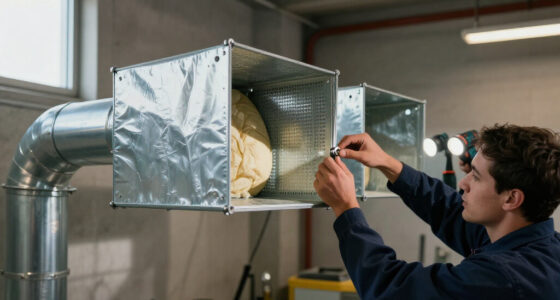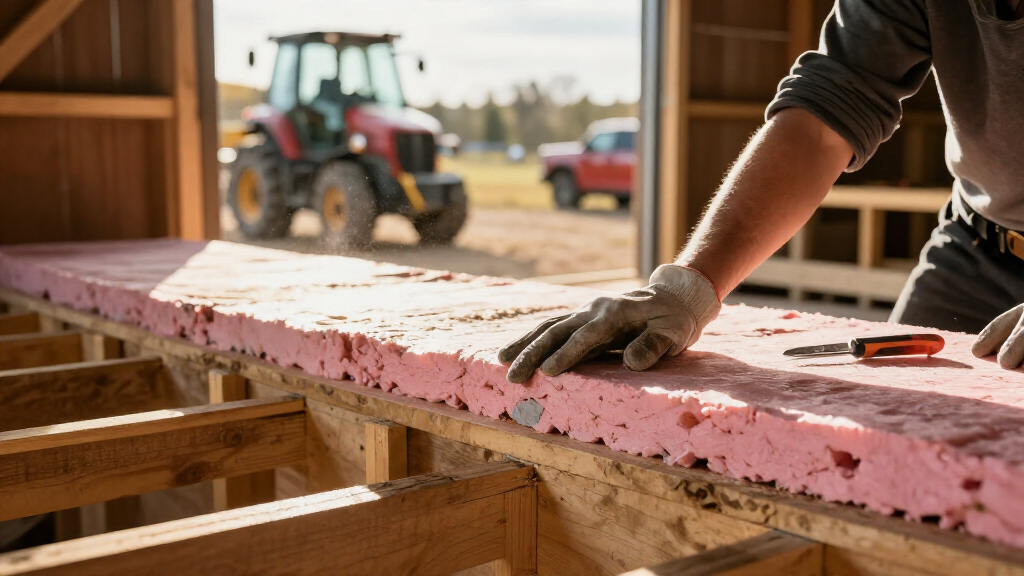

The best pole barn insulation depends on whether you need broad radiant coverage, a fiberglass condensation blanket, or insulation sized for a smaller project. My best overall pick is the US Energy Products 48″ x 1000′ Double Bubble Reflective Insulation, which offers extensive coverage for large buildings. The 6-inch R-19 PSK fiberglass stands out for buyers prioritizing a stated R-value, while the SmartSHIELD 10mm roll suits those seeking a thicker reflective foam-core option. The main tradeoffs are coverage versus handling, reflective barriers versus cavity insulation, and stated thermal ratings versus the installation details needed to achieve them. Read on for the full comparison and guidance on matching insulation to your barn’s structure and climate.

Get cleaning gear delivered free with Prime
- Fast, free delivery on millions of items
- Prime Video, Amazon Music and more included
- Member-only deals all year
Complete the kit


Key Takeaways
- The 1000-foot double-bubble roll leads on coverage, making it a better fit for large projects than the 50- to 125-foot rolls, though its scale can be unwieldy for small jobs.
- PSK-faced fiberglass and reflective bubble products serve different roles: the 6-inch R-19 option is a cavity-style choice, while reflective rolls primarily act as radiant barriers and need the right installation conditions.
- Roll dimensions matter as much as material: the 72-inch SmartSHIELD roll covers wider runs, while shorter and narrower formats may be easier to handle in tight spaces.
- The list includes distinct thicknesses and stated ratings, but product labels alone do not establish whole-wall performance; air gaps, framing, seams, and climate all affect results.
- There are duplicate EcoFoil single-bubble entries, so they do not represent two meaningfully different insulation designs; compare the listed specifications and package details before choosing.


| pole barn insulation | Thickness | Material | Coverage | Width |
|---|---|---|---|---|
| US Energy Products White Doubl | 6.5 mm | Double-bubble reflective foil and polyethylene | 4,000 sq. ft. | 48 inches |
| US Energy Products Radiant Bar | — | Metalized aluminum foil with Mylar and nylon scrim | 1,000 sq. ft. | 4 feet |
| 6-inch R-19 PSK Faced Fibergla | 6 inches | Fiberglass with polypropylene scrim kraft facing | 187.2 sq. ft. | 48 inches |
| 1000sf White Reflective Foam I | 0.13 inches | — | 1,000 sq. ft. | — |
| USA Reflective Insulation Bubb | 0.19 inches | Polyethylene | — | — |
| EcoFoil Single Bubble Insulati | 3.175 mm (1/8 inch) | Foil/white/foil | 500 sq. ft. | 48 inches |
| US Energy Products 48" x 100′ | Described as twice as thick as normal single-bubble insulation | — | 400 sq. ft. | 48 inches |
| Metal Building Insulation Roll | 3 mm | — | 200 sq. ft. | 48 inches |
| EcoFoil Single Bubble Insulati | 3.175 mm | Reflective foil | 500 sq. ft. | 48 inches |
| 2" PSK Faced Fiberglass Insula | 2 inches | Fiberglass | — | 48 inches |
| Owens Corning R-19 Unfaced Fib | 6.5 inches | Fiberglass | 77.5 sq ft | — |
| SmartSHIELD 10mm 48" x 50ft R2 | 0.4 inches | Polyethylene (PE) | 200 sq ft | — |
| SmartSHIELD 1.5mm 48" x 100ft | 1.5 mm | Polyethylene (PE) | 400 sq ft | — |
| SmartSHIELD 1.5mm 48" x 200ft | 1.5 mm | Polyethylene (PE) | 800 sq ft | — |
| SmartSHIELD -5mm 72" x 50ft R1 | 5 mm | Polyethylene (PE) | — | — |
More Details on Our Top Picks
US Energy Products White Double Bubble Reflective Thermal Insulation Radiant Barrier 48″ x 1000′ (4000 sqft), 6.5mm R8-24, Class 1, Class A Fire Rated, Made in USA
For a large pole barn with broad roof or wall runs, this 1,000-foot double-bubble roll stands out for its substantial coverage and reflective surface. The polyethylene bubble layers add a thermal break, while the product description says its reflective material reduces heat transfer by 99.7%; that figure describes radiant performance, not a substitute for a complete assembly’s insulation rating. Its vapor-barrier function also suits metal buildings where condensation control matters. Compared with the 6-inch R-19 PSK fiberglass, this roll is easier to cover large uninterrupted areas, but it does not provide the same stated R-19 rating. The long, heavy roll can be awkward to position, and performance depends on correct installation, including appropriate air space where required. I’d choose it for broad coverage, not as a one-product answer to every climate or code requirement.
Pros:- 4,000 square feet of stated coverage suits large roofs and walls.
- Double-bubble construction provides a thermal break alongside the reflective surface.
- Acts as a vapor barrier to help manage condensation in metal buildings.
- Product data lists Class 1 and Class A fire ratings.
Cons:- Large roll size can make transport, cutting, and overhead installation difficult.
- Reflective performance depends on installation details and should not be confused with a guaranteed whole-wall R-value.
- A reflective barrier alone may not meet insulation needs in colder climates.
Best for: Owners insulating a large metal pole barn who want long continuous runs of reflective material and vapor-barrier coverage.
Not ideal for: Buyers who need a documented conventional R-value for a cold-climate assembly, or anyone working alone who cannot manage a heavy, 1,000-foot roll.
- Material:Double-bubble reflective foil and polyethylene
- Thickness:6.5 mm
- Width:48 inches
- Length:1,000 feet
- Coverage:4,000 sq. ft.
- Listed R-value range:R-8–24
- Country of manufacture:USA
Our verdict“Choose this for large pole barns needing extensive reflective and vapor-barrier coverage, but compare its assembly performance with the stated R-19 fiberglass option before planning for cold weather.”
US Energy Products Radiant Barrier Insulation 1000 sqft, Commercial Grade, Perforated, No Tear, Green Energy Reflective Insulation for Solar Attic, Roof, House Wrap
This perforated foil barrier is a better match for pole-barn projects where radiant-heat control is the goal and a non-perforated vapor barrier is not required. The 1,000-square-foot roll is easier to handle than the 4,000-square-foot US Energy Products double-bubble roll, while its foil, Mylar, and nylon-scrim construction is described as tear-resistant. Perforations can allow some moisture vapor to pass, which distinguishes it from products intended to block vapor; that may suit certain roof or wrap assemblies, but it is not a universal condensation solution. Compared with the R-19 PSK fiberglass, this barrier is lighter and more focused on radiant transfer, yet it does not provide the same stated R-value. Check the building assembly and local requirements before choosing it, especially where moisture control is a priority.
Pros:- 1,000-square-foot coverage is more manageable than the 4,000-square-foot double-bubble roll.
- Reflective foil is designed to reduce radiant heat transfer.
- Nylon scrim and Mylar backing are described as tear-resistant.
- Perforated construction may suit assemblies that need vapor permeability.
Cons:- Perforations make it unsuitable where a continuous vapor barrier is required.
- No conventional R-value is provided in the product data.
- Installation calls for care to avoid damage and preserve the intended performance.
Best for: Pole-barn owners seeking a manageable roll for radiant-heat reduction in an assembly designed to use a perforated barrier.
Not ideal for: Buyers needing a continuous vapor barrier or substantial documented conductive insulation for a cold-weather workspace.
- Coverage:1,000 sq. ft.
- Width:4 feet
- Length:250 feet
- Material:Metalized aluminum foil with Mylar and nylon scrim
- Reflective value:99.7% (as stated in product data)
- Weight specification:70 grams (listed thickness specification)
- Design:Perforated radiant barrier
- Country of manufacture:USA
Our verdict“Pick this for radiant control in a pole-barn assembly that calls for perforated material, and skip it when you need sealed vapor protection or a stated fiberglass-style R-value.”
6-inch R-19 PSK Faced Fiberglass Insulation, 48 inches wide, 39.3 feet long for pole barns and metal buildings
When a pole barn needs more than radiant control, this 6-inch, R-19 fiberglass option offers the clearest stated thermal rating in this group. Its PSK facing is described as a vapor barrier, giving it a practical role in metal buildings where condensation can threaten comfort and stored materials. Unlike the US Energy Products perforated radiant barrier, this is conventional insulating material with a stated R-value, so it is the more direct choice for temperature moderation in cooler conditions. The tradeoff is coverage: one roll covers 187.2 square feet, far less than the large reflective rolls, so bigger barns may require substantial quantities and careful joint planning. The listing provides no fire-resistance certification, and the facing does not remove the need to design the full wall or roof assembly for local climate and moisture conditions.
Pros:- Stated R-19 rating gives buyers a clearer thermal benchmark than the radiant barriers in this lineup.
- Six-inch thickness supplies substantial insulation depth.
- PSK facing is intended to help control vapor and condensation.
- Four-foot width suits common pole-barn framing and metal-building applications.
Cons:- Each roll covers only 187.2 square feet, so large barns require multiple rolls.
- Product data does not list fire-resistance certifications.
- Fiberglass and facing require correct fitting and detailing around framing and joints.
Best for: Pole-barn owners prioritizing a stated R-19 thermal layer and facing intended to help control condensation in a metal-building assembly.
Not ideal for: Buyers covering very large areas on a tight installation schedule, or anyone who needs listed fire certifications before selecting materials.
- Material:Fiberglass with polypropylene scrim kraft facing
- Thickness:6 inches
- Stated R-value:R-19
- Width:48 inches
- Length:39.3 feet
- Coverage:187.2 sq. ft.
- Facing:PSK
- Listed applications:Pole barns, metal buildings, and duct wrap
Our verdict“Choose this when stated R-19 insulation and condensation control matter more than covering a large area quickly with reflective roll material.”
1000sf White Reflective Foam Insulation Vapor Barrier for Warehouse Building
The defining reason to choose this product is its white reflective surface, which may suit a warehouse-style pole barn where a bright interior finish is preferred alongside vapor-barrier coverage. Its listed 1,000-square-foot coverage is more practical for a medium-sized project than the 187.2-square-foot R-19 PSK fiberglass roll, but the comparison has limits: the product data gives no R-value, so I would not treat its 0.13-inch thickness as equivalent to six inches of fiberglass. It is presented as lightweight and easy to install, though the listing describes the material type as aluminum without much detail about its foam construction or installation method. That lack of specification makes it harder to judge thermal performance and assembly compatibility. I’d shortlist it for reflective coverage, but verify technical documentation before relying on it as the primary insulation layer.
Pros:- 1,000-square-foot coverage can serve a sizable building area.
- White reflective surface may be preferable for a bright interior.
- Listed as lightweight and easy to install.
- Designed for insulation and vapor-barrier use in buildings or warehouses.
Cons:- No R-value is supplied, limiting thermal-performance comparisons.
- At 0.13 inches thick, it is not a direct substitute for the 6-inch R-19 fiberglass option.
- Product data offers limited detail on material construction and installation requirements.
Best for: Owners of warehouse-style pole barns who want a white reflective surface and broad vapor-barrier coverage, with installation details confirmed for their assembly.
Not ideal for: Buyers who need a documented R-value, detailed material construction, or proven insulation performance for a cold-climate barn.
- Coverage:1,000 sq. ft.
- Thickness:0.13 inches
- Dimensions:3,000 inches long × 48 inches wide
- Material type:Aluminum (as listed)
- Surface:White reflective
- Listed use:Insulation and vapor barrier for buildings or warehouses
Our verdict“Consider this for reflective warehouse-style coverage when a white finish matters, but get performance and assembly details before using it as your barn’s main insulation.”
USA Reflective Insulation Bubble Roll, 48″ x 125′
For a small pole-barn section or a DIY retrofit, this 48-inch-by-125-foot bubble roll is less commitment than the 1,000-foot double-bubble option and is described as easy to cut and install. Its 3/16-inch bubble layer offers a lightweight thermal break, while the listed R-value range of 4.9 to 14.1 gives buyers a reference point—though the range should be checked against the exact assembly and test conditions before comparing it with the R-19 PSK fiberglass. The roll is also marketed for packaging and climate control, so it feels less specifically tailored to pole-barn construction than the fiberglass product. The listed coverage of 6,000 square inches is unusually small for the stated roll dimensions, so I would verify usable coverage with the seller before calculating materials. Additional sealing may be needed for the intended performance.
Pros:- Shorter roll is easier to handle than the 1,000-foot double-bubble product.
- Bubble layer creates a thermal break in a thin, flexible format.
- Can be cut to fit varied surfaces and small areas.
- Product data lists an R-value range for comparison.
Cons:- Listed coverage of 6,000 square inches conflicts with the stated 48-inch-by-125-foot dimensions and needs verification.
- R-value is presented as a range rather than one clear assembly-specific figure.
- May need additional sealing, and the listing is not focused solely on pole-barn installation.
Best for: DIY owners insulating a small barn area, door, or retrofit section who want a cut-to-fit reflective bubble material.
Not ideal for: Buyers insulating an entire large pole barn or seeking a clearly specified, purpose-built assembly with verified coverage and a single documented R-value.
- Dimensions:48 inches × 125 feet
- Thickness:0.19 inches
- Bubble layer:3/16 inch
- Material:Polyethylene
- Listed coverage:6,000 sq. inches
- Listed R-value range:R-4.9 to R-14.1
Our verdict“Choose this for a small DIY retrofit after confirming coverage and installation details, but use a better-documented system for a full pole-barn build.”
EcoFoil Single Bubble Insulation Roll 48″ x 125′ (500 sq. ft.), 3.175mm Thick, Reflective Foil Insulation
I’d choose this EcoFoil roll when a pole barn needs a broad reflective layer and radiant heat is a bigger concern than severe winter cold. Its 500-square-foot coverage exceeds the 400-square-foot US Energy Products Double Bubble roll, which can mean fewer roll changes across a larger project. At 1/8 inch thick, though, this single-bubble material is not a substitute for substantial insulation in a cold-climate building. The reflective surface is described as reflecting up to 96% of thermal energy, and the material can also serve as a vapor barrier when seams are properly sealed. That sealing is part of the job, not an optional finishing touch. I’d shortlist it for warm-region barns, but compare it with the thicker US Energy product if added bubble thickness and a waterproof vinyl face matter more than coverage.
Pros:- Covers 500 square feet per roll, more than the 400-square-foot US Energy Products Double Bubble option.
- Reflects up to 96% of thermal energy according to the product description.
- Lightweight material is described as easy to cut and install.
- Can act as a vapor barrier when seams are sealed.
Cons:- Its 1/8-inch thickness may not provide enough insulation for harsh winters or high heating demands.
- Seams require tape to make the vapor-barrier layer effective.
- The product is described as better suited to warmer regions with minimal snow or ice.
Best for: Pole-barn owners in warmer regions who want a lightweight reflective layer with 500 square feet of coverage and can seal the seams carefully.
Not ideal for: Owners heating a barn through snowy winters or seeking a thick insulation layer; this single-bubble roll is only 1/8 inch thick.
- Width:48 inches
- Length:125 feet
- Coverage:500 sq. ft.
- Thickness:3.175 mm (1/8 inch)
- Reflectivity:Up to 96%
- Material:Foil/white/foil
- Weight:21 pounds
- Country of manufacture:USA
Our verdict“Choose this roll for wide-area radiant-heat control in a warm-climate pole barn, but not as the sole insulation for severe winter conditions.”
US Energy Products 48″ x 100′ Double Bubble Reflective Foil Insulation Thermal Barrier R8
This US Energy Products roll suits pole-barn owners who want a double-bubble reflective layer with a more protective surface than the single-bubble EcoFoil rolls. The product description says it is twice as thick as normal single-bubble insulation and has a puncture-resistant build, useful when installation involves handling large wall or roof sections. Its white waterproof vinyl finish on one side and foil on the other also set it apart from the foil/white/foil EcoFoil option. Coverage is 400 square feet, so you’ll get less area per roll than with either EcoFoil 500-square-foot roll. The stated R8 designation and up-to-97% reflection are product claims; installation details still affect performance, and reflective insulation needs the appropriate air space to work as intended. I’d favor this for a tougher reflective assembly, not as a replacement for thick fiberglass in a cold barn.
Pros:- Double-bubble construction is described as twice as thick as standard single-bubble material.
- Puncture-resistant construction is suited to handling during larger installations.
- White waterproof vinyl finish on one side and foil on the other offer different surface properties.
- Product description states up to 97% thermal reflection.
Cons:- Covers 400 square feet, less than the 500-square-foot EcoFoil rolls.
- Large roll may be cumbersome for small DIY jobs.
- Proper installation and suitable installation tools may be needed to get the intended performance.
Best for: Pole-barn builders who want a double-bubble reflective layer with a waterproof vinyl face and greater resistance to punctures during installation.
Not ideal for: Buyers prioritizing maximum coverage per roll or seeking a stand-alone solution for cold-climate heating; this covers 400 square feet and remains reflective insulation.
- Width:48 inches
- Length:100 feet
- Coverage:400 sq. ft.
- Construction:Double-bubble foil insulation
- Facing:White waterproof vinyl on one side; foil on the other
- Thickness:Described as twice as thick as normal single-bubble insulation
- Reflectivity:Up to 97%, as stated in the product description
- Durability:Puncture-resistant
Our verdict“Pick this for a more durable double-bubble reflective layer, while choosing EcoFoil if you need greater coverage per roll.”
Metal Building Insulation Roll, 48 in x 50 ft, Reflective Foil Foam
For patching a smaller pole barn or insulating a limited wall or ceiling area, this roll is the easiest fit in this group: it weighs 5.8 pounds and covers 200 square feet. That is much less material than either 500-square-foot EcoFoil roll, but it also avoids handling a long, heavy roll when the job is modest. Its 3 mm flexible foam core and foil surface are described as reflecting 95% of radiant heat; the product is also listed as fire-rated and non-toxic. Those claims make it appealing for varied building surfaces, though the product data doesn’t specify a fire-rating class or an R-value. The foil may tear if handled roughly, and seams may need extra sealing. I’d choose it for manageable, targeted work rather than a whole-barn project where the EcoFoil rolls cover more area per roll.
Pros:- At 5.8 pounds, it is much lighter than the 21-pound EcoFoil roll listed here.
- Flexible foam core can suit walls, ceilings, floors, and mobile spaces.
- Product description states 95% radiant-heat reflection.
- Listed as fire-rated and non-toxic.
Cons:- Covers only 200 square feet, less than the other reflective rolls in this batch.
- Foil surface may tear if handled carelessly.
- Additional seam sealing may be needed, and the supplied data does not state an R-value or fire-rating class.
Best for: DIYers insulating a small pole-barn section, outbuilding, or repair area who value a lightweight roll that is easy to handle.
Not ideal for: Owners covering a large barn or relying on a clearly specified R-value; coverage is 200 square feet and no R-value is provided in the product data.
- Width:48 inches
- Length:50 feet
- Coverage:200 sq. ft.
- Thickness:3 mm
- Reflectivity:95% of radiant heat, as stated in the product description
- Materials:Aluminum, EPE foam, and vinyl film
- Weight:5.8 pounds
- Model number:FIR-WH-0450
Our verdict“Choose this lightweight roll for a small, targeted barn project, but use a larger roll or specified thermal assembly for extensive coverage.”
EcoFoil Single Bubble Insulation Roll 48″ x 125′ (500 sq. ft.), 3.175mm Thick, Reflective Foil Insulation
This EcoFoil listing has the same stated dimensions and 500-square-foot coverage as the other EcoFoil roll in this batch, making it another option for a broad single-bubble radiant barrier. The listed weight is 17 pounds, compared with 21 pounds for the B0FDR73CSQ listing, which may make this version easier to move and position overhead. Both describe 96% reflection and a 3.175 mm thickness, so the deciding difference in the supplied data is largely the stated weight; the other listing also identifies a USA origin and foil/white/foil material. Against the thicker US Energy Products double-bubble roll, this one is lighter and covers more area, but offers less bubble thickness. It is best treated as a warm-climate radiant-control layer, not a stand-alone answer for cold winters. The product data also warns that colder areas may call for multiple layers.
Pros:- 500-square-foot coverage provides more area per roll than the 400-square-foot US Energy Products option.
- Listed weight of 17 pounds makes it lighter than the other EcoFoil listing in this batch.
- Reflects 96% of radiant heat according to the product description.
- Flexible material is described as easy to handle and install without special equipment.
Cons:- The 3.175 mm single-bubble layer may be insufficient for cold climates or high heating demands.
- Product description says it is less effective in snowy or icy climates.
- Multiple layers may be needed for better insulation in colder areas.
Best for: DIY pole-barn owners in warmer climates who want a lightweight 500-square-foot roll that can be cut and installed without special equipment.
Not ideal for: Buyers in snowy or icy climates seeking a single, substantial insulation layer; this product is single-bubble and may require multiple layers in colder areas.
- Width:48 inches
- Length:125 feet
- Coverage:500 sq. ft.
- Thickness:3.175 mm
- Reflectivity:96% of radiant heat, as stated in the product description
- Material:Reflective foil
- Weight:17 pounds
- Applications:Basements, pole barns, and metal buildings
Our verdict“This is the lighter EcoFoil choice for warm-region projects where broad reflective coverage matters more than substantial cold-weather insulation.”
2″ PSK Faced Fiberglass Insulation 48″ x 52.5′, Condensation Blanket for Metal Buildings
Unlike the reflective rolls in this group, this 2-inch fiberglass blanket is aimed directly at temperature regulation and condensation management in metal buildings and pole barns. Its PSK facing is described as a vapor barrier, giving it a different job from the EcoFoil single-bubble rolls, which emphasize radiant-heat reflection. For a barn where moisture forming on metal surfaces is a concern, that facing may make this a better match—provided the blanket is installed with the right fit and sealed details. The tradeoff is that the supplied coverage is listed as only 24.5 square feet, far below the reflective rolls’ 200 to 500 square feet, so buyers should verify the coverage figure before planning a full building. Fiberglass also calls for careful handling, and this product is less versatile beyond metal-building applications.
Pros:- Two-inch fiberglass provides a thicker insulation layer than the 3.175 mm EcoFoil single-bubble rolls.
- PSK facing is described as a vapor barrier to help control moisture and condensation.
- Designed for metal buildings and pole barns, including walls and ceilings.
- Scrim Kraft facing is specified as part of the product construction.
Cons:- Listed coverage of 24.5 square feet is far lower than the reflective rolls in this batch; verify the figure before estimating materials.
- Fiberglass materials require careful handling during installation.
- Its stated applications are more focused on metal buildings than the more versatile reflective options.
Best for: Pole-barn owners focused on reducing condensation and adding a faced fiberglass layer to metal-building walls or ceilings.
Not ideal for: Buyers seeking a lightweight radiant barrier, broad coverage per roll, or a material that avoids fiberglass handling precautions.
- Thickness:2 inches
- Width:48 inches
- Length:52.5 feet
- Listed coverage:24.5 sq. ft.
- Material:Fiberglass
- Facing:Polypropylene Scrim Kraft (PSK)
- Item count:1
- Application:Metal buildings and pole barns
Our verdict“Choose this faced fiberglass blanket when condensation control and a thicker insulation layer matter more than easy handling or high coverage per roll.”
Owens Corning R-19 Unfaced Fiberglass Insulation 77.5 sq ft, 15 in x 93 in Batts
For pole barns with conventional 2×6 framing, these R-19 batts offer a different approach from the reflective SmartSHIELD rolls: they fill the cavity with fiberglass rather than relying on a reflective surface and air gap. The 6.5-inch thickness suits deeper framed walls and can also help dampen sound, a useful benefit for workshops or equipment sheds. Its unfaced construction leaves you free to choose a separate vapor-control layer for your climate and wall assembly, but that flexibility puts more responsibility on the installer. Compared with SmartSHIELD’s wider, lightweight roll, these batts are less suited to covering broad open surfaces quickly and can be awkward to handle. I’d choose them when the barn has framed cavities, not as a direct substitute for insulation designed to span metal building framing.
Pros:- R-19 fiberglass is sized for 2×6 framing cavities.
- Unfaced design allows the vapor-control approach to be selected for the building assembly.
- Can reduce sound as well as heat transfer.
- Eight batts cover 77.5 square feet.
Cons:- No facing or vapor barrier is included, so moisture control must be planned separately.
- Bulky batts can be cumbersome to carry, cut, and fit.
- Cavity-focused format is less convenient than a roll for broad, open barn surfaces.
Best for: Pole-barn owners with 2×6 framed walls who want cavity insulation and some sound reduction, and can plan a separate vapor-control layer.
Not ideal for: Owners insulating large, open metal-frame bays who need a continuous covering that installs across framing without fitting individual cavities.
- Material:Fiberglass
- Design:Unfaced
- Thermal resistance:R-19
- Thickness:6.5 inches
- Batt dimensions:15 in x 93 in
- Number of batts:8
- Coverage:77.5 sq ft
Our verdict“Choose these batts for framed 2×6 pole-barn walls when cavity fit matters more than fast coverage of open bays.”
SmartSHIELD 10mm 48″ x 50ft R22 Reflective Insulation Roll, Foam Core Radiant Barrier, Thermal Insulation Shield – Foil / Foil
The 10mm foam core gives this SmartSHIELD roll more thickness than the brand’s 1.5mm options in this lineup, making it a better fit when you want a more substantial reflective layer without switching to fiberglass batts. Foil on both sides reflects radiant energy, while the described vapor-barrier function can help manage moisture when the seams and edges are handled appropriately. The roll covers 200 square feet, so it is a manageable choice for a smaller barn or a targeted roof or wall section. Compared with the 400- and 800-square-foot SmartSHIELD rolls, it covers less area but offers a thicker core. It still is not equivalent to a deep cavity insulation system; buyers needing substantial insulation for cold conditions should compare it with the Owens Corning R-19 batts and check the assembly requirements.
Pros:- 10mm foam core is thicker than the 1.5mm SmartSHIELD rolls listed here.
- Foil surfaces are described as reflecting 95% of radiant energy.
- Includes a vapor-barrier function when installed with suitable seam treatment.
- Lightweight roll can be cut to fit roof or wall sections.
Cons:- Its 200-square-foot coverage may require multiple rolls on a larger barn.
- May need additional fastening depending on the installation surface.
- Reflective construction is not a replacement for deep cavity insulation in every climate.
Best for: Owners insulating a limited area of a pole barn who prefer a thicker reflective roll and need radiant-barrier coverage.
Not ideal for: Buyers seeking deep cavity insulation for severe cold, or those covering a large barn who want fewer roll changes.
- Material:Polyethylene (PE)
- Thickness:0.4 inches
- Roll dimensions:600 in L x 48 in W
- Coverage:200 sq ft
- Listed R-value:R-22
- Facing:Foil / foil
- Construction:Foam-core reflective roll
Our verdict“Pick this roll for a smaller pole-barn project where a thicker reflective layer matters more than maximum coverage per roll.”
SmartSHIELD 1.5mm 48″ x 100ft Reflective Insulation Roll, 400 sq ft, Foam Core Radiant Barrier, Commercial Grade Foil/Foil
This SmartSHIELD roll hits a useful middle ground: its 400-square-foot coverage is twice that of the 10mm roll, while the 100-foot length is less unwieldy than the 800-square-foot version. The 1.5mm foam core keeps it light and easy to cut, and the foil faces are described as reflecting 95% of radiant energy. It can also function as a vapor barrier, so it may suit a pole-barn roof or wall assembly designed around a reflective layer. The tradeoff is limited thickness: its stated R-value is 10.67, below the listed R-22 for the thicker 10mm SmartSHIELD. Compared with the Owens Corning R-19 batts, it is easier to run across broad surfaces but does not fill a framed cavity in the same way. Plan fastening and seam details before installation.
Pros:- 400-square-foot roll balances coverage with more manageable handling than the 800-square-foot size.
- Foil on both sides is described as reflecting 95% of radiant energy.
- Serves as a radiant and vapor barrier in suitable assemblies.
- Lightweight polyethylene foam core is easy to cut.
Cons:- The 1.5mm core is thin compared with the 10mm SmartSHIELD roll.
- Stated R-value of 10.67 is lower than the 10mm product’s listed R-22.
- Tight spaces can complicate installation, and long-term durability details are limited.
Best for: Pole-barn owners covering a moderate roof or wall area who want a manageable reflective roll with stated radiant- and vapor-barrier functions.
Not ideal for: Buyers who need thick cavity insulation, have a large project that calls for fewer roll joins, or cannot provide the appropriate installation air space and sealing.
- Material:Polyethylene (PE)
- Thickness:1.5 mm
- Roll dimensions:1200 in L x 48 in W
- Coverage:400 sq ft
- R-value:10.67
- Reflectivity claim:Reflects 95% of radiant energy
- Facing:Foil / foil
Our verdict“Choose this mid-size roll for moderate pole-barn coverage when ease of handling matters more than a thicker foam core.”
SmartSHIELD 1.5mm 48″ x 200ft Reflective Insulation Roll, 800 Sq. Ft., Foam Core Radiant Barrier, Thermal Insulation Shield – Foil / Foil
When a pole barn has a broad roof or wall area to cover, this SmartSHIELD’s 800-square-foot roll can reduce the number of separate rolls and joins compared with the 400-square-foot version. Its 1.5mm polyethylene foam core and foil faces are described as providing a radiant barrier, while the product also serves as a vapor barrier when installed and sealed appropriately. Those benefits make it a candidate for assemblies designed for reflective insulation, not an automatic substitute for thicker cavity fill. The same thin core found in the smaller SmartSHIELD means the extra coverage does not add insulation thickness; buyers seeking a heavier layer should look at the 10mm roll, while framed-wall projects may suit the Owens Corning R-19 batts better. The long roll also needs space and care during handling.
Pros:- 800-square-foot coverage can reduce the number of rolls and seams on a large project.
- Foil faces are described as reflecting 95% of radiant energy.
- Provides a vapor-barrier function when seams and edges are properly sealed.
- Lightweight material can be cut for different surfaces.
Cons:- The 1.5mm core is thin and does not provide the same cavity fill as fiberglass batts.
- The 200-foot roll can be difficult to maneuver, particularly in tight areas.
- Proper sealing is needed for the stated vapor-barrier function, and durability details are limited.
Best for: Owners covering a large pole-barn roof, ceiling, or wall section with a reflective layer and able to handle a long roll.
Not ideal for: DIYers working alone in tight spaces, or buyers who need thicker insulation rather than broad radiant-barrier coverage.
- Material:Polyethylene (PE)
- Thickness:1.5 mm
- Roll dimensions:2400 in L x 48 in W
- Coverage:800 sq ft
- R-value:10.67
- Reflectivity claim:Reflects 95% of radiant energy
- Facing:Foil / foil
Our verdict“Select this roll for large, open pole-barn surfaces when broad coverage outweighs the challenges of handling a long roll.”
SmartSHIELD -5mm 72″ x 50ft R15 Reflective Foam Core Insulation Roll, Cold and Heat Shield, Radiant Barrier, Thermal Insulation – White / FOIL
The standout here is the 72-inch width, which can cover wider runs than the 48-inch SmartSHIELD rolls and may mean fewer joins on a pole-barn ceiling or wall. Its 5mm closed-cell polyethylene core is paired with reflective foil on one side and a white polyethylene film on the other, offering a cleaner interior-facing finish than the foil/foil models. The product lists R-15 and describes radiant, vapor, and sound-barrier functions, but buyers should confirm that performance and fire requirements match their building assembly. Compared with the 800-square-foot SmartSHIELD, this roll covers less area; compared with the 1.5mm SmartSHIELD, its core is thicker. The single foil face and 50-foot length limit its appeal for projects prioritizing two reflective faces or maximum coverage.
Pros:- 72-inch width can reduce seams across wide surfaces compared with 48-inch rolls.
- 5mm closed-cell polyethylene core is thicker than the 1.5mm SmartSHIELD options.
- White film provides a clean interior-facing surface without painting.
- Product data lists R-15 and describes radiant- and vapor-barrier functions.
Cons:- 50-foot length covers less area than the 100- and 200-foot SmartSHIELD rolls.
- Only one side has reflective foil, unlike foil/foil alternatives.
- The supplied description does not give a square-foot coverage figure, and claims should be checked against the intended assembly.
Best for: Pole-barn owners who want a wider reflective roll with a white finished face for visible interior walls or ceilings.
Not ideal for: Buyers who need the highest coverage per roll, foil facing on both sides, or verified insulation performance for a specific code-required assembly.
- Material:Polyethylene (PE)
- Thickness:5 mm
- Roll dimensions:600 in L x 72 in W
- Listed R-value:R-15
- Construction:Closed-cell foam core
- Facing:Reflective foil / white polyethylene film
- Fire classification:Class 1 / Class A, as stated in product description
Our verdict“Choose this model for wide, visible pole-barn interiors where a white face and fewer seams matter more than maximum roll coverage.”

How We Picked
I ranked the options by how clearly their listed format and construction fit common pole barn needs: large-area roof or wall coverage, condensation control, cavity insulation, and smaller retrofit jobs. I gave preference to products with useful project-scale dimensions, clearly described facing or core construction, and a stated insulation rating where available. A listed R-value is a useful comparison point, but it does not by itself tell a buyer how the assembly will perform once installed.
The order reflects practical fit, not a claim that reflective rolls and fiberglass batts are interchangeable. Large double-bubble rolls rank ahead for broad coverage, while PSK-faced fiberglass ranks well for buyers who need a cavity-style product. Smaller rolls and less fully specified options rank lower because they suit narrower jobs or leave more questions about installation and performance. I also account for handling, coverage, and whether the product’s format matches the stated job; none earns a blanket recommendation without checking the barn’s framing, moisture conditions, and assembly design.
Factors to Consider When Choosing Best Pole Barn Insulation
Before choosing a roll or batt, I would start with the building assembly rather than the product label. Pole barns vary widely in framing, cladding, ventilation, occupancy, and heating plans, so the same insulation can be sensible in one building and poorly suited to another.
Match the insulation type to the building assembly
Reflective bubble and foam-core rolls are not direct substitutes for fiberglass batts. Reflective products are commonly used as radiant barriers, and their performance depends on the assembly and installation conditions, including any required air space. Fiberglass is designed to resist heat flow within a cavity, so it needs framing depth and suitable support. A common mistake is comparing a reflective product’s advertised R-value directly with a batt’s R-value as if both were measured in the same installed conditions. Check the manufacturer’s installation instructions and confirm that the product suits the wall or roof assembly you actually have.
Plan for condensation before adding insulation
Metal cladding can collect condensation when warm, moist indoor air meets a cold surface, and insulation alone may not solve that problem. Think through vapor control, air leakage, ventilation, and indoor humidity together, especially if the barn will hold animals, vehicles, or wet materials. Faced products may simplify some installations, but the facing’s placement and continuity matter. Avoid trapping moisture between low-permeance layers without a building-specific plan. For a heated or humid barn, local building guidance or a qualified installer can help identify the right assembly.
Use dimensions to plan labor and waste
Roll width and length affect more than total coverage: they change how many seams you make and how manageable installation is overhead. A very long roll can reduce joins on a large roof, but it may be awkward to lift, stage, and cut without help. Shorter rolls can be easier to control on a small repair or one section of wall, though they can leave more seams. Measure each surface and account for overlaps, cuts around framing, and openings rather than buying from the nominal square-foot figure alone. Check that the roll width fits your framing layout and installation method.
Treat R-value claims as one part of the decision
R-value helps compare resistance to heat flow, but a product label does not guarantee that the whole barn will perform at that level. Gaps, compressed batts, unsealed seams, thermal bridging through framing, and air leaks can all reduce real-world results. Reflective products may list ratings tied to a particular test or assembly, so read the qualification rather than assuming the number applies to any installation. If year-round comfort or energy use is a priority, decide on a target for the complete roof and wall assembly, not a single layer. Paying more for a thicker product is only useful if it fits that assembly and can be installed correctly.
Choose facing and finish for the space
Facing affects installation, exposure, and how the finished interior looks, so select it with the barn’s use in mind. A white surface may be preferable where a brighter interior is useful, while foil-faced material can suit an assembly that calls for a reflective surface. Check whether the material is intended to remain exposed or needs protection, and review fire-related specifications for the intended application. Do not assume a fire classification applies to every construction detail or local code situation. If the building will be occupied, store sensitive materials, or host equipment, check code requirements before covering the framing.
Decide when a mixed system is worth the added work
A single product may not address heat flow, condensation, and air leakage equally well. Some buildings may call for a layered assembly, but adding layers without planning can create moisture traps or complicate attachment. Before paying for a premium thickness or a second insulation layer, identify the main problem: summer radiant heat, winter heat loss, condensation, or drafts. A mixed system can make sense when each layer has a defined role and the assembly details are sound. For a basic storage barn, a simpler approach may be easier to install and maintain than a more elaborate build-up.
Frequently Asked Questions
Can I use reflective bubble insulation as the only insulation in a pole barn?
That depends on the building assembly and the level of temperature control you need. Reflective bubble products are often used as radiant barriers, and their effectiveness can depend on air space and correct placement, so a label’s stated rating should not be treated as a universal whole-wall result. If you need dependable winter heat retention, compare the full assembly and local climate requirements rather than relying on a reflective layer alone. Also plan for seams, air leaks, and condensation control. A qualified installer can advise whether another insulation layer is needed for your use.
Is PSK-faced fiberglass a better choice than a reflective roll for a metal barn?
Neither is automatically better; they address different parts of the problem. PSK-faced fiberglass is a cavity-style option that can provide a stated R-value when installed in a suitable framing space. Reflective rolls are often selected for broad surface coverage and radiant-barrier applications, with performance tied to installation details. Compare the available depth, facing requirements, condensation strategy, and intended heating or cooling use. If the framing cannot support the batt or the assembly lacks the conditions the reflective product requires, the apparent advantage may disappear.
How much insulation should I buy for the roof and walls?
Measure roof and wall areas separately, then subtract large openings and add allowance for overlaps, cuts, and framing details. Roll coverage figures describe the material area, not necessarily the finished area after seams and fitting. Account for the roll width: a width that does not align well with the framing can create extra cuts and waste. Roof work may also need extra planning for safe handling and access. If you are uncertain, sketch each surface and calculate the material needed by section before ordering.
Will insulation stop condensation on the inside of metal siding?
Insulation can change the temperature of interior surfaces, but it does not automatically prevent condensation. Moist indoor air, air leaks, ventilation, vapor control, and the cladding assembly all affect whether water forms or becomes trapped. A faced blanket may be part of a condensation-control approach, but it must be installed as specified, with seams and edges handled properly. Do not add a vapor-retarding layer without checking what lies on the other side of the assembly. For barns with high humidity, address moisture sources and ventilation as well as insulation.
When should I choose a large roll instead of shorter insulation rolls?
A large roll can reduce handling interruptions and seams across extensive, open surfaces, which can be useful on a large barn project with enough people and room to stage material. Shorter rolls are usually easier to carry, position, and cut for repairs or isolated sections. The wider 72-inch format in this roundup may suit broad runs, but it can be harder to manage around framing and openings. Consider access, lifting, storage, and installation crew size alongside coverage. The best format is the one your team can install cleanly without damaging or misaligning the material.
Conclusion
For a large barn where broad coverage is the priority, my best overall pick is the US Energy Products 48″ x 1000′ Double Bubble Reflective Insulation, provided its installation requirements fit the assembly. The best value in practical coverage is the EcoFoil single-bubble roll for buyers with a smaller area and a straightforward radiant-barrier use; the two identical listings should be treated as one product option, not separate designs. For a premium-style reflective choice, the thicker SmartSHIELD 10mm roll stands out by format, while buyers should verify how its stated rating applies to their installation. The best choice for a beginner is a manageable roll sized to the project rather than the longest available option, with clear installation instructions and a simple surface layout. For cavity insulation or a stated batt rating, compare the 6-inch R-19 PSK-faced fiberglass with the 2-inch PSK option based on framing depth and intended use. Choose by assembly and moisture plan first, then select the roll or batt that fits the job.
Halloween Picks
halloween
As an affiliate, we earn on qualifying purchases.