
TL;DR

Get cleaning gear delivered free with Prime
- Fast, free delivery on millions of items
- Prime Video, Amazon Music and more included
- Member-only deals all year
A Hunker report describes the Heat Storm 6,000-watt garage heater as a wall- or ceiling-mounted option for heating a garage without using floor space. The report lists infrared heating, a remote thermostat and Wi-Fi app controls, but notes that the unit’s electrical requirements may call for a dedicated circuit and professional installation.
Hunker has highlighted the Heat Storm 6,000-watt garage heater, a wall- or ceiling-mounted electric unit designed to warm a garage without occupying floor space. The report says it combines infrared heating with a remote thermostat and Wi-Fi app controls, while warning that its high electrical demand may require dedicated wiring beyond a typical garage setup.
The report lists the heater at $399.99 and says it uses carbon-fiber infrared elements with a combination of radiant and convection heat. Heat Storm’s stated coverage, as reported by Hunker, is 1,000 to 1,800 square feet. Actual heating performance in a given garage can depend on conditions such as insulation and air leakage; the report does not provide independent testing results or a temperature-rise measurement.
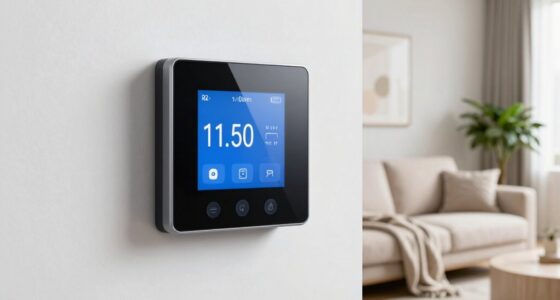
Included controls reportedly include a handheld remote and a separate thermostat that can measure temperature away from the ceiling-mounted unit. The heater also supports Wi-Fi operation through the SmartLife: Smart Living app, with reported compatibility for Alexa and Google Assistant. Hunker says the app can provide basic controls and automations in its free version, while some other SmartLife services require paid plans.
Hunker reports that the product had a 4.5-star rating from 42 ratings and that 100% of Home Depot purchasers recommended it at the time of the report. Those figures describe the retailer’s displayed customer feedback, not a controlled assessment of heating efficiency or long-term reliability. The article also notes negative recent ratings for the Android app, without giving a precise review period or rating breakdown.
Keeping Garage Floor Space Clear
A heater mounted overhead can leave more room for vehicles, tools and work areas than a portable floor unit. That may be useful for people who use a garage as a workshop during cold months or need to protect temperature-sensitive stored items. The design is relevant to both smaller garages where floor area is limited and larger spaces that need substantial heating capacity, although the stated coverage should not be treated as a guarantee for every building.
Remote control may also help users adjust heat before entering a garage they do not occupy continuously. But app operation depends on a connected service, according to the report, and the product’s high wattage brings a separate practical constraint: electrical capacity and safe installation. Buyers need to weigh those requirements alongside the convenience of a mounted heater and smart controls.
Products Worth Considering

Google Nest Doorbell (Wired, 3rd Gen, 2025) – Snow

Bose Smart Ultra Dolby Atmos Soundbar

Dyson V8 Cyclone Cordless Vacuum
As an affiliate, we earn on qualifying purchases.
Power Needs Shape Installation
Garages can be difficult to heat because they may have limited insulation and lose warm air when the garage door opens. Hunker frames the Heat Storm as an option for that setting, but does not report a direct comparison with other heaters or establish that this model is suitable for every garage. The article mentions electric alternatives with higher wattage, as well as propane heaters, while noting that fuel-based models bring separate handling and safety considerations.
The electrical specification is a central part of the report. It says a 6,000-watt, 240-volt installation requires a dedicated circuit with a 30-amp breaker and at least 10-gauge cable. Although the article discusses plug configurations, it says Heat Storm recommends hardwiring the unit. A mounting bracket is included, but mounting the heater does not remove the need to meet electrical and local code requirements.
Because this work involves a high-voltage circuit, homeowners should have a licensed electrician assess the panel, wiring route and applicable permits rather than treating the job as an ordinary plug-in appliance installation. Electrical work should be performed with the circuit de-energized and verified safe, using appropriate protective equipment. Hunker’s comparison to connecting a dryer plug does not establish that a particular installation is safe or code-compliant.
“The heater should be hardwired.”
— Hunker’s report on the Heat Storm garage heater
Performance and App Support Questions
The source does not establish how quickly the heater warms a cold garage, how well it maintains a set temperature in different insulation conditions, or what operating costs owners should expect. It also does not specify the report’s publication date, so the listed price and customer ratings may have changed. The cited rating count is a snapshot, not a current guarantee of buyer satisfaction.
App controls depend on SmartLife’s cloud service for remote operation, Hunker says, and cloud availability could change. The report does not clarify how the heater behaves if internet access or the service is unavailable. It also describes poor recent Android app ratings but gives no figures or detailed reasons, leaving the scope and current status of those complaints unclear. Electrical compatibility should be confirmed for each property before purchase or installation.
Check Fit Before Buying
Readers considering the heater should confirm the garage’s area, insulation, electrical panel capacity and the manufacturer’s current installation instructions. They should also verify the current price, warranty terms, retailer ratings and app compatibility, since the report’s listed figures are not necessarily current. A licensed electrician can determine whether the existing service can support a dedicated 240-volt circuit and identify any permit or code requirements.
The source does not announce a product launch, recall or forthcoming change. The next practical step is a site-specific assessment: confirm that the unit can be mounted in an appropriate location, that its heating capacity matches the space, and that the electrical work can be completed safely. Any future changes to the app service or product specifications would need to be checked with the manufacturer.
Key Questions
Does the Heat Storm heater take up garage floor space?
According to Hunker, it is designed for wall or ceiling mounting, so it does not need to sit on the floor like a portable space heater. The location and mounting must still follow the manufacturer’s instructions.
How large an area is the heater rated to cover?
Hunker gives a stated coverage range of 1,000 to 1,800 square feet. The report does not provide independent test results, and real-world performance can vary with insulation, air leakage and garage layout.
What electrical setup does installation require?
The report says a 6,000-watt, 240-volt setup requires a dedicated circuit with a 30-amp breaker and at least 10-gauge cable, and says the manufacturer recommends hardwiring. Have a licensed electrician check the installation and local code requirements.
Can the heater be controlled remotely?
Hunker says the heater supports the SmartLife: Smart Living app, along with reported Alexa and Google Assistant integration. Remote app control relies on a cloud service, so its availability may depend on continued service and internet access.
Source: hunker.com