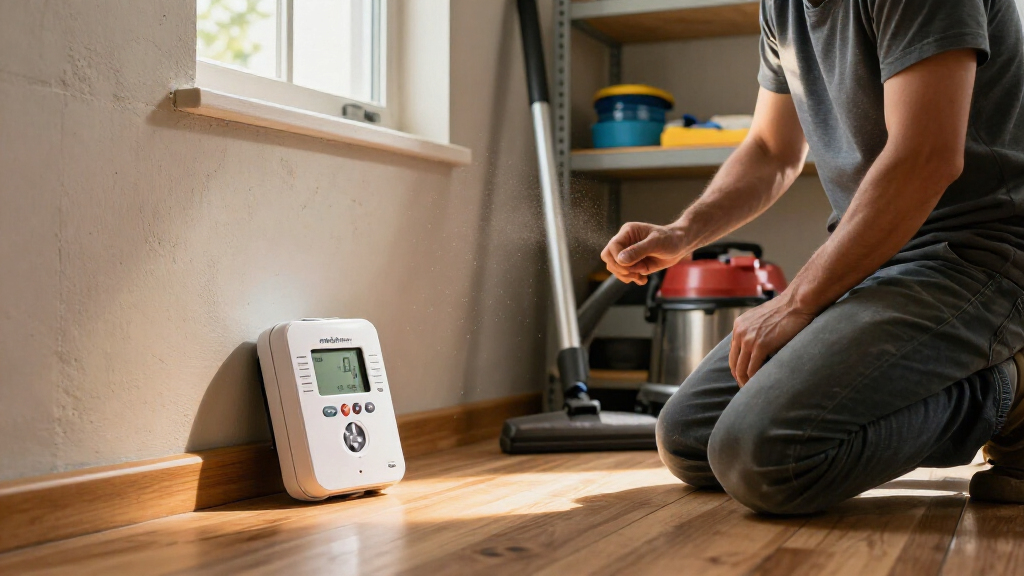

Choosing the best radon detectors requires balancing accuracy, ease of installation, and long-term maintenance. My top recommendation is the Airthings Wave Radon for its seamless smart home integration and reliable continuous monitoring. For those prioritizing professional-grade accuracy without recurring fees, the Aranet Radon Plus stands out with its rapid 10-minute reading capability. The main tradeoff in this category often lies between smart connectivity features and standalone simplicity; some users prefer the data logging of Wi-Fi models, while others want a simple audible alarm. Read on to see how these models stack up against one another in accuracy, battery life, and usability.

Get cleaning gear delivered free with Prime
- Fast, free delivery on millions of items
- Prime Video, Amazon Music and more included
- Member-only deals all year
Complete the kit



Key Takeaways
- Smart Wi-Fi detectors like the Airthings Wave offer superior historical data tracking but require consistent home network stability.
- Standalone digital detectors such as the Kidde RAB provide immediate audible alerts, which is critical for basements without cell coverage.
- Continuous monitors significantly outperform short-term test kits for detecting fluctuating radon levels over time.
- Battery life varies drastically, with some models lasting up to 355 days while others require monthly replacements.
- Calibration frequency is a hidden cost; electronic detectors need periodic calibration unlike passive charcoal kits.
| Airthings Wave Radon Smart Radon Detector with Humidity and Temperature Sensors | 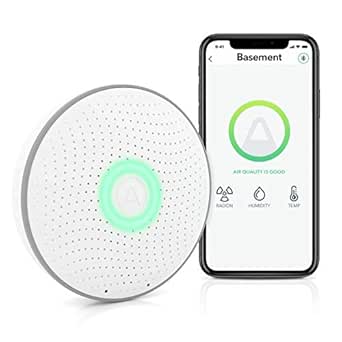 | Best for Whole-Room Context | Model: 2950 | Detector type: Smart radon detector | Sensors: Radon, humidity, temperature | VIEW LATEST PRICE | See Our Full Breakdown |
| EcoSense EcoQube Flex Continuous Radon Detector, EF100 |  | Best for Portable Room Comparisons | Model: EF100 | Output type: Digital | Power: Battery-powered | VIEW LATEST PRICE | See Our Full Breakdown |
| AEGTEST HOUND-1008 Portable Radon Detector |  | Best for Audible Alerts and Flexible Units | Model: HOUND-1008 | Measurement range: 0.09–1000 pCi/L | Units: pCi/L or Bq/m³ | VIEW LATEST PRICE | See Our Full Breakdown |
| X-Sense XR0A-SR Radon Detector, White |  | Best for App-Free Readouts | Model: XR0A-SR | Sensor type: Alpha particle sensor | Power: 3 replaceable AA batteries | VIEW LATEST PRICE | See Our Full Breakdown |
| X-Sense XR0A-iR Wi-Fi Radon Detector |  | Best for Remote Monitoring | Model: XR0A-iR | Connectivity: 2.4 GHz Wi-Fi | Display: LCD with trend arrows | VIEW LATEST PRICE | See Our Full Breakdown |
| Forensics FD-65-RADON Radon Detector, Version 2.0 |  | Best for Long-Term Durability | Sensor Life: 20 years | Sensor Type: Semiconductor | Housing Material: ABS | VIEW LATEST PRICE | See Our Full Breakdown |
| Kidde RAB Battery-Powered Radon Gas Detector |  | Best for Immediate Alerts | Initial Reading Time: As little as 12 hours | Power Source: 3 AAA batteries (included) | Display Type: Backlit with color-coded bar | VIEW LATEST PRICE | See Our Full Breakdown |
| PYZYCKYH 3-in-1 Radon Detector with Temperature and Humidity Monitor |  | Best for Fast Data & Portability | First Reading Time: 6 hours | Display Size: 3.5-inch IPS Color Screen | Power Source: Wall Outlet or 1000 mAh Battery | VIEW LATEST PRICE | See Our Full Breakdown |
| Airthings View Radon Monitor with Humidity and Temperature Detection |  | Best Smart Home Integration | Connectivity: WiFi | Display Type: Customizable eInk | Battery Life: Up to 3 years | VIEW LATEST PRICE | See Our Full Breakdown |
| X-Sense XR0B-SR Radon Detector with Audible and Visual Alerts |  | Best for Multi-Room Tracking | Tracking Duration: Up to 999 days | Battery Life: 2 years | Accuracy: Up to 90% after 7 days | VIEW LATEST PRICE | See Our Full Breakdown |
| AEGTEST HOUND-1011S Portable Radon Detector |  | Best for Flexible Monitoring Durations | Measurement Range: 0.09–1000 pCi/L | Sensor Type: Semiconductor | Time to First Result: Within 12 hours | VIEW LATEST PRICE | See Our Full Breakdown |
| Aranet Radon Plus Home Radon Detector |  | Best for Real-Time Data Enthusiasts | Response Time: 10 minutes | Battery Life: Up to 7 years | Additional Sensors: Temperature, Humidity, Pressure | VIEW LATEST PRICE | See Our Full Breakdown |
| Airthings Corentium Home Portable Radon Detector |  | Best for Simplicity and Longevity | Sensor Type: Passive Radon Sensor | Calibration: No annual calibration required | Estimated Life: Over 10 years | VIEW LATEST PRICE | See Our Full Breakdown |
| FORENSICS DETECTORS FD-64-RADON |  | Best for High-Visibility Alerts | Sensor Type: Alpha-decay semiconductor | Battery Life: Up to 355 days per charge | Display: 2-inch HD color | VIEW LATEST PRICE | See Our Full Breakdown |
| CRADTEC Digital Radon Detector III |  | Best Budget-Friendly Entry Point | Display: 300 DPI tempered glass | First Reading Time: Within 24 hours | Accuracy: Over 90% (48h), 95% (2 months) | VIEW LATEST PRICE | See Our Full Breakdown |
| radon detector | Battery life |
|---|---|
| Airthings Wave Radon Smart Rad | — |
| EcoSense EcoQube Flex Continuo | — |
| AEGTEST HOUND-1008 Portable Ra | Up to 400 days on 3 AAA batteries |
| X-Sense XR0A-SR Radon Detector | Up to 24 months |
| X-Sense XR0A-iR Wi-Fi Radon De | Up to 2 years |
| Forensics FD-65-RADON Radon De | — |
| Kidde RAB Battery-Powered Rado | — |
| PYZYCKYH 3-in-1 Radon Detector | — |
| Airthings View Radon Monitor w | Up to 3 years |
| X-Sense XR0B-SR Radon Detector | 2 years |
| AEGTEST HOUND-1011S Portable R | — |
| Aranet Radon Plus Home Radon D | Up to 7 years |
| Airthings Corentium Home Porta | — |
| FORENSICS DETECTORS FD-64-RADO | Up to 355 days per charge |
| CRADTEC Digital Radon Detector | More than one year |
More Details on Our Top Picks
Airthings Wave Radon Smart Radon Detector with Humidity and Temperature Sensors
The Airthings Wave Radon is my pick for buyers who want more than a radon number: it also tracks humidity and temperature, giving readings useful context as indoor conditions change. Its color-coded glow ring offers a quick check at the device, while Bluetooth app syncing adds short- and long-term readings and trends. Compared with the X-Sense XR0A-SR, which keeps readings on its LCD without an app, the Wave is more useful for reviewing trends alongside other room conditions, but less convenient if you want every detail directly on the detector. It runs on batteries, so placement is flexible. The tradeoff is that Bluetooth syncing requires a nearby phone, and remote, always-online access needs an Airthings Hub.
Pros:- Continuously monitors radon for short- and long-term trend information
- Measures humidity and temperature as well as radon
- Battery power allows placement without a cable
- Color-coded glow ring provides a quick visual indication
Cons:- Bluetooth data syncing requires a phone within range
- 24/7 online access requires a separate Airthings Hub
Best for: Households that want ongoing radon trends plus humidity and temperature readings in a room without a nearby outlet
Not ideal for: Buyers who want remote online readings without purchasing a hub, or who prefer a full data display on the detector itself
- Model:2950
- Detector type:Smart radon detector
- Sensors:Radon, humidity, temperature
- Power:Battery-powered
- Connectivity:Bluetooth; Smartlink compatible with Airthings Hub
- Visual indicator:Color-coded glow ring: green, yellow, red
- Warranty:5-year extended warranty available with registration within 30 days
Our verdict“Choose the Airthings Wave if you want battery-powered radon monitoring with room-condition context and can accept phone-dependent syncing.”
EcoSense EcoQube Flex Continuous Radon Detector, EF100
The EcoSense EcoQube Flex suits buyers who plan to move a detector between rooms and want its display to show more than a single current reading. It presents real-time levels, averages, and historical highs and lows, while the app adds charts and room-by-room comparisons. That makes it more suited to comparing spaces than the Airthings Wave Radon, whose focus also includes humidity and temperature; the EcoQube Flex’s listed measurements center on radon. It is battery-powered and compact, with an initial reading available in minutes and more accurate levels developing over hours. The main compromise is that detailed history depends on Bluetooth app syncing, so it is less self-contained for chart review than a detector with extensive on-device readouts. Battery life is not specified.
Pros:- Cord-free design supports moving it between rooms
- Display includes real-time levels, averages, and historical highs and lows
- App charts support room-by-room comparisons
- Continuous monitoring provides short- and long-term readings
Cons:- Detailed charts and syncing require the companion app
- Battery life is not specified in the supplied product information
Best for: Homeowners who want to carry one continuous monitor between rooms and compare radon readings using app charts
Not ideal for: Buyers who need stated battery-life expectations or want detailed historical charts without using a phone app
- Model:EF100
- Output type:Digital
- Power:Battery-powered
- Connectivity:Bluetooth
- Monitoring:Continuous, short- and long-term
- Dimensions:3.14 × 3.14 × 2.95 inches
- Weight:8.32 ounces
Our verdict“Pick the EcoQube Flex if room-to-room radon comparisons matter more to you than on-device historical charts or a stated battery-life estimate.”
AEGTEST HOUND-1008 Portable Radon Detector
The AEGTEST HOUND-1008 is a practical choice for buyers who want an alarm and a choice of radon units rather than app-based trend tools. It reports in pCi/L or Bq/m³, updates hourly after its first reading, and uses audible and visual alerts when levels pass the alarm threshold. Its stated battery life of up to 400 days is a clear advantage over the EcoSense EcoQube Flex, whose battery life is not specified, while the EcoSense offers app charts and room comparisons that the HOUND-1008 does not list. The principal limitation is the wait: the initial reading takes about 12 hours, so it is not a quick-check device. It also relies on three AAA batteries instead of a rechargeable power source.
Pros:- Displays measurements in pCi/L or Bq/m³
- Provides hourly updates after the initial reading
- Battery life is specified at up to 400 days
- Audible alarm and visual indicator flag elevated readings
Cons:- Takes approximately 12 hours to provide the first reading
- Uses three AAA batteries rather than a rechargeable power source
Best for: Buyers who want a portable detector with audible and visual alerts, hourly updates, and readings in either common radon unit
Not ideal for: People seeking a rapid first reading, app-based charts, or a rechargeable device
- Model:HOUND-1008
- Measurement range:0.09–1000 pCi/L
- Units:pCi/L or Bq/m³
- Sensor:Semiconductor
- Initial reading:Approximately 12 hours after startup
- Update frequency:Hourly
- Battery life:Up to 400 days on 3 AAA batteries
- Alerts:Audible alarm and visual concentration indicator
- Dimensions:4.45 × 1.08 × 2.28 inches (D × W × H)
Our verdict“Choose the HOUND-1008 if alerting and flexible measurement units matter more than a fast startup or app-based analysis.”
X-Sense XR0A-SR Radon Detector, White
The X-Sense XR0A-SR makes sense for buyers who want radon averages on the device itself, with no app connection required. Its LCD shows 1-, 7-, 30-, and 90-day averages as well as a long-term cumulative reading, making it easier to distinguish a recent fluctuation from a longer pattern. Compared with the Wi-Fi-connected X-Sense XR0A-iR, this model skips remote notifications and data exports but also avoids relying on a wireless network for its readings. It can begin providing data within 24 hours, though the stated consistency with reference results is reached after seven days of continuous operation. A silent alarm suits rooms where alerts would be disruptive, but it also means the screen must be checked to notice changes.
Pros:- LCD displays several short-term averages and a long-term cumulative average
- Does not require an app for viewing readings
- Replaceable AA batteries offer up to 24 months of battery life
- Silent operation and an on-demand backlight suit shared or quiet rooms
Cons:- Stated consistency with reference results takes seven days of continuous operation
- Readings are not remotely available through an app
- Data retention through a power interruption depends on restoring power within four hours
Best for: People who want multiple radon averaging periods visible on an LCD and prefer not to use an app or Wi-Fi
Not ideal for: Buyers who need remote notifications, app-based exports, or an audible warning when readings rise
- Model:XR0A-SR
- Sensor type:Alpha particle sensor
- Power:3 replaceable AA batteries
- Battery life:Up to 24 months
- Readouts:1-, 7-, 30-, and 90-day short-term averages; long-term cumulative average
- Tracking duration:Up to 999 days
- Data retention:Retains data during a power interruption if power is restored within 4 hours
- Accuracy consistency:Up to 90% with reference results after 7 days of continuous operation
- Dimensions:3.23 × 2.79 × 3.15 inches (D × W × H)
Our verdict“Choose the XR0A-SR if you want useful averaging periods on the detector and can do without remote alerts or app access.”
X-Sense XR0A-iR Wi-Fi Radon Detector
The X-Sense XR0A-iR is the clearest fit for buyers who want radon readings and alerts available away from home. It connects over 2.4 GHz Wi-Fi for app notifications, reading guidance, and data exports, while its LCD trend arrows keep basic changes visible at the device. Unlike the app-free X-Sense XR0A-SR, it supports remote access and record keeping; the SR instead offers several averaging periods directly on its display. The XR0A-iR also tracks temperature and humidity and can monitor for up to 999 days. Its battery-powered setup avoids a cable, but app access depends on a compatible Wi-Fi connection. Moving it to another room requires resetting the session, which makes it less convenient for frequent room-by-room comparisons.
Pros:- App notifications support remote awareness of radon readings
- Data exports help with record keeping
- LCD trend arrows show changes at the detector
- Tracks temperature and humidity alongside radon
Cons:- App connectivity requires a 2.4 GHz Wi-Fi network
- Moving the detector to another room requires resetting the session
- Uses three replaceable AA batteries rather than a wired power connection
Best for: Homeowners who want remote radon notifications, exported records, and temperature and humidity readings in one battery-powered monitor
Not ideal for: Buyers without 2.4 GHz Wi-Fi, or people who frequently move a detector between rooms and want to preserve the same monitoring session
- Model:XR0A-iR
- Connectivity:2.4 GHz Wi-Fi
- Display:LCD with trend arrows
- Monitoring duration:Up to 999 days
- Power:3 replaceable AA batteries
- Battery life:Up to 2 years
- Additional measurements:Temperature and humidity
- Dimensions:3.1 × 3.2 × 2.79 inches (D × W × H)
- Warranty:5-year quality warranty; lifetime technical support
Our verdict“Choose the XR0A-iR if remote app access and exported records outweigh the need for simple room-to-room relocation.”
Forensics FD-65-RADON Radon Detector, Version 2.0
This detector stands out for its 20-year sensor lifespan, a specification that far exceeds the typical 5 to 10-year range found in most consumer units. While many competitors, such as the Kidde RAB, require periodic sensor replacement or device upgrades, the Forensics FD-65 is built for longevity. The ABS housing is rated to withstand drops from up to 10 feet, making it resilient in rough environments like basements or crawl spaces where other delicate plastic units might fail. However, the tradeoff for this ruggedness is a lack of detailed performance metrics; no specific detection range or accuracy figures are provided in the documentation. This opacity makes it harder to trust for precise mitigation verification compared to certified professional-grade tools. It is a robust, set-and-forget option for those who prioritize hardware durability over data granularity.
Pros:- Sensor rated for a 20-year lifespan
- Durable ABS housing withstands 10-foot drops
- Color LCD includes temperature display
- Audible alarm for high-level alerts
Cons:- No published detection range or accuracy specifications
- Battery specifications are vague
- Lacks connectivity for remote monitoring
Best for: Homeowners who want a rugged, long-lasting device for hard-to-reach or high-traffic areas like unfinished basements.
Not ideal for: Users who require precise, certified measurement data for legal or professional mitigation verification.
- Sensor Life:20 years
- Sensor Type:Semiconductor
- Housing Material:ABS
- Display:Color LCD with Temperature
- Power Source:Battery
- Weight:3.2 oz
Our verdict“Choose this if you need a tough, long-lasting unit for rough environments and don’t need precise data logs.”
Kidde RAB Battery-Powered Radon Gas Detector
The Kidde RAB is designed for users who prioritize continuous monitoring with rapid initial feedback. Unlike the Forensics FD-65, which lacks clear performance metrics, the Kidde RAB provides initial readings in as little as 12 hours, allowing for quicker reassessment. The color-coded status bar and backlit display offer an intuitive, at-a-glance check on air quality, reducing the need to interpret raw numbers. Its audio alert system is persistent, sounding for 20 seconds every hour if levels remain elevated, which is a significant safety feature for busy households. However, it is strictly a radon detector; it does not monitor carbon monoxide or smoke, meaning you still need separate devices for those hazards. It is ideal for those who want a simple, dedicated radon sentinel without the complexity of smart home integration.
Pros:- Initial readings available in 12 hours
- Color-coded status bar for easy interpretation
- Persistent audio alerts for elevated levels
- Runs on included AAA batteries
Cons:- Detects radon only; no CO or smoke detection
- Readings are local to the sensor location
- No smart connectivity or app integration
Best for: Homeowners who want a simple, dedicated radon monitor with fast initial readings and clear visual alerts.
Not ideal for: Users who need a multi-gas detector (CO/Smoke) or smart connectivity for remote data access.
- Initial Reading Time:As little as 12 hours
- Power Source:3 AAA batteries (included)
- Display Type:Backlit with color-coded bar
- Alert System:Audible (20s/hour) and Visual
- Monitoring Type:Continuous short- and long-term
- Detection Scope:Radon only
Our verdict“A solid choice for basic, reliable radon monitoring with fast feedback and no smart-home complexity.”
PYZYCKYH 3-in-1 Radon Detector with Temperature and Humidity Monitor
This device offers the fastest initial radon reading in this lineup, delivering data in just 6 hours, which is twice as fast as the Kidde RAB. The 3.5-inch IPS color display is larger and sharper than the eInk screens found on premium competitors like the Airthings View, making it easier to read from a distance. Its ability to switch between wall plug-in and battery power adds significant flexibility, allowing you to move it between rooms to identify localized hotspots. The aluminum-alloy housing provides a premium feel compared to the plastic casings of many rivals. However, the magnetic mount restricts placement to metal surfaces, which can be limiting in wood-framed homes. Additionally, while it stores 385 days of history, it lacks the professional certification details often required for official mitigation verification.
Pros:- First reading in only 6 hours
- Dual power options (plug-in and battery)
- Large 3.5-inch IPS color display
- Stores up to 385 days of historical data
Cons:- Magnetic mount limits placement options
- Lacks specific professional certification details
- No remote app connectivity mentioned
Best for: Users who want to quickly test different rooms for radon hotspots using a portable, high-resolution display.
Not ideal for: Those who need to mount the device on drywall or wood and require certified professional-grade accuracy.
- First Reading Time:6 hours
- Display Size:3.5-inch IPS Color Screen
- Power Source:Wall Outlet or 1000 mAh Battery
- Housing Material:Aluminum-Alloy
- History Storage:Up to 385 days
- Accuracy:±10%
- Mounting Type:Magnetic Mount
Our verdict“Ideal for proactive homeowners who want to quickly scan multiple rooms with a bright, easy-to-read display.”
Airthings View Radon Monitor with Humidity and Temperature Detection
The Airthings View is the superior choice for tech-savvy users who want remote access to their air quality data. Unlike the PYZYCKYH 3-in-1, which relies on local storage and a physical display, the View connects via WiFi to provide real-time graphs and alerts through a dedicated app and online dashboard. The customizable eInk display is energy-efficient, contributing to a battery life of up to 3 years, which is significantly longer than the 2-year life of the X-Sense XR0B-SR. It also functions as a hub for other Airthings devices, creating a cohesive ecosystem. The drawback is the dependency on the app for full data visualization; the screen itself offers limited information. If your WiFi goes down, you lose the ability to remotely monitor trends, though the device continues to measure locally.
Pros:- WiFi connectivity for remote app monitoring
- Customizable eInk display saves battery
- Acts as a hub for other Airthings devices
- Battery life up to 3 years
Cons:- Full data visualization requires app or dashboard
- Accuracy specs require separate documentation
- Larger footprint than compact competitors
Best for: Users who want remote monitoring, historical trend analysis via an app, and integration with other smart home sensors.
Not ideal for: Those who prefer a standalone device without app dependency or those with unreliable WiFi connections.
- Connectivity:WiFi
- Display Type:Customizable eInk
- Battery Life:Up to 3 years
- Measurements:Radon, Humidity, Temperature
- Power Options:6 AA batteries or USB
- Dimensions:6.69 x 1.3 x 3.54 inches
- Extended Warranty:5 years (with registration)
Our verdict“The best option for users who want to monitor radon trends remotely and integrate with a broader smart home ecosystem.”
X-Sense XR0B-SR Radon Detector with Audible and Visual Alerts
The X-Sense XR0B-SR is a practical choice for those who want to track long-term trends across multiple rooms without the cost of buying several smart units. It stores up to 999 days of tracking data, offering a longer historical window than the PYZYCKYH‘s 385 days. The device is compact and lightweight, making it easy to rotate between bedrooms or living areas. While it lacks the WiFi connectivity of the Airthings View, its local storage capability allows you to review past readings directly on the unit or via the connected app if available. A key limitation is that accuracy stabilizes only after 7 days of continuous monitoring, so it is not suitable for immediate, one-off checks. It is a balanced, affordable option for systematic home-wide radon surveillance.
Pros:- Up to 999 days of tracking data
- Compact size for easy room-to-room rotation
- 2-year battery life with included AAs
- Monitors temperature and humidity
Cons:- Accuracy requires 7 days of monitoring
- No WiFi or remote monitoring capabilities
- Local storage limited to 99 records
Best for: Homeowners who want to rotate a single device through different rooms to map radon distribution over time.
Not ideal for: Users who need immediate readings or remote access to data via WiFi.
- Tracking Duration:Up to 999 days
- Battery Life:2 years
- Accuracy:Up to 90% after 7 days
- Record Storage:Up to 99 records
- Dimensions:3.1″ D x 2.8″ W x 3.2″ H
- Measurements:Radon, Temperature, Humidity
Our verdict“A cost-effective, portable solution for systematically checking radon levels in different areas of the home.”
AEGTEST HOUND-1011S Portable Radon Detector
This detector stands out for its extremely flexible monitoring window, allowing users to switch between 12-hour checks and multi-year tracking. Unlike the Aranet Radon Plus, which focuses on rapid 10-minute updates, the HOUND-1011S prioritizes stability over immediate feedback, making it ideal for those who want to see long-term trends rather than hourly fluctuations. The dual-unit display (pCi/L and Bq/m³) removes conversion headaches, a convenience not always found in budget models. However, the 12-hour wait for the first result means you cannot get an instant baseline reading, which might frustrate users needing quick answers. While it offers a 45-day battery life in sleep mode, continuous monitoring requires a USB-C connection, limiting true cord-free longevity compared to battery-only competitors.
Pros:- Supports monitoring periods ranging from 12 hours to over 500 days.
- Displays readings in both pCi/L and Bq/m³ units.
- Includes audible and visual alarms for immediate awareness.
- Lightweight and portable design with a included stand and lanyard.
Cons:- Takes up to 12 hours to display the first result.
- Continuous monitoring requires a connected USB-C cable.
- Battery life in active mode is not specified, only sleep mode.
Best for: Users who want to switch between short-term spot checks and long-term trend analysis without buying multiple devices.
Not ideal for: Those needing immediate readings or who dislike managing charging cables for continuous operation.
- Measurement Range:0.09–1000 pCi/L
- Sensor Type:Semiconductor
- Time to First Result:Within 12 hours
- Monitoring Period:12 hours to 504 days
- Power Source:Rechargeable (USB-C)
- Sleep Mode Battery Life:Up to 45 days
- Weight:0.28 kg
Our verdict“Choose this if you value the ability to customize your monitoring duration more than you need instant data.”
Aranet Radon Plus Home Radon Detector
The Aranet Radon Plus is engineered for those who demand high-frequency data, updating radon levels every 10 minutes. This is significantly faster than the CRADTEC Digital Radon Detector III, which takes 24 hours for an initial reading, making the Aranet superior for detecting rapid changes caused by weather or ventilation. Its E-Ink display offers exceptional readability and battery efficiency, lasting up to 7 years on two AA batteries—a longevity that far exceeds most competitors. The device also tracks temperature, humidity, and pressure, providing context for radon fluctuations. However, the full potential of its data visualization is locked behind the mobile app, meaning the standalone device is less informative than its connected counterpart.
Pros:- Updates radon measurements every 10 minutes.
- Tracks temperature, humidity, and atmospheric pressure.
- Extremely long battery life of up to 7 years.
- Color-coded E-Ink display for easy visual status checks.
Cons:- Advanced features and detailed graphs require app connectivity.
- Does not include batteries, requiring separate purchase.
- No audible alarm mentioned in standard standalone operation.
Best for: Tech-savvy homeowners who want to correlate radon spikes with environmental factors and prefer frequent data updates.
Not ideal for: Users who prefer a simple, set-and-forget device without installing apps or managing digital dashboards.
- Response Time:10 minutes
- Battery Life:Up to 7 years
- Additional Sensors:Temperature, Humidity, Pressure
- Display Type:E-Ink with color coding
- Average Options:Real-time, 24h, 7-day, 30-day
- Dimensions:3.03 x 2.8 x 2.8 inches
- Weight:7.68 ounces
Our verdict“This is the top choice for data-driven users who want granular insight into radon trends.”
Airthings Corentium Home Portable Radon Detector
The Airthings Corentium remains a benchmark for no-fuss reliability. Unlike the Forensics FD-64-RADON, which offers a color display and alarms, the Corentium focuses strictly on accurate, long-term averaging without complex features or calibration requirements. Its passive design means it requires no annual calibration, reducing maintenance costs and hassle over its 10+ year lifespan. This makes it a better option than the AEGTEST HOUND-1011S for users who want to place a device and check it occasionally rather than monitor it actively. The downside is its lack of alarms; it will not alert you if radon levels spike suddenly, requiring manual checks to catch dangerous trends early.
Pros:- No annual calibration required, lowering long-term costs.
- Estimated useful life extends over 10 years.
- Simple LCD display of daily, weekly, and long-term averages.
- Battery-powered with no need for wall outlets or charging.
Cons:- No audible or visual alarms for high radon levels.
- Requires three AAA batteries, which are not included.
- Lacks additional sensors for temperature or humidity.
Best for: Homeowners who want a simple, maintenance-free device for long-term radon monitoring in a single location.
Not ideal for: Those who need immediate alerts for high radon levels or want detailed environmental data like humidity.
- Sensor Type:Passive Radon Sensor
- Calibration:No annual calibration required
- Estimated Life:Over 10 years
- Power Source:3 AAA batteries
- Readings:Daily, weekly, short-term, long-term
- Warranty:5-year extended (with registration)
- Model Number:223
Our verdict“The ideal choice for users prioritizing set-and-forget reliability over real-time alerts.”
FORENSICS DETECTORS FD-64-RADON
This detector is designed for users who need clear, immediate feedback. With a 2-inch HD color display and a 75 dB audible alarm, it is far more noticeable than the AEGTEST HOUND-1011S or the Aranet Radon Plus, which rely primarily on visual indicators or app notifications. The alpha-decay semiconductor sensor provides hourly updates based on a rolling six-hour average, offering a balance between stability and responsiveness. Its 355-day battery life per charge is impressive, reducing the frequency of recharging compared to the CRADTEC model’s yearly replacement cycle. However, the loud alarm might be disruptive in bedrooms or quiet living spaces, and the device relies on natural diffusion, which can be slower to react to rapid changes than active pumping systems.
Pros:- Features a bright 2-inch HD color display.
- Includes a loud 75 dB audible alarm and flashing visual alert.
- Long-lasting rechargeable battery (up to 355 days).
- Uses pump-free natural diffusion for quiet operation.
Cons:- Readings update hourly, not continuously.
- The 75 dB alarm may be too loud for some living spaces.
- Sensor lifespan is 20 years, but warranty is only 1 year.
Best for: Users in high-risk areas who want prominent visual and audible warnings for elevated radon levels.
Not ideal for: Those who prefer silent operation or need instant, minute-by-minute data updates.
- Sensor Type:Alpha-decay semiconductor
- Battery Life:Up to 355 days per charge
- Display:2-inch HD color
- Alarm Level:75 dB audible
- Reading Update:Hourly (6-hour average)
- Sensor Lifespan:20 years
- Warranty:1 year
Our verdict“Select this if you prioritize loud, clear alarms and a large display over discreet operation.”
CRADTEC Digital Radon Detector III
The CRADTEC Digital Radon Detector III offers a cost-effective entry into digital radon monitoring, avoiding the subscription models or complex setups of premium units like the Airthings Wave. It provides short-term and long-term readings with over 90% accuracy after 48 hours, making it suitable for standard home compliance checks. The tempered glass display adds a touch of durability and aesthetic appeal compared to the plastic housings of the Forensics FD-64. However, the 24-hour wait for the first reading is slower than the Aranet Radon Plus‘s 10-minute updates, and the batteries are not included, adding a small upfront cost. It is a straightforward tool for those who need a reliable baseline measurement without advanced connectivity features.
Pros:- High accuracy (over 95% for long-term results).
- Tempered glass display for better durability and clarity.
- Battery life exceeds one year on three AAA batteries.
- Simple unit switching between pCi/L and Bq/m³.
Cons:- Batteries are not included in the package.
- Wall mounting holder is sold separately.
- First reading takes up to 24 hours.
Best for: Budget-conscious homeowners who need a simple, accurate device for standard radon testing.
Not ideal for: Users who want real-time data, app connectivity, or immediate initial readings.
- Display:300 DPI tempered glass
- First Reading Time:Within 24 hours
- Accuracy:Over 90% (48h), 95% (2 months)
- Power Source:3 AAA batteries (not included)
- Battery Life:More than one year
- Mounting Options:Surface or wall (holder sold separately)
- Warranty:1 year
Our verdict“A solid, no-nonsense choice for basic radon monitoring on a budget.”
How We Picked
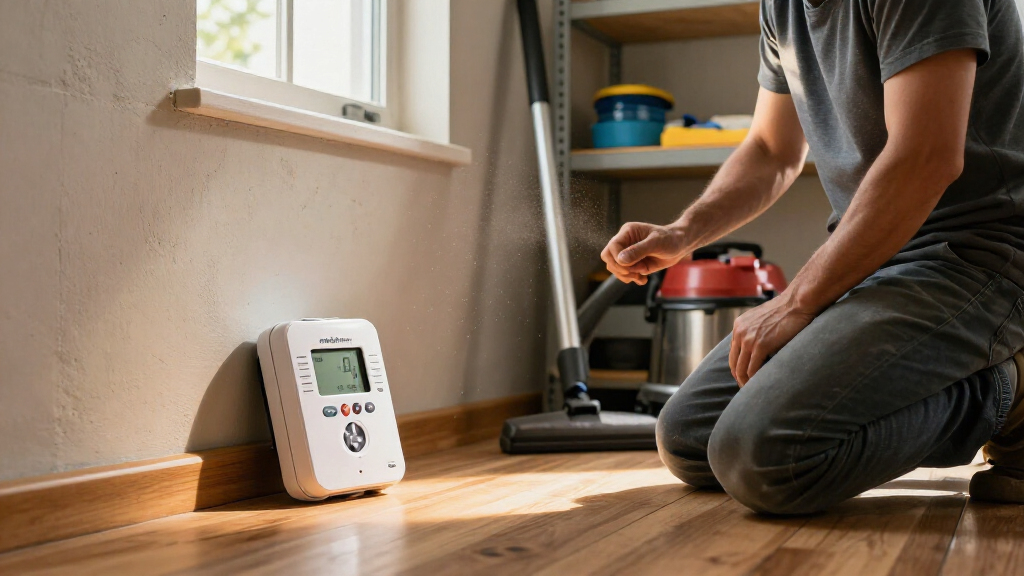
I evaluated these radon detectors based on measurement accuracy, sensor technology type, connectivity options, and ease of installation. Priority was given to models that offer continuous monitoring rather than one-time tests, as radon levels fluctuate daily and seasonally. I also assessed the clarity of the user interface, ensuring that non-technical homeowners could interpret the data without confusion.
Connectivity was a key differentiator; models with Wi-Fi or Bluetooth capabilities were ranked higher for their ability to provide remote alerts and historical trend analysis. However, I balanced this against battery life and privacy concerns, giving weight to standalone units for users who prefer offline operation. Build quality and sensor longevity were also critical, as replacing sensors annually adds to the long-term cost of ownership.
Factors to Consider When Choosing Best Radon Detectors
Selecting the right radon monitor depends heavily on your home’s infrastructure and your personal preference for data access. Here are the critical factors to weigh before making a purchase.Continuous vs. Short-Term Monitoring
Most homeowners underestimate the importance of continuous monitoring. Radon levels are not static; they change based on weather, ventilation, and soil moisture. A continuous radon detector provides an average over months, offering a more accurate picture than a 48-hour test kit. If you live in a high-radon zone, a continuous monitor is the safer choice. Short-term kits are better suited for real estate transactions where a quick snapshot is required, but they often miss long-term exposure risks.
Connectivity and Data Accessibility
Modern detectors often connect via Wi-Fi or Bluetooth. Wi-Fi enabled models allow you to check levels from your phone anywhere in the world, which is ideal for landlords or vacation homes. However, this requires a stable internet connection in the basement, where signals are often weak. Bluetooth models are easier to set up but require you to be within range to check readings. Decide if you value remote access or if a simple local display is sufficient for your needs.
Battery Life and Power Source
Battery maintenance is a common pain point. Some detectors run on replaceable AA batteries for a year, while others use internal rechargeable cells. Long-life battery models reduce the hassle of frequent replacements, which is vital for devices installed in hard-to-reach basements. If a detector dies, it stops protecting you. Look for models with low-battery warnings and consider whether a USB-powered option is feasible given your outlet availability.
Sensor Type and Calibration Needs
Most consumer detectors use electret ion chamber or semiconductor sensors. Electret sensors are generally considered more accurate for long-term monitoring. However, electronic detectors require periodic calibration to maintain accuracy, often every one to two years. This contrasts with passive charcoal canisters that are discarded after use. Factor in the cost and effort of recalibration when calculating the total cost of ownership for a digital unit.
Alert Systems and Local Alarms
A silent detector is a dangerous one if you are not checking the app daily. Models with audible alarms provide immediate feedback when levels exceed safety thresholds. This is particularly important for users who do not want to rely on smartphone notifications. If you choose a smart detector, ensure it supports push notifications and email alerts. For maximum safety, some users prefer a hybrid approach using a smart monitor for data and a basic audible alarm for immediate protection.
Frequently Asked Questions
Do I need a smart radon detector if I don’t have Wi-Fi in my basement?
If you lack Wi-Fi, a smart detector is less useful because it cannot send remote alerts. You should opt for a standalone model with a clear local display and audible alarms. These units store data internally and display current levels directly on the device. While you lose the convenience of remote monitoring, you gain reliability without network dependency. Brands like Kidde offer simple, battery-operated options that work perfectly in disconnected spaces.
How often should I replace the batteries in my radon detector?
Battery replacement schedules vary by model, ranging from every six months to over a year. Many modern detectors include low-battery indicators that alert you via the app or a flashing light. It is wise to replace batteries annually as part of your home maintenance routine to prevent unexpected shutdowns. Always use high-quality alkaline batteries as recommended by the manufacturer to ensure consistent sensor performance.
Can I use a radon detector in a room with high humidity?
High humidity can affect some sensor types, particularly passive charcoal kits, which may absorb moisture and skew results. However, most electronic detectors like the Airthings Wave are designed to handle typical basement humidity levels. Look for models that explicitly list humidity resistance or compensation algorithms. If your basement is prone to condensation, ensure the detector is placed away from direct water sources and consider using a dehumidifier to maintain stable conditions.
Are digital radon detectors more accurate than short-term test kits?
Digital detectors are generally more reliable for assessing long-term exposure because they average readings over time. Short-term kits provide a snapshot that can be misleading if radon levels spike temporarily due to weather or ventilation changes. Digital units capture these fluctuations, offering a true average risk assessment. However, for legal compliance or real estate sales, certified short-term kits are often required by local regulations.
Do radon detectors need to be professionally calibrated?
Most consumer-grade radon detectors do not require professional calibration during their lifespan. Manufacturers design them to maintain accuracy within a specific tolerance for several years. However, if you suspect a malfunction or if the device has been exposed to extreme conditions, contacting customer support for verification is wise. Unlike industrial equipment, home monitors are typically replaced rather than recalibrated if they fail accuracy checks.
Conclusion
Choosing the right radon detector comes down to your specific monitoring needs and home setup. For most homeowners, the Airthings Wave Radon is the best overall choice due to its smart features and ease of use. If you prefer a simple, no-frills device, the Kidde RAB serves as the best value option with reliable audible alerts. Tech enthusiasts and data lovers will appreciate the Aranet Radon Plus as the best premium pick for its rapid readings and detailed analytics. Beginners should start with the X-Sense XR0A-SR for its straightforward interface and low maintenance. Ultimately, the best detector is the one you will actually check and maintain.