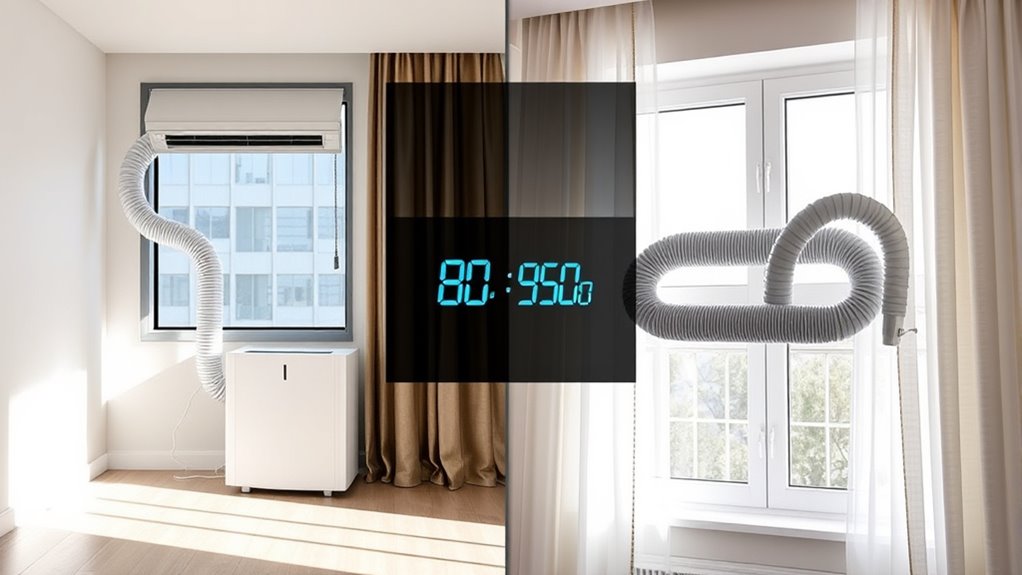

Dual-hose portable AC units cool your room faster than single-hose models because they draw in fresh air and expel hot air simultaneously, increasing airflow and reducing internal pressure. This dual process allows for quicker cooling and better temperature regulation. Single-hose units are simpler to set up but rely on recycling indoor air, which can slow things down. Stay with us if you want to discover which option suits your space best.
Key Takeaways
- Dual-hose units typically cool faster by drawing in fresh air while expelling hot air simultaneously.
- Single-hose units rely on recycling indoor air, which can slow the cooling process.
- Dual-hose systems improve airflow efficiency, leading to quicker temperature reduction.
- Single-hose units may take longer to cool large or poorly ventilated rooms.
- Overall, dual-hose portable ACs generally provide faster cooling performance.
![Gasbye Dual Hose Portable Air Conditioner, [2026 Upgraded] Full DC Inverter Compressor, Energy-Saving 13.6 CEER, Low Noise (45dB), Cools Room up to 500 Sq.Ft., Backlit Remote Control, 14,000BTU, Black](https://m.media-amazon.com/images/I/41O9kgQPtHL._SL500_.jpg)
Gasbye Dual Hose Portable Air Conditioner, [2026 Upgraded] Full DC Inverter Compressor, Energy-Saving 13.6 CEER, Low Noise (45dB), Cools Room up to 500 Sq.Ft., Backlit Remote Control, 14,000BTU, Black
- Energy-efficient DC Inverter Technology: Full DC inverter with 13.6 CEER rating
- Powerful Cooling Capacity: 14,000 BTU cooling for 500 sq.ft.
- Dual-Hose Design: Ensures rapid and balanced cooling
As an affiliate, we earn on qualifying purchases.
As an affiliate, we earn on qualifying purchases.
How Single-Hose and Dual-Hose Units Work
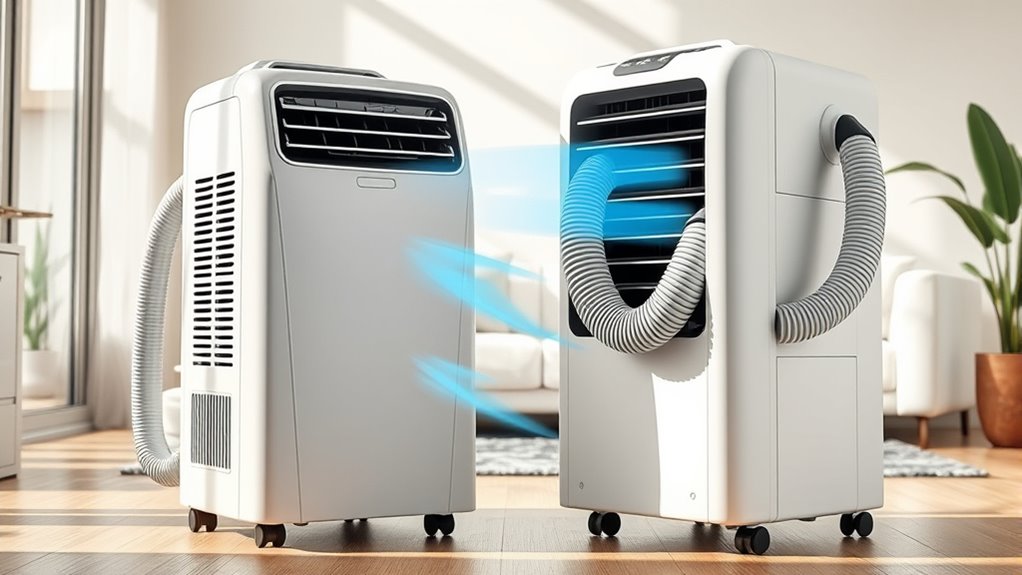
Single-hose portable air conditioners work by drawing air from the room through a single exhaust hose to cool the compressor and then venting the warm air outside. This design is straightforward but can affect energy efficiency because it sometimes creates negative pressure inside the room, causing warm air from outside to seep in. Installation is generally simple—you just attach the hose to the unit and vent it through a window. However, the comfort level may decrease if the unit struggles to maintain the desired temperature efficiently. The single hose setup is ideal for quick cooling and portability but may need more frequent adjustments to keep the room comfortable. Overall, its energy efficiency can be impacted by the way it manages air exchange, and understanding air circulation principles can help optimize performance.

Whynter Portable Air Conditioner 14,000 BTU with Dual Hose Dehumidifier & Cooling Fan for 500 Sq Ft Rooms, Includes AC Unit Window Kit, ARC-14S (9,500 SACC)
- Award-Winning Portable AC: Best Overall Portable Air Conditioner 2025
- Powerful Yet Quiet: Operates at 51 dBA for peaceful cooling
- CFC-Free Operation: Eco-friendly refrigerant for planet safety
As an affiliate, we earn on qualifying purchases.
As an affiliate, we earn on qualifying purchases.
Performance Comparison: Which Cools Faster?
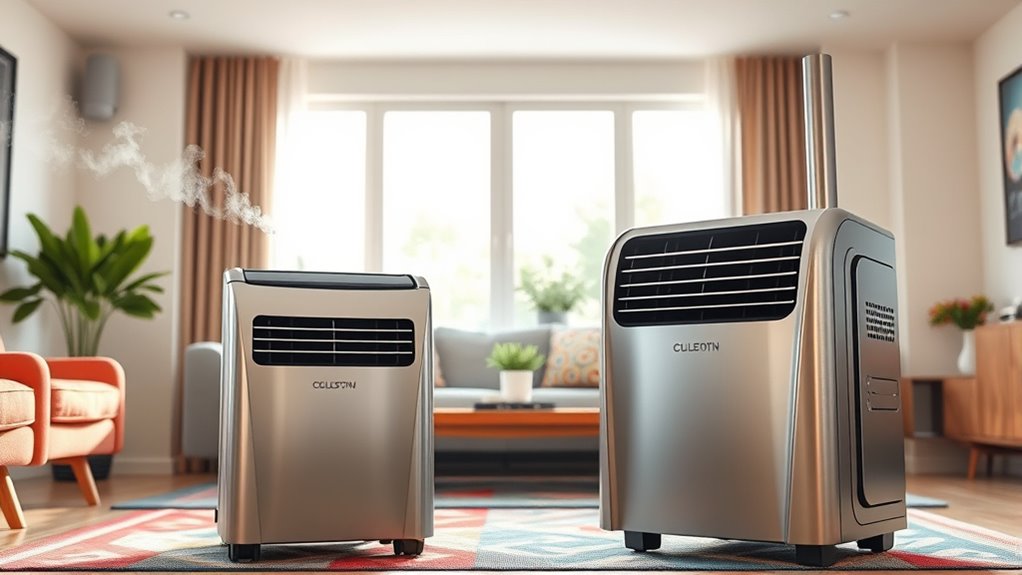
When it comes to cooling speed, the design of your portable AC plays a significant role. Dual-hose units generally cool faster because they draw in air and expel hot air simultaneously, reducing internal pressure and improving airflow. Single-hose models might lag slightly due to their reliance on recycling indoor air, which can slow cooling. Factors affecting performance include:
Dual-hose portable ACs cool faster by expelling hot air simultaneously, enhancing airflow and efficiency.
- Airflow efficiency: Dual-hose units often deliver quicker results.
- Energy efficiency: Single-hose models tend to consume less power but may take longer.
- Installation complexity: Dual-hose systems are a bit more involved to set up.
- Room size: Larger spaces benefit more from dual-hose units’ faster cooling.
- Temperature stability: Dual-hoses maintain consistent temperature levels better. Additionally, internal pressure management influences how effectively the unit cools your space.
Ultimately, if speed matters, dual-hose units are typically more effective, but consider energy efficiency and installation ease too.

16000 BTU Portable Air Conditioners for Large Room up to 730 sq.ft 5-in-1 Smart AC Unit with WiFi APP/Remote Control, Fast Cooling, Dehumidifier, Quiet Sleep Mode, Window Kit Included
- Powerful Cooling: Cools up to 730 sq.ft. quickly
- 5-in-1 Functionality: Dehumidifier, fan, sleep mode, timer
- Quiet Operation: Operates below 42dB for peaceful sleep
As an affiliate, we earn on qualifying purchases.
As an affiliate, we earn on qualifying purchases.
Frequently Asked Questions
Which Portable AC Type Is More Energy-Efficient Overall?
You’ll find that dual-hose portable ACs are generally more energy-efficient overall because they better manage airflow and cooling, reducing energy consumption. This means they often cost less to operate over time, offering better cost efficiency. Single-hose units may be cheaper upfront but tend to use more energy, making them less economical in the long run. So, if you’re aiming to save on energy costs, a dual-hose model is your best choice.
Can Dual-Hose Units Operate Quietly in Small Rooms?
Imagine a whispering breeze in your tiny, echo-filled room—that’s what dual-hose units can achieve with their quiet operation. Thanks to better design, they generally produce lower noise levels, making them ideal for small spaces with sensitive acoustics. You’ll hardly notice them working, so you can enjoy a peaceful environment. Just remember, their quietness depends on proper placement and room acoustics, but overall, they’re pretty discreet.
Are Single-Hose Units Suitable for Prolonged Use?
Single-hose units are generally suitable for prolonged use, but they may not be the most efficient long-term option. Over time, they can impact air quality because they recycle warm air, making your unit work harder. For better long-term efficiency and improved air quality, consider a dual-hose system, which pulls in fresh air and exhausts warm air more effectively, reducing strain on the unit.
How Does Room Size Affect Cooling Speed for Each Unit?
Think of your room size as the stage where your portable AC performs. For smaller rooms, both units cool efficiently, but dual-hose models often cool faster because they handle airflow better. As room size increases, single-hose units struggle to keep up, reducing cooling efficiency. To maximize cooling speed, choose a dual-hose unit for larger spaces, ensuring you stay cool without waiting long.
Do Dual-Hose Units Require More Maintenance Than Single-Hose?
Dual-hose units generally require more maintenance than single-hose models because of their increased complexity. You’ll find that filter replacement can be a bit more involved, as dual-hose units often have additional components to keep clean. While they’re efficient, expect to spend a little more time on maintenance tasks like cleaning filters and checking hoses, which helps guarantee peak performance and longevity for your appliance.

Garvee 3-in-1 Portable Air Conditioner, 8000 BTU (5000 BTU SACC) AC Unit
- Fast Cooling for Large Rooms: Cools up to 350 sq. ft.
- 3-in-1 Climate Control: Cooling, dehumidifier, fan
- Adjustable Temperature & Fan Speed: 61°F–88°F, 2-speed fan
As an affiliate, we earn on qualifying purchases.
As an affiliate, we earn on qualifying purchases.
Conclusion
Choosing between single-hose and dual-hose units is like selecting a trusted guide for a hot, winding journey. The single-hose is your steady compass, quietly cooling as it navigates through the heat. The dual-hose, however, is a swift breeze, rushing to bring relief faster. Whichever you choose, remember you’re harnessing a tool that transforms the scorching sun into a cool, calming shadow—your personal oasis in the heat.