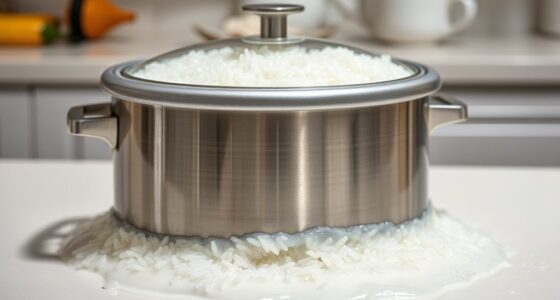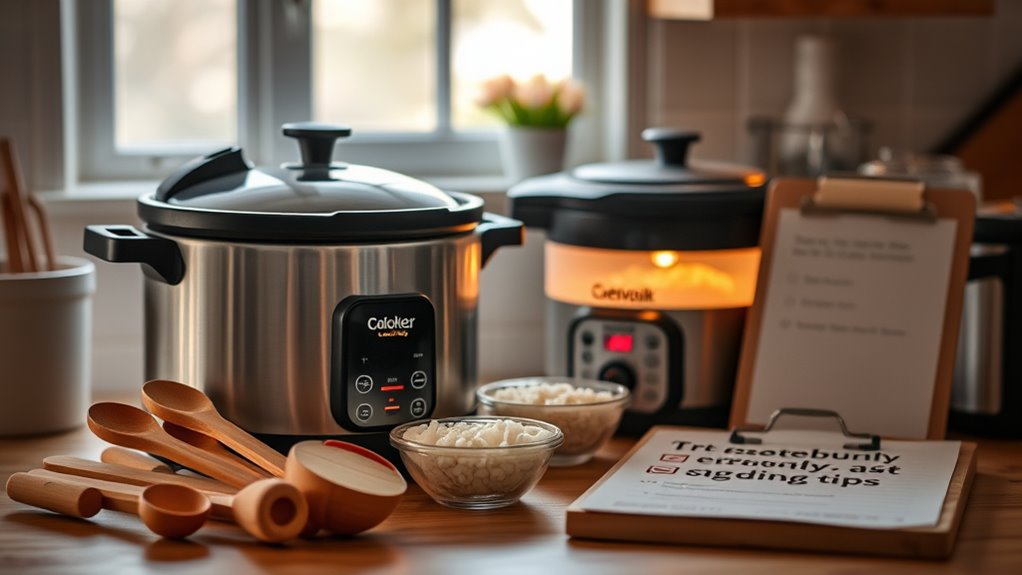
To save energy with slow cookers and rice cookers, prep large batches on weekends and store portions to reduce frequent appliance use. Always follow manufacturer instructions for safe placement and operation, and keep appliances on stable surfaces away from water. Regularly clean and maintain them for maximum efficiency. Use energy-efficient models with safety features like automatic shut-off, and operate appliances during off-peak hours. Keep these tips in mind to reduce utility bills and boost safety—more helpful ideas are just ahead.
Key Takeaways
- Prepare large batches and store portions to minimize appliance use throughout the week.
- Use appliances with energy-efficient features and automatic shut-off functions to reduce energy waste.
- Measure ingredients accurately and avoid overfilling appliances to ensure optimal performance and efficiency.
- Clean appliances regularly to maintain proper functioning and reduce longer cooking times.
- Cook during off-peak hours and cooler times of the day to save energy and reduce utility costs.
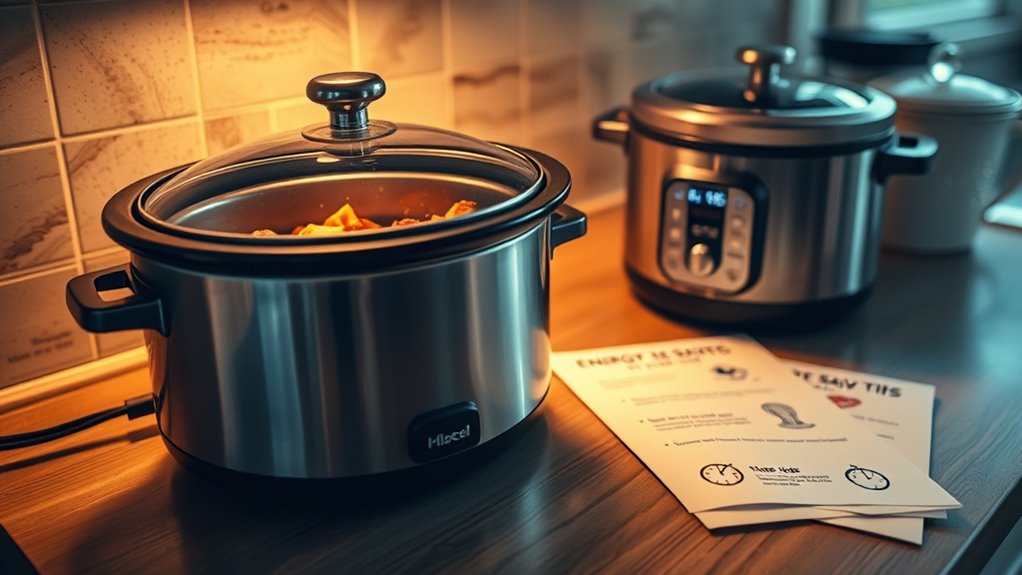
Using slow cookers and rice cookers can save energy and reduce your utility bills if you know how to use them effectively. One of the best ways to do this is by incorporating them into your meal prep routines. Planning your meals ahead allows you to load the appliances with the right amount of ingredients, preventing unnecessary cooking cycles and energy waste. For example, you can prepare a batch of stew or rice on the weekend and store portions for the week. This not only saves energy by avoiding multiple cooking sessions but also cuts down on time spent in the kitchen. When meal prepping, be sure to measure ingredients carefully, as overfilling can cause uneven cooking and waste energy, while underfilling might result in longer cooking times. Using the right portion sizes ensures your appliances run efficiently.
Kitchen safety is another critical aspect when using slow cookers and rice cookers. Always follow the manufacturer’s instructions, especially regarding placement and electrical safety. Keep appliances on stable, heat-resistant surfaces and away from water or moisture to prevent electrical hazards. When handling hot contents, use oven mitts or heat-resistant gloves to avoid burns. Set timers wisely and avoid leaving appliances unattended for extended periods, especially when you’re not home. Many slow cookers have safety features that turn them off automatically after a certain time, so familiarize yourself with these functions to maximize both safety and energy savings. Regularly inspecting cords and plugs for damage helps prevent electrical fires and ensures the appliances operate safely.
To further improve safety and efficiency, clean your appliances regularly. Food residues or mineral build-up can cause longer cooking times and reduce energy efficiency. Cleaning also prevents bacteria growth, maintaining kitchen hygiene. When prepping meals, use sharp knives and proper cutting techniques to reduce the risk of accidents. Keep your workspace organized, and store utensils and ingredients within easy reach to avoid unnecessary movements that waste energy and pose safety risks. Additionally, choosing appliances with energy-efficient features can significantly reduce your overall energy consumption and costs.
Finally, consider the ambient temperature of your kitchen. Cooking during cooler parts of the day can help keep your home warmer and reduce the need for additional heating. Using appliances during off-peak hours may also take advantage of lower energy rates, helping you save even more. By combining careful meal prep, diligent kitchen safety, and efficient appliance use, you can make the most of your slow cookers and rice cookers without increasing your energy bills.
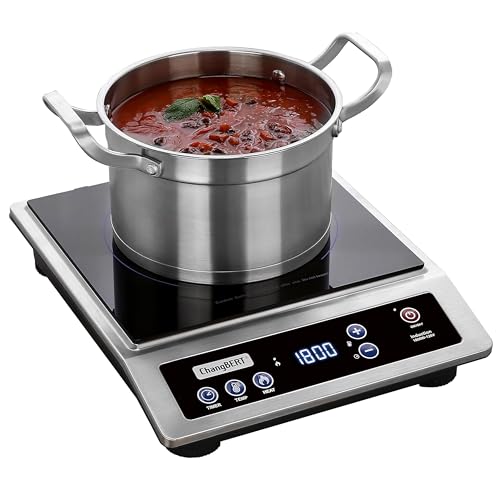
ChangBERT Induction Cooktop, Commercial Grade Portable Cooker, Large 8” Heating Coil, Premium Stainless Steel Countertop Burner with NSF Certified, 10 Hours Timer Powerful 1800W Professional Hot Plate
- Multiple Power and Temperature Settings: 9 power levels, 18 temperature options
- High Energy Efficiency: 83% efficiency for quick heating
- Stable High-Power Output: Continuous-duty circuitry for reliable performance
As an affiliate, we earn on qualifying purchases.
Frequently Asked Questions
How Can I Tell if My Slow Cooker Is Energy Efficient?
You can tell if your slow cooker is energy efficient by checking its energy label, which indicates its power consumption. Look for models with lower wattage ratings, as they use less electricity while still cooking effectively. Comparing energy labels helps you choose appliances that consume less power, saving you money and energy over time. Keep an eye on these labels to guarantee you’re selecting the most efficient slow cooker available.
Are There Specific Settings That Save More Energy on Rice Cookers?
Did you know using the “keep warm” setting on your rice cooker can save energy by avoiding unnecessary heating? To maximize energy savings, focus on the most efficient settings designed for specific cooking tasks. Many rice cookers come with energy-saving features like delayed start or eco modes. By selecting these, you reduce power consumption without sacrificing quality, helping you save money and energy every time you cook.
Can Using a Timer Reduce Energy Consumption?
Using a timer can definitely reduce your energy consumption. Smart timers allow you to schedule your appliances to run only when needed, preventing unnecessary power use. Additionally, energy monitoring features help you track and manage your appliance’s efficiency. By setting a timer, you avoid leaving devices on longer than necessary, saving electricity and lowering your bills. It’s a simple step that makes your cooking routines more energy-efficient.
Is It Better to Cook at Higher or Lower Temperatures for Energy Savings?
You should cook at lower temperatures for energy savings, as it reduces energy consumption without sacrificing quality. While higher temperatures might cook food faster, they use more energy. Proper temperature control ensures efficient cooking, conserving power over time. By maintaining a steady, lower heat, you save energy, cut costs, and still enjoy perfectly cooked meals. So, opt for lower temperatures whenever possible to maximize your energy efficiency.
Do Newer Models of Slow Cookers and Rice Cookers Consume Less Power?
Newer models of slow cookers and rice cookers generally consume less power thanks to smart features like automatic shutoff and energy-efficient heating elements. You benefit by saving energy without sacrificing performance. These smart features optimize power consumption, ensuring your appliances use only what’s necessary. So, upgrading to newer models helps you cut down on energy costs and reduces your environmental impact while still enjoying perfectly cooked meals.

Ninja® Combi™ All-in-One Multicooker & Air Fryer, Stainless Steel, SFP701
- 14-in-1 Versatility: Multiple cooking functions in one appliance
- Fast Meal Preparation: Complete meals in just 15 minutes
- All-in-One Kitchen Solution: Reduces clutter with versatile functionality
As an affiliate, we earn on qualifying purchases.
Conclusion
By following these energy-saving tips, you can cut costs and reduce your environmental impact. Did you know that slow cookers use up to 70% less energy than traditional stovetop cooking? That’s a significant saving over time. So, next time you cook, remember to choose efficient appliances and optimize their use. Small adjustments can make a big difference—saving you money and helping the planet, one meal at a time.

FOTILE HYZK32-E3-E ChefCubii 1.1 cu. ft. 4-in-1 Combi-Steam Oven with Steam-Bake, Air Fry, Convection, Dehydrator Functions, and 50 Preset Menus, Beige
- All-in-One Cooking Functions: Steam, bake, roast, air fry, and more
- Dual-Zone Temperature Control: Independent heating with 360° convection
- Precise Temperature Adjustment: ±1℉/℃ accuracy for consistent results
As an affiliate, we earn on qualifying purchases.

ROBAM R-Box Pro Countertop Combi Steam Oven White, Air Fryer Toaster Oven with EXP, 1.2 cu. ft. XL Capacity, 1800W Steam Fry Technology, 86-446°F Precision, 32 Presets, Easy-to-Clean Enamel Interior
- All-in-One Cooking Modes: 15+ functions including steam, air fry, and more
- Dual-Zone Independent Heat Control: Separate temperature adjustment for upper and lower zones
- Even Heating with Circulation: 360° convection for uniform browning and crispiness
As an affiliate, we earn on qualifying purchases.