When blending hot soup, always use a vented lid or leave the lid slightly ajar to let steam escape gradually, preventing dangerous pressure buildup. Never fill the blender completely or seal it tightly without venting, as this can cause spills or explosions. Starting at a low speed and then increasing helps manage steam safely. Following proper venting techniques is key to avoiding accidents—keep going to discover the best tips for safe, mess-free blending.

Get cleaning gear delivered free — and shop member deals
- Fast, free delivery on millions of items
- Access to Prime Big Deal Days deals on October 6–7
- Prime Video, Amazon Music and more included
Key Takeaways
- Always use a vented lid or leave the lid slightly ajar to allow steam escape during hot soup blending.
- Do not overfill the blender; leave space at the top to accommodate steam expansion safely.
- Allow hot soup to cool slightly before blending to reduce pressure buildup and risk of explosion.
- Start blending at low speed and gradually increase to prevent sudden pressure spikes.
- Follow manufacturer instructions and safety guidelines for blending hot liquids to minimize explosion risks.

Ever wondered how blending hot soup affects your blender? When you put steaming hot liquid into a blender, you might not realize there’s a hidden risk of steam buildup. As the hot soup whirls inside, heat causes the liquid to generate steam, which needs an escape route. If the steam isn’t released properly, it can create pressure inside the container, potentially leading to dangerous splatters or even an explosion. That’s why container safety is vital when blending hot foods. You need to make certain your blender’s lid is vented or that you’re using a method designed for hot liquids to prevent accidents.
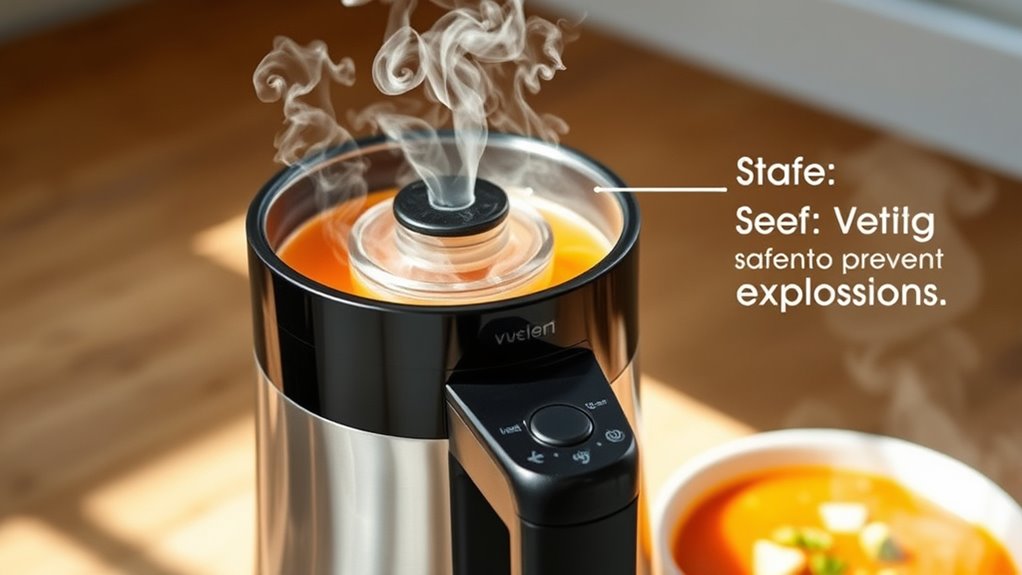
Many blenders come with vented lids or special inserts precisely for this reason. These vents allow the steam to escape gradually, reducing the risk of pressure buildup. If your blender lacks a vent or if you’re unsure, it’s best to leave the lid slightly ajar or cover it with a towel while blending. This way, you give the steam an escape route, preventing dangerous pressure from forming. Never, under any circumstances, fill your blender to the brim with hot soup and seal the lid tightly without a vent. Doing so can cause the hot liquid to force the lid off suddenly, leading to burns or messes.
Use vented lids or cover with a towel to safely blend hot liquids and prevent pressure buildup.
Another key to container safety is knowing the capacity of your blender. Overfilling it with hot soup increases the likelihood of steam buildup because there’s less room for the liquid and steam to expand. Always leave a little space at the top, especially with hot liquids, to accommodate the steam and prevent overflow. When blending hot soup, start at a low speed to gently mix the ingredients and gradually increase to a higher setting. This controlled approach helps manage the steam and avoids sudden pressure spikes.
It’s also wise to let hot soup cool slightly before blending. Waiting a few minutes reduces the intensity of steam generated and minimizes risks of pressure buildup. If you’re blending only a small batch, the risk is lower, but safety precautions still matter. Remember, your blender is a sealed container, and hot liquids can create dangerous pressure if not vented properly. Always follow your blender’s manufacturer instructions for blending hot liquids to make certain container safety. Proper venting practices can greatly reduce the risk of accidents when blending hot foods.
As an affiliate, we earn on qualifying purchases.
Frequently Asked Questions
Can I Use a Regular Blender for Hot Liquids Safely?
You shouldn’t use a regular blender for hot liquids because it risks poor blender safety and mishandling hot liquids. Hot liquids generate pressure that can cause the lid to pop off or the blender to spill, leading to burns or messes. Instead, opt for a blender designed for hot liquid handling, which has a vented lid and heat-resistant materials. Always allow hot items to cool slightly and vent properly before blending.
How Long Should I Vent My Blender When Blending Hot Soup?
Venting verifies your vessel before venturing into vigorous blending. You should vent your blender for about 30 seconds to a minute, allowing steam to safely escape. This venting duration prevents pressure buildup and potential explosions. As you carefully release the lid, focus on controlled steam release to avoid mishaps. Remember, patience and proper venting protect you from splatters, ensuring smooth, safe blending of hot soups without disaster.
What Type of Blender Is Best for Hot Soups?
You should choose a blender with a vented lid designed for hot liquids, like a high-performance or immersion blender, to guarantee safety precautions are met. These blenders reduce the risk of pressure buildup and explosions. Regular blender maintenance, such as cleaning the vent and checking for cracks, helps keep it safe. Always vent hot soups properly and follow manufacturer instructions to prevent accidents and extend your blender’s lifespan.
Are There Specific Safety Features to Look for in a Blender?
Look for safety features that guarantee your peace of mind, such as secure lids, automatic shut-off, and venting techniques to release pressure safely. Blender safety includes sturdy construction, non-slip bases, and overload protection, which prevent accidents. Venting techniques help you avoid explosions when blending hot liquids. By choosing a blender with these features, you protect yourself and enjoy safer, more efficient blending every time.
What Should I Do if My Blender Leaks Hot Liquid?
If your blender leaks hot liquid, stop it immediately to prevent burns or messes. Carefully unplug the blender, then open the lid cautiously to avoid splashes. Check for cracks or damaged seals that compromise blender safety and hot liquid handling. Clean any spills and inspect the jar for damage. Replace any faulty parts before using the blender again to guarantee safe operation and prevent leaks during future use.
As an affiliate, we earn on qualifying purchases.
Conclusion
To stay safe and avoid any explosive surprises, always heed the hot soup and blender boundaries. Be vigilant, vent vigorously, and never underestimate the importance of cautious communication. By following simple steps, you can confidently blend and bowl without the blow-up bother. Remember, safety starts with smart steps—sensible, steady, and secure. So, savor your soups safely, stay savvy, and keep your kitchen chaos-free!
As an affiliate, we earn on qualifying purchases.
hot liquid blending safety tools
As an affiliate, we earn on qualifying purchases.
As an affiliate, we earn on qualifying purchases.
Fall Picks
fall essentials
As an affiliate, we earn on qualifying purchases.