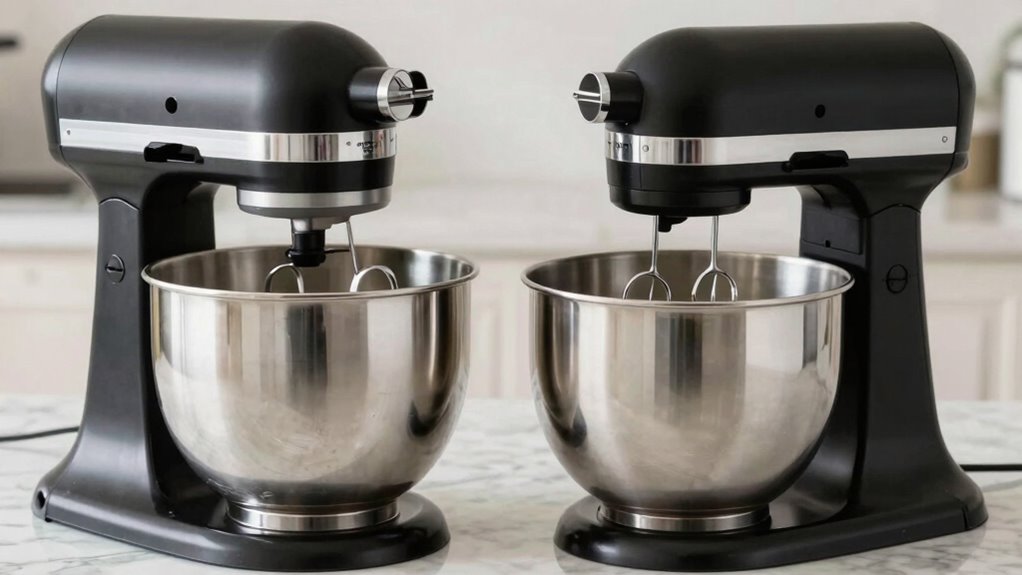

Choosing between a bowl-lift and tilt-head stand mixer depends on your kitchen needs. Bowl-lift models are powerful, better for large batches and heavy doughs, but can be less accessible. Tilt-head mixers are more compact, easier to access, and good for small to medium tasks. Your choice hinges on capacity, convenience, and space. Stay with us as you discover which type suits your baking style best and how to pick the perfect model.
Listen free for 30 days with Audible
Thousands of audiobooks and originals — cancel anytime.
As an affiliate, we earn on qualifying purchases.
Key Takeaways
- Bowl-lift mixers are generally more powerful and suited for heavy, large-batch baking tasks.
- Tilt-head mixers offer easier access for ingredient addition and cleaning, enhancing daily convenience.
- Bowl-lift models tend to be larger and more stable, ideal for handling bigger recipes and heavy doughs.
- Tilt-head mixers are more compact, better for small kitchens with space constraints.
- Price and durability vary; higher-end models often provide better longevity, attachments, and performance for both types.
As an affiliate, we earn on qualifying purchases.
What Are the Main Differences Between Bowl‑Lift and Tilt‑Head Mixers?
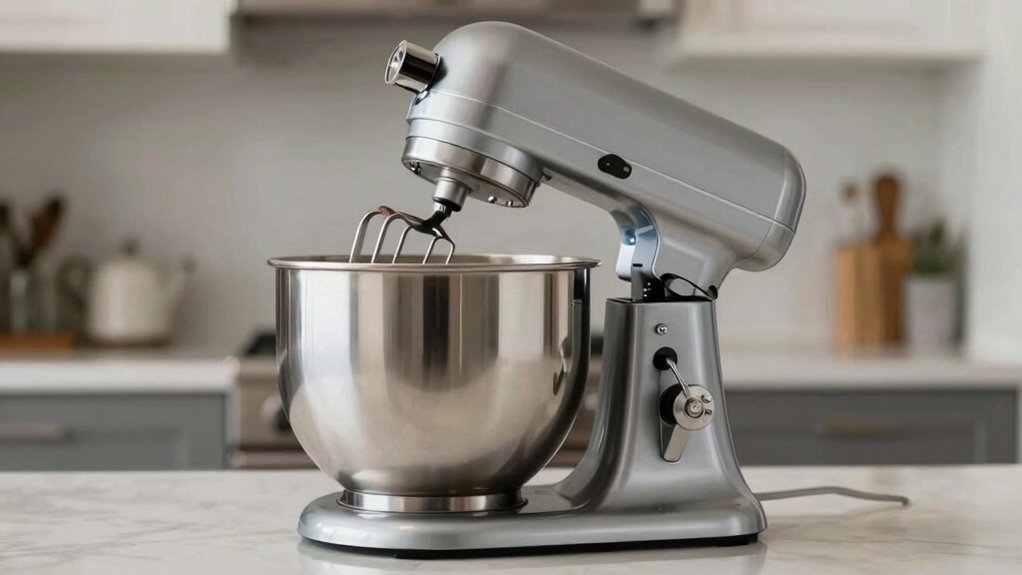
When choosing between bowl-lift and tilt-head mixers, understanding their main differences can help you make the right decision for your baking needs. Bowl-lift mixers typically have a more powerful motor, making them ideal for heavy-duty tasks like kneading dense bread dough. They also usually feature a sturdy, elevated design that keeps the bowl in place during vigorous mixing. Tilt-head mixers, on the other hand, have a more compact form and are easier to access, especially for adding ingredients. The brand reputation matters here—trusted brands tend to offer reliable motor power and durable construction. While bowl-lift models often excel in performance for large batches, tilt-head mixers are known for convenience and versatility. Knowing these core differences helps you choose the right mixer based on your baking volume and brand trustworthiness.
As an affiliate, we earn on qualifying purchases.
Which Is Easier to Use: Bowl‑Lift or Tilt‑Head?
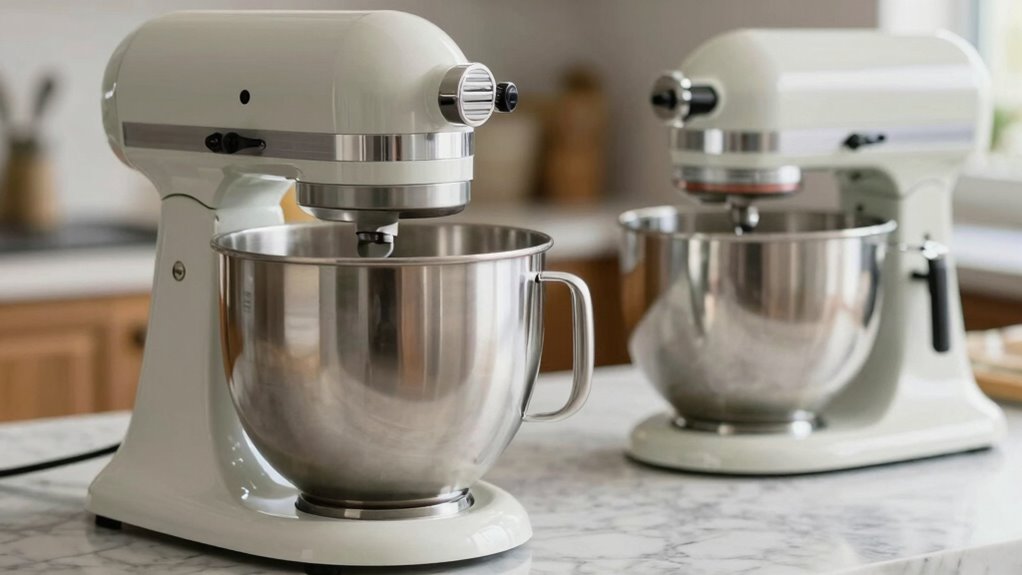
When choosing between bowl‑lift and tilt‑head mixers, ease of access is a key factor. You’ll find tilt‑head models generally simpler to operate because they let you lift the head for quick bowl access. However, bowl‑lift mixers can feel more stable, making operation easier for some users. Additionally, Free Floating mechanisms in some models allow for smoother movement and easier adjustments during mixing. The contrast ratio of the motor and overall build quality can also influence the stability and ease of use of the mixer. Moreover, understanding the ergonomics of each design can help you select a model that minimizes strain during prolonged use. For instance, user-friendly controls and thoughtful design features can significantly improve the overall experience. Considering the market options and available features can further aid in choosing a mixer suited to your needs.
Ease of Access
Which type of stand mixer offers easier access—the bowl‑lift or the tilt‑head? Generally, the tilt‑head design provides better ergonomic access, making it easier to add ingredients or change attachments. Its open design allows you to reach the bowl and motor easily without lifting the entire unit. In contrast, bowl‑lift mixers require you to raise the bowl via a lever, which can be less intuitive, especially for those with limited strength. Here’s a quick comparison:
| Feature | Bowl-Lift | Tilt-Head |
|---|---|---|
| Ergonomic Design | Less accessible, needs lifting | Easier to access, tilts back |
| Motor Accessibility | Slightly restricted | Fully accessible |
| Ease of Adding Ingredients | Moderate | Easy |
| Cleaning | Slightly more effort | Easier |
| Overall Access | Less convenient | More user-friendly |
This makes tilt-head mixers more accessible for quick ingredient additions and maintenance. Additionally, ergonomic design plays a crucial role in user comfort and efficiency during use.
Operation Complexity
Determining which stand mixer is easier to operate depends largely on your familiarity with appliance controls and how intuitive the design feels. When comparing bowl‑lift and tilt‑head models, operation complexity varies:
- Tilt‑head mixers often have simpler controls, making it easier to access the bowl, but may produce more motor noise during high-speed use.
- Bowl‑lift models can feel more robust but might require extra effort to lock and disengage the lift mechanism, affecting ease of use.
- Electrical safety is essential; both types include safety features, but tilt‑head mixers typically have safety locks that prevent accidental operation.
- Understanding the noise level and control responsiveness helps you gauge which design feels more intuitive and safer to operate daily.
heavy duty stand mixer for bread dough
As an affiliate, we earn on qualifying purchases.
As an affiliate, we earn on qualifying purchases.
How Do Size and Capacity Affect Your Baking?
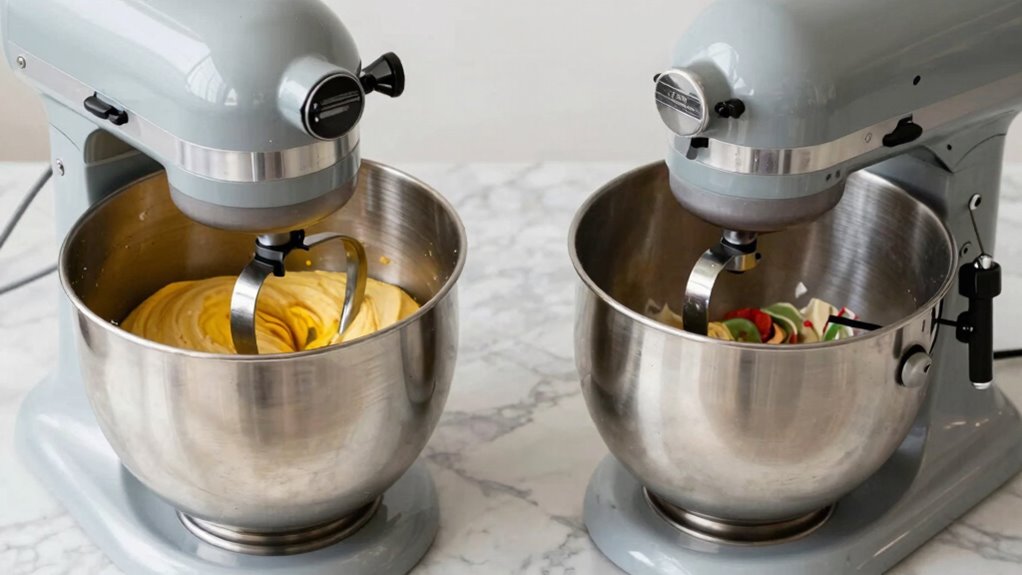
The size and capacity of your stand mixer directly influence how much you can prepare at once. If you often bake large batches, choosing a mixer with a bigger bowl is essential; for smaller recipes, a compact model works fine. Understanding these limits helps you prevent overloading the mixer and ensures your baked goods turn out perfect every time. Incorporating traditional healing practices can also enhance your overall baking experience by connecting you with Indigenous wellness principles that emphasize balance and harmony.
Mixer Capacity Limits
Choosing the right mixer capacity is essential because it directly impacts your baking results. If the bowl is too small, you’ll struggle with large batches, risking uneven mixing. Conversely, a large capacity mixer with a weak motor power can be inefficient and strain the machine. Your choice should also consider brand reputation, guaranteeing durability and reliable performance. Here are some key points:
- Larger bowls handle bigger recipes but may require stronger motors.
- Smaller capacity mixers are perfect for quick, small batches.
- Motor power influences how well the mixer handles dense doughs in larger bowls.
- Reputable brands often provide better build quality and customer support, making capacity decisions more dependable.
Balancing size and power ensures consistent results without overloading your mixer.
Batch Size Considerations
Selecting the right batch size depends heavily on your mixer’s capacity and how you plan to use it. Smaller batches allow for better control over speed adjustments, helping you avoid overloading the motor. Larger batches require careful attention to speed control to prevent splattering or strain on the motor. Keep in mind that bigger mixes often produce higher noise levels, which can be disruptive, especially in quiet environments. If you frequently bake large quantities, choose a mixer with a robust motor and adjustable speed settings to handle the load efficiently. Conversely, for small batches, a mixer with precise speed control helps you achieve consistent results without unnecessary noise or risk of overmixing. Proper batch sizing ensures suitable performance and longevity of your stand mixer.
Small vs Large Batches
When you work with small batches, you gain greater control over mixing speed and ingredients, reducing the risk of overmixing or spillage. The bowl shape plays a key role here, as a deeper or wider bowl can accommodate ingredients more effectively for larger or smaller quantities. Larger batches demand a stand mixer with sufficient motor power to handle the workload without straining, especially when using a bowl shape that can distribute ingredients evenly. Conversely, for small batches, a less powerful motor often suffices. Consider these points:
- Smaller bowls improve precision for tiny batches.
- Larger bowls prevent splattering with big mixes.
- Motor power must match batch size to avoid strain.
- Bowl shape influences mixing efficiency and control.
Additionally, choosing the appropriate bowl material can impact durability and ease of cleaning, further optimizing your baking process.
compact stand mixer for small kitchens
As an affiliate, we earn on qualifying purchases.
As an affiliate, we earn on qualifying purchases.
What Attachments and Features Make Mixers More Versatile?

Enhancing a stand mixer’s versatility often depends on the attachments and features it offers. Attachments compatibility is key—look for models that support a variety of tools like pasta makers, meat grinders, or citrus juicers, expanding your cooking possibilities. These attachments transform your mixer from a simple mixing device into a multi-functional kitchen helper. Additionally, color options matter if you want your appliance to match your kitchen decor. Many brands provide a range of colors, allowing you to choose a style that complements your space. Features like speed controls, splash guards, and locking mechanisms also contribute to ease of use and safety. Proper cable management is essential to keep your workspace tidy and prevent accidents. By selecting a mixer with diverse attachments and appealing aesthetics, you maximize its utility and integrate it seamlessly into your culinary routine.
How Durable and Easy to Maintain Are These Mixers?
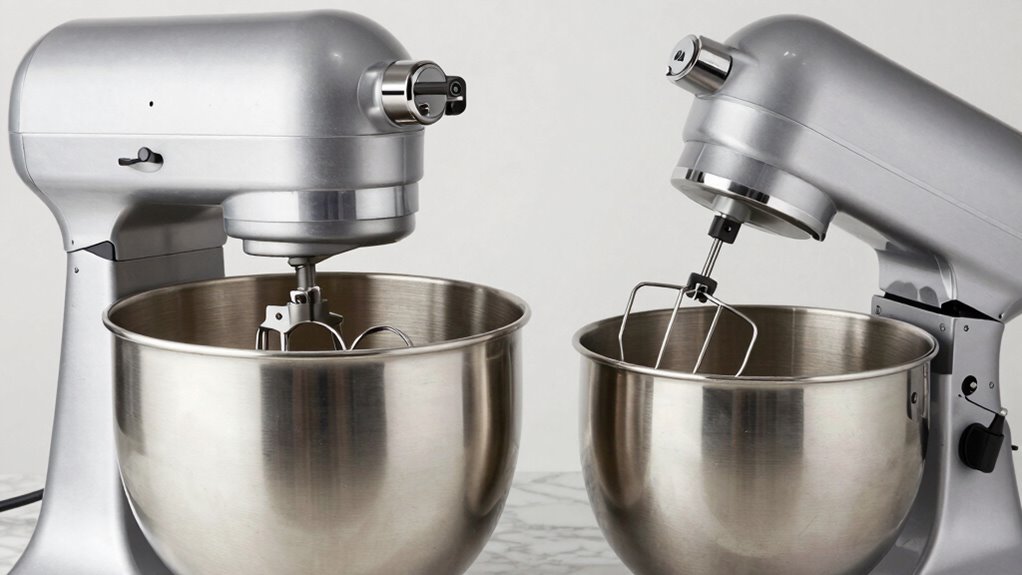
Durability and ease of maintenance are crucial factors when choosing a stand mixer, as they directly impact its long-term performance and your convenience. To keep your mixer running smoothly, follow these maintenance tips:
- Regularly clean attachments and bowls to prevent residue buildup.
- Check for loose parts and tighten screws as needed.
- Lubricate moving parts periodically, following manufacturer instructions.
- Use the durability comparison to select models with sturdy construction and corrosion-resistant materials.
A well-maintained mixer lasts longer and performs better, saving you money over time. Remember, a bowl‑lift model often features more robust materials for heavy-duty use, while tilt‑head mixers might require more frequent maintenance due to exposed components. Staying proactive with maintenance ensures your mixer remains reliable and efficient.
What’s the Price Range and Which Offers Better Value?
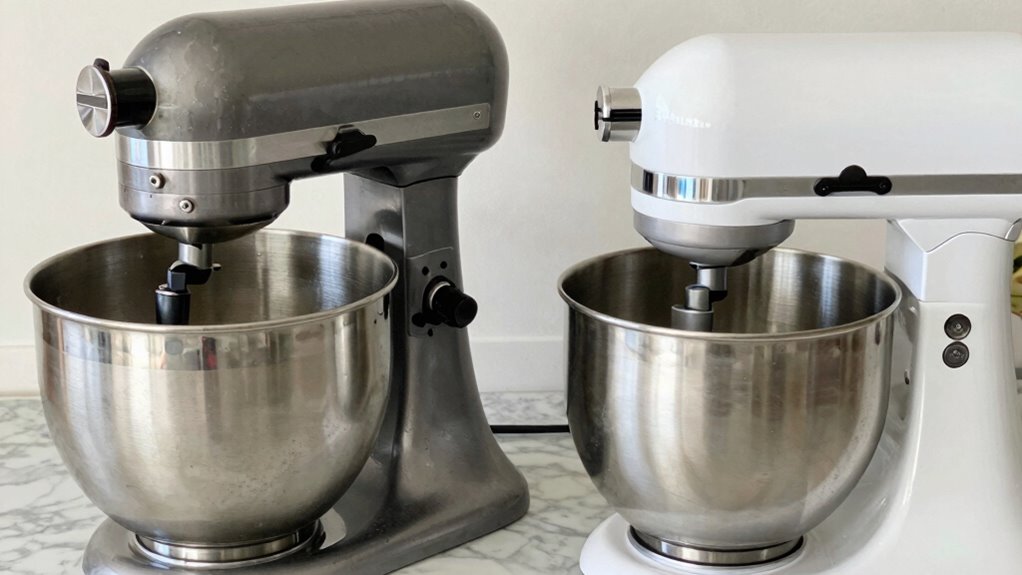
Stand mixers come in a wide range of prices, making it essential to identify models that offer the best value for your budget. Generally, you can find options from around $200 to over $1,000. Cheaper models might lack durability or advanced features, but reputable brands often provide better warranty coverage, guaranteeing long-term reliability. Investing in a mixer from a well-known brand can save you money in the long run due to their proven durability and customer support. While higher-priced models tend to have more powerful motors and versatile attachments, mid-range options often strike a good balance between cost and performance. Ultimately, choosing a mixer with a solid brand reputation and extensive warranty coverage ensures you get the best bang for your buck. Additionally, understanding the subtopics such as family photoshoot fails, young tennis prodigies, and digital privacy considerations can help you make more informed decisions about products and services. Moreover, considering the personality assessment tools used by manufacturers or reviewers can provide insights into product reliability and customer satisfaction.
When Should You Pick Bowl‑Lift or Tilt‑Head? Practical Baking Scenarios

Choosing between a bowl‑lift and a tilt‑head stand mixer depends on your baking needs and typical kitchen tasks. Consider these practical scenarios:
Your baking habits and kitchen space guide the best mixer choice for you.
- If you frequently switch ingredient substitutions, a tilt‑head mixer offers easier access for quick changes.
- For large batches or heavy doughs, a bowl‑lift model provides stability and capacity.
- If you prefer customizing your mixer’s look, consider color options—bowl‑lift models often come in more varied shades.
- When space is limited, a tilt‑head mixer’s compact design might fit better on your countertop.
Your choice affects convenience and efficiency, especially when handling different ingredients or matching your kitchen decor. Think about your typical baking routines to decide which design suits your practical needs best.
How to Choose the Best Stand Mixer for Your Kitchen
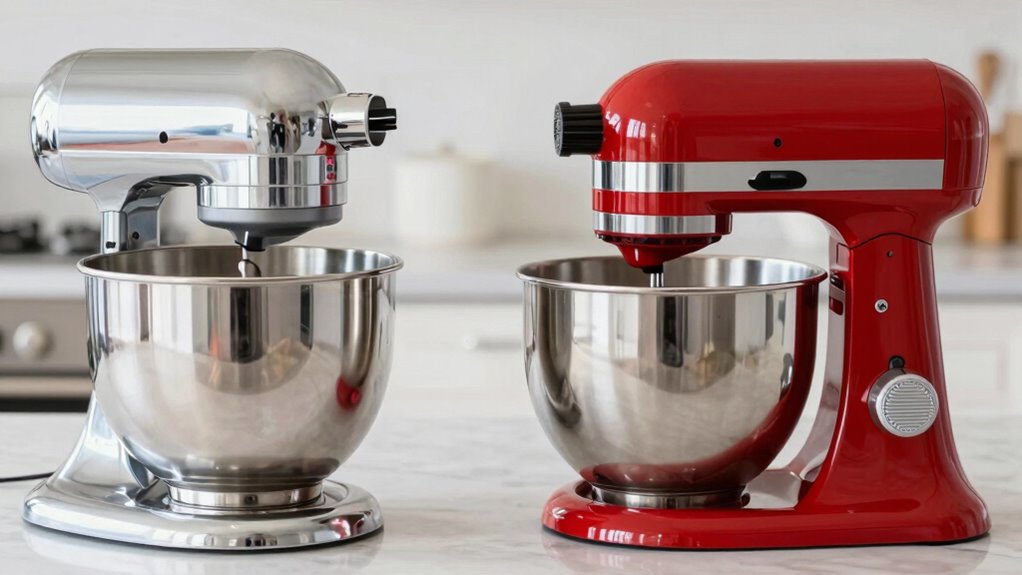
Selecting the right stand mixer for your kitchen involves evaluating your specific baking habits and space constraints. Consider if color customization matters to match your décor or add personality to your kitchen. If you prefer a seamless look, choose a neutral or classic color, or opt for a mixer that offers more color options. Noise levels are also essential—if you often bake early mornings or late nights, look for models with quieter operation. Think about how much counter space you have; a compact mixer may fit better in smaller kitchens, while larger models with more power suit frequent bakers. Additionally, understanding the ownership essentials can help you choose a durable and reliable model that will serve you well over time. Being aware of accessory compatibility can also expand your mixer’s versatility and functionality. Considering maintenance requirements is important to ensure your mixer stays in optimal condition with minimal effort. Recognizing the importance of user reviews and brand reputation can provide valuable insights into long-term performance and customer satisfaction. Balancing these factors will help you find a mixer that meets your style, noise preferences, and functional needs, ensuring it becomes a reliable kitchen companion.
Frequently Asked Questions
Which Mixer Type Is Quieter During Operation?
You’ll find tilt-head mixers are generally quieter during operation compared to bowl-lift models. They tend to produce lower noise levels and fewer vibration issues because of their design, which allows for better stability and less mechanical strain. If quiet operation is a priority, a tilt-head mixer might be your best choice, as it minimizes noise and vibration, making your baking experience more comfortable without sacrificing performance.
Can Bowl‑Lift Mixers Handle Large Batches More Efficiently?
Sure, bowl-lift mixers handle large batches more efficiently because of their bigger bowl capacity and robust motor power, making you feel like a culinary superhero. With their sturdy design, you can toss in hefty dough or giant batches without breaking a sweat. So, if you’re all about handling big projects with ease and efficiency, a bowl-lift mixer is your best buddy—no more juggling small loads.
Are There Specific Recipes Better Suited for Tilt‑Head Mixers?
You’ll find that tilt-head mixers excel with delicate recipes like soufflés and meringues because their design allows easier recipe adaptation and gentle mixing. They’re also great for recipes requiring variable mixing speeds, such as bread dough or cake batter. The accessible bowl and straightforward controls make it simpler to adjust mixing speed as needed, making tilt-head mixers ideal for recipes that demand careful attention and precise mixing.
How Do Maintenance Requirements Differ Between the Two Types?
Maintenance requirements for bowl-lift and tilt-head mixers differ mainly in cleaning frequency and lubrication needs. You should clean the mixing head and bowl after each use to prevent buildup, but tilt-head models may require more frequent cleaning around the hinge. Lubrication needs are minimal for both, though bowl-lift models with moving parts might need occasional lubrication of the lifting mechanism. Regular maintenance keeps your mixer running smoothly and prolongs its lifespan.
Which Mixer Type Offers More Safety Features During Use?
You’ll find that bowl‑lift mixers often include safety sensors that automatically stop the motor if you open the lid or if something’s wrong, reducing accidents. Tilt‑head models usually have an emergency stop button for quick shutdowns. Both types prioritize safety, but bowl‑lift mixers tend to provide more extensive safety features, making them ideal if you want maximum protection during use.
Conclusion
Ultimately, choosing between a bowl‑lift and tilt‑head mixer depends on your baking needs and preferences. Consider how each design aligns with your kitchen’s workflow and the types of recipes you love. Remember, even the most advanced mixer can’t replace the artistry of a master baker, but selecting the right one will certainly make your culinary pursuits more enjoyable and efficient. So, weigh your options carefully, and may your baking adventures be as timeless as a well-crafted sonnet.
Flea & tick season Picks
flea and tick prevention
As an affiliate, we earn on qualifying purchases.