If your dough keeps tearing, it’s likely due to improper mixing speed and hydration levels. Mixing too fast can over-develop gluten, making dough tough and prone to ripping, while mixing too slow may under-develop gluten, leading to weak dough. Additionally, insufficient hydration results in dry, fragile dough, whereas excess water makes it sticky and hard to handle. Adjusting your mixing technique and hydration carefully can help create a strong, elastic dough that resists tearing—more tips await.
Open a free Amazon Business account
Business pricing, bulk buying and tax-exempt orders.
As an affiliate, we earn on qualifying purchases.
Key Takeaways
- Maintain proper hydration levels; too dry or too sticky dough increases tearing risk.
- Mix at a moderate speed to develop gluten evenly without overworking the dough.
- Use autolyse and resting periods to strengthen gluten before kneading.
- Adjust hydration gradually during mixing to achieve a smooth, elastic dough.
- Handle dough gently during kneading to prevent breaking the gluten network.
stand mixer with variable speed settings
As an affiliate, we earn on qualifying purchases.
As an affiliate, we earn on qualifying purchases.
Why Does My Dough Keep Tearing During Handling?
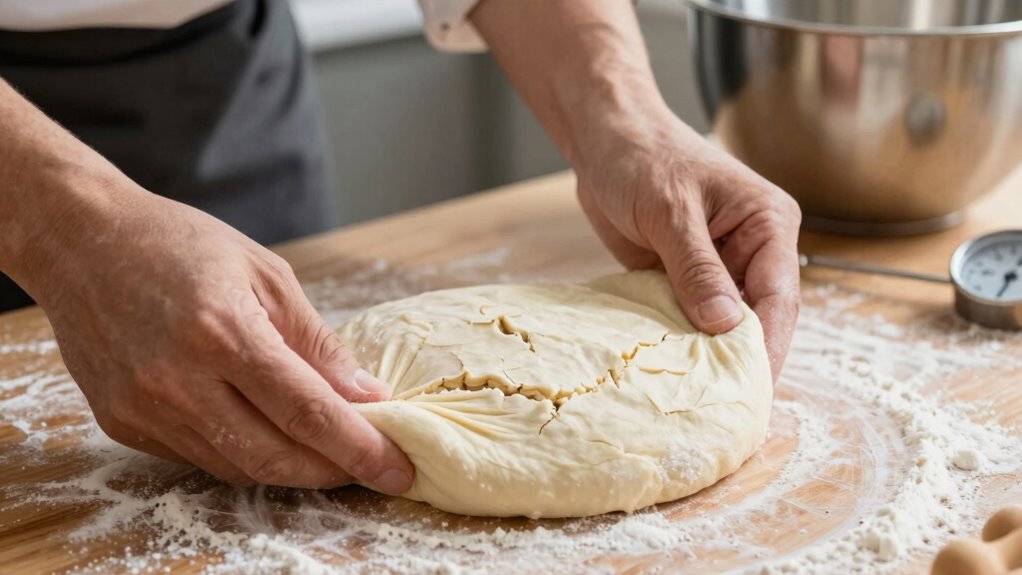
If your dough keeps tearing during handling, the most common cause is that it’s too dry or not sufficiently hydrated. Your kneading techniques matter; overworking or underworking the dough can weaken its structure. Using the wrong flour types also plays a role—flours with low protein content, like cake flour, produce less gluten, making dough more fragile. To fix this, adjust hydration by adding small amounts of water gradually while kneading. Incorporate proper kneading techniques, like gentle folding and consistent pressure, to develop gluten without tearing. Experiment with different flour types suited for your recipe, ensuring they have enough protein to create a resilient dough. Proper hydration and technique will help you achieve a smooth, elastic dough that handles well. Choosing the right flour is essential for developing the gluten network that provides strength and elasticity to your dough.
As an affiliate, we earn on qualifying purchases.
How Gluten Formation Leads to Dough Tears and Handling Problems
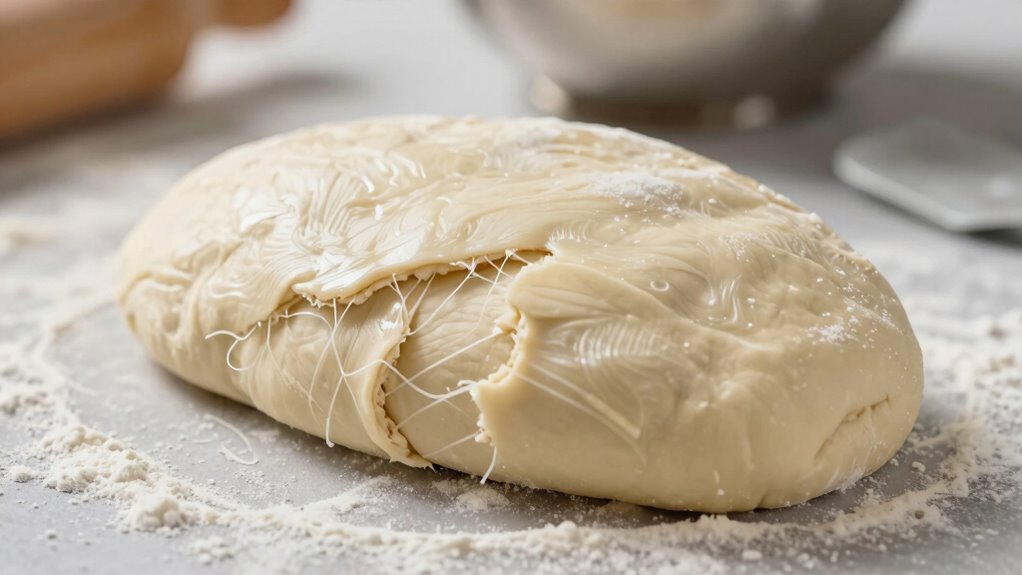
When gluten develops too much or unevenly, your dough becomes stretchy and prone to tearing. Overmixing can strengthen the gluten network too much, making the dough tough to handle. Balancing hydration levels is key, as too little or too much water disrupts gluten formation and increases handling difficulties. Ensuring proper piercing care and hygiene can also help prevent issues with dough handling, just as maintaining good hygiene prevents infections in piercings. Additionally, monitoring mixing techniques can help avoid overworking the dough and damaging its structure.
Gluten Development Dynamics
Understanding how gluten develops is essential because it directly impacts dough elasticity and strength. As you mix, proteins in the flour form a gluten network that gives your dough its structure. If you develop the gluten too quickly or too aggressively, the network becomes overly tight and brittle, reducing dough resilience. Conversely, gentle mixing allows gluten strands to form gradually, creating a flexible, extensible dough. Proper gluten development balances strength and elasticity, preventing tears during handling. When the gluten network is too weak, your dough lacks support and tears easily; if overdeveloped, it becomes tough and prone to cracking. Recognizing these dynamics helps you control mixing techniques and hydration levels to optimize gluten formation and minimize tearing. Controlling gluten development also involves managing hydration, which influences how easily gluten strands form and interact. Additionally, understanding the role of hydration in gluten formation can help you fine-tune your dough-making process for better results. For example, adjusting hydration levels can significantly modify the gluten network’s strength, making your dough more resilient and easier to handle.
Overmixing Consequences
Overmixing your dough can quickly lead to tears and handling difficulties because it causes the gluten network to become overly tight and brittle. The main overmixing drawbacks include a dough that’s tough to shape and prone to tearing. When you continue mixing past the ideal point, gluten overdevelopment occurs, creating a dense and stiff structure. This over-strong gluten network loses its flexibility, making the dough less elastic and more likely to rip when stretched or shaped. As a result, handling becomes frustrating, and your final baked goods may have a tough, chewy texture. To avoid these issues, stop mixing once the dough just reaches the best development, preventing excessive gluten formation that compromises dough extensibility and overall quality.
Hydration Balance Importance
Proper hydration levels play a key role in controlling gluten development and preventing dough tears. When your dough has the right hydration balance, it develops ideal dough elasticity, making it easier to handle without tearing. Too little water results in a stiff dough that lacks flexibility, increasing the risk of tears. Excessive water creates a slack dough, which can be sticky and hard to shape. Achieving the perfect hydration ensures strong gluten networks that stretch smoothly. Keep these points in mind:
- Proper hydration promotes balanced gluten formation
- Too dry causes stiff, tear-prone dough
- Overhydration leads to sticky, fragile dough
- Well-hydrated dough improves elasticity and handling
- Consistent hydration levels prevent tearing during shaping
- Maintaining the right hydration supports gluten strength and overall dough quality. Additionally, hydration control helps you achieve consistent results in your baking process. Monitoring hydration levels closely ensures your dough maintains the optimal balance for elasticity and durability. Achieving the correct hydration also relies on understanding flour absorption, which varies between different flours and affects water retention.
Mastering hydration balance is essential for durable, elastic dough that resists tearing.
As an affiliate, we earn on qualifying purchases.
How Mixing Speed Affects Dough Elasticity and Tear Resistance
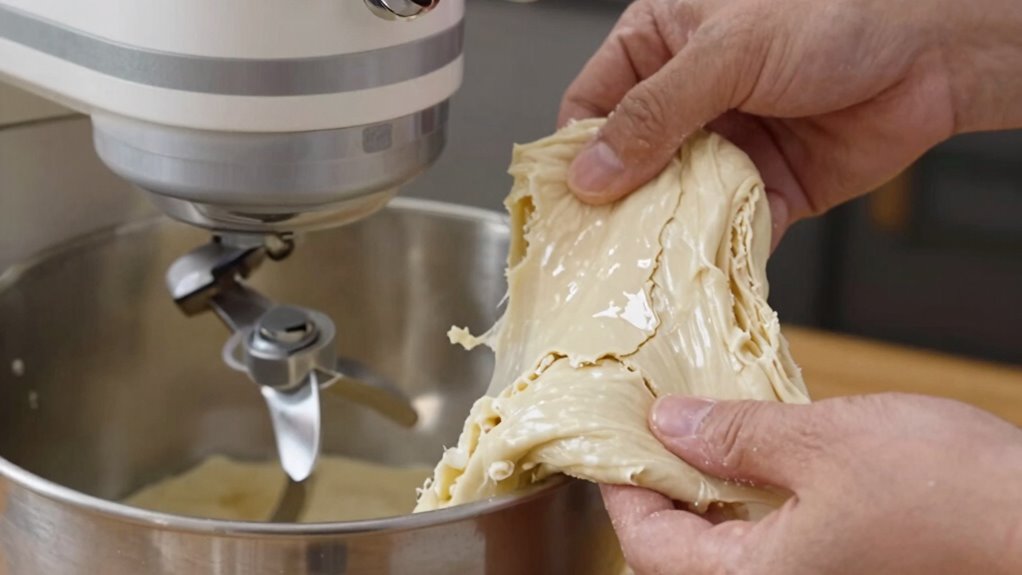
The speed at which you mix your dough directly influences its elasticity and tear resistance. When you mix too quickly, you risk overworking the gluten, making the dough tough and less flexible, which increases the chances of tearing. Conversely, mixing too slowly may not develop enough dough elasticity, resulting in weak gluten networks that tear easily during shaping. Finding the right mixing speed allows you to develop a balanced gluten structure that’s both elastic and resilient. Properly controlled mixing helps stretch the dough without overstressing it, ensuring it can hold its shape and withstand handling. Adjust your mixing speed based on your recipe and dough consistency to optimize elasticity and minimize tearing. A precise approach results in dough that’s strong, flexible, and less prone to ripping. Controlling mixing speed is crucial for achieving the desired dough texture and strength. Additionally, understanding the impact of astrological signs on personal traits can help bakers choose the right approach to patience and precision in their craft. Recognizing the importance of gluten development can further enhance your ability to produce durable, tear-resistant dough. Developing an understanding of dough hydration levels can also significantly influence elasticity and tearing tendencies.
kitchen scale for precise measurements
As an affiliate, we earn on qualifying purchases.
As an affiliate, we earn on qualifying purchases.
How Hydration Levels Impact Dough Flexibility and Strength
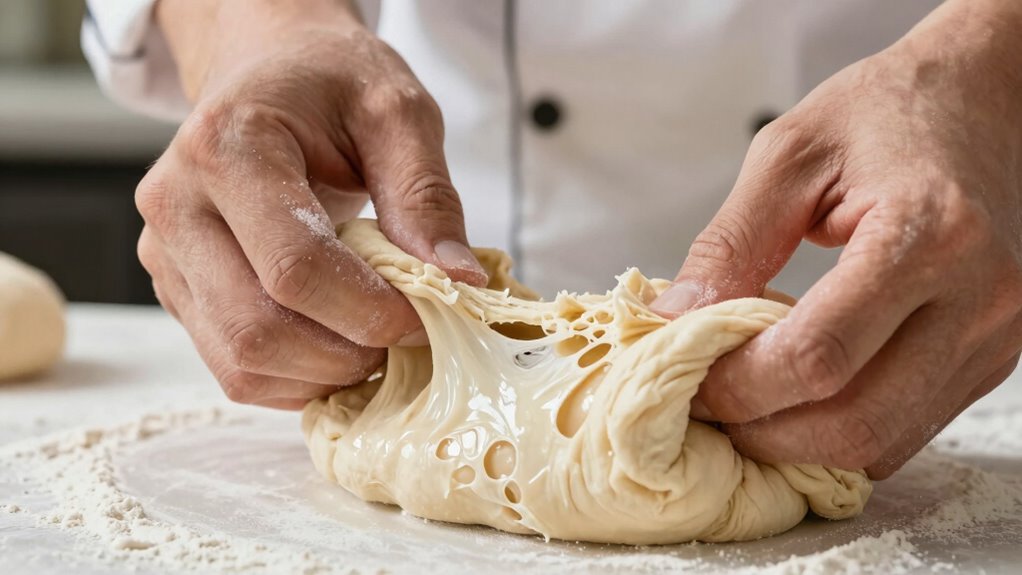
Your dough’s hydration level directly affects its flexibility and strength. Too little water makes it stiff and prone to tearing, while the right amount enhances elasticity without sacrificing structure. Proper hydration is key to achieving a resilient dough that can stretch without breaking. Incorporating natural filtration systems can also help maintain the quality of ingredients used in your baking, contributing to overall dough performance.
Hydration and Dough Elasticity
Hydration levels play a crucial role in determining how flexible and strong your dough will be. When you get the hydration right, the gluten network forms ideally, enhancing dough stretchability without tearing. Too little water results in a stiff dough that’s hard to manipulate, while too much makes it sticky and weak. Proper hydration allows the gluten strands to develop fully, providing elasticity and resilience. To improve elasticity:
- Use precise water measurements
- Incorporate autolyse for better gluten development
- Adjust hydration gradually during mixing
- Maintain ideal dough temperature
- Allow sufficient resting time
Balancing hydration ensures your dough remains elastic enough to stretch without tearing, giving you a better chance at achieving a smooth, workable texture. Proper hydration is key to strong, flexible dough that handles well. Hydration levels directly influence the formation of the gluten network, which impacts dough elasticity and overall strength. Additionally, proper mixing techniques can help evenly distribute water, ensuring consistent dough quality.
Proper Hydration for Strength
Ever wonder how water content directly influences your dough’s strength and flexibility? Water absorption is key to developing a sturdy gluten network. When you add the right amount of water, it hydrates the flour, allowing gluten proteins to form a strong, elastic structure. Too little water results in a dry, weak dough that tears easily, while too much makes the dough overly slack and difficult to handle. Achieving proper hydration ensures your dough can stretch without tearing, providing the necessary strength for shaping and baking. Consistent water absorption helps build a resilient gluten network, giving your dough the flexibility it needs. Adjusting hydration levels based on flour type and environment is vital for preventing tears and achieving ideal dough strength. Understanding gluten development is essential for mastering dough elasticity and durability. Proper hydration also encourages optimal gluten formation, which is crucial for dough resilience. Additionally, maintaining consistent hydration levels throughout the kneading process helps prevent uneven textures and tearing issues. Recognizing the importance of Water absorption in dough can significantly improve your baking results, especially when factoring in the flour’s protein content for best outcomes.
How to Mix and Hydrate Your Dough to Prevent Tears
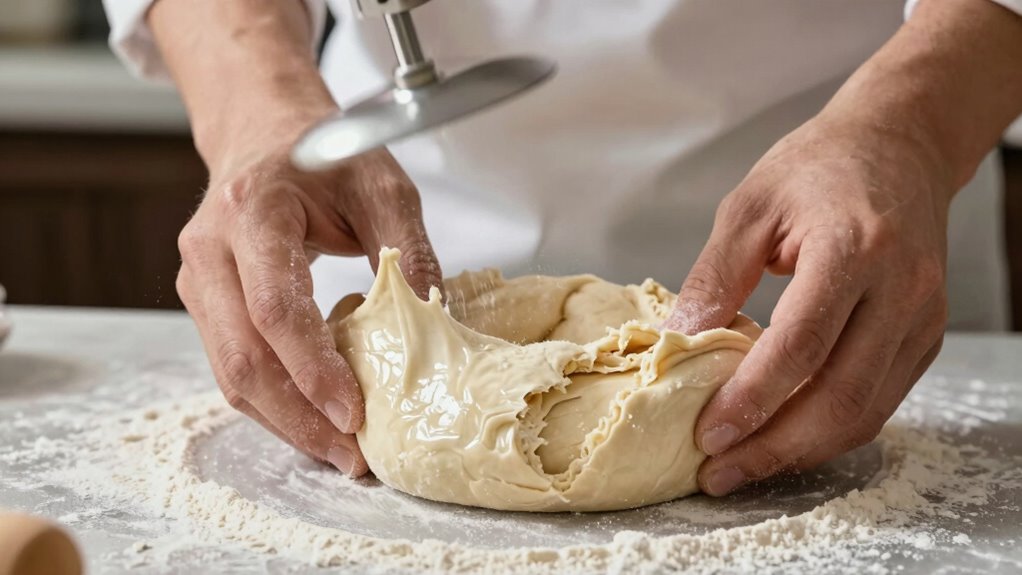
To prevent tears in your dough, it’s crucial to focus on proper mixing and hydration techniques from the start. Use gentle kneading techniques to evenly distribute water and develop gluten without overstressing the dough. Proper hydration ensures flexibility, reducing the risk of tears during shaping. To optimize the process, consider standardized protocols for consistent results across batches. Be mindful of fermentation effects; overly fermented dough can weaken gluten, making tears more likely. To improve your process:
- Mix gradually, adding water in small increments
- Knead with firm but gentle pressure
- Cover and allow proper fermentation for gluten development
- Use a dough scraper to avoid overworking
- Pay attention to dough consistency—smooth and elastic is ideal
- Creative and Gaming Gear can help in monitoring and improving your baking setup through specialized tools
These steps help create a resilient dough that can handle stretching without tearing, setting the foundation for a perfect bake.
Common Dough Tearing Problems and How to Fix Them
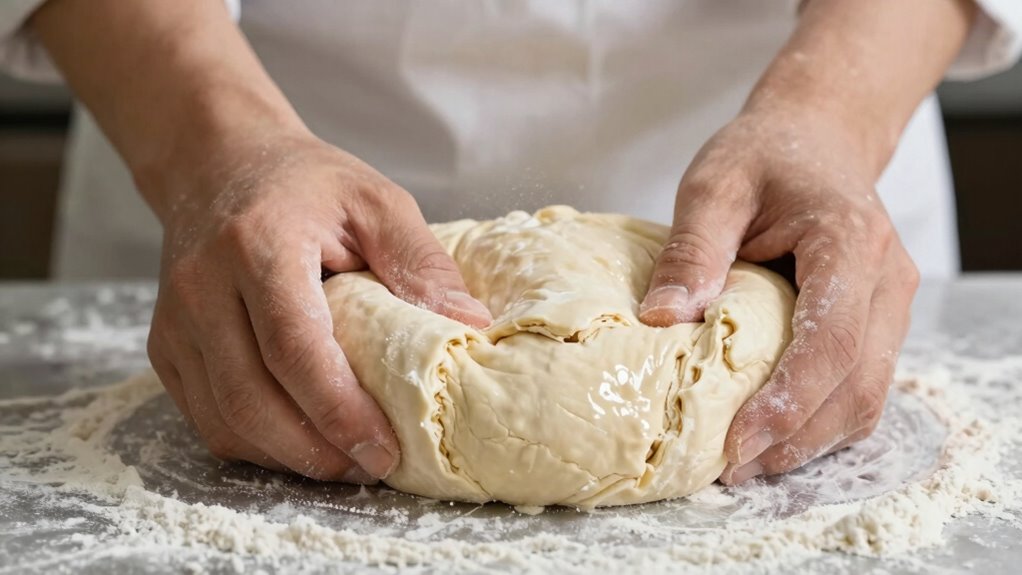
Many bakers encounter dough tearing during shaping, which can be frustrating if you don’t know how to address it. Often, improper kneading techniques weaken the dough’s gluten structure, making it more prone to tearing. Under-kneaded dough lacks elasticity, while over-kneading can cause it to become tough. Additionally, fermentation effects play a role; excessive fermentation can weaken gluten bonds, leading to tears. To fix these issues, adjust your kneading approach: gentle, consistent kneading helps develop gluten without overworking it. Also, monitor fermentation times closely—allow enough time for gluten development but avoid over-fermentation, which compromises dough strength. Understanding these factors helps you create a more resilient dough that’s less likely to tear during shaping.
Tips for Consistently Making Tear-Free, Elastic Dough
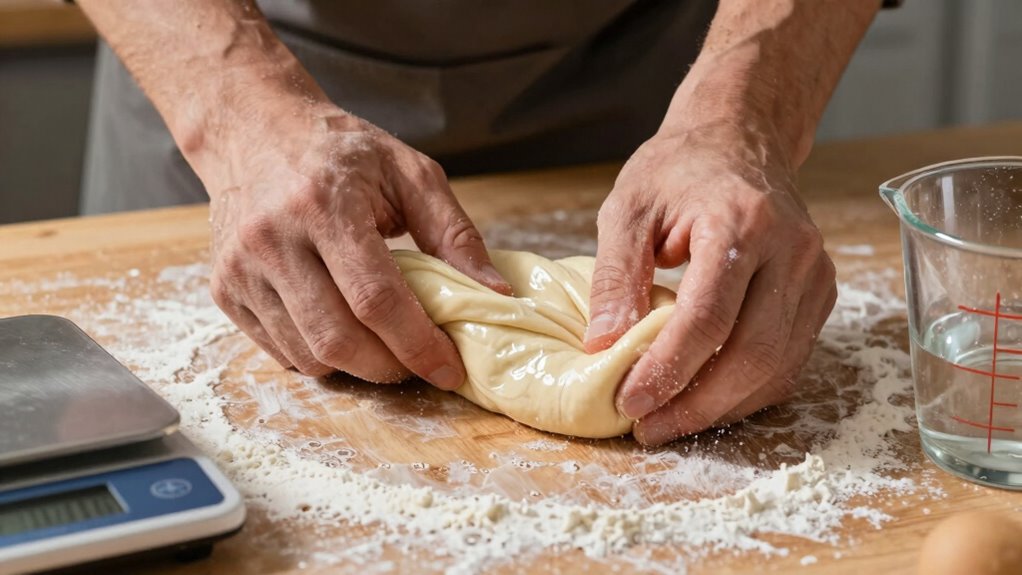
Achieving consistently tear-free, elastic dough requires paying attention to key techniques that develop and maintain gluten strength. Focus on optimizing dough consistency through proper mixing techniques, which guarantee even hydration and gluten development. To improve your results, consider these tips:
- Mix at a steady, moderate speed to avoid tearing the dough.
- Incorporate water gradually for better dough consistency.
- Knead just enough to develop gluten without overworking.
- Rest the dough between mixing stages to relax gluten.
- Use the slap-and-fold method for better elasticity and strength.
Frequently Asked Questions
Can Adding More Water Always Prevent Dough Tears?
Adding more water won’t always prevent dough tears. While higher water content can improve gluten development, too much water can weaken the dough’s structure, making it more prone to tearing. You need to find the right balance, adjusting hydration based on your flour type and mixing technique. Proper kneading encourages gluten formation, so focus on mixing speed and hydration to achieve a strong, elastic dough that resists tearing.
How Does Resting the Dough Influence Its Tear Resistance?
Resting the dough enhances its tear resistance by allowing gluten development to strengthen the dough’s structure. During the resting period, gluten strands relax and realign, making the dough more elastic and less prone to tearing. You’ll notice that after resting, your dough becomes easier to handle and stretch without ripping. This simple step is key to achieving a resilient, well-formed dough that resists tearing during shaping and baking.
Are There Specific Flour Types That Reduce Tearing?
Yes, choosing flour with higher protein content can reduce tearing. Higher protein flour, like bread flour, enhances gluten development, creating a stronger dough that resists tearing. When you use flours with lower protein, the dough is weaker and more prone to ripping. To improve tear resistance, opt for flours with ideal gluten-forming proteins, and guarantee proper mixing to develop the gluten network thoroughly.
Does Kneading Technique Affect Tear Formation?
Yes, your kneading technique impacts tear formation. By maintaining a consistent kneading rhythm, you promote better gluten development, which strengthens the dough and reduces tearing. Avoid over-kneading or rushing through the process, as uneven gluten development can cause weak spots. Focus on gentle, steady kneading to develop elasticity, and you’ll notice fewer tears and a smoother dough. Proper technique guarantees a resilient dough that holds together during shaping and baking.
How Does Ambient Humidity Impact Dough Elasticity?
Imagine your dough as a delicate sail catching the wind. When ambient humidity rises, it provides extra moisture, making your dough more elastic and easier to stretch. Low humidity, however, causes dryness, leading to elasticity challenges and tearing. Humidity effects are vital; too much or too little can weaken your dough’s structure. To keep it resilient, adjust hydration levels based on the air’s moisture, ensuring a smooth, tear-free rise.
Conclusion
By mastering the balance of mixing speed and hydration, you can transform your dough from fragile to resilient. Think of your dough as a delicate dance—too fast or too dry, and it stumbles; too slow or too wet, and it loses grace. With patience and practice, you’ll turn tearing mishaps into a thing of the past, revealing the secret to perfect, elastic dough every time. After all, isn’t baking about turning simple ingredients into something extraordinary?
Flea & tick season Picks
flea and tick prevention
As an affiliate, we earn on qualifying purchases.