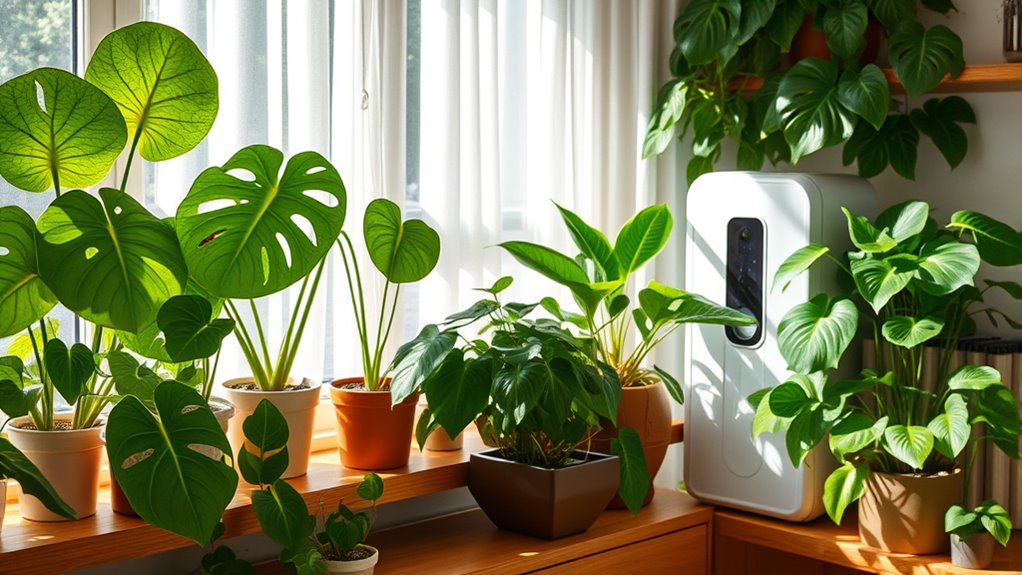

Houseplants can add beauty and some freshness to your home but don’t rely on them to notably improve indoor air quality. They can absorb specific gaseous pollutants like formaldehyde and benzene, but only in modest amounts and often require many plants to make a difference. They do little to remove dust, mold spores, or allergens. For better air, focus on proper ventilation, cleaning, and air purifiers—there’s more to consider if you want cleaner indoor air.
Key Takeaways
- Houseplants can absorb some VOCs but have a limited impact on overall indoor air quality.
- They are ineffective at filtering particulate matter, mold spores, and allergens.
- Achieving significant air purification requires dozens of plants, which is impractical.
- Proper maintenance is essential to prevent mold growth from overwatering or decay.
- Combining houseplants with ventilation and cleaning measures provides the best indoor air quality improvement.
Have you ever wondered if houseplants truly improve your indoor air quality? It’s a common question, especially when you’re considering adding greenery to your home. The truth is, certain plant species can help reduce indoor pollution, but their impact isn’t as dramatic as many believe. While plants do absorb some airborne toxins and add a fresh aesthetic, their ability to clean the air considerably is often overstated. It’s important to understand what they can and can’t do when it comes to improving your indoor environment.
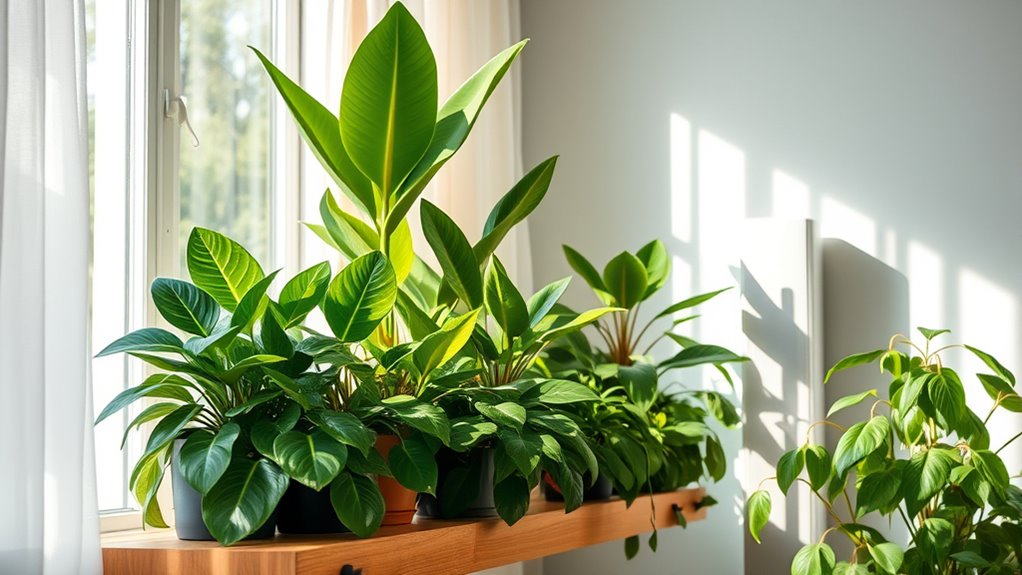
Different plant species have varying capabilities when it comes to filtering indoor pollution. For example, popular choices like pothos, snake plants, and peace lilies are known for their ability to absorb chemicals like formaldehyde, benzene, and trichloroethylene. These plants are capable of taking in some volatile organic compounds (VOCs), which are common indoor pollutants emitted by furniture, cleaning products, and paints. However, their effectiveness depends on several factors, including the size of the plant, the number of plants in your space, and the volume of pollutants present. Most studies suggest that while they can contribute to lowering VOC levels, their impact in typical home environments is relatively modest. You’d need dozens of plants to make a noticeable difference, which isn’t always practical.
Houseplants can absorb some VOCs, but their overall impact on indoor air quality is limited.
It’s also worth noting that indoor pollution isn’t solely caused by VOCs. Particulate matter, mold spores, and other allergens play a significant role in affecting air quality. Unfortunately, houseplants are less effective at filtering out these larger particles. They mainly target gaseous pollutants rather than dust or mold. So, relying solely on houseplants to improve air quality can give a false sense of security. They’re a nice addition, but not a substitute for proper ventilation, air purifiers, or regular cleaning.
Furthermore, some plants can even worsen indoor air quality if not maintained properly. Overwatered or decaying plants can foster mold growth, which adds to indoor pollution rather than reduces it. It’s essential to choose the right plant species and care for them properly to avoid creating more problems. Good air quality isn’t achieved just by adding greenery; it requires a wide-ranging approach that includes ventilation, reducing sources of indoor pollution, and regular cleaning.
Additionally, incorporating air exchange mechanisms can significantly boost indoor air quality more effectively than houseplants alone.
Top picks for "houseplant quality"
Open Amazon search results for this keyword.
As an affiliate, we earn on qualifying purchases.
Frequently Asked Questions
Can Houseplants Eliminate All Indoor Air Pollutants?
No, houseplants can’t eliminate all indoor air pollutants. While plants can improve air quality by removing some toxins and increasing humidity, their plant limitations mean they can’t tackle every pollutant effectively. Don’t fall for air purification myths—you’ll need proper ventilation and air purifiers for thorough cleanup. Houseplants are great supplements, but relying solely on them won’t ensure clean indoor air.
How Many Houseplants Are Needed to Improve Air Quality Effectively?
Research shows that having around 15-20 houseplants can modestly improve indoor air quality, but don’t rely on them alone. You’ll need to evaluate plant maintenance to keep them healthy and effective. Also, if you have pets, choose pet-safe plants to prevent any accidents. While more plants can help, they won’t eliminate all pollutants, so combine them with proper ventilation and cleaning for the best results.
Do Certain Plant Species Purify Specific Toxins Better Than Others?
Yes, certain plant species show plant toxin specificity and are more effective at purifying specific toxins. For example, snake plants excel at removing formaldehyde, while pothos is better at filtering benzene. You should choose species based on the particular toxins in your environment. By understanding species effectiveness, you can optimize your indoor air quality efforts and select the best plants for targeting specific pollutants.
Are Artificial Air Purifiers More Effective Than Houseplants?
You might think artificial purifiers outshine plant varieties, but they don’t. While artificial purifiers are quick and efficient, they lack the charm and natural filtration of houseplants. Plants like pothos or snake plants actively absorb toxins and add a fresh vibe to your space. So, if you want effective air cleaning with a touch of nature, houseplants beat artificial purifiers—ironic, isn’t it?
Can Houseplants Help Reduce Indoor Airborne Viruses or Bacteria?
Houseplants can help reduce indoor airborne viruses or bacteria by offering some antimicrobial effects, but they aren’t highly effective at virus filtration. While they may improve humidity and remove certain toxins, relying solely on houseplants for virus or bacteria removal isn’t enough. You should combine their presence with good ventilation, regular cleaning, and air purifiers to better protect your indoor environment from airborne pathogens.
Conclusion
While houseplants can boost your mood and add a touch of nature to your space, they aren’t miracle workers for air purification. They can improve humidity and remove some toxins, but don’t rely on them alone to cleanse your air completely. So, next time you choose a plant, ask yourself: are you really enhancing your home’s air quality, or just creating a more inviting atmosphere? Remember, a holistic approach works best—plants included.