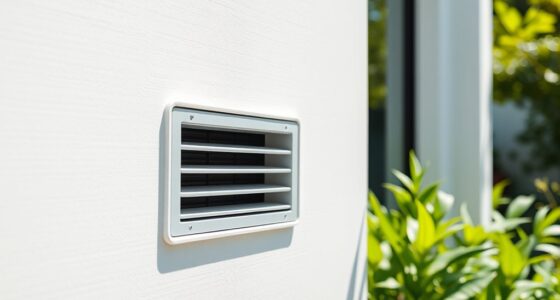
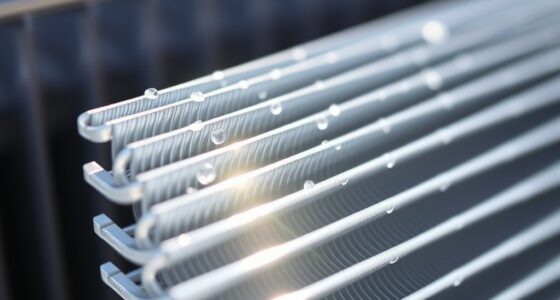
To stop summer drips from condensation in your ducts, start by insulating them properly with high-quality, vapor-retardant insulation. This keeps surface temperatures closer to room temperature, preventing moisture from condensing. Additionally, sealing any gaps with moisture barriers or vapor barriers guarantees humidity can’t escape and cause leaks. Together, these solutions will help reduce condensation and protect your home. Keep exploring to discover more ways to keep your ducts dry and efficient.

Get cleaning gear delivered free with Prime
- Fast, free delivery on millions of items
- Prime Video, Amazon Music and more included
- Member-only deals all year
Key Takeaways
- Insulate ducts with high-quality, vapor-retardant materials to maintain surface temperature and prevent dew point formation.
- Install moisture barriers around ductwork to block humidity infiltration, especially in high-humidity areas.
- Ensure proper sealing and continuous insulation to eliminate air leaks and moisture entry points.
- Improve indoor humidity control with dehumidifiers to reduce excess moisture in the air.
- Regularly inspect and maintain duct insulation and barriers to identify and fix condensation issues promptly.

Condensation in ducts occurs when warm, moist air comes into contact with cooler surfaces, causing water vapor to turn into liquid. If you notice water dripping from your vents or see moisture buildup along your ductwork, it’s a sign that humidity is escaping into your ducts and cooling surfaces below dew point temperatures. This moisture can lead to mold growth, structural damage, and poor indoor air quality if left unchecked. The good news is that you can tackle this issue by focusing on insulation improvements and incorporating effective moisture barriers.
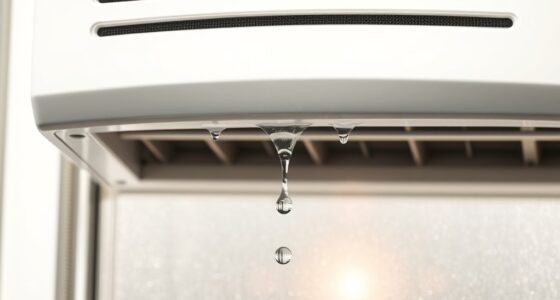
Water dripping from vents signals duct moisture and condensation issues.
First, upgrading your duct insulation is one of the most effective ways to prevent condensation. Proper insulation keeps the temperature of the duct surface closer to the air temperature inside the duct, reducing the chances of surfaces reaching dew point. When ducts are poorly insulated or uninsulated, they cool down too much, especially during hot and humid summer months, increasing the likelihood of condensation forming on their surfaces. Installing high-quality, insulated ductwork helps maintain a consistent temperature and minimizes moisture buildup. Make sure to choose insulation with a vapor barrier built-in or add an external moisture barrier to further protect against humidity infiltration.
In addition to insulation improvements, moisture barriers play a vital role in controlling condensation. Moisture barriers are materials designed to prevent moisture from passing through surfaces and reaching the cooler parts of your duct system. When properly installed, they act as a shield, blocking humid air from condensing onto duct surfaces. You should consider wrapping ducts with a vapor-retardant material, especially in areas prone to high humidity, like basements or attic spaces. Ensuring that these barriers are continuous and well-sealed will help eliminate pathways for moisture to penetrate and condense inside your ductwork.
Combining insulation improvements with the strategic placement of moisture barriers provides a thorough solution to condensation issues. Properly insulated ducts with a reliable vapor barrier reduce the temperature differential that causes water vapor to turn into liquid. This dual approach also enhances energy efficiency by preventing heat loss or gain, which can further contribute to condensation problems. Additionally, using insulation with vapor barriers that are specifically designed for ductwork can significantly improve the effectiveness of your moisture control efforts.
high-quality vapor-retardant duct insulation
As an affiliate, we earn on qualifying purchases.
As an affiliate, we earn on qualifying purchases.
Frequently Asked Questions
Can Condensation Damage My Ductwork Over Time?
Yes, condensation can damage your ductwork over time if moisture isn’t properly managed. When moisture accumulates, it can lead to rust, mold, and insulation deterioration, reducing insulation effectiveness. To prevent this, guarantee good moisture control by sealing ducts and maintaining proper insulation. Regular inspections help catch leaks early, protecting your system and improving indoor air quality while avoiding costly repairs in the future.
Are There Specific Materials That Prevent Condensation Buildup?
Yes, certain materials can help prevent condensation buildup. You should look for ducts with high insulation effectiveness, which reduces temperature differences that cause condensation. Additionally, moisture barriers like vapor barriers or reflective foil linings keep moisture out of the ductwork. These materials work together to minimize condensation, protecting your ducts from water damage and mold growth, especially during hot, humid summers.
How Often Should I Inspect Ducts for Condensation Issues?
You should inspect your ducts at least twice a year, especially during peak summer and winter months. This keeps condensation issues from sneaking up on you like a stealthy ninja. Regular inspections help guarantee the best air quality and maintain energy efficiency, preventing mold growth and water damage. Look for signs of moisture, mold, or corrosion, and address problems early to keep your home safe, comfortable, and running smoothly year-round.
Does Insulation Alone Eliminate Condensation Problems?
Insulation alone may not fully eliminate condensation problems because its effectiveness depends on proper installation and the insulation type. To prevent condensation, you should combine insulation with other techniques like sealing duct leaks, maintaining consistent temperatures, and using vapor barriers. These condensation prevention techniques work together, ensuring your ducts stay dry and efficient. Regular inspections also help catch issues early, preventing water damage and mold growth.
Can Condensation in Ducts Lead to Mold Growth?
Did you know that mold can start growing within just 24-48 hours of moisture exposure? Yes, condensation in ducts can lead to mold growth if humidity control isn’t maintained. Excess moisture provides the perfect environment for mold, making mold prevention essential. To avoid health issues and damage, guarantee proper insulation and ventilation, and keep humidity levels low to stop mold from thriving in your ducts.
As an affiliate, we earn on qualifying purchases.
Conclusion
Now that you know the signs of condensation in your ducts, it’s essential to act before it’s too late. Ignoring this issue could lead to hidden moisture problems, mold growth, or even costly repairs. But here’s the catch—you might not notice the damage until it’s advanced. So, are you prepared to face the consequences later? Stay vigilant, take action now, and keep your ducts dry—because what’s lurking behind those walls might surprise you.
duct sealing tape for moisture prevention
As an affiliate, we earn on qualifying purchases.
As an affiliate, we earn on qualifying purchases.
dehumidifier for high humidity areas
As an affiliate, we earn on qualifying purchases.
As an affiliate, we earn on qualifying purchases.
Fall Picks
fall essentials
As an affiliate, we earn on qualifying purchases.