To size your saltwater chlorine generator correctly, start by accurately calculating your pool’s volume in gallons or liters. Consider your pool’s size, usage, and turnover rate to determine the needed chlorine output. Avoid oversizing to prevent over-chlorination or undersizing that risks poor sanitation. Use manufacturer guidelines and sizing charts for suitable match. Tracking salt levels and adjusting settings ensure efficiency. Continuing this process helps you keep your pool safe, balanced, and hassle-free.
Key Takeaways
- Accurately measure your pool’s volume using length, width, and depth for proper generator sizing.
- Match the generator capacity to your pool’s size and turnover rate to ensure sufficient chlorine production.
- Consider water chemistry, salt levels, and usage patterns to select a generator that maintains balanced sanitation.
- Use manufacturer’s guidelines and sizing tables to choose the appropriate generator size—small, medium, or large.
- Regularly monitor chlorine and salt levels, adjusting the generator output or upgrading as your pool size or usage changes.
saltwater pool chlorine generator
As an affiliate, we earn on qualifying purchases.
As an affiliate, we earn on qualifying purchases.
How Do Saltwater Pool Chlorine Generators Work?
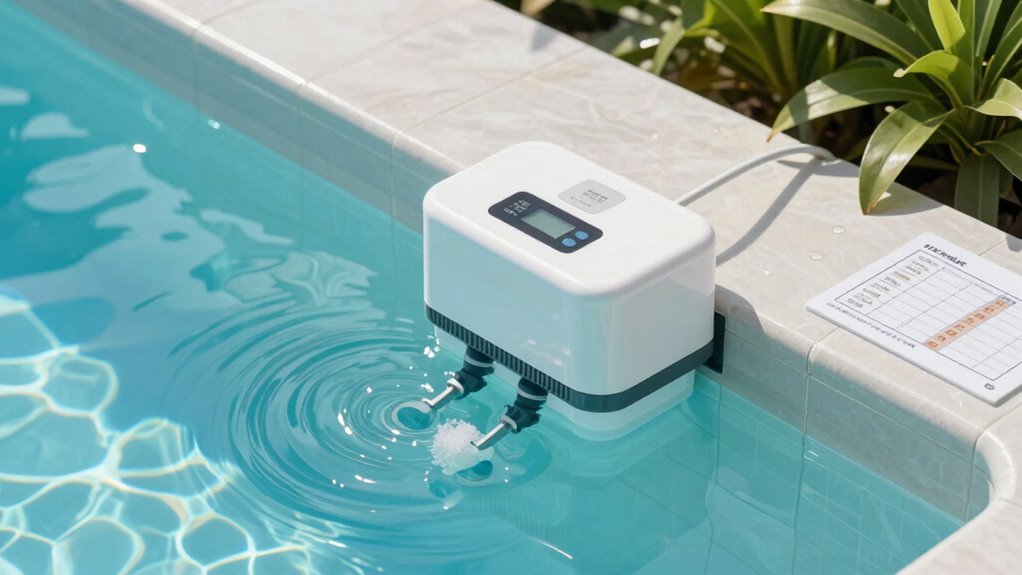
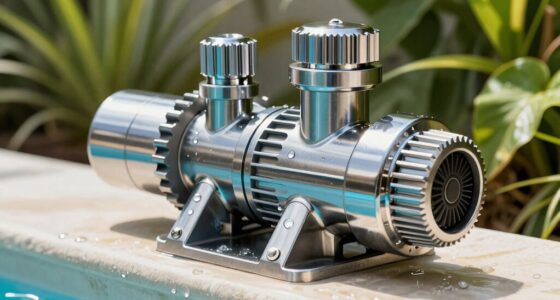
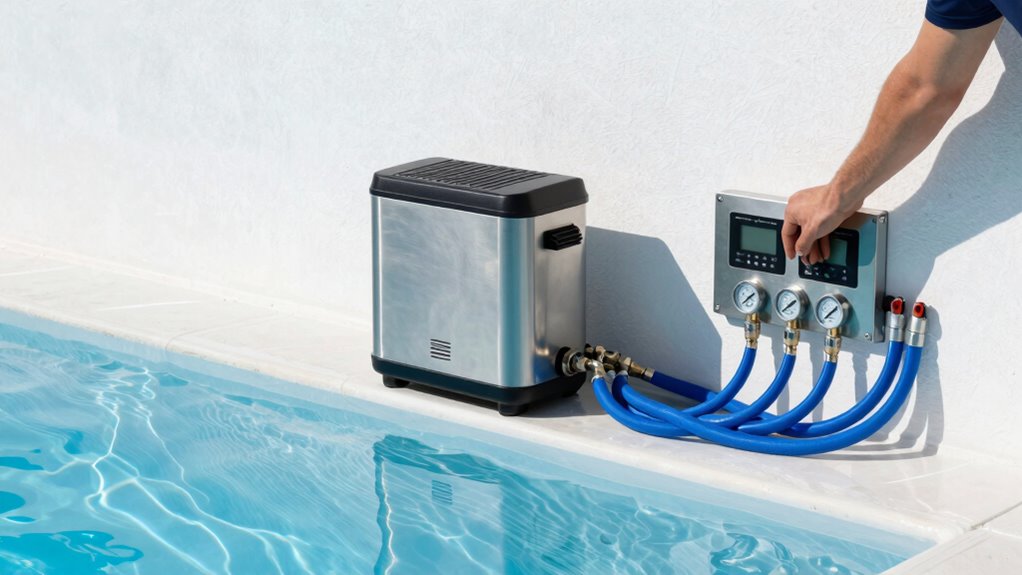
Saltwater pool chlorine generators, also known as salt chlorinators, work by converting salt into chlorine through a process called electrolysis. When you run your system, electricity passes through a cell containing saltwater, producing chlorine gas that dissolves into the pool. This process simplifies pool maintenance by continuously generating a steady supply of chlorine, reducing the need for manual chemical additions. The saltwater benefits include softer water that’s gentler on your skin and eyes, and fewer chemical odors around your pool area. Because the system automates chlorine production, you spend less time balancing chemicals and more time enjoying your pool. Proper system maintenance ensures optimal performance and longevity of your saltwater chlorinator. Regularly inspecting and cleaning your system helps maintain electrolysis efficiency, which is essential for consistent chlorine generation. Additionally, understanding chemical equilibrium is key to optimizing system performance and maintaining water quality. Being aware of salt level management helps prevent issues with corrosion and system failure, ensuring your pool stays properly sanitized. Overall, salt chlorinators offer a convenient, low-maintenance way to keep your pool sanitized and sparkling. Understanding how electrolysis works helps pool owners appreciate the technology behind saltwater systems.
As an affiliate, we earn on qualifying purchases.
Calculating Your Pool’s Volume and Saltwater System Capacity
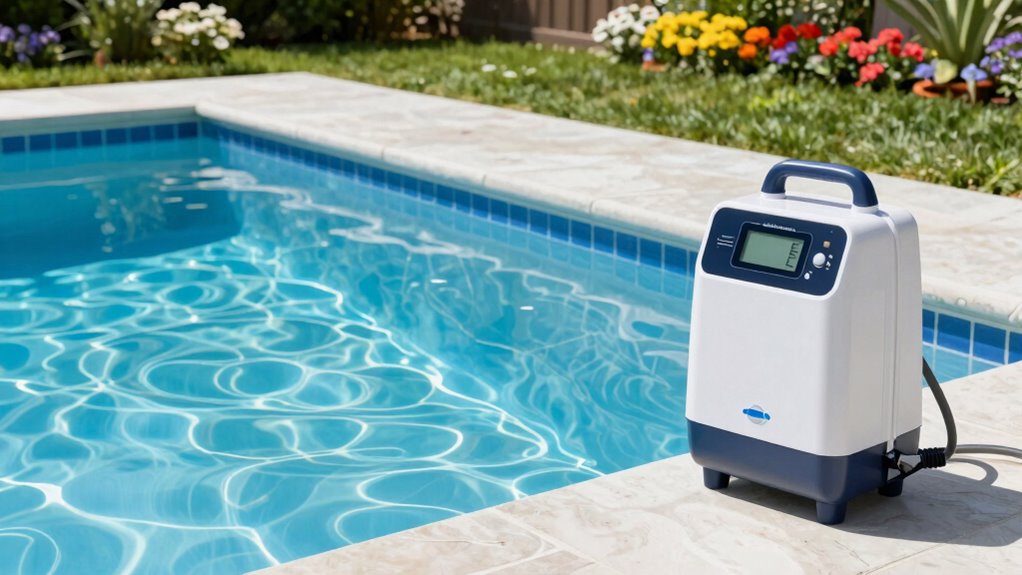
To guarantee your saltwater system works efficiently, you need to know your pool’s water volume. Next, calculate the amount of salt required to reach the ideal level, considering your pool size. Proper salt level maintenance is crucial for optimal system performance and swimmer comfort. Regular testing and adjustment help prevent issues related to improper salinity. Finally, match your generator’s capacity to your pool’s volume to maintain proper sanitation without overworking the system. Proper system sizing ensures efficient operation and longevity of your equipment. Additionally, ensuring proper ventilation in your pool area can help prevent issues related to chemical fumes and enhance overall safety. Proper filter sizing and flow rates are essential to keep your system running smoothly and prevent clogs or failures.
Determine Pool Water Volume
Accurately determining your pool’s water volume is essential for ensuring your saltwater system functions properly. Knowing your pool’s size helps you select the right chlorine generator and maintain proper water balance. To calculate volume, measure the length, width, and average depth of your pool. For rectangular pools, multiply these dimensions and divide by 7.5 to get gallons. For round pools, use the formula π times radius squared times average depth, divided by 7.5. Be precise with your measurements, as even small errors can impact salt and chlorine levels. Properly calculating your pool’s volume also aids in effective pool maintenance and selecting compatible pool accessories. This step guarantees your system operates efficiently, keeping your water sparkling and safe. Additionally, understanding your pool’s hydraulic system helps optimize circulation and filtration, ensuring consistent chemical distribution. Recognizing the importance of accurate measurements can prevent costly mistakes and help maintain ideal chemical levels for a healthy swimming environment. When you have a clear understanding of your pool’s volume, you can better assess the saltwater system capacity needed to keep your water properly sanitized. Moreover, selecting the appropriate size of electric chlorination system based on your pool volume enhances efficiency and longevity of the equipment.
Calculate Salt Requirements
Knowing your pool’s exact volume is vital for calculating how much salt you need to add and ensuring your saltwater system works efficiently. Proper salt levels support optimal water chemistry and simplify pool maintenance. To determine your salt requirement:
- Calculate your pool’s volume in gallons or liters
- Consult your saltwater system’s manual for recommended salt concentration
- Use a salt test kit to measure current salt levels
- Adjust salt addition based on the difference between current and desired levels
- Regularly monitor water chemistry to maintain balanced salt levels
Adding the correct amount of salt prevents issues like corrosion or cloudy water. Accurate calculations help you avoid over-salting, extending equipment life, and keeping your pool safe and clean. Proper salt management is key to effortless pool maintenance.
Match Generator Capacity
Understanding your pool’s volume is the foundation for matching your saltwater system’s capacity. Accurate calculation guarantees you select a generator that maintains ideal chlorine levels, supporting both pool aesthetics and safety. Proper sizing also helps prevent system overload, which can lead to equipment failure or increased operational costs. If your generator is too small, your water may become unsanitary, leading to cloudy water and algae growth. Conversely, an oversized system could cause excessive chlorine production, irritating your skin and eyes. By knowing your pool’s exact volume, you can choose a generator that efficiently produces chlorine as a safe and effective chlorine alternative. Proper matching minimizes maintenance, extends equipment lifespan, and keeps your pool looking inviting. Pool chemistry plays a crucial role in maintaining balanced chlorine levels and overall water quality. Additionally, understanding system capacity ensures your saltwater system operates efficiently without unnecessary wear or energy use. Regularly monitoring chlorine levels helps you fine-tune your system for optimal performance and safety.
As an affiliate, we earn on qualifying purchases.
How to Determine the Right Saltwater Pool Chlorine Generator Size
Choosing the right size for your saltwater pool’s chlorine generator is essential to keep your water clean and balanced without wasting energy or money. To do this, you need to take into account your pool’s size, water chemistry, and usage patterns. Proper sizing ensures efficient pool maintenance and maintains ideal sanitizer levels. Additionally, understanding Free Floating systems can help optimize your setup for better performance and reduced maintenance. Here are key ideas to guide your decision:
- Calculate your pool’s total gallons
- Match generator output to your pool size
- Avoid oversizing to prevent over-chlorination
- Consider your pool usage frequency
- Ensure compatibility with your water chemistry
- Remember that proper system sizing can extend the lifespan of your equipment and improve overall water quality.
As an affiliate, we earn on qualifying purchases.
What Factors Affect the Size of Your Saltwater Chlorine Generator?
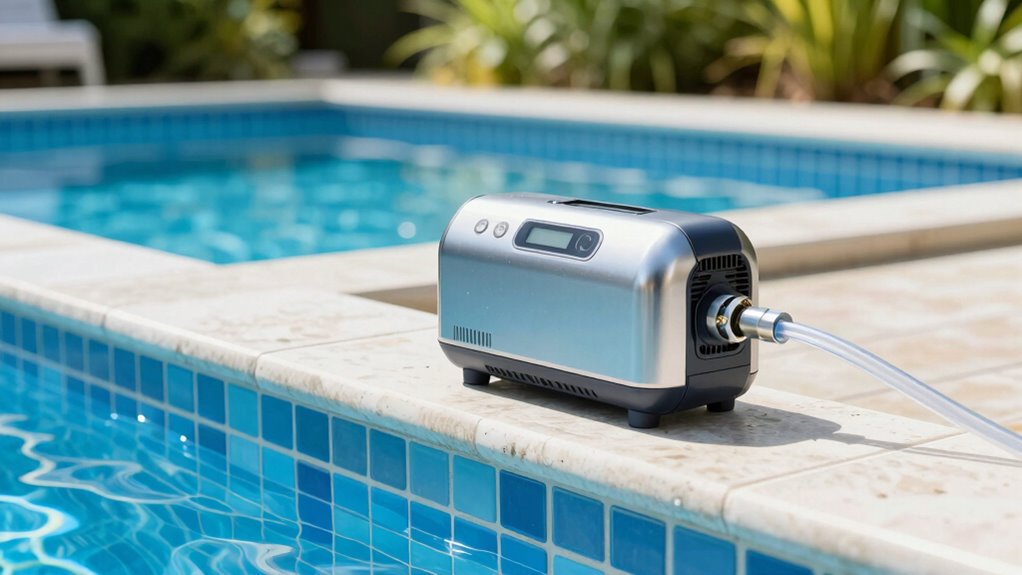
Several key factors influence the appropriate size of your saltwater chlorine generator, and evaluating these can help you select the right unit for your pool. First, your pool’s size and surface area impact the needed chlorine output to maintain proper chemical balance. Larger pools require more chlorine, meaning a bigger generator. Pool aesthetics also matter; if you prioritize clear, sparkling water, choosing a generator that produces enough chlorine to prevent algae and cloudy water is essential. Additionally, your chemical balance plays a role—if your water tends to be more sensitive or prone to imbalance, a larger generator can help maintain consistent sanitation. Keep in mind that an undersized unit may struggle to keep up, leading to maintenance issues and compromised aesthetics. Moreover, understanding the seasonal variations in pool usage and environment can influence the ideal generator size to ensure consistent sanitation year-round. Considering local climate factors can also affect the chlorine demand and appropriate generator size, especially in regions with extreme temperatures or high humidity. Being aware of climate conditions can help you select a generator that performs reliably regardless of seasonal changes. Additionally, factoring in use patterns and pool occupancy levels can assist in sizing a generator that meets your specific needs without over- or under-sizing.
Using Pool Volume and Turnover Rate to Size Your Generator
To size your saltwater chlorine generator accurately, you need to take into account your pool’s volume and how quickly you circulate and filter the water. Proper sizing guarantees effective sanitation and reduces the workload on your system. The turnover rate, or how many times your pool’s water is cycled daily, is vital for maintaining chemical balance and simplifying pool maintenance. A higher turnover rate means your generator must produce more chlorine to keep the water clean. Conversely, a lower rate might require a smaller generator. When selecting a unit, consider these factors:
- Pool volume in gallons or liters
- Desired daily turnover rate
- Pump flow rate
- Existing pool circulation system
- Chemical balancing needs for ideal water quality
Accurate sizing helps keep your pool safe, clear, and easy to maintain.
Should You Use a Small, Medium, or Large Saltwater Chlorine Generator?
Selecting the right size saltwater chlorine generator depends on your pool’s specific needs and usage. A small generator may suffice if your pool has low chlorine demand, providing adequate chlorine production without overdoing it. Medium-sized units suit average pools with moderate usage, ensuring consistent salt dosage and reliable chlorine levels. Large generators are ideal for high-traffic pools, delivering higher chlorine production to maintain proper sanitation. Choosing a generator that’s too small can lead to insufficient salt dosage and poor water quality, while oversized units might produce excess chlorine, causing irritation and unnecessary wear. Assess your pool’s size, bather load, and maintenance preferences, then select a generator that matches your chlorine production needs. Proper sizing ensures suitable saltwater system performance and water quality.
Common Mistakes When Sizing Your Saltwater Chlorine Generator and How to Avoid Them
One common mistake is overestimating the size of your generator, which can lead to wasted energy and costs. Ignoring your pool’s actual volume can result in inadequate sanitation or equipment strain. Additionally, neglecting water chemistry can cause performance issues and damage your system; understanding these factors helps you choose the right size and avoid costly errors.
Overestimating Generator Size
Many pool owners make the mistake of overestimating the size of their saltwater chlorine generator, thinking a larger unit will produce more sanitizer and keep the water crystal clear. However, an oversized generator can lead to issues like over-sanitizing, increased energy costs, and unnecessary wear. It may also cause the pool heater to work harder to balance the water chemistry, and running the system with a pool cover could worsen these problems. To avoid this, size your generator appropriately for your pool volume. Remember, more isn’t always better. Proper sizing ensures efficient operation, longer equipment lifespan, and manageable maintenance. Focus on your pool’s actual needs rather than assuming a bigger unit is the best choice.
- Excessive sanitizer production
- Higher energy bills
- Shortened equipment lifespan
- Difficulty maintaining water balance
- Unnecessary strain on pool heater
Ignoring Pool Volume
Ignoring your pool’s actual volume when sizing a saltwater chlorine generator is a common mistake that can lead to inadequate sanitation or unnecessary costs. If you underestimate your pool’s size, you won’t produce enough chlorine, resulting in cloudy water and algae growth. Overestimating, on the other hand, can waste energy and cause chemical imbalances. Always measure your pool’s volume accurately, considering factors like the shape and depth. Using a pool cover during off-season or periods of seasonal maintenance helps reduce water evaporation and chemical demand, but it doesn’t replace proper sizing. Correctly matching your generator to your pool’s volume guarantees reliable chlorine production and keeps your water balanced year-round. Taking these steps avoids problems and extends the lifespan of your equipment.
Neglecting Water Chemistry
Have you considered how water chemistry impacts the effectiveness of your saltwater chlorine generator? Neglecting proper water balance can compromise chemical stability, reducing chlorine production and potentially damaging equipment. When water isn’t balanced, pH, alkalinity, and calcium hardness become unstable, leading to corrosion or cloudy water. Ensuring correct water chemistry is key to maintaining ideal chlorine levels.
- Regularly test pH, alkalinity, and calcium hardness
- Adjust chemicals to keep water balanced
- Avoid shocking the pool without balancing water first
- Monitor for signs of water imbalance, like cloudiness or scaling
- Maintain proper filtration to support chemical stability
Focusing on water chemistry helps your generator operate efficiently, extending its lifespan and ensuring safe, clear water.
Step-by-Step: Matching Your Saltwater Pool to the Right Chlorine Generator
Choosing the right chlorine generator for your saltwater pool starts with understanding your pool’s size and salt levels. You need to match the generator’s capacity with your pool’s volume to ensure proper water chemistry and effective pool maintenance. To do this, measure your pool’s gallons and check your salt concentration.
Use this simple guide to match your pool to the right generator:
| Pool Size (Gallons) | Recommended Chlorine Generator (kW) |
|---|---|
| Up to 25,000 | 1.0 – 2.0 kW |
| 25,001 – 40,000 | 2.0 – 3.0 kW |
| 40,001 – 60,000 | 3.0 – 4.5 kW |
| Over 60,000 | 4.5+ kW |
Correct sizing guarantees easy maintenance, balanced water chemistry, and long-term pool health.
How to Adjust Your Generator Settings for Optimal Performance
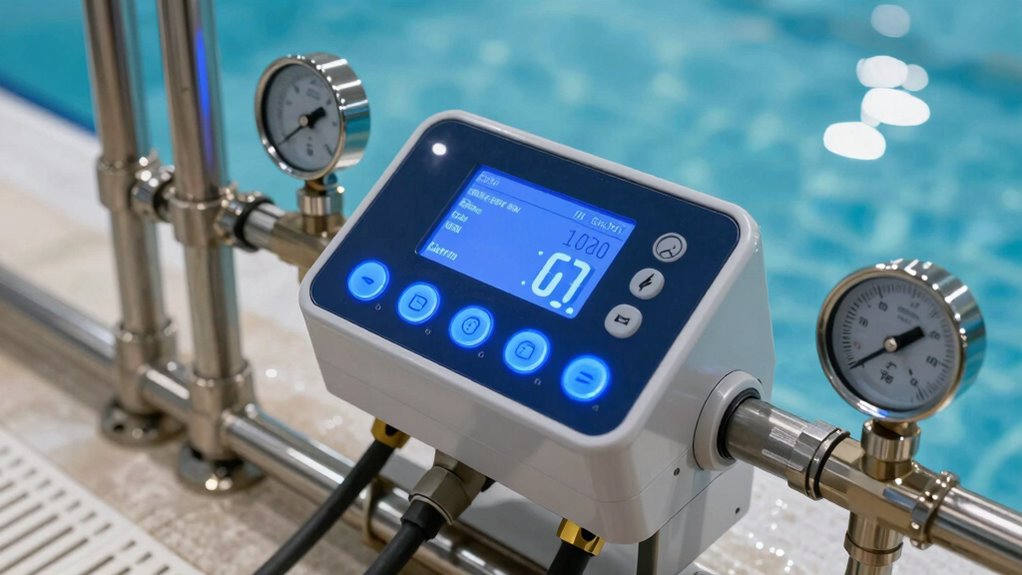
To guarantee your saltwater generator operates efficiently and produces the right amount of chlorine, it’s crucial to regularly adjust its settings based on your pool’s conditions. Monitoring your chlorine levels is key to maintaining proper pool maintenance and avoiding issues like algae or dull water. Start by testing chlorine levels weekly, then tweak the generator’s output accordingly. Increase the setting if chlorine levels are low or decrease if they’re too high. Keep an eye on the weather and usage, as these affect chlorine demand. Consistent adjustments ensure balanced water chemistry and efficient generator performance.
Regularly testing and adjusting your saltwater generator ensures balanced water chemistry and efficient chlorine production.
- Check chlorine levels regularly
- Adjust output based on test results
- Consider weather and usage changes
- Maintain proper salt levels
- Monitor for signs of over or under-chlorination
When to Upgrade or Replace Your Saltwater Chlorine Generator as Your Pool Changes

As your pool size changes or salt levels fluctuate, your generator may need an upgrade or replacement. If you’ve added more water or resized your pool, the current system might not keep up efficiently. Keep an eye on these signs to guarantee your saltwater system stays effective and safe.
Pool Size Adjustments
When your pool size changes substantially, it’s important to reassess your saltwater chlorine generator’s capacity. An undersized unit won’t maintain proper pool chemistry, leading to algae or cloudy water, while an oversized one may cause over-chlorination and unnecessary wear. Upgrading or replacing your generator guarantees ideal sanitation and reduces maintenance tips. Consider these indicators:
- Significant increase or decrease in pool volume
- Changes in pool shape affecting surface area
- More frequent water testing needed
- Elevated chlorine demand
- Signs of inconsistent chlorine levels
Adjusting your saltwater system helps keep your pool balanced and safe. Always match your generator’s capacity to your current pool size to ensure effective sanitation and minimize maintenance hassles. Regularly reassess as your pool evolves to maintain a sparkling, healthy swimming environment.
Salt Level Fluctuations
Salt level fluctuations can signal that it’s time to upgrade or replace your saltwater chlorine generator, especially if your pool’s salt content consistently drifts outside the ideal range. When the salt level drops too low, your generator struggles to produce enough chlorine, leading to cloudy water and imbalance. Conversely, high salt levels can cause corrosion and stress your equipment. Keep an eye on salt level fluctuations and regularly test your water to maintain proper pH balance. If you notice persistent changes, it’s a sign your current generator may no longer be effective as your pool evolves. Upgrading or replacing your system guarantees consistent chlorine production, helps stabilize pH balance, and keeps your pool water clear and safe.
Frequently Asked Questions
How Often Should I Inspect and Maintain My Saltwater Chlorine Generator?
You should inspect and maintain your saltwater chlorine generator at least once a month. Check the chlorine levels and salt concentration regularly to guarantee ideal performance. Keep an eye on the cell for scaling or buildup, and clean it as needed. Regular maintenance helps maintain proper chlorination, prevents equipment issues, and keeps your pool water safe and balanced. Don’t forget to test chlorine levels and salt concentration before each swimming season.
Can Multiple Generators Be Used for Larger Pools?
Yes, you can use multiple systems for larger pools. When your pool capacity exceeds what a single generator can handle, installing multiple systems guarantees proper sanitation. This approach distributes the chlorine production evenly, maintaining water quality efficiently. Just make sure each generator is correctly sized for your pool’s capacity, and coordinate their operation to prevent over-chlorination. Proper setup guarantees your large pool stays clean and well-maintained.
What Are Signs My Generator Is Underperforming?
You notice your generator isn’t producing enough chlorine, and that’s a clear sign it’s underperforming. Coincidences like cloudy water, algae growth, or low sanitizer levels often point to issues. To troubleshoot, check your salt level monitoring to guarantee proper salt levels, and inspect the generator for buildup or wear. Regular generator troubleshooting helps maintain efficiency, keeping your pool clean and safe without guesswork.
How Does Water Temperature Affect Generator Efficiency?
Water temperature markedly influences your generator efficiency. When water is warm, your chlorine generator functions more effectively because higher temperatures accelerate the electrolysis process. Conversely, cold water hampers the production of chlorine, decreasing efficiency. To keep your system running smoothly, monitor water temperature regularly and adjust your expectations or settings accordingly, especially during seasonal changes, to maintain ideal chlorine production and guarantee your saltwater pool stays sanitized.
Are There Safety Precautions When Installing or Servicing the System?
When installing or servicing your saltwater system, you should always follow safety precautions. Turn off the electrical wiring before starting any work, and use personal protective equipment like gloves and safety goggles to prevent injuries. Carefully read the manufacturer’s instructions, and avoid working on the system in wet conditions. These steps help guarantee your safety and prevent electrical hazards during installation or maintenance.
Conclusion
Getting your saltwater system just right isn’t a coincidence; it’s about understanding your pool’s needs and choosing the perfect generator size. When you match the right size, everything flows smoothly—from crystal-clear water to easy maintenance. Keep an eye on your pool’s changes over time, and you’ll find that ideal performance often comes down to paying attention and making small adjustments. With the right setup, your pool will stay inviting and hassle-free—almost as if it was meant to be.