
When you first use appliances, the “burn-in” smell comes from residues from manufacturing that burn off during initial operation. This smell is usually harmless and temporary, often fading within hours or days. Good ventilation helps disperse fumes faster and guarantees safety. While the odor is normal, persistent or strong smells might mean something’s wrong. Staying aware of precautions and proper startup practices can make your experience safer and more comfortable — explore further to learn more.
Key Takeaways
- Burn-in smells result from residual substances burning off during initial use, typically harmless and temporary.
- Proper ventilation during first operation helps dissipate odors and ensures safety.
- Persistent or strong odors may indicate incomplete residue burn-off or electrical issues.
- Following manufacturer guidelines reduces risks and speeds up odor dissipation.
- The smell usually disappears within hours or days, confirming it’s a normal part of appliance break-in.
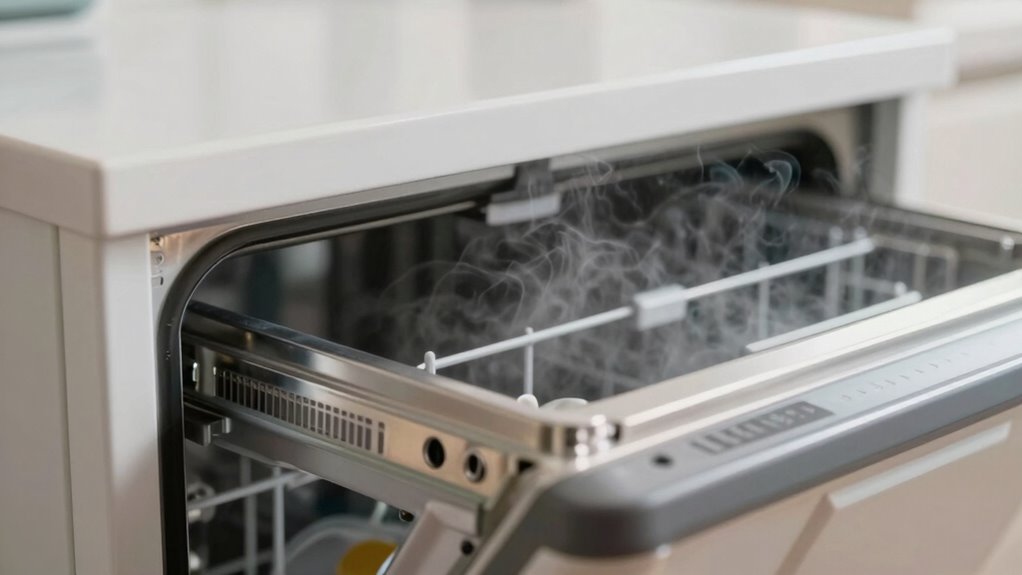
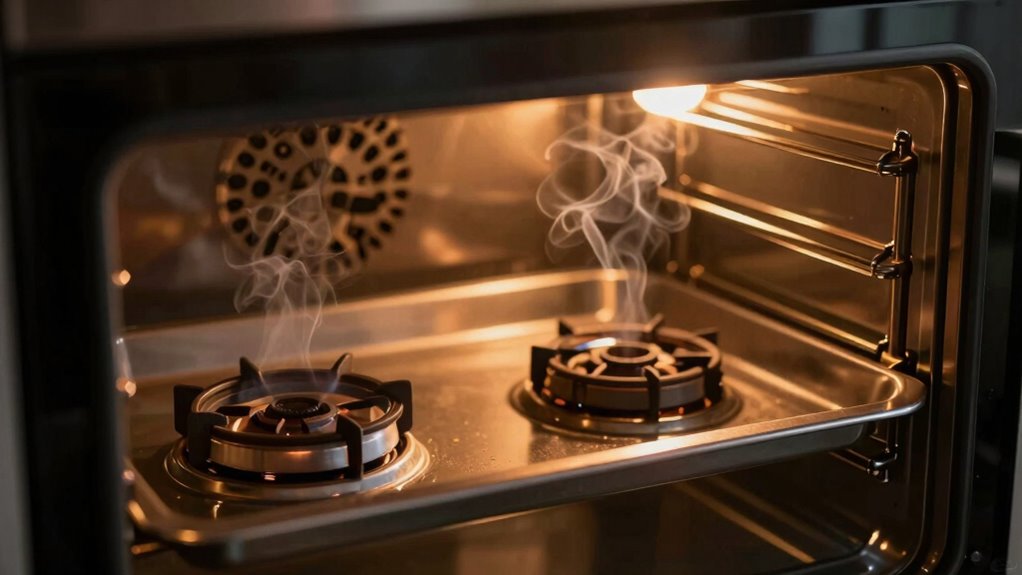
When you buy a new appliance, you might notice a strange smell during its initial use—that’s often called a “burn-in” smell. This odor is usually harmless and temporary, but understanding its origin can help ease your concerns. Manufacturing processes play a significant role in producing this smell. During assembly, appliances often undergo tests and quality checks that involve heating components or running them at certain temperatures. These steps are vital to assure electrical safety and proper operation before they reach your home. The heat causes residual substances from manufacturing to burn off, which is what generates the smell. Once these substances oxidize and dissipate, the odor typically disappears within a few hours or days of regular use. Additionally, this smell results from manufacturing residues, which are designed to burn off safely during initial operation.
It’s important to understand that this initial smell is generally not an indication of a defect or safety issue. However, it’s wise to be cautious about electrical safety. If you notice that the smell persists beyond a reasonable time, or if you observe any signs of smoke, sparks, or unusual heat, you should turn off the appliance immediately and consult a professional. Prolonged or intense odors might indicate that manufacturing residues weren’t completely burned off or that there’s an electrical fault. Ensuring proper ventilation during initial use can help disperse lingering fumes more effectively. Making sure that appliances are properly ventilated during their first few uses helps disperse any lingering fumes and reduces potential health risks. Proper ventilation can also prevent fume buildup, which might cause discomfort or health concerns. It’s also helpful to understand that some appliances are designed with ventilation features to facilitate the dissipation of these initial odors.
In addition, choosing appliances with good ventilation design can significantly reduce the duration and intensity of the burn-in smell. The key to handling this “burn-in” smell safely is patience and awareness. Keep the area well-ventilated, and avoid sealing the appliance in a confined space where fumes can accumulate. Also, follow the manufacturer’s instructions regarding initial operation and safety precautions. Manufacturers design appliances with safety standards in mind, and their processes aim to minimize any risks associated with residual manufacturing substances. That said, always prioritize electrical safety by inspecting cords, plugs, and vents for damage before use.
new appliance burn-in smell removal
As an affiliate, we earn on qualifying purchases.
As an affiliate, we earn on qualifying purchases.
Frequently Asked Questions
How Long Does the Initial “Burn-In” Smell Typically Last?
The initial “burn-in” smell usually lasts for about a few hours to a couple of days, depending on your appliance and ventilation. You’ll notice the odor duration decreases as the smell dissipates through proper airflow and cleaning. To speed up the smell dissipation, keep the appliance running in a well-ventilated space, and avoid sealing it tightly during this period. Usually, the smell should be gone within a few days.
Are Certain Appliances More Prone to Emitting Burn-In Smells?
About 60% of new appliances, especially those with plastic or rubber components, are more prone to emitting burn-in smells. You’ll notice that appliances like refrigerators and dishwashers tend to produce these odors more than others. To improve appliance longevity and manage odor mitigation, guarantee proper ventilation during initial use. Regular cleaning and airing out can also considerably reduce lingering smells, making your appliance more pleasant to use sooner.
Can Using the Appliance Immediately After Purchase Worsen the Smell?
Using your appliance immediately after purchase can worsen the smell if you don’t allow for proper odor mitigation. To minimize the odor, you should run the appliance with no products inside, ensuring good appliance ventilation. This helps burn off manufacturing residues and reduces the initial burn-in smell. Taking these steps can make your appliance more comfortable to use and prevent the smell from lingering or intensifying.
What Safety Precautions Should I Take During the Burn-In Period?
Think of the burn-in period as a cautious dance with a new appliance. Keep safety in mind by ventilating the area well—open windows, turn on fans, and use exhaust vents to chase away lingering odors. Avoid inhaling fumes directly, and don’t leave the appliance unattended during initial use. These ventilation tips help with odor mitigation and guarantee you stay safe while your new appliance settles into its rhythm.
Do Different Brands Have Varying Burn-In Smell Emissions?
Yes, different brands can have varying burn-in smell emissions. You might notice differences in odor intensity, with some appliances emitting stronger or milder smells initially. Brand variations in materials or manufacturing processes influence these emissions, so it’s common for one brand to smell more during the burn-in period than another. To minimize discomfort, make sure your space is well-ventilated and follow manufacturer guidelines for proper burn-in procedures.
As an affiliate, we earn on qualifying purchases.
Conclusion
So, don’t panic if your new appliance smells like a campfire’s ghost; it’s just the “burn-in” fading away. Think of it like a thunderstorm clearing the sky—unsettling but temporary. Ventilate well, run a cycle, and give it a little time. Before you know it, your appliance will be fresh, ready, and as inviting as a sunny day after a storm. Just patience and proper care will have it smelling like new in no time.
As an affiliate, we earn on qualifying purchases.
initial use safety precautions for appliances
As an affiliate, we earn on qualifying purchases.
As an affiliate, we earn on qualifying purchases.