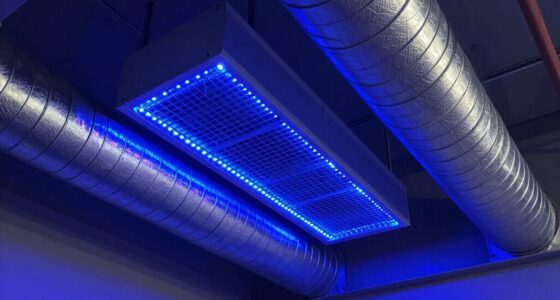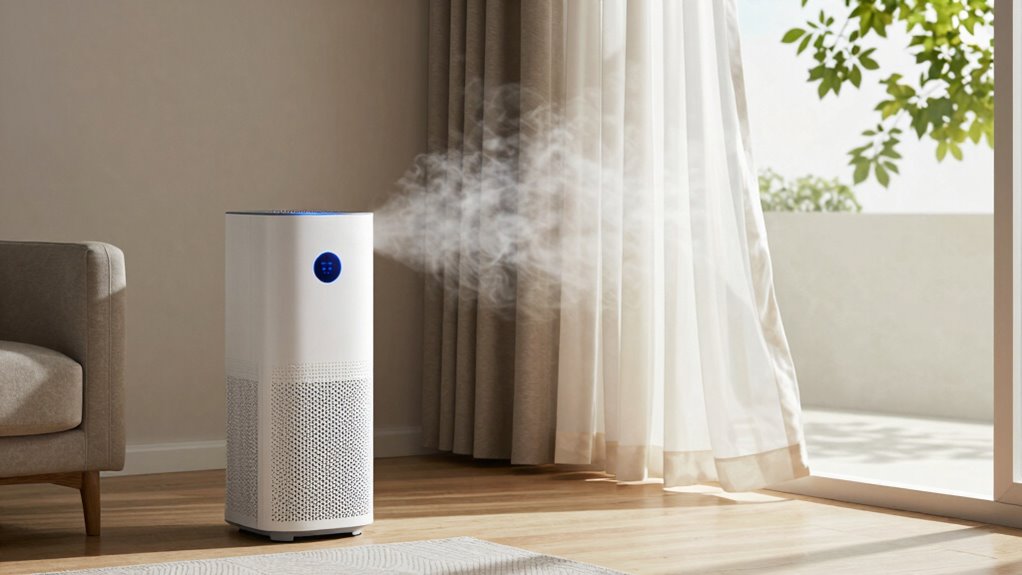

Air purifiers and ventilation systems both improve indoor air quality but serve different roles. Air purifiers target specific pollutants like dust, pet dander, and smoke, providing quick, localized cleaning. Ventilation systems, on the other hand, exchange indoor air with outdoor air to reduce overall pollutant levels and maintain fresh airflow. Understanding these differences can help you decide the best approach for your home—there’s more to discover if you want to optimize your air quality.

Get cleaning gear delivered free — and shop member deals
- Fast, free delivery on millions of items
- Access to Prime Big Deal Days deals on October 6–7
- Prime Video, Amazon Music and more included
Key Takeaways
- Air purifiers filter airborne particles indoors, while ventilation systems exchange indoor air with outdoor air.
- Purifiers target specific pollutants; ventilation reduces overall pollutant levels through continuous air exchange.
- Purifiers operate in localized areas; ventilation provides whole-house fresh air circulation.
- Air purifiers consume less energy; ventilation systems, especially whole-house models, use more energy.
- Combining both enhances indoor air quality by targeting pollutants and maintaining fresh air supply.
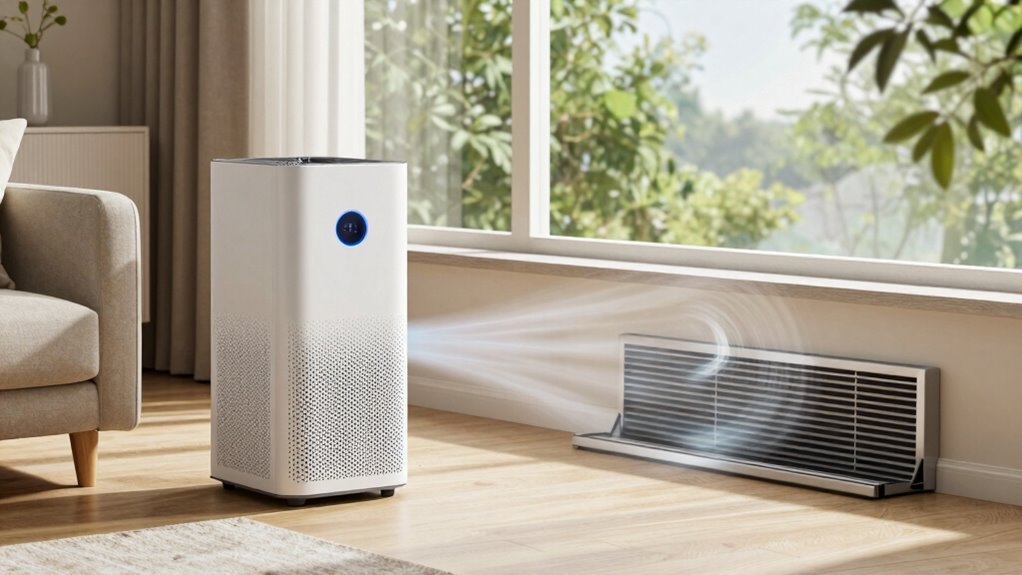
Have you ever wondered whether air purifiers or ventilation systems are more effective at improving indoor air quality? The answer depends on what you’re trying to achieve and how you use each option. Both play essential roles in creating a healthier indoor environment, but they do so in different ways. Air purifiers focus on filtering out airborne particles, allergens, and pollutants within a room. They’re especially useful if you’re dealing with specific issues like dust, pet dander, or smoke. Ventilation systems, on the other hand, work by exchanging indoor air with fresh outdoor air, reducing the concentration of pollutants and maintaining better airflow overall. When considering indoor air quality, it’s important to understand these differences so you can choose the right solution for your space. Incorporating ventilation strategies can significantly enhance indoor air quality by continuously replenishing stale indoor air with fresh outdoor air, complementing the filtration provided by purifiers. Additionally, understanding air exchange rates helps determine how effectively a ventilation system can improve air quality in different spaces. Properly managing airflow patterns is also crucial to ensure pollutants are effectively removed and fresh air is evenly distributed throughout your home. Energy efficiency is another key aspect. Air purifiers typically consume less energy because they operate in a single room or small area. They run continuously or on demand, filtering the air without greatly impacting your utility bills. Ventilation systems, especially whole-house models, tend to use more energy since they actively move large volumes of air and often require fans or ductwork. However, modern ventilation options like energy recovery ventilators (ERVs) are designed to optimize energy use by capturing heat from outgoing air to warm incoming fresh air, reducing overall energy consumption. When evaluating both options, you should consider not only how effective they are at improving indoor air quality but also how they fit into your home’s energy efficiency goals. If your primary concern is removing specific airborne pollutants, an air purifier is usually a quicker, more targeted solution. It can be easily placed in the room where you spend most of your time. But if your goal is to lower the concentration of indoor pollutants overall and maintain consistent air exchange, a ventilation system might be more effective in the long run. In many cases, combining both approaches offers the best results: use air purifiers for localized air cleaning and ventilation systems to maintain fresh, circulating air throughout the home. Ultimately, understanding the real difference between air purifiers and ventilation helps you make smarter decisions. You can prioritize indoor air quality improvements based on your specific needs and budget while considering how energy efficient each option is. Neither is inherently better—each has its role, and when used together, they can greatly enhance your indoor environment. Recognizing the different functions of these systems can help you tailor your approach to achieving optimal indoor air quality.
HEPA air purifier for dust and pet dander
As an affiliate, we earn on qualifying purchases.
As an affiliate, we earn on qualifying purchases.
Frequently Asked Questions
Can Air Purifiers Eliminate All Types of Indoor Pollutants?
Air purifiers can’t eliminate all indoor pollutants, but they considerably improve air quality by targeting airborne particles like dust, pollen, and pet dander. The device’s efficiency depends on its filter type and room size, so choosing the right one is essential for effective air quality enhancement. However, pollutants like gases, odors, and VOCs may require additional solutions like activated carbon filters or proper ventilation for thorough indoor air purification.
How Much Energy Do Ventilation Systems Consume Compared to Air Purifiers?
Ventilation systems generally consume more energy than air purifiers because they actively exchange indoor air with outside air, which requires running fans and motors continuously. When considering energy efficiency, air purifiers tend to be more cost-effective, using less power to filter pollutants. For a balanced approach, compare the energy consumption and costs of both systems to determine which best fits your indoor air quality needs and budget.
Are There Health Risks Associated With Using Air Purifiers or Ventilation?
You might think air purifiers and ventilation are harmless, but poor filtration efficiency can pose health risks. If filters aren’t effective, you could be inhaling pollutants that worsen allergies or respiratory issues. Some devices emit ozone or other chemicals that irritate your lungs. To protect your indoor air quality, choose high-quality purifiers and guarantee proper ventilation, so your home stays safe and breathable—like breathing pure mountain air every day.
Which Option Is Better for Allergy Sufferers, Purifiers or Ventilation?
For allergy sufferers, air purifiers generally provide better allergy relief by directly filtering out allergens like pollen, dust, and pet dander from indoor air. While ventilation improves overall air quality by bringing in fresh air, it may not eliminate allergens as effectively if outdoor air is polluted or allergen-rich. Combining both options offers the best allergy relief, but if you must choose, a high-quality air purifier is usually the superior choice.
How Do Maintenance Costs Compare Between Air Purifiers and Ventilation Systems?
You might think ventilation systems are pricier, but air purifiers often have higher ongoing costs due to filter lifespan and replacement costs. While ventilation systems require occasional maintenance like filter changes or duct cleaning, their costs tend to be predictable. With air purifiers, you’ll need to budget for frequent filter replacements, which can add up over time. Ultimately, consider both initial setup and long-term expenses to decide which fits your budget best.
whole house ventilation system with energy recovery
As an affiliate, we earn on qualifying purchases.
As an affiliate, we earn on qualifying purchases.
Conclusion
Understanding the difference between air purifiers and ventilation helps you make better choices for your indoor air quality. While air purifiers filter out pollutants, ventilation brings in fresh air from outside. Did you know that indoor air can be up to five times more polluted than outdoor air? By combining both, you create a healthier living space. So, assess your needs and invest wisely—your lungs will thank you!
portable air purifier for smoke removal
As an affiliate, we earn on qualifying purchases.
As an affiliate, we earn on qualifying purchases.
energy efficient ventilation fan
As an affiliate, we earn on qualifying purchases.
As an affiliate, we earn on qualifying purchases.
Fall Picks
fall essentials
As an affiliate, we earn on qualifying purchases.