
TL;DR
A homeowner’s comparison found kitchen foil less effective and more difficult to install than purpose-made radiator reflector panels. The test was informal, and its reported bill reduction cannot be attributed to the panels alone.
A homeowner’s test found that kitchen foil behind radiators did not reflect heat back into her room as effectively as purpose-made radiator reflector panels, raising questions about a popular low-cost winter tip. The comparison was informal and does not establish how much either option would save in other homes.

Get cleaning gear delivered free with Prime
- Fast, free delivery on millions of items
- Prime Video, Amazon Music and more included
- Member-only deals all year
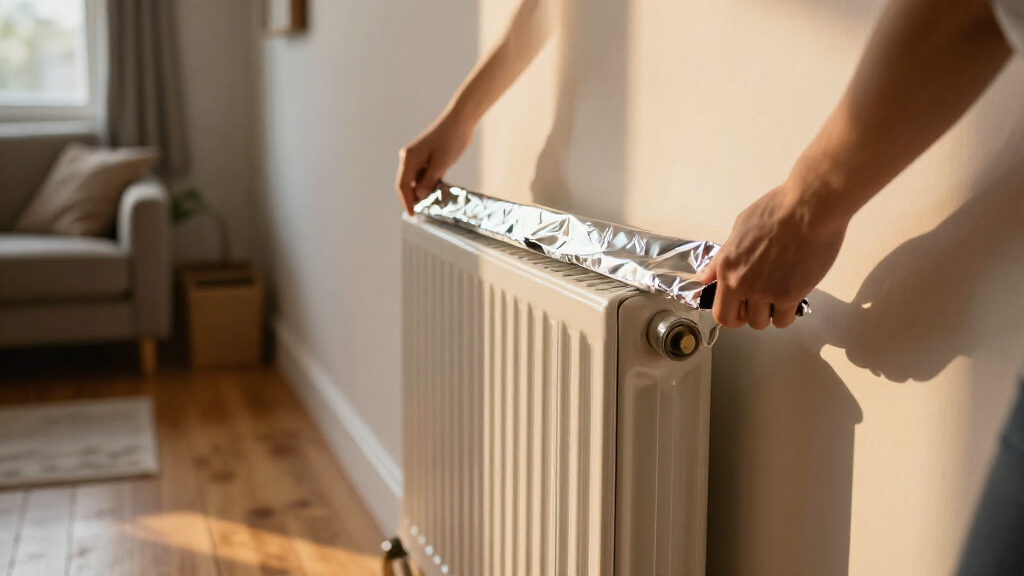
In the test, the homeowner placed kitchen foil behind radiators and compared it with reflector panels she had already used for four years. She reported that the foil became hot, while the wall behind it also felt warm. By contrast, she said the wall behind the reflector panels felt noticeably cooler. That observation suggested to her that the panels were keeping more heat from passing into the wall, but it was not a controlled measurement of heat loss.
The materials also differed in how easy they were to fit. The panels came in large, cuttable sheets and were rigid enough to slide behind radiators without tearing. The foil needed to be joined with tape to cover larger radiators and was damaged during fitting. The panels included plastic strips to help hold them in place; using tape to secure foil could, the homeowner noted, risk damaging a wall.
Kitchen foil was the cheaper purchase in her comparison: £7 for 20 metres, compared with nearly £40 for five reflector sheets. She said the sheets covered five radiators on external walls. The figures are specific to the products and quantities she bought and do not establish which option offers better value across homes of different sizes.
Can kitchen foil help?One home’s radiator test
A homeowner found purpose-made reflector panels easier to fit and more effective than kitchen foil. The informal comparison cannot predict savings in other homes.
What she observed
Her account suggests the panels kept more heat from passing into the wall.
- Wall behind it felt warm
- Needed tape to cover larger radiators
- Damaged during fitting
- Wall behind them felt cooler
- Rigid, cuttable sheets slid into place
- Plastic strips helped hold them
What the test cannot show
The comparison relied on touch and personal experience, not controlled measurements.
No measured result
It did not quantify how much heat either material reflected or stopped entering the wall.
Cause is unclear
Milder weather and other energy-saving changes may have contributed to the reported bill drop.
Results may differ
Radiators, walls, products, heating habits and energy prices vary.
Compare before you fit
Check the product against your radiators on external walls and your household’s needs.
Compare each product’s cost and coverage with the number and size of your radiators.
Check whether it can be secured and fitted without tearing or risking wall damage.
Review use over time alongside weather, thermostat settings and other changes.
What the Home Test Can Tell You
The comparison matters to households weighing a low-cost way to reduce heat loss as temperatures fall and energy bills are expected to rise in January. Foil may cost less upfront, but the homeowner’s experience suggests it can be harder to install and may not perform like a purpose-made reflector. The test offers a practical account, not a reliable estimate of typical energy savings.
The homeowner reported that her energy bills in the first month after installing reflector panels were 20% lower than in the same period the previous year. She also said she had kept her thermostat around 18–19°C over the following four years, 2–3°C below her former winter setting, while feeling just as cosy. Those are personal observations, not proof that the panels caused the bill change: milder weather and other energy-saving measures may also have contributed.
The article cites the Energy Saving Trust as estimating that lowering a thermostat by one degree, from 22°C to 21°C, could save about £120 a year on energy bills. That estimate is not a forecast for someone installing foil or reflector panels. Actual costs and results depend on the home, heating use, weather and energy prices.
Products Worth Considering

Dyson V8 Cordless Vacuum

Roborock F25 BX Cordless Wet/Dry Vacuum Cleaner

Roborock F25 GT Gen 2 Cordless Wet-Dry Vacuum Mop
As an affiliate, we earn on qualifying purchases.
Reflectors Compared With Foil
Radiator reflectors are intended to limit heat passing from a radiator into an external wall and reflect some of it back towards the room. The homeowner said the panels she used were thicker and more rigid than ordinary kitchen foil, which she compared to the difference between printer paper and card. Her handling and hair-dryer demonstrations were informal; they do not provide laboratory evidence of how much heat either material reflects.
The comparison appeared as households were looking for ways to stay warm while controlling costs. Other measures mentioned include draught-proofing doors and windows and closing curtains strategically. These are separate steps, and the test does not compare their effectiveness with radiator reflectors. Nor does it show that every reflector product will perform alike.
“The kitchen foil doesn’t work anywhere near as well as the radiator reflectors I have.”
— The homeowner who carried out the test
What the Comparison Cannot Prove
The test did not measure temperatures with instruments, track heat loss under controlled conditions or compare energy use while keeping other factors constant. It is not clear how much heat the foil or panels reflected, or whether the result would be similar with different radiators, wall construction, foil products or reflector brands.
The reported bill reduction also has no confirmed single cause. The homeowner identified milder weather and other energy-saving changes as possible factors, and the comparison does not provide the household’s energy use, tariff details or a full account of conditions in both years. The cited thermostat estimate likewise should not be treated as a guaranteed saving for any household.
Check Fit and Heating Costs
Households considering a reflector can compare the upfront cost and coverage of products with the number and size of radiators on external walls. The homeowner’s test suggests checking how a material can be secured and whether it is sturdy enough to fit without tearing. Results are best judged against a household’s own energy use over time, while accounting for weather, thermostat settings and any other changes.
No independent or controlled follow-up test is described, and no broader savings figure for kitchen foil is available from this comparison. The practical takeaway is limited: in one home, the purpose-made panels were easier to install and appeared more effective, while the cheaper foil did not show equivalent results.
Source: rss
Key Questions
Does kitchen foil behind a radiator keep a room warmer?
In one homeowner’s informal test, kitchen foil seemed less effective than purpose-made reflector panels: the wall behind the foil felt warm, while the wall behind the panels felt cooler. The test did not measure heat output or establish results for other homes.
Are radiator reflector panels more expensive than kitchen foil?
In the homeowner’s comparison, the foil cost £7 for 20 metres, while five reflector sheets cost nearly £40. Prices and the amount needed vary by product and radiator size.
Did the reflector panels cause a 20% fall in the homeowner’s energy bills?
That is not established. The homeowner reported a 20% lower bill in the first month compared with the same period a year earlier, but noted that milder weather and other energy-saving measures may also have played a part.
How can households judge whether a reflector is worthwhile?
Compare the product’s cost and coverage with the radiators on external walls, and consider how securely it can be fitted. Track energy use over time, while accounting for weather and changes in heating habits; one household’s test cannot predict a particular home’s savings.
Source: idealhome.co.uk