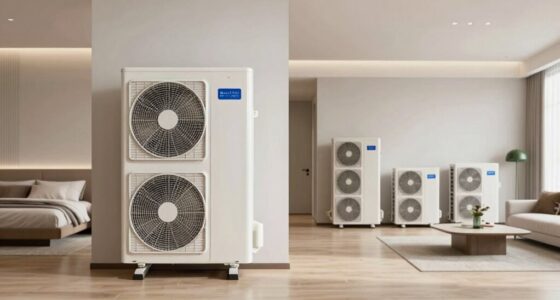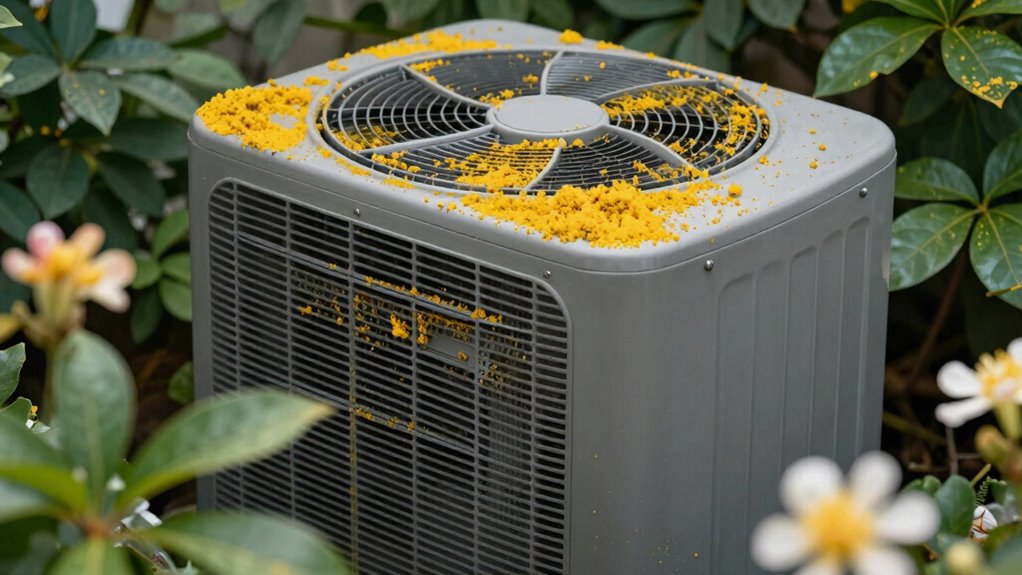
To keep your outdoor HVAC unit cleaner during pollen season, regularly clear away leaves, twigs, and debris around it, and use a garden hose or soft brush for gentle cleaning. Change or upgrade filters often to prevent clogging and maintain good airflow. Consider covering the unit during heavy pollen buildup or storms, but remove the cover afterward. For more tips on efficient maintenance and protecting your system, keep exploring ways to keep it in top shape.
Listen free for 30 days with Audible
Thousands of audiobooks and originals — cancel anytime.
As an affiliate, we earn on qualifying purchases.
Key Takeaways
- Regularly clear debris, leaves, and pollen from around the outdoor unit to prevent buildup.
- Cover the unit during heavy pollen or storms, removing covers promptly afterward.
- Schedule professional inspections before peak pollen seasons for coil cleaning and system checkups.
- Use protective filters and upgrade to higher-efficiency filters indoors to reduce pollen circulation.
- Keep the area around the unit free of dust, pollen, and debris with gentle cleaning tools like soft brushes and hoses.
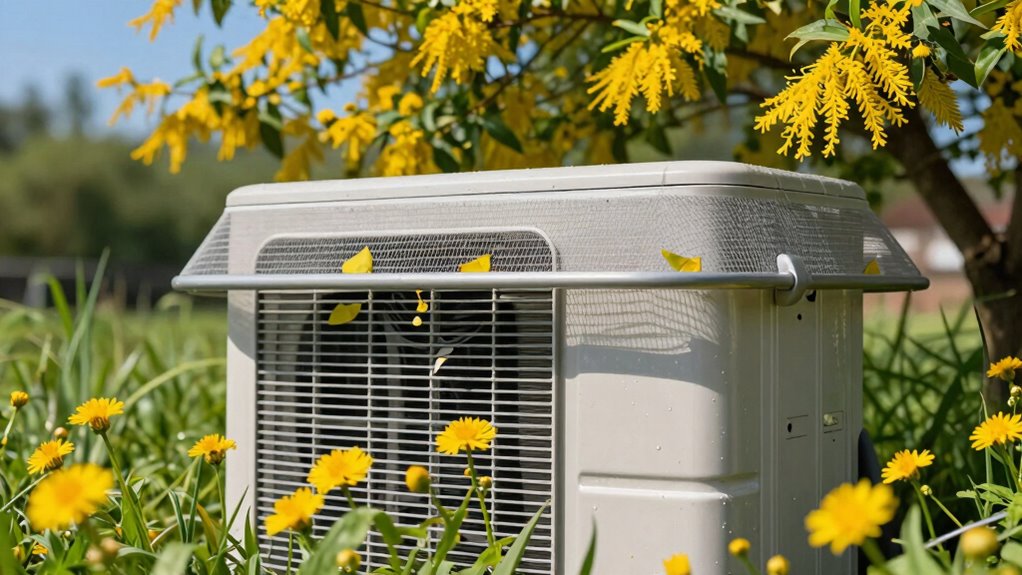
As pollen levels rise during the season, outdoor HVAC units are more vulnerable to clogging and dirt buildup. This increase in debris can considerably impact your system’s efficiency and, more importantly, your indoor air quality. When pollen and dirt accumulate on the unit, they restrict airflow, forcing the system to work harder and reducing its lifespan. To keep your outdoor unit functioning at its best and to guarantee cleaner air inside, you need to stay proactive with your maintenance routines.
Rising pollen levels can clog outdoor units, reducing efficiency and indoor air quality—stay proactive with regular maintenance.
The first step is to regularly inspect and clean the area around your outdoor HVAC unit. Clear away leaves, twigs, and any accumulated pollen that might settle nearby. Keeping a clean zone around the unit prevents debris from being drawn into the system and helps maintain proper airflow. Additionally, it’s essential to pay attention to the filters within your HVAC system. Regular filter maintenance is key during pollen season because clogged or dirty filters allow airborne particles, including pollen, to circulate indoors. Changing filters frequently ensures that your indoor air quality remains high and that your system isn’t overexerted trying to push air through contaminated filters.
You should also schedule professional inspections before pollen season peaks. Technicians can clean the coils, check for damage, and guarantee the unit operates efficiently. During these visits, ask about the condition of your filters and whether they need replacement sooner than usual. Upgrading to higher-efficiency filters designed to trap smaller particles can greatly improve indoor air quality during high pollen seasons. Additionally, understanding the importance of air filtration can help you choose the best solutions to keep pollen out of your indoor environment. Regular system maintenance can also help identify potential issues early, preventing costly repairs and ensuring optimal operation. Using proper cleaning tools, like soft brushes and garden hoses, can help maintain the coils and prevent pollen buildup without damaging sensitive components.
In addition, consider covering your outdoor unit if you expect extended periods of heavy pollen buildup or storms. A cover can prevent large debris from settling on the unit, but make sure to remove it when the weather clears so the system can breathe properly. Remember, keeping the coils clean by gently removing dirt and pollen buildup with a hose or brush can boost airflow and heat exchange efficiency. Maintaining a clean environment around your unit is crucial for optimal performance. Furthermore, using protective coverings during peak pollen times can provide extra protection and reduce the amount of debris reaching the unit. Regularly checking and replacing filters, especially during pollen season, is essential for maintaining good indoor air quality and system efficiency.
As an affiliate, we earn on qualifying purchases.
Frequently Asked Questions
How Often Should I Schedule Professional HVAC Inspections During Pollen Season?
You should schedule professional HVAC inspections every spring and fall, especially during pollen season, to keep your system running efficiently. During these visits, they’ll check air filter maintenance and duct sealing techniques to prevent pollen buildup and improve airflow. Regular inspections help identify issues early, ensuring your system stays clean and effective. Don’t wait until problems worsen—routine checks during pollen season maintain indoor air quality and prolong your HVAC’s lifespan.
Are There Eco-Friendly Ways to Reduce Pollen Buildup Around Outdoor Units?
You can effectively reduce pollen buildup using eco-friendly methods that surprise you. Natural deterrents like planting certain herbs or using organic barriers can help keep pollen at bay. Additionally, optimizing airflow around your outdoor unit prevents pollen accumulation. By combining these eco-conscious strategies, you’ll maintain cleaner units effortlessly, all while protecting the environment. Small, thoughtful changes make a significant difference—discover the power of natural solutions today.
Can Plant Placement Near the Unit Affect Pollen Accumulation?
Yes, plant placement can considerably affect pollen accumulation around your outdoor unit. If you plant pollen-heavy trees or flowering shrubs close to your HVAC unit, you’ll likely see more pollen buildup, which can clog filters and reduce efficiency. To minimize pollen accumulation, position plants away from the unit and choose low-pollen or non-flowering plants nearby. Regularly trimming and maintaining nearby vegetation also helps keep pollen levels in check.
What Specific Tools Are Best for Cleaning Outdoor HVAC Units?
Think of your cleaning tools as your allies in battle against pollen and dirt. Use sturdy brush tools to scrub away stubborn debris, ensuring all nooks and fins are clear. Complement this with a garden hose to rinse off pollen and dust without damaging sensitive components. Together, these tools efficiently maintain your outdoor HVAC unit, prolonging its lifespan and ensuring peak performance during pollen season.
How Do Weather Changes Impact Pollen Accumulation on HVAC Units?
Weather fluctuations markedly impact pollen adhesion on your outdoor HVAC units. During windy, dry days, pollen particles are easily carried and stick to the unit’s surfaces. Conversely, rain helps wash away pollen, reducing buildup. Sudden temperature changes can cause dust and pollen to settle more quickly. To keep your unit cleaner, monitor weather patterns and perform regular inspections, especially after windy or dry spells, to prevent excessive pollen accumulation.
As an affiliate, we earn on qualifying purchases.
Conclusion
During pollen season, keeping your outdoor HVAC unit clean is essential for efficient performance. Regularly removing debris and changing filters can reduce the risk of system breakdowns. Did you know that pollen and dirt buildup can decrease your AC’s efficiency by up to 20%? Stay proactive by scheduling routine maintenance and quick cleanings. This simple effort not only extends your unit’s lifespan but also keeps your indoor air quality high, ensuring comfort all season long.
As an affiliate, we earn on qualifying purchases.
garden hose for cleaning HVAC units
As an affiliate, we earn on qualifying purchases.
As an affiliate, we earn on qualifying purchases.
NFL season / tailgating Picks
team gear
As an affiliate, we earn on qualifying purchases.