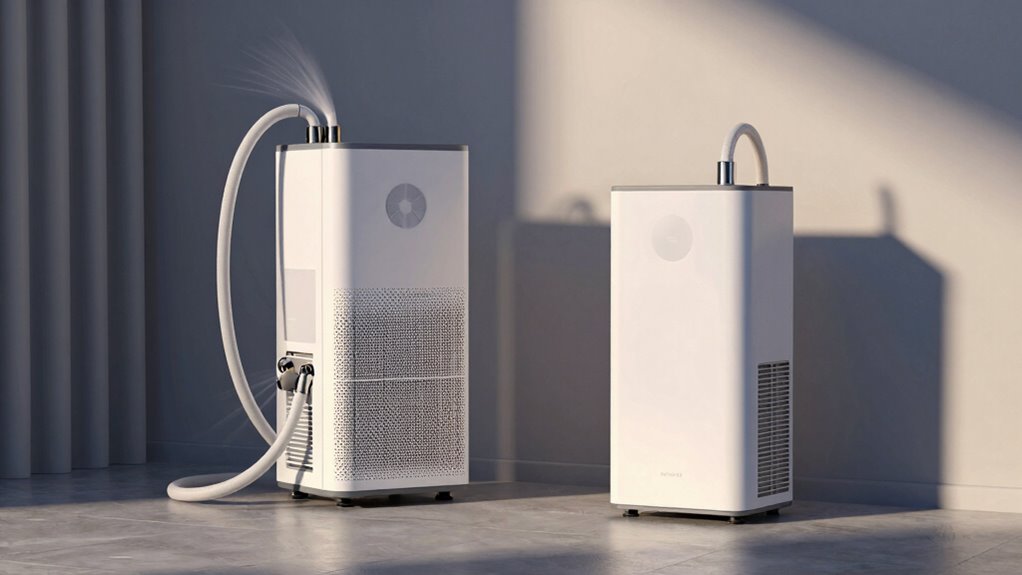
Dual hose portable ACs generally offer better efficiency and faster cooling because they draw in fresh air and vent hot air simultaneously, reducing hot air recirculation. Single hose units are less effective since they reuse already cooled air, slowing down the process and causing potential negative pressure. If you want to maximize cooling speed and energy savings, dual hose models are usually the better choice. Keep exploring to see which option fits your needs best.
Key Takeaways
- Dual hose portable ACs provide better airflow, faster cooling, and more efficient heat expulsion than single hose models.
- Single hose units may cause negative pressure, recirculating hot air and reducing cooling performance.
- Dual hoses generally operate more quietly and use less energy due to improved ventilation.
- Proper hose size, length, and installation are critical to prevent performance issues in either model.
- For larger rooms or faster cooling, dual hose ACs are typically more effective and energy-efficient.
How Do Dual Hose and Single Hose Portable ACs Differ in Design and Functionality?
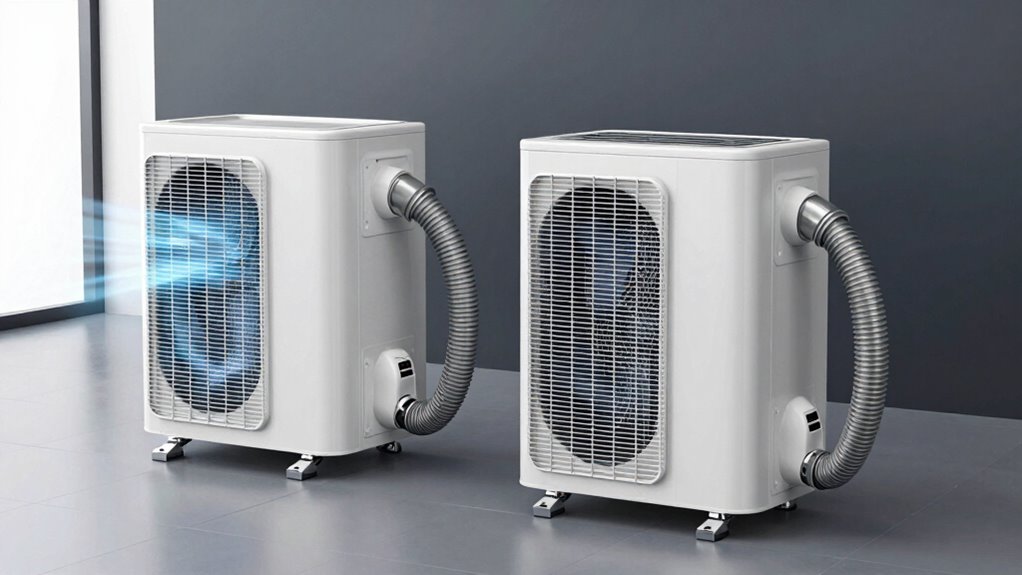
While both dual hose and single hose portable ACs are designed to cool individual rooms, they differ markedly in how they operate and their overall efficiency. Dual hose units use one hose for intake and another for exhaust, improving ventilation strategies by reducing pressure imbalances and allowing for better airflow. This setup typically results in more consistent cooling and less strain on the compressor. Additionally, ventilation strategy can significantly influence the overall efficiency and performance of the unit. Proper airflow management ensures optimal operation and energy use. Single hose models, however, rely on a single vent to both draw in air and expel hot air, which can cause negative pressure and reduce efficiency. Regarding noise levels, dual hose ACs tend to operate more quietly because they don’t have to work as hard to maintain proper ventilation. Overall, these design differences considerably impact performance, comfort, and noise during operation. Additionally, color accuracy in the system’s design can influence the efficiency and effectiveness of cooling, as well as the overall user experience. Moreover, air intake design plays a crucial role in determining how well the unit maintains consistent temperatures and energy efficiency. Furthermore, understanding energy efficiency ratings can help consumers select units that offer optimal performance with lower energy consumption.
Which Type Provides Better Cooling and Faster Results?
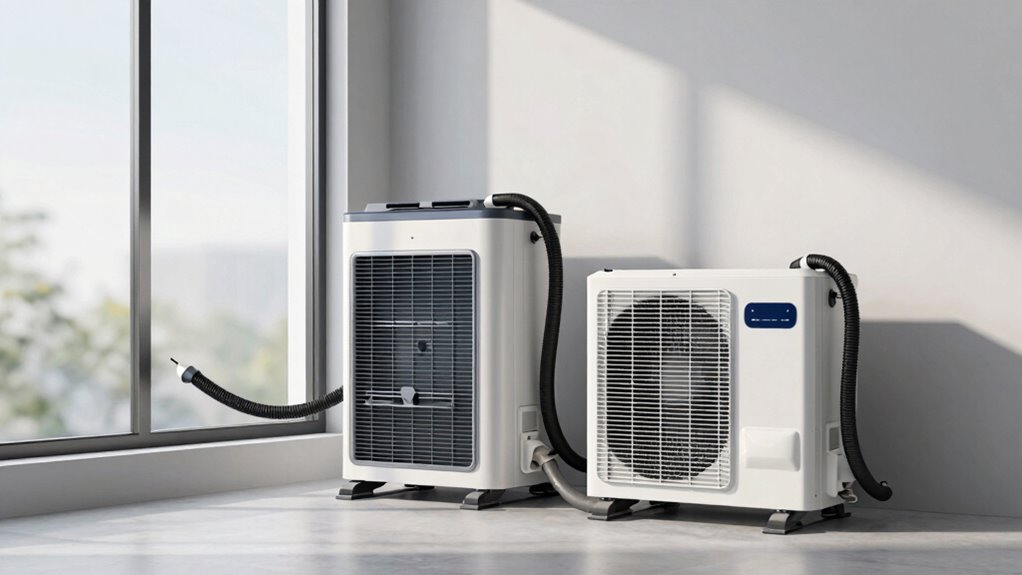
When it comes to cooling speed and effectiveness, dual hose portable ACs generally outperform single hose models. Their efficiency comparison shows they cool faster because they draw in fresh air and vent hot air simultaneously. To maximize cooling results, consider these points:
- Dual hoses provide better airflow, reducing internal temperature faster.
- They maintain more consistent cooling speeds over extended use.
- Single hose units often struggle with efficiency, leading to slower cooling.
- Dual hose models prevent hot air recirculation, boosting overall performance.
- Proper ventilation is crucial for maintaining optimal cooling efficiency and preventing hot air buildup. Additionally, airflow dynamics play a significant role in how quickly and effectively your portable AC cools your space. Ensuring proper exhaust setup can further improve cooling efficiency and prevent hot air from re-entering the room. Adequate ventilation techniques are essential to optimize the performance of your portable AC system. Recognizing the impact of thermal exchange can help in understanding how different hose configurations influence overall cooling effectiveness.
What Are Common Performance Problems With Dual and Single Hose Models?
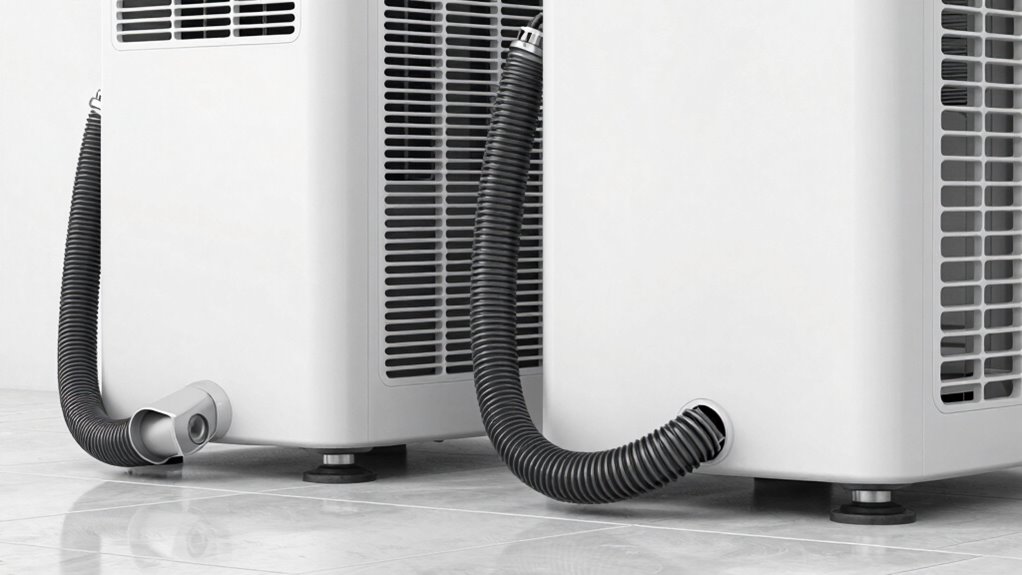
Both dual and single hose portable ACs can encounter performance issues that affect their cooling efficiency. Ventilation issues are common, especially if hoses aren’t compatible with your unit or if they’re too long or kinked, restricting airflow. Poor ventilation prevents hot air from escaping properly, reducing cooling performance. Hose compatibility problems can also lead to leaks or inadequate sealing, causing warm air to re-enter the space. Additionally, using the wrong size or type of hose can make the unit work harder, increasing energy use and decreasing effectiveness. Regularly checking that your hoses are securely connected, undamaged, and properly suited to your model can help prevent these issues. Ensuring proper hose installation and adherence to manufacturer guidelines can significantly improve performance. Addressing ventilation and hose compatibility problems ensures your portable AC runs smoothly and cools effectively.
How Do Energy Consumption and Operating Costs Compare?
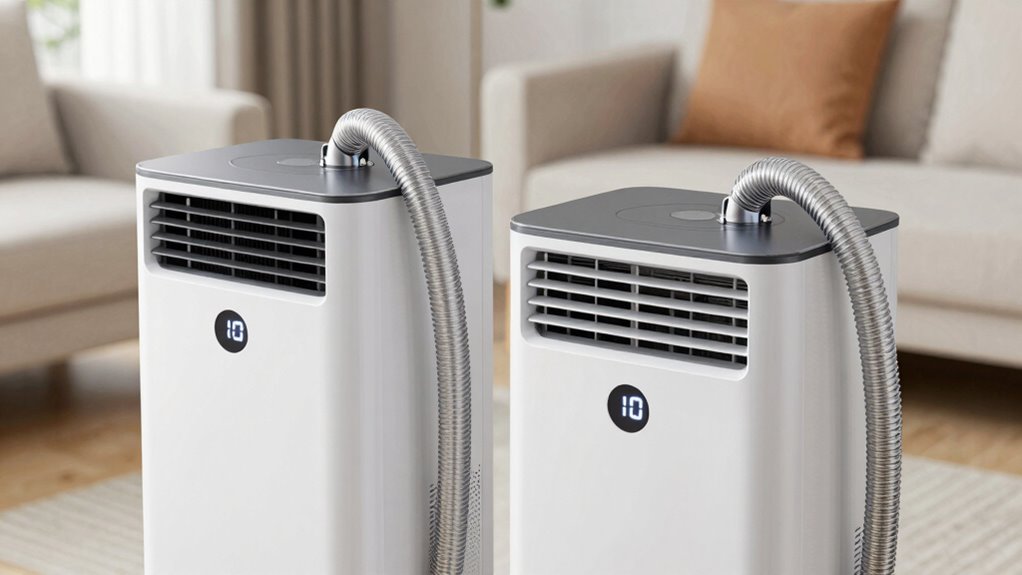
Understanding how energy consumption and operating costs compare between different portable AC models helps you make smarter choices. Generally, dual hose units tend to be more energy efficient than single hose models because they recycle air more effectively, reducing power draw. When doing a cost analysis, consider these factors:
Compare portable AC models’ energy efficiency and operating costs to choose the most cost-effective option.
- Energy efficiency ratings—higher ratings mean lower electricity use.
- Running hours—longer use increases costs regardless of model.
- Cooling capacity—oversized units consume more energy.
- Maintenance needs—clean filters improve efficiency and lower costs.
Which Portable AC Is Best for Different Room Sizes and Living Situations?
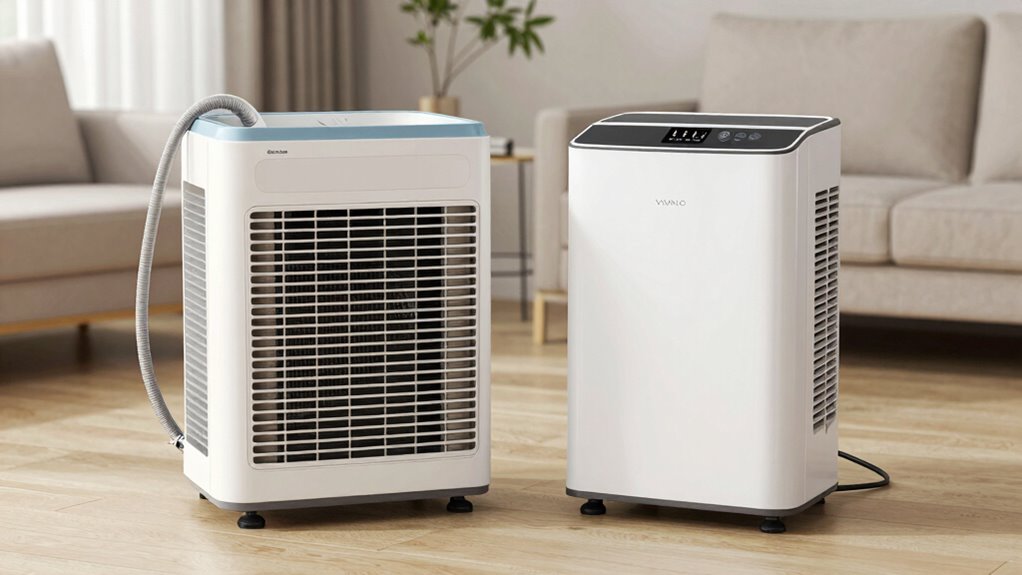
Choosing the right portable AC depends heavily on your room size and living situation. For small rooms or personal spaces, a compact unit with lower cooling capacity works well and is energy-efficient. If you have a larger room or open living areas, opt for a model with higher BTU ratings to guarantee effective cooling. Your living situation also matters—apartment dwellers might prefer quieter, portable units that won’t disturb neighbors, while homeowners with larger spaces may need more powerful options. Consider the layout and whether the AC will be the primary cooling source or supplemental. The right choice balances room size and your lifestyle needs, ensuring comfort without unnecessary energy use or noise. Picking the correct portable AC enhances efficiency and keeps your living space comfortable year-round.
Frequently Asked Questions
Are Dual Hose Units Quieter Than Single Hose Models?
Yes, dual hose units are generally quieter than single hose models. They tend to produce lower noise levels because they don’t have to work as hard to cool the space. You’ll notice that at the same fan speed, dual hose ACs operate more smoothly and quietly, making them ideal if you want less noise while maintaining comfort. Keep in mind, though, that actual noise levels can vary based on the specific model.
Can Portable ACS Be Used Effectively in Humid Climates?
Think of your portable AC as a reliable boat steering stormy waters. In humid climates, it can be effective if it’s equipped for humidity control and dehumidification. While portable units help reduce moisture, their effectiveness depends on size and features. Look for models with dehumidification functions to improve comfort, but remember, they might struggle against the heaviest humidity. Choose the right unit, and you’ll stay dry and cool.
How Often Should Filters Be Cleaned or Replaced?
You should clean or replace your portable AC filters every 1 to 3 months, depending on usage and environment. Regular cleaning extends the filter’s lifespan and maintains efficiency. Check the manufacturer’s guidelines for specific cleaning frequency, especially if you notice reduced airflow or increased humidity. In dusty or humid conditions, you might need to clean filters more often to guarantee ideal performance and air quality.
Do Dual Hose ACS Require More Maintenance?
Yes, dual hose ACs generally require more maintenance. They tend to have more components, so you need to check the filters more frequently to maintain ideal filter longevity. Regularly cleaning or replacing filters every few months keeps the unit working efficiently. Keep an eye on the hoses and vents for dirt or blockages, as these can affect performance and increase the need for maintenance over time.
Which Portable AC Type Is More Portable for Travel?
If you’re looking for the most portable portable AC, a single hose model is your best bet. They tend to be lighter—averaging around 50 pounds—making them easier to carry on trips. Their compact design also helps with weight considerations, fitting easily into car trunks or backpacks. With fewer components, single hose units are simpler to move and set up, perfect for travel needs.
Conclusion
Choosing between dual and single hose portable ACs depends on your cooling needs. Dual hoses often outperform single hoses, turning your space into a invigorating paradise faster than you can say “ice-cold breeze.” Consider your room size, budget, and energy costs to pick the perfect match. Remember, the right portable AC can transform your hot, stuffy room into a cool oasis, making summer feel like a gentle ocean breeze instead of a scorching desert.