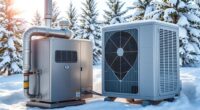
To maximize your heat-pump water heater’s efficiency, install it in a warm, well-ventilated space like a utility room or garage, avoiding cold or tightly sealed areas. Make certain it’s on a dedicated circuit and placed away from bedrooms to reduce noise disturbance. Proper placement and ventilation help the unit perform at its best and last longer. If you want to learn more about installation tips and ways to boost efficiency, keep exploring these essential details.
Key Takeaways
- Ensure the unit is installed in a well-ventilated, warm, and dry space like a utility room or garage.
- Maintain sufficient clearance around the heater for airflow, maintenance, and proper operation.
- Connect the water heater to a dedicated electrical circuit, preferably installed by a licensed electrician.
- Position the heater close to water fixtures to reduce heat loss and improve efficiency.
- Avoid cold or tightly sealed spaces; if in colder climates, consider models with backup heating options.
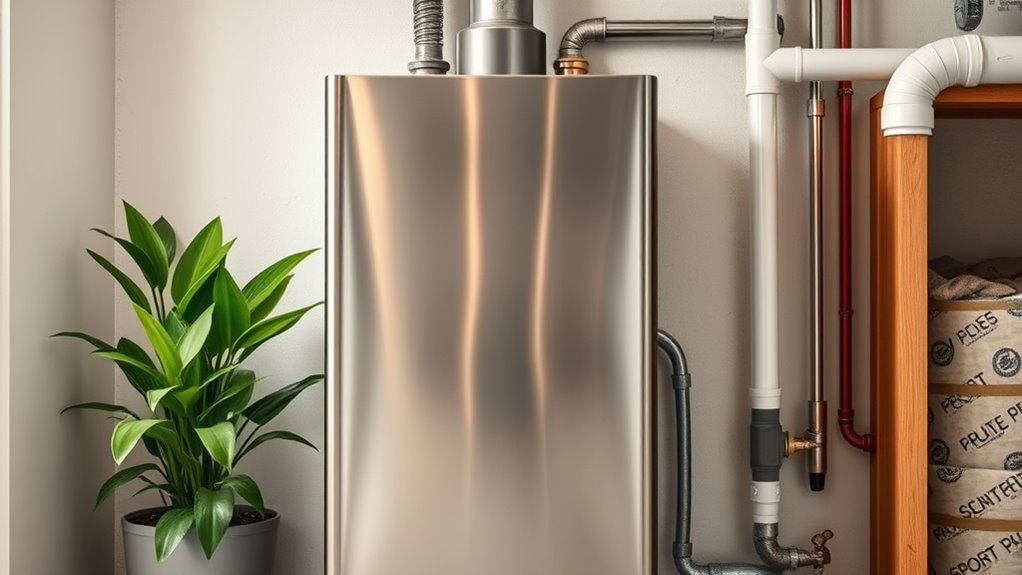
Have you ever wondered how heat-pump water heaters work? These innovative appliances use ambient air to heat water, making them highly energy-efficient compared to traditional electric or gas models. Instead of generating heat directly, they transfer heat from the surrounding air into the water tank, which can considerably reduce your energy consumption. When you consider switching to a heat-pump water heater, one of the first things to keep in mind is the potential for energy savings. Since they use less electricity to produce the same amount of hot water, you’ll notice lower utility bills over time. Plus, they tend to have a smaller carbon footprint, making them an eco-friendly choice. However, maximizing these benefits depends on proper installation considerations.
Heat-pump water heaters save energy and reduce bills by transferring ambient air heat to water.
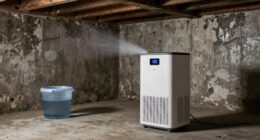
Placement is vital for peak performance. Heat-pump water heaters need a well-ventilated space, ideally somewhere warm and dry. If you put one in a cold or tightly sealed area, its efficiency drops because it has to work harder to extract heat from the air. An unconditioned garage, utility room, or basement with good airflow usually works well. You’ll also want to guarantee there’s enough clearance around the unit for proper airflow and maintenance. Keep in mind that these heaters can be noisier than conventional models, so placing them away from bedrooms or quiet zones is advisable.
Another important consideration is the ambient temperature. These units operate best in environments where the temperature stays above 40°F (4°C). If you live in a particularly cold climate, you might need to supplement your heat-pump water heater with a traditional backup or choose a model designed for colder conditions. Additionally, think about the proximity to your water usage points. Installing the heater close to your main water fixtures reduces heat loss in the pipes and improves overall efficiency. Proper installation practices can also significantly impact their performance and longevity.
Electrical setup also matters. Since heat-pump water heaters require a dedicated circuit, ensure your home’s electrical system can support the unit’s power needs. It’s wise to have a licensed electrician handle the installation to prevent any safety issues or code violations. Proper installation not only enhances energy savings but also prolongs the lifespan of the unit. Taking these considerations into account before purchasing and installing a heat-pump water heater will help you enjoy maximum efficiency, savings, and reliability for years to come.
Frequently Asked Questions
How Long Do Heat-Pump Water Heaters Typically Last?
A heat-pump water heater typically lasts around 10 to 15 years, but this lifetime expectancy can fluctuate based on usage, maintenance, and installation quality. To maximize its lifespan, you should perform regular maintenance and address issues promptly. Replacement factors include the unit’s age, efficiency decline, and increasing repair costs. Proper care and timely upgrades help ensure you get the most out of your investment, often extending its useful life.
Are Heat-Pump Water Heaters Suitable for Cold Climates?
Yes, heat-pump water heaters can work well in cold climates if you choose models with cold climate adaptations. Did you know some units operate efficiently down to -20°F? To guarantee peak performance, focus on insulation considerations around the unit to prevent heat loss. Proper installation and selecting a model designed for lower temperatures will help you enjoy energy savings and reliable hot water, even in chilly conditions.
What Are the Maintenance Requirements for Heat-Pump Water Heaters?
To maintain your heat-pump water heater, regularly clean the air filter to guarantee efficient operation and prevent dust buildup. Check for any leaks or unusual noises, which could indicate issues. Follow energy-saving tips by optimizing thermostat settings and scheduling maintenance checks annually. Troubleshooting common issues like reduced heating performance or strange sounds can help you catch problems early, saving energy and extending your heater’s lifespan.
Can Heat-Pump Water Heaters Be Installed Outdoors?
Yes, you can install heat-pump water heaters outdoors, but you need to guarantee proper weather protection. Outdoor installation requires a weatherproof enclosure to shield the unit from rain, snow, and extreme temperatures. Make sure the location has good airflow and is level. Regular maintenance is essential to keep it running efficiently. Always follow manufacturer guidelines for outdoor setups, and consider adding insulation or a cover for added protection.
How Do I Choose the Right Size for My Household?
You should choose a heat-pump water heater with a tank capacity that matches your household size. For small families or singles, a 40-gallon tank usually suffices, while larger families may need 50 gallons or more. Consider your daily water usage to avoid shortages or excess energy use. Assess your peak hot water demand and pick a size that guarantees everyone has enough hot water without waste.
Conclusion
Heat-pump water heaters offer impressive efficiency when installed correctly, saving you money and energy. While some might think they only work in warm climates, recent studies show they can perform well in colder areas with proper insulation and placement. By understanding the science behind their operation, you can optimize their performance and durability. Investing in a heat-pump water heater isn’t just eco-friendly—it’s a smart choice supported by ongoing research into their evolving technology.