
TL;DR
A flat piece of plywood placed over an outdoor air conditioner condenser can help keep snow and falling debris off without sealing in moisture. It does not protect the unit’s sides, and homeowners should remove it and clear the condenser before turning the system on.
A piece of plywood placed over an outdoor air conditioner condenser can help block snow and falling debris without enclosing the unit, according to seasonal home-maintenance guidance. The method may suit homes in snowy areas or units beneath trees and eaves, but it does not protect the side grilles, and the board must be removed before the system runs.

Get cleaning gear delivered free with Prime
- Fast, free delivery on millions of items
- Prime Video, Amazon Music and more included
- Member-only deals all year
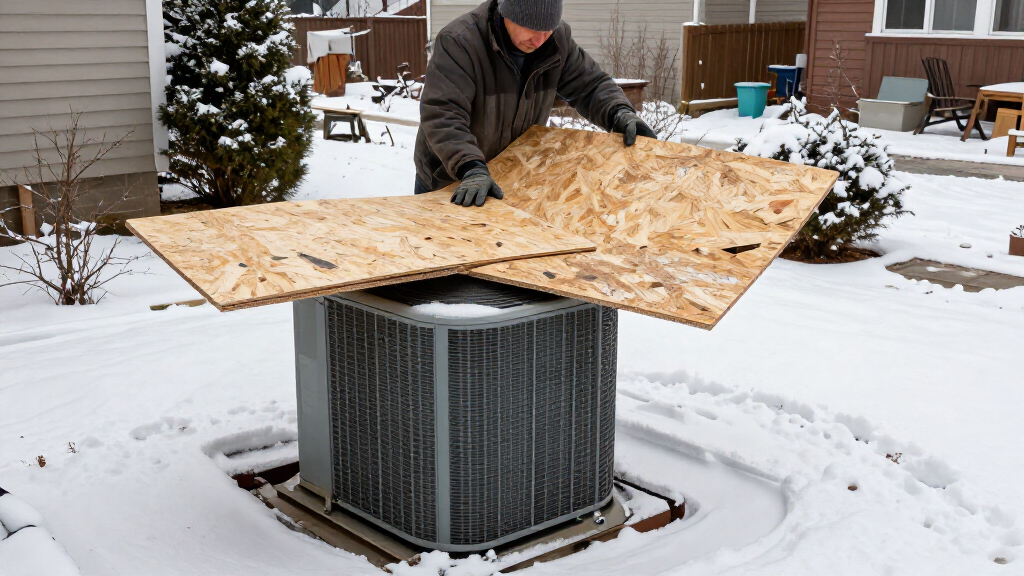
The suggested approach is to place a board large enough to cover the top of the entire condenser. If it could shift in wind or weather, it can be weighed down with a brick or secured with bungee cords. The board acts as a shield against snow falling onto the unit and hazards such as icicles and branches.
Plywood is not a full enclosure. The unit’s side grilles remain exposed, allowing snow, ice, leaves, pine needles and road salt to reach the housing or interior. The guidance says that when snow and ice melt, moisture may contribute to rust. Homeowners should inspect and clean the unit in spring, before operating it, and take the plywood off as part of that preparation.
The advice cautions against covering a condenser with a plastic tarp or another covering that restricts air circulation. Trapped winter moisture can contribute to rust and mold, while a covered unit may offer rodents and other animals shelter. A breathable cover made for the specific unit is described as a better option than plastic, but the guidance still identifies animal nesting and damage to wiring as possible concerns.
Shield your outdoor AC from snow and ice
A plywood board can block falling snow and debris from above while leaving the condenser sides open to air. It is a seasonal shield, not a full cover.
Where plywood helps
Consider it when snow, branches or icicles could fall onto the unit.
Block falling debris
A board over the top can help keep snow and debris off the condenser.
Limited coverage
Side grilles remain exposed, so snow, leaves, needles and road salt may still reach the unit.
Set it up carefully
Use a board large enough to cover the condenser top. Secure it if wind or weather could shift it.
Place plywood over the full top of the condenser.
If needed, weigh it with a brick or secure it with bungee cords.
Avoid trapping moisture
A sealed cover can restrict airflow and create a sheltered space for animals.
- Blocks some overhead hazards
- Leaves the sides open to air
- Can restrict airflow and retain moisture
- May contribute to rust or mold and shelter animals
Before spring operation
Restore ventilation and check the condenser before switching the system on.
- Remove the plywood before operating the system.
- Clear leaves, needles, salt and other debris from the unit.
- Check for visible damage or animal nesting; arrange service if wiring appears affected.
A Shield Without Sealing the Condenser
The recommendation addresses a common winter-maintenance tradeoff: keeping snow and debris off outdoor equipment without trapping moisture or creating an enclosed shelter. A board over the top offers limited protection, rather than weatherproofing the whole condenser. That distinction matters because the sides remain exposed and the board should not be treated as permission to leave the equipment unchecked.
For homeowners, the main practical benefit is a simple barrier against material falling from above, especially where a unit sits below a tree or roof eave. The approach may also reduce direct snow accumulation on top in places with heavy snowfall. But it does not eliminate the need to check for buildup around the unit, clean debris from the grilles, or follow the manufacturer’s maintenance instructions.
There is also a startup concern. An operating condenser needs appropriate ventilation, and leaving plywood on top when the system is switched on could obstruct it. Removing the board before use is a basic step in the spring cleanup, alongside checking for debris or signs of damage.
Products Worth Considering

Ring Alarm 5-Piece Home Security Kit

Ring Alarm 8-Piece Home Security System Kit

Dyson Cyclone V10 Origin Cordless Vacuum
As an affiliate, we earn on qualifying purchases.
Why Full Covers Can Cause Problems
Outdoor units on homes with central air conditioning or heat pumps are exposed to winter weather. A conventional air conditioner’s outdoor condenser may not run during the cold season, but it remains outside. The guidance says the equipment is sturdily built and that extra protection is not always necessary, particularly where winter snow is uncommon.
Wrapping the unit may seem more protective, but a plastic cover can limit airflow and retain moisture. The guidance warns that this combination may contribute to rust or mold. Even breathable covers can create a sheltered space that attracts mice, rats, squirrels, raccoons or opossums. Animals may leave nesting material and can chew wires or other components. Plywood over the top, by contrast, leaves the sides open to air while blocking some overhead hazards.
The recommendation is conditional, not a universal requirement: consider the board where snow, branches or icicles are a concern, and weigh that against the fact that the sides remain exposed. The guidance does not replace the equipment maker’s instructions, which may differ by model and installation.
Limits Depend on Weather and Placement
The guidance does not specify a plywood thickness, exact overhang, fastening method for every installation, or how much weight is appropriate. Those details can depend on the unit, local wind and snow conditions, and the placement of nearby structures. It also does not establish that plywood prevents rust: the sides remain exposed, and moisture may still reach the condenser.
There is no claim that every outdoor unit needs a winter shield, or that a board is suitable for every model. The guidance says protection may be unnecessary in areas with little winter snow. Homeowners should check their system’s manufacturer instructions or consult a qualified HVAC professional if they are unsure whether a cover or board is appropriate. The extent of any existing damage, animal activity or corrosion cannot be determined without inspecting the unit.
Remove the Board Before Operation
Before turning on the air conditioner in spring, remove the plywood and check the condenser for leaves, needles, salt and other debris, including material that may have entered through the side grilles. Look for visible damage or signs of animal nesting, and arrange service if wiring or other components appear affected. Do not start the system with the board still in place.
For the next winter, homeowners can decide whether to use the board based on snowfall, overhead trees or eaves, and the unit maker’s guidance. Keep any board stable without wrapping or sealing the condenser. The seasonal recommendation is to protect against overhead debris where useful, then restore full ventilation and clear the unit before operation.
Source: rss
Key Questions
Can I cover an outdoor AC unit with plywood?
A board placed over the top can help shield a condenser from falling snow and debris. It does not cover the sides, and it should be removed before the system is turned on.
Should I wrap the condenser in a tarp for winter?
The guidance cautions against plastic tarps because they can restrict airflow and retain moisture, which may contribute to rust and mold. A full cover may also offer animals a sheltered nesting place.
Does plywood protect the sides of the unit?
No. The side grilles remain exposed, so snow, ice, leaves, pine needles and road salt may still reach the unit. Check and clean the condenser before spring operation.
When should I remove the plywood?
Remove it before operating the air conditioner in spring. As part of the same preparation, clear debris from the unit and check for visible damage or signs of nesting.
Source: hunker.com