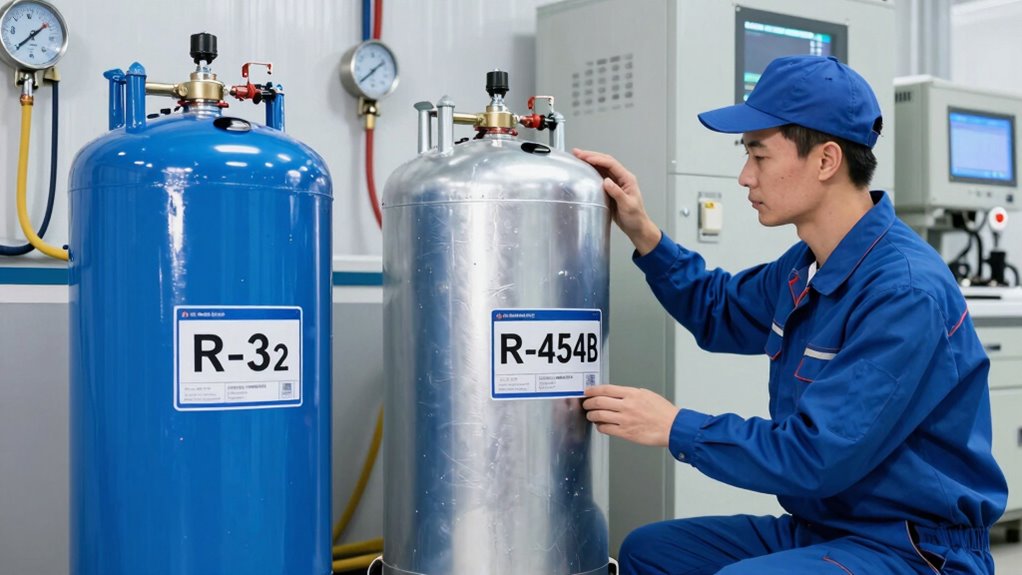

Choosing refrigerants like R-32 and R-454B indicates that your future HVAC decisions will prioritize sustainability and energy efficiency. These options have lower GWP, helping reduce environmental impact, and support regulations pushing for greener solutions. They enable systems to perform well while consuming less energy, which can save you money. As industry trends shift toward eco-friendly options, adopting these refrigerants positions you for a more sustainable and compliant HVAC setup—discover more about their benefits and impact.

Get cleaning gear delivered free with Prime
- Fast, free delivery on millions of items
- Prime Video, Amazon Music and more included
- Member-only deals all year
Key Takeaways
- R-32 and R-454B’s low GWP support regulatory compliance and reduce environmental impact in future HVAC systems.
- Their high energy efficiency encourages adoption of more sustainable, cost-effective cooling and heating solutions.
- Industry trends favor these refrigerants, driving innovation and safer handling technologies for widespread use.
- Future HVAC designs will increasingly prioritize eco-friendly refrigerants to meet climate goals and regulatory standards.
- Adoption of R-32 and R-454B enables long-term sustainability, reducing greenhouse emissions and promoting climate change mitigation.
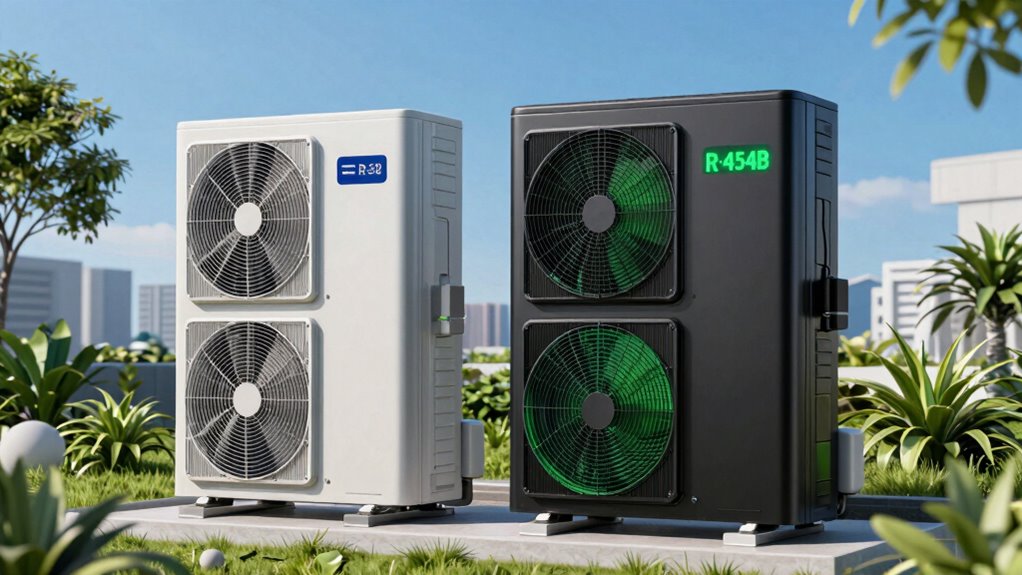
R-32, for example, is gaining popularity because of its lower global warming potential (GWP) compared to traditional refrigerants like R-410A. This means it contributes less to greenhouse gas emissions when used properly. Its higher energy efficiency also means your system consumes less power to deliver the same cooling or heating output, which can lead to lower utility bills and a smaller carbon footprint. R-32’s improved thermodynamic properties make it an attractive option for manufacturers aiming to create more sustainable HVAC solutions without sacrificing performance. Additionally, the adoption of R-32 is supported by regulatory trends, which are encouraging the transition to environmentally friendly refrigerants. These regulatory trends are also driven by increased awareness of climate change impact, emphasizing the importance of adopting greener technologies. As research continues to advance in refrigerant technology, the availability of these eco-friendly options is expected to expand further.
R-32 offers lower GWP and higher efficiency, reducing energy use and environmental impact without sacrificing performance.
Similarly, R-454B is emerging as a promising alternative, especially for systems seeking to balance performance with environmental responsibility. It has a notably lower GWP than R-410A, which means it’s gentler on the planet while still providing the reliable cooling capacity you expect. The refrigerant’s high efficiency translates into less energy consumption, which benefits both your electricity bill and the environment. When you choose systems that utilize R-454B, you’re supporting innovations that aim to reduce overall greenhouse gas emissions without compromising comfort. Moreover, ongoing technological advancements are making these refrigerants more accessible and easier to handle for technicians and consumers alike. These improvements also contribute to safer handling and installation procedures, encouraging wider adoption across the HVAC industry.
The adoption of R-32 and R-454B is more than just about meeting regulatory standards; it’s about aligning your HVAC choices with a broader effort to create sustainable buildings and communities. These refrigerants are part of a larger movement toward more environmentally responsible technology, emphasizing energy efficiency as a core principle. By selecting systems that incorporate these refrigerants, you’re investing in solutions that deliver the same or better comfort levels while actively reducing your environmental impact.
As regulations tighten and technology advances, it’s clear that future HVAC decisions will increasingly favor refrigerants like R-32 and R-454B. They enable you to enjoy efficient climate control while supporting global efforts to combat climate change. Making informed choices now ensures your system remains relevant, compliant, and environmentally friendly for years to come. Ultimately, these refrigerants represent a step forward in sustainable HVAC practices, helping you do your part in reducing energy consumption and greenhouse gas emissions without sacrificing comfort. Additionally, advancements in environmentally friendly refrigerants are shaping the future of HVAC technology, promising even more sustainable options ahead.
R-32 refrigerant for HVAC systems
As an affiliate, we earn on qualifying purchases.
As an affiliate, we earn on qualifying purchases.
Frequently Asked Questions
How Cost-Effective Are R-32 and R-454b Compared to Traditional Refrigerants?
R-32 and R-454B are more cost-effective than traditional refrigerants, thanks to their lower energy consumption and improved efficiency. You’ll see significant cost savings over time through reduced utility bills and maintenance expenses. As market adoption grows, prices for these refrigerants will likely decrease further, making them an even smarter investment. Overall, switching to R-32 and R-454B can be a financially sound choice for your HVAC system.
Are R-32 and R-454b Compatible With Existing HVAC Equipment?
R-32 and R-454B aren’t fully compatible with existing HVAC equipment without modifications. You need to take into account refrigerant mixing and system retrofitting to guarantee ideal performance. Some systems may require components like compressors or seals to be upgraded, while others might need precise adjustments. Always consult manufacturers’ guidelines and professionals to assess compatibility, because blindly using these refrigerants could lead to inefficiency or damage.
What Are the Safety Concerns Associated With R-32 and R-454b?
You should be aware that R-32 and R-454B pose safety concerns primarily due to their flammability. Strict safety protocols and handling procedures are essential to prevent leaks and accidents. Always wear proper protective gear, guarantee good ventilation, and follow manufacturer guidelines during installation and maintenance. Proper training minimizes risks, and maintaining equipment properly reduces potential hazards associated with these refrigerants.
How Do R-32 and R-454b Impact Environmental Regulations?
You notice that R-32 and R-454B, both with lower global warming potential, align well with evolving environmental regulations. Their adoption helps you meet stricter standards for environmental impact and regulatory compliance, reducing your carbon footprint. As regulations tighten globally, choosing these refrigerants positions your HVAC systems as eco-friendly solutions, ensuring you stay ahead of compliance requirements while minimizing environmental harm. It’s a smart move for sustainable operations.
What Training Is Required for Technicians Handling R-32 and R-454b?
You’ll need technician certification to handle R-32 and R-454B safely. This certification guarantees you understand proper handling protocols, including leak detection, recovery, and recycling procedures. Training covers the refrigerants’ properties, environmental impacts, and safety precautions. Staying current with these protocols helps you comply with regulations and protect yourself and the environment. Always seek approved training programs to maintain your certification and confidently work with these refrigerants.
As an affiliate, we earn on qualifying purchases.
Conclusion
As you stand at the crossroads of HVAC innovation, R-32 and R-454B are your guiding stars—bright symbols of a greener future. Choosing these refrigerants isn’t just about efficiency; it’s about planting seeds for a healthier planet. Embrace the change, and let these eco-friendly options lead you toward a horizon where comfort and sustainability walk hand in hand. Your decisions today shape the world of tomorrow—make them wisely.
energy efficient HVAC systems with R-32
As an affiliate, we earn on qualifying purchases.
As an affiliate, we earn on qualifying purchases.
low GWP refrigerant for air conditioning
As an affiliate, we earn on qualifying purchases.
As an affiliate, we earn on qualifying purchases.
Fall Picks
fall essentials
As an affiliate, we earn on qualifying purchases.