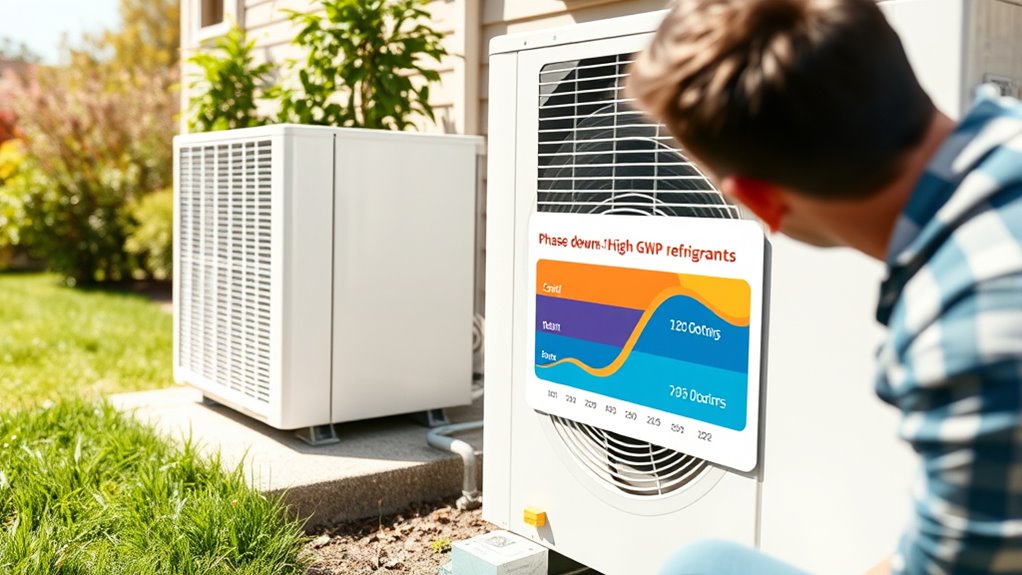

As a homeowner, understanding the phase-down of high-GWP refrigerants means knowing that many older cooling systems contain environmentally harmful gases that are being replaced with safer, more efficient options like HFOs, hydrocarbons, or CO₂. This shift can impact your current system, prompting upgrades or replacements to stay compliant and reduce your carbon footprint. Staying informed helps you make smarter choices when it’s time to update or maintain your cooling systems. Keep exploring to learn how this move can benefit your home.
Key Takeaways
- Transitioning away from high-GWP refrigerants reduces environmental impact and is supported by evolving regulations and policies.
- Homeowners should consider upgrading to appliances using eco-friendly refrigerants like HFOs, hydrocarbons, or CO₂.
- Consulting HVAC professionals ensures compliance and helps select energy-efficient, environmentally safe cooling systems.
- Replacing or maintaining older units minimizes leaks, emissions, and promotes sustainable cooling practices.
- Staying informed about refrigerant options enables responsible decisions that contribute to climate change mitigation.

As governments and industries work to reduce their environmental impact, the phase-down of high-GWP (global warming potential) refrigerants has become a crucial step in combating climate change. These refrigerants, used in air conditioning, refrigeration, and heat pumps, substantially contribute to greenhouse gas emissions when released into the atmosphere. To address this, policies are pushing for the adoption of refrigerant alternatives that are more eco-friendly, helping to lower the overall environmental impact of cooling systems. As a homeowner, understanding this shift is essential because it influences the types of systems available and how they operate in your home.
Reducing high-GWP refrigerants is key to fighting climate change and shaping eco-friendly cooling options for homeowners.
The shift away from high-GWP refrigerants means that manufacturers are developing and implementing new, environmentally safer options. These refrigerant alternatives typically have lower global warming potential and are designed to minimize their impact if accidentally released. Many of these new refrigerants are hydrofluoroolefins (HFOs), hydrocarbons, or other natural refrigerants like ammonia or carbon dioxide, which have proven to be more sustainable. By choosing appliances and systems that utilize these refrigerant alternatives, you’re actively reducing your carbon footprint. It’s not just about compliance; it’s about making responsible choices that contribute to a healthier planet.
This shift also influences the environmental impact of your existing cooling systems. If you have older units that use high-GWP refrigerants, you might consider upgrading or replacing them. Modern systems equipped with refrigerant alternatives are designed to be energy-efficient, which not only lowers your utility bills but also reduces overall emissions. Additionally, these newer systems are often more environmentally friendly in their manufacturing and disposal processes, further decreasing their environmental impact. While replacing equipment might seem costly upfront, the long-term benefits in energy savings and reduced environmental harm can outweigh those initial expenses.
Staying informed about refrigerant alternatives means you’re better equipped to ask the right questions when purchasing new appliances or scheduling repairs. It’s wise to consult HVAC professionals who prioritize eco-friendly refrigerants and ensure your systems are compliant with current regulations. These professionals can also help you understand the potential benefits of switching to more environmentally responsible options and guide you through maintenance practices that prevent leaks and emissions. Ultimately, your choices can help accelerate the phase-down of high-GWP refrigerants and promote a more sustainable future. Furthermore, understanding the types of refrigerants used can help you make environmentally conscious decisions aligned with Zodiac Sign Compatibility principles of harmony and balance in your lifestyle.
Frequently Asked Questions
How Will Refrigerant Phase-Down Affect My Current HVAC System?
The refrigerant phase-down might impact your current HVAC system if it uses high-GWP refrigerants. You may need refrigerant compatibility checks to see if your system can handle newer, environmentally friendly types. Sometimes, system modifications become necessary to guarantee peak performance and compliance. Talk to an HVAC professional to evaluate your system and explore options like retrofitting or replacing components to adapt smoothly to the changing regulations.
Are There Financial Incentives for Replacing High-Gwp Refrigerant Systems?
You can often score a win-win by replacing your high-GWP refrigerant system, as rebate programs and tax credits are available to help offset costs. These incentives are a great way to save money while upgrading to eco-friendlier options. Keep an eye out for local and federal offers, because they’re designed to make your shift smoother and more affordable. Don’t miss out on these financial perks—they could make the switch easier than you think.
What Are the Environmental Benefits of Switching to Low-Gwp Refrigerants?
By switching to low-GWP refrigerants, you help protect the ozone layer and reduce global warming. These refrigerants emit fewer greenhouse gases, which means less heat is trapped in the atmosphere, slowing climate change. Your choice supports a healthier environment, and over time, this can lead to improved air quality and a more sustainable future. Making the switch is a simple step that has a meaningful impact on our planet.
How Long Do I Have Before High-Gwp Refrigerants Are Phased Out Completely?
You have until around 2030 to phase out high-GWP refrigerants, based on current policy deadlines and refrigerant timeline expectations. Governments worldwide are enforcing stricter regulations, so it’s smart to start planning now. Moving forward early helps you avoid potential disruptions and future costs. Stay informed about local regulations and consider switching to environmentally friendly alternatives sooner rather than later to stay compliant and protect the environment.
Will Refrigerant Replacements Impact My System’s Energy Efficiency?
Refrigerant replacements can impact your system’s energy efficiency, especially if your current system isn’t compatible with new refrigerants. You might need system retrofitting to guarantee compatibility, which could improve efficiency and performance. It’s best to consult a professional to evaluate your system’s refrigerant compatibility and determine if retrofitting is necessary. Upgrading properly can help maintain energy efficiency and avoid future issues with refrigerant phase-outs.
Conclusion
Just like traversing a new path, understanding the refrigerant phase-down might seem daunting at first. But with knowledge and proactive steps, you can stay ahead of the changes. Keep your systems maintained, consider eco-friendly options, and work with trusted professionals. Remember, this shift is like turning a corner toward a greener future—smooth and promising if you’re prepared. Embrace the change, and you’ll help protect the environment while keeping your home comfortable.