Using variable-speed compressors and fans helps you save energy by adjusting their output to match real-time demand, which reduces waste and lowers utility bills. They give you greater control over your system, improving comfort and responsiveness to changing conditions. Plus, these systems run smoothly, minimizing wear and tear. This leads to longer equipment life and lower maintenance costs. If you want to discover how these benefits work together to optimize performance, keep exploring further.
Key Takeaways
- Enhance energy efficiency by adjusting output to match demand, reducing wasted energy and lowering utility costs.
- Increase operational flexibility to respond seamlessly to fluctuating load demands and environmental conditions.
- Reduce mechanical wear and tear through smooth, continuous operation, extending equipment lifespan and minimizing maintenance.
- Optimize system response to demand changes, ensuring consistent indoor comfort and efficient energy use.
- Benefit from advanced technology for improved reliability, longer service life, and sustainable performance.
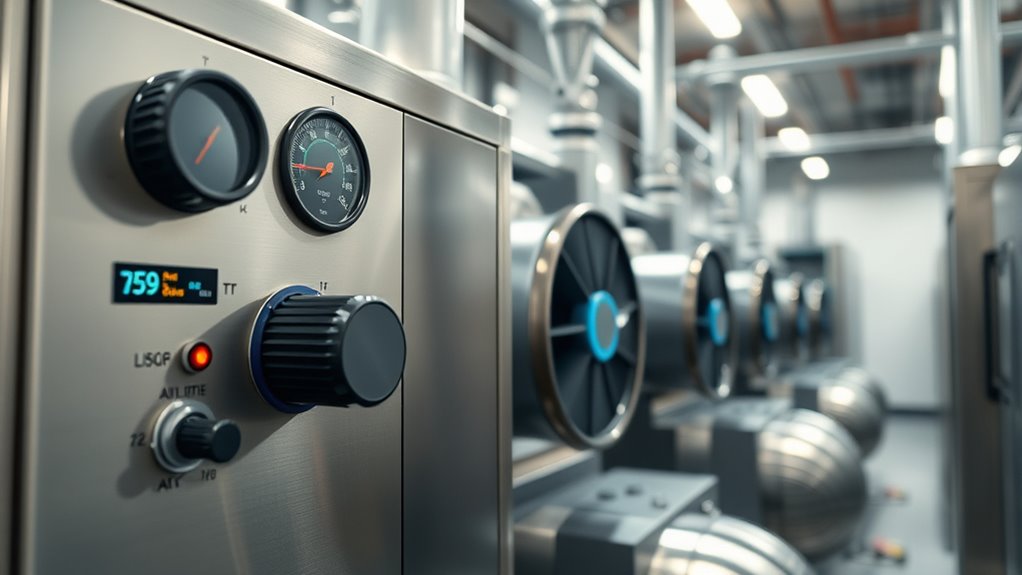
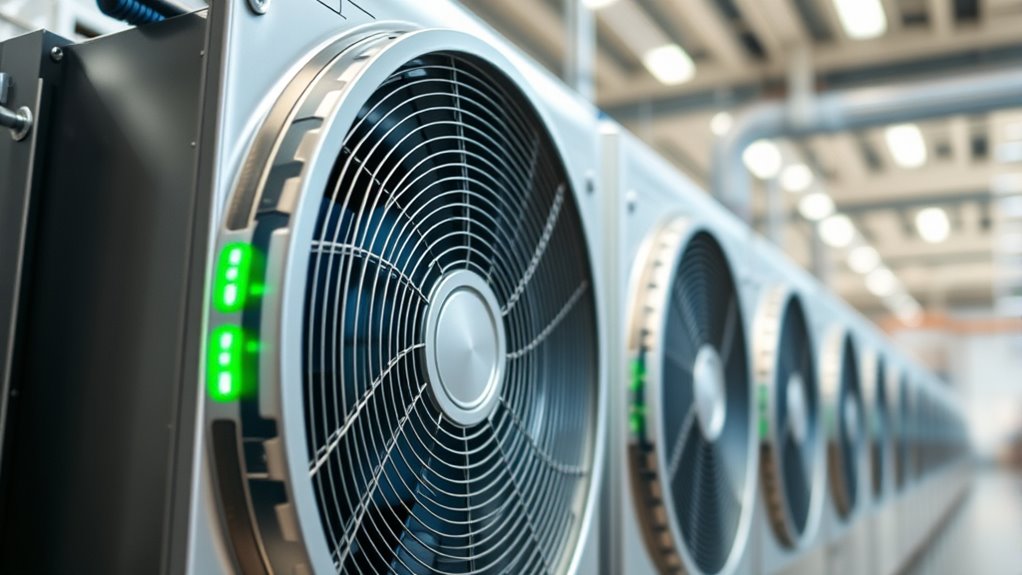
Variable-speed compressors and fans offer significant advantages by adjusting their output to match current demand, which leads to increased energy efficiency and cost savings. Instead of running at a constant speed regardless of need, these systems modulate their performance, ensuring they operate only as much as necessary. This means you can reduce wasted energy during periods of low demand, directly translating into lower utility bills. By fine-tuning their operation, they help optimize overall energy consumption, making your facility more environmentally friendly and cost-effective.
Variable-speed systems optimize energy use by matching output to demand, reducing costs and environmental impact.
One of the key benefits of variable-speed technology is operational flexibility. With traditional systems, you often face limitations because they only operate at full capacity or shut off completely. Variable-speed systems, however, adapt seamlessly to changing conditions. Whether you’re dealing with fluctuating load demands or variable environmental factors, these systems respond in real-time, maintaining consistent performance. This flexibility allows you to better control indoor conditions, improve comfort levels, and avoid the wear and tear associated with frequent cycling or abrupt operational changes.
You’ll find that the enhanced operational flexibility also simplifies system management. Unlike fixed-speed units that require complex, often inefficient staging, variable-speed compressors and fans provide smooth, continuous adjustments. This means fewer start-stop cycles, which reduces mechanical stress and extends equipment lifespan. Additionally, this adaptability enables your HVAC or process systems to better integrate with automation controls, further streamlining operations and improving overall system reliability.
Not only does this increased flexibility help with energy savings, but it also improves your ability to respond quickly to changing conditions. For instance, during peak hours, the system can ramp up to meet higher demand, while during off-peak times, it can slow down, conserving energy without sacrificing performance. This dynamic response capability ensures you’re getting the most out of your equipment, minimizing unnecessary energy expenditure and maximizing operational efficiency.
Furthermore, the combination of energy efficiency and operational flexibility means less maintenance and fewer costly repairs over time. Because variable-speed compressors and fans operate more smoothly and experience less stress, they tend to have longer service lives. This reduces long-term replacement costs and downtime, providing you with a more sustainable, reliable solution. Additionally, advancements in compressor technology have further enhanced the performance and durability of these systems. Overall, embracing variable-speed technology means you’re investing in a system that adapts, conserves energy, and enhances operational control, ultimately delivering better performance and savings in the long run.
Frequently Asked Questions
How Do Variable-Speed Systems Impact Overall Energy Costs?
Variable-speed systems considerably reduce your energy costs by adjusting their operation based on demand, leading to substantial energy savings. You’ll notice improved cost efficiency because these systems run only at the necessary capacity, avoiding energy waste associated with traditional on/off units. As a result, your utility bills decrease, and you benefit from consistent comfort levels. Overall, adopting variable-speed technology helps you save money while maintaining ideal performance.
What Maintenance Is Required for Variable-Speed Compressors and Fans?
You need to regularly check lubrication requirements to keep your variable-speed compressors and fans running smoothly. Make certain lubrication levels are adequate and use the recommended oil type. Additionally, you should replace filters periodically to prevent dust and debris from affecting performance. Regular maintenance, including inspecting belts and electrical connections, helps prolong equipment life and maintains efficiency. Staying on top of these tasks minimizes downtime and keeps energy costs optimized.
Are Variable-Speed Units Suitable for All Climate Conditions?
You might be surprised to learn that variable-speed units aren’t perfect for every climate. They excel in moderate conditions, offering great climate adaptability, but face technological limitations in extreme cold or heat. If you live in a region with harsh weather, these systems may struggle to maintain efficiency, making it important to evaluate your specific climate needs before choosing a variable-speed compressor or fan.
How Do Installation Costs Compare to Traditional Systems?
You’ll find that the initial installation cost for variable-speed compressors and fans is generally higher than traditional systems due to their advanced technology and more complex setup. However, this upfront investment often pays off over time through increased energy efficiency and lower operating costs. While the initial costs are higher, the long-term savings on energy bills and maintenance can make them a worthwhile choice for many, especially in energy-conscious environments.
What Is the Typical Lifespan of Variable-Speed Components?
You might think variable-speed components are a fleeting trend, but thanks to technological advancements, they typically last 10 to 15 years. Their component durability has improved markedly, making them more reliable than traditional options. While you may pay more upfront, their longer lifespan and efficiency make them a smart investment, proving that innovation truly pays off in the long run.
Conclusion
So, next time your energy bills sneak up on you, thank those fancy variable-speed compressors and fans. They’re the unsung heroes quietly slashing costs while you bask in the illusion of constant comfort. Who knew that a bit of tech wizardry could make your wallet happy and the planet greener? Embrace the future—after all, why settle for boring constant-speed when you can have this delightful, energy-saving magic? Cheers to smarter, sassier cooling!