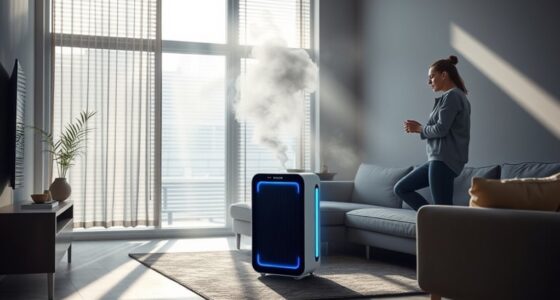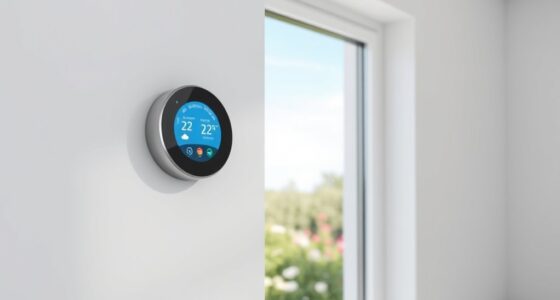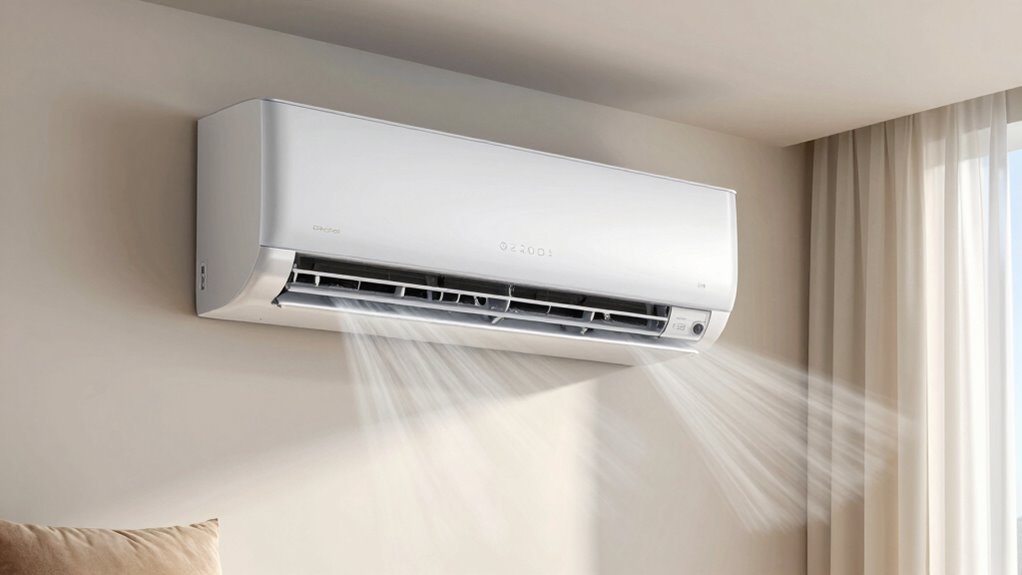
An inverter AC feels more comfortable because it continuously adjusts its compressor speed to maintain a steady temperature, preventing sudden fluctuations and hot or cold spots. It operates more quietly and smoothly, reducing vibrations and noise. Plus, it manages humidity and air quality better, making your indoor environment healthier. These features help you stay comfortable while saving energy. Want to discover more about how inverter technology creates such a cozy, efficient space?
Key Takeaways
- Inverter ACs adjust compressor speed for consistent temperature, preventing fluctuations that cause discomfort.
- They regulate humidity levels, maintaining a balanced and comfortable indoor environment.
- Continuous operation reduces noise and vibrations, making the cooling experience quieter and more peaceful.
- Precise temperature control avoids hot or cold spots, enhancing overall indoor comfort.
- Advanced air purification features improve air quality, contributing to a healthier, more comfortable space.
What Is an Inverter AC and How Is It Different From Traditional Units?
Have you ever wondered what makes inverter ACs different from traditional units? The key lies in their ability to provide better humidity control and air purification. Unlike standard ACs that turn on and off at full power, inverter models adjust their compressor speed continuously, maintaining a steady temperature and reducing humidity more effectively. This constant regulation helps keep the air fresh and comfortable, preventing dryness or excess moisture. Additionally, the variable speed compressor technology allows for quieter operation and increased energy efficiency. This combination of precise humidity control and air cleaning creates a healthier, more comfortable environment. Furthermore, the energy-saving capabilities of inverter ACs contribute significantly to reducing electricity bills while promoting eco-friendly operation. Many inverter ACs also incorporate advanced filtration systems that improve indoor air quality by removing dust, pollen, and other pollutants. Inverter ACs also often feature air purification systems that filter out pollutants, ensuring cleaner indoor air. So, with an inverter AC, you’re not just cooling; you’re enhancing overall air quality while enjoying consistent comfort.
How Do Inverter AC Compressors Adjust Speed to Cool Effectively?
Since inverter AC compressors can adjust their speed, they don’t need to turn on and off repeatedly like traditional units. Instead, they use compressor modulation to match the cooling demand precisely. When the room temperature rises, the compressor speeds up to provide more cooling, and when it reaches the desired temperature, it slows down. This continuous adjustment helps minimize temperature fluctuations, keeping your room consistently comfortable. By modulating the compressor’s speed, the inverter AC maintains a steady temperature without the abrupt cycling that causes hot and cold spots. This smart control not only enhances comfort but also reduces energy consumption. Efficient cooling results from this precise control, providing a more stable environment, with efficient cooling that adapts seamlessly to your needs.
How Inverter Technology Keeps Temperatures Stable and Consistent?
Inverter technology uses variable speed control to maintain a steady temperature without constant on-off cycling. This allows your AC to adjust its operation smoothly, providing continuous temperature regulation. As a result, you enjoy consistent comfort while saving energy. Additionally, humidity control tips can help optimize your indoor environment for better comfort and efficiency. Incorporating energy efficiency strategies can further enhance your system’s performance and reduce electricity costs over time. Understanding thermal comfort principles can also lead to better system adjustments and overall satisfaction. Recognizing the importance of energy consumption patterns can help you fine-tune your system for even greater savings and comfort.
Variable Speed Control
Variable speed control allows inverter air conditioners to adjust their compressor’s power output seamlessly, maintaining a stable temperature more efficiently. By fine-tuning the compressor’s speed, the AC responds instantly to changes in room conditions, preventing temperature fluctuations. This precise control not only enhances comfort levels but also reduces energy consumption since the compressor runs at only the necessary power. Instead of turning on and off repeatedly, the inverter keeps the compressor operating steadily, which minimizes energy waste. As a result, you enjoy consistent comfort without the spikes and dips typical of traditional units. This smooth operation leads to better energy savings over time, making inverter ACs more cost-effective and environmentally friendly while keeping your space perfectly comfortable. Additionally, variable speed control plays a key role in reducing noise levels, contributing to a quieter indoor environment. Understanding energy efficiency in inverter ACs helps consumers make more informed choices for sustainable living. Moreover, the ability to adjust compressor speed contributes to the overall durability and longevity of the unit, reducing maintenance costs. Furthermore, advanced inverter technology enhances overall system performance and reliability, ensuring long-term operation with minimal issues. Incorporating smart features can further optimize the system’s efficiency and user experience.
Continuous Temperature Regulation
Thanks to advanced inverter technology, your air conditioner can maintain a consistently comfortable temperature without frequent fluctuations. It adjusts its compressor speed smoothly, ensuring stable climate control. This continuous regulation helps prevent sudden temperature swings, making your environment more comfortable. Additionally, inverter ACs often feature humidity control, which keeps moisture levels balanced, reducing stuffiness and maintaining a fresh atmosphere. Some models also incorporate air purification systems, removing dust, allergens, and pollutants for cleaner indoor air. By constantly fine-tuning cooling output, inverter technology creates a steady, pleasant environment while supporting better air quality. Indoor air quality is also improved through features like dust filters and pollutant removal, contributing to a healthier living space. This combination of temperature stability, humidity management, and air purification enhances overall comfort, so you can enjoy a consistently cool and healthy space without the annoyance of fluctuating temperatures. Moreover, the energy efficiency of inverter ACs helps reduce electricity costs while maintaining optimal performance. The energy-saving capabilities further contribute to long-term cost savings and environmental benefits. Additionally, inverter systems often incorporate smart controls that optimize operation based on usage patterns, further improving energy conservation.
Energy-Efficient Operation
By continuously adjusting the compressor speed to match your cooling needs, inverter technology considerably reduces energy consumption. This efficiency means your AC uses less power, lowering your electricity bills and minimizing environmental impact. Here’s how it it works:
- The inverter adjusts the compressor’s speed dynamically, avoiding unnecessary energy use during partial load conditions.
- It maintains a consistent temperature without frequent cycling, reducing energy spikes.
- Less energy wasted translates to a smaller carbon footprint, benefiting the environment.
- Additionally, advanced inverter components contribute to quieter operation and longer-lasting performance.
This smart operation ensures your space stays comfortable without overusing electricity. By optimizing energy consumption, inverter ACs help you save money and contribute to a greener planet while providing stable, reliable cooling.
How Inverter ACs Reduce Noise and Vibration?
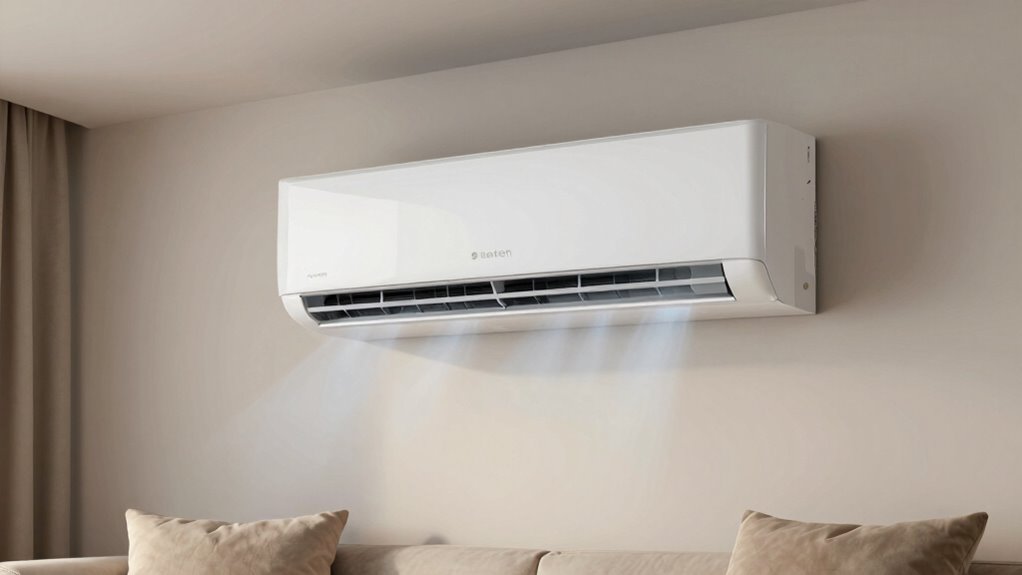
Inverter ACs are designed to operate more quietly and smoothly than traditional models, making them ideal for homes and offices where noise can be disruptive. Their advanced technology minimizes vibrations and noise by adjusting the compressor speed gradually, avoiding sudden starts and stops. This sophisticated mechanism ensures less mechanical stress and smoother operation, which directly reduces noise levels. You’ll notice a quieter environment, especially during night-time use. Additionally, the variable speed compressor contributes significantly to the quieter operation by continuously adjusting to cooling demands, further minimizing disturbances. The advanced compressor technology also plays a crucial role in reducing energy consumption while maintaining comfort. To help visualize, here’s a quick comparison:
| Feature | Traditional AC | Inverter AC | Benefits |
|---|---|---|---|
| Noise Level | Higher due to compressor on/off | Lower due to constant, smooth operation | Noise reduction, comfort |
| Vibration Control | Less effective | Enhanced with vibration dampers | Less vibration, durability |
| Compressor Speed | Fixed speed | Variable speed | Quieter, energy-efficient |
| Mechanical Stress | Higher | Lower | Longer lifespan |
| User Comfort | Less stable | More stable and quiet | More comfort, less disturbance |
Why Inverter ACs Save Energy and Lower Your Electricity Bills?
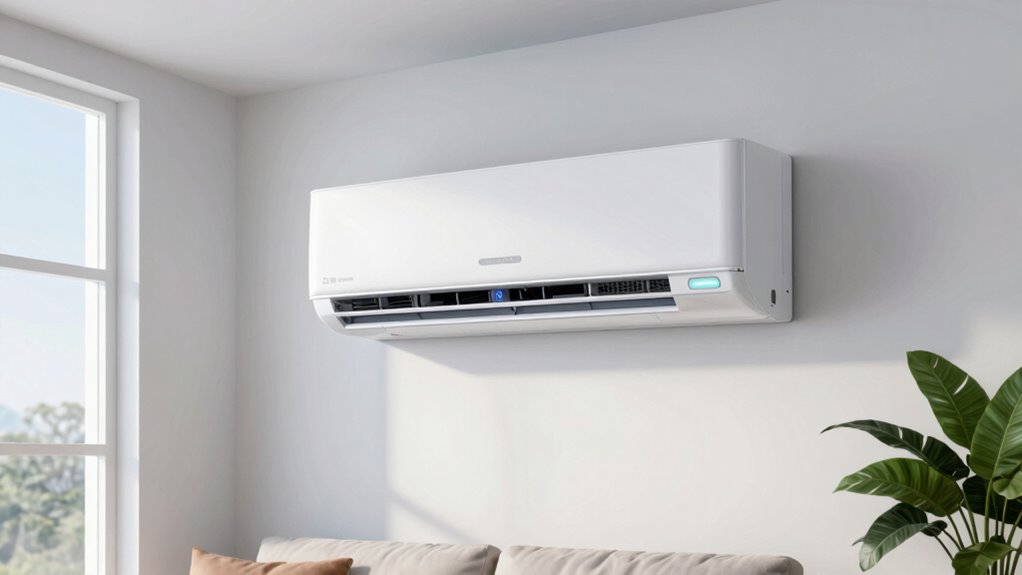
Inverter ACs use variable speed operation to match cooling demand, which helps prevent energy waste. This means they run more efficiently than traditional units, saving you money on electricity bills. Over time, these energy savings add up, making inverter ACs a smart investment.
Variable Speed Operation
Since traditional air conditioners turn on and off to regulate temperature, they often waste energy through frequent starts and stops, causing temperature fluctuations and inconsistent humidity control. Inverter ACs use variable speed operation, meaning the compressor adjusts its speed based on your room’s needs. This results in smoother temperature regulation and more stable humidity. Here are three ways it benefits you:
- Maintains a consistent temperature, reducing fluctuations.
- Uses less energy by avoiding constant startups.
- Provides better humidity control, making the room more comfortable.
Reduced Energy Waste
Because the compressor in an inverter AC adjusts its speed based on cooling demand, it consumes less energy than traditional units that frequently turn on and off. This continuous regulation minimizes energy waste, leading to significant savings on your electricity bills. Inverter ACs embody energy conservation and eco-friendly technology, reducing your carbon footprint while keeping your space comfortable. By maintaining a stable temperature without constant cycling, they operate more efficiently.
| Feature | Benefit |
|---|---|
| Variable speed compressor | Lowers energy consumption |
| Constant temperature | Reduces energy waste |
| Eco friendly technology | Protects the environment |
| Less frequent on/off cycles | Saves electricity |
| Cost-effective operation | Lowers utility bills |
Long-Term Cost Savings
Investing in an inverter AC can lead to significant long-term savings on your energy bills. Its energy-efficient design reduces power consumption over time, making it a smart financial choice. When doing a cost analysis, you’ll notice lower electricity costs compared to traditional units. Keep in mind, maintenance costs are also minimized because inverter ACs have fewer parts that wear out quickly. Here are three ways they save you money:
- Reduced energy consumption during operation
- Faster cooling with less energy waste
- Lower maintenance expenses due to durable parts
Over the years, these savings add up, making the initial investment worthwhile. The combination of lower energy bills and reduced upkeep makes inverter ACs a cost-effective choice for long-term comfort.
Are Inverter ACs Worth the Investment? Factors to Consider?
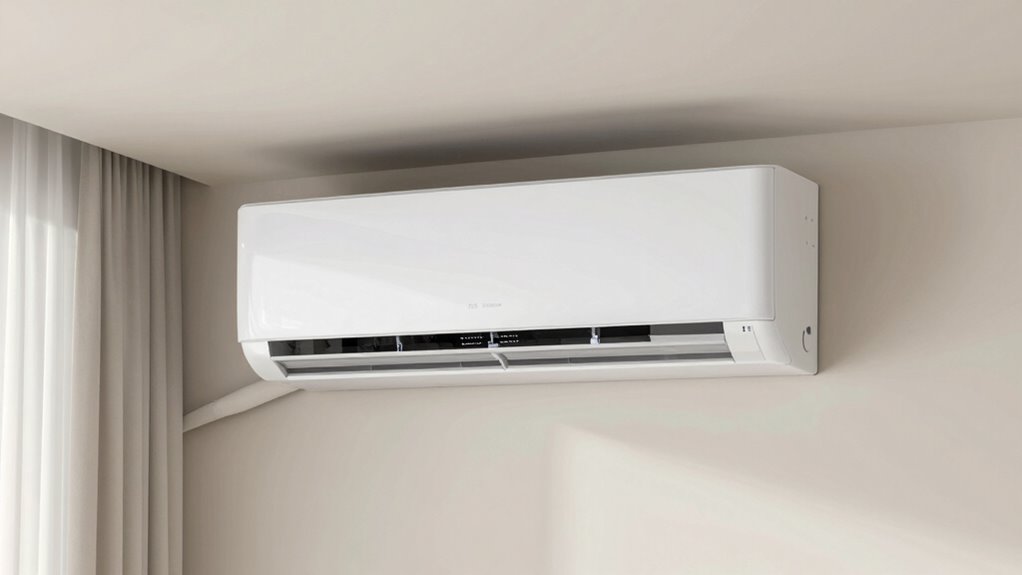
Deciding whether an inverter AC is worth the investment depends on several key factors. First, consider the cost comparison between inverter and non-inverter models. Although inverter ACs often have a higher upfront price, they usually save you money over time through lower energy bills and reduced maintenance costs. Next, think about your usage patterns—if you run your AC frequently, the efficiency gains are more significant. Brand selection also matters; choosing a reputable brand ensures better reliability, warranty support, and energy efficiency. Additionally, evaluate your local climate and the size of the space you need to cool. If comfort and long-term savings are priorities, investing in a quality inverter AC can be worthwhile. However, careful comparison and research are essential to make an informed decision.
Tips for Choosing the Most Comfortable and Energy-Efficient Inverter AC?
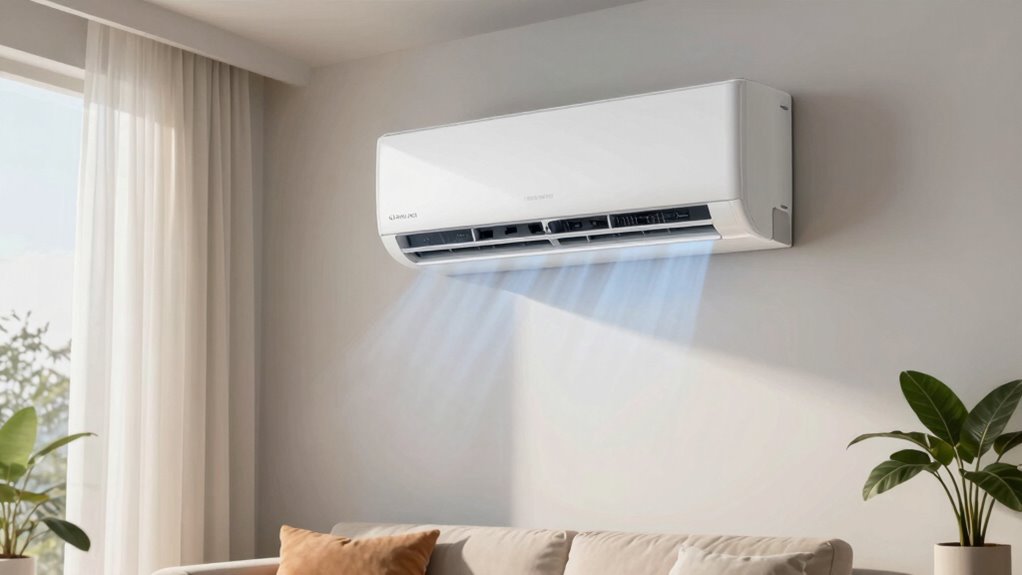
Choosing the right inverter AC involves balancing comfort with energy efficiency, so start by selecting a unit with a high Seasonal Energy Efficiency Ratio (SEER) or Energy Efficiency Ratio (EER). Look for models that optimize energy savings without sacrificing cooling performance. To guarantee maximum efficiency, consider these tips:
- Proper installation: Ensure the unit is installed by a professional, following manufacturer’s installation tips to prevent leaks and optimize airflow.
- Size appropriately: Choose an AC that matches your room size to avoid overworking or underperforming.
- Features matter: Opt for models with programmable timers and eco modes to enhance energy savings and maintain consistent comfort.
These steps will help you select an inverter AC that’s both comfortable and energy-efficient.
Common Myths About Inverter ACs Debunked?
Many people believe inverter ACs are markedly more expensive than traditional units, but that’s a common misconception. Myth busters reveal that, when you do a proper cost analysis, inverter ACs can be more affordable in the long run. They often have higher upfront costs, but their energy efficiency considerably reduces electricity bills over time. Some think inverter technology is complicated and unreliable, but modern units are durable and low-maintenance. Others assume inverter ACs don’t cool as effectively; however, they provide consistent and faster cooling, maintaining comfort levels more efficiently. By understanding these myths and examining the true costs involved, you see that inverter ACs aren’t just a luxury—they’re a smart, economical choice for better comfort and savings.
Frequently Asked Questions
Do Inverter ACS Require More Maintenance Than Traditional Units?
Inverter ACs generally require similar or slightly lower maintenance costs compared to traditional units. Their energy efficiency means you save on electricity bills, and because they operate more smoothly with fewer starting and stopping cycles, they tend to have less wear and tear. Regular cleaning of filters and checking the compressor will keep your inverter AC running efficiently, helping you avoid extra maintenance costs and ensuring long-term performance.
Can Inverter ACS Be Used in Large Commercial Spaces?
Sure, inverter ACs can handle large commercial spaces, even if it seems like overkill. Their energy efficiency helps reduce running costs, making them a smart choice for big areas. While the initial investment might be higher, the long-term savings and consistent comfort outweigh the cost implications. So, don’t dismiss them—using inverter ACs in large spaces can be both practical and economical, proving that sometimes, bigger really is better.
How Long Is the Typical Lifespan of an Inverter AC?
An inverter AC typically lasts around 10 to 15 years with proper maintenance. Its energy efficiency helps you save on electricity bills over time, making it a cost-effective choice. You can extend its lifespan by regularly cleaning filters, checking refrigerant levels, and servicing it annually. Investing in an inverter AC guarantees you enjoy consistent comfort while benefiting from long-term cost savings and reliable performance.
Are Inverter ACS Suitable for Use in Humid Climates?
Absolutely, inverter ACs are your best allies in humid climates! They excel at humidity control, preventing that sticky, damp feeling, and they’re energy-efficient, saving you money while keeping your space perfectly comfortable. With the ability to adjust cooling power on the fly, they handle humidity fluctuations effortlessly. So, yes, inverter ACs are not just suitable—they’re the powerhouse solution for battling humidity and maintaining a fresh, dry environment.
What Are the Environmental Impacts of Inverter AC Technology?
You’re likely concerned about inverter ACs’ environmental impacts. These units boost energy efficiency, reducing electricity use and lowering greenhouse gas emissions. However, they often use refrigerants that can influence the environment if leaked, contributing to ozone depletion and global warming. To minimize these effects, choose models with eco-friendly refrigerants and ensure proper maintenance. This way, you enjoy comfort while being mindful of your ecological footprint.
Conclusion
Inverter ACs can save you up to 30% on energy bills while providing consistent comfort. They adapt quickly to temperature changes, reducing noise and vibrations for a peaceful environment. With rising electricity costs, investing in an inverter unit makes sense—especially since they last longer and run more efficiently. If you want reliable cooling that’s gentle on your wallet, choosing an inverter AC is a smart move for comfort and savings.