
TL;DR

Get cleaning gear delivered free — and shop member deals
- Fast, free delivery on millions of items
- Access to Prime Big Deal Days deals on October 6–7
- Prime Video, Amazon Music and more included
A Family Handyman report lays out ten everyday habits to keep a car clean between deep cleans, including banning food and drink, vacuuming weekly, using all-weather floor mats and emptying trash at every gas stop. The guidance is preventive: small, frequent actions reduce mess, odors and clutter, and may help protect resale value.
Family Handyman has published a guide listing ten everyday habits the outlet says keep a car cleaner between deep cleans, arguing that how a vehicle is treated day to day matters more than occasional detailing. The recommendations range from a strict no-food rule and weekly vacuuming to switching to all-weather floor mats and emptying trash at every fuel stop. The report frames prevention as the central principle: messes avoided are easier than messes removed.
The first recommendation in the report is to not eat or drink in the car. According to Family Handyman, crumbs, wrappers and sticky spills make a vehicle feel dirty quickly, attract pests and create lingering odors. For households where a no-food rule is not realistic, the outlet recommends the fallback habit of wiping up spills immediately: fresh spills clean up easily, while dried soda, coffee and sauces become sticky and far harder to remove.
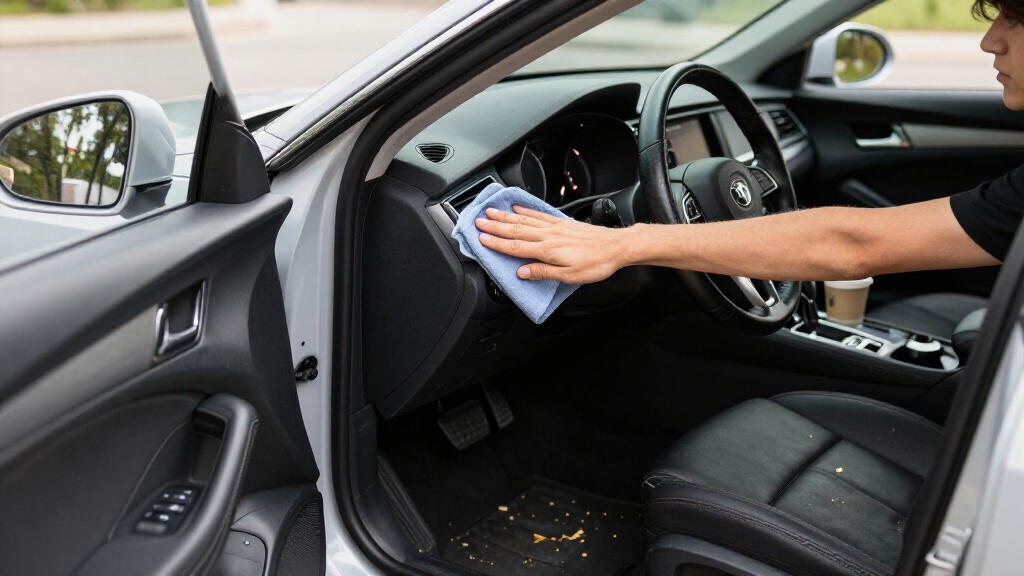
Several habits focus on tools and routines. The report suggests keeping a microfiber towel in the glove box for quick touch-ups, and wiping the dash, console and door handles once a week to stop dust and grime from accumulating. For trash, it recommends a small bag or bin emptied regularly — with a simple memory hook: toss trash whenever you stop for gas. For daily drivers, it advises vacuuming seats, floor mats and carpeting at least once a week, removing the mats first because debris collects around their edges and gets ground into the carpet fibers.
The remaining habits target what enters the car in the first place. Drivers in areas with dirt roads or frequent rain or snow are advised to install all-weather floor mats, which trap sand, mud and water and can be hosed off. The report also says to stow small items like pens and receipts in the glove box or designated compartments, keep the passenger seat clear, and avoid using the trunk as a storage closet. Before passengers get in, the outlet suggests checking for muddy shoes, open containers or messy bags, with a one-line rule: if something comes in with a passenger, it leaves with them. Finally, the report advises against smoking in the car, saying odors, ash and residue are difficult to remove and can reduce resale value. A few minutes of weekly maintenance, paired with an exterior wash every two to three weeks, makes deep cleans faster, according to the guide.
Why Prevention Beats Deep Cleans
The report’s core argument is economic as well as practical: small weekly efforts reduce the need for expensive or time-consuming deep cleans. Dirt that is allowed to accumulate — especially debris ground into carpet fibers under floor mats — becomes harder and costlier to remove later.
Two of the habits carry financial stakes beyond tidiness. Family Handyman states that smoking in a car leaves odors and residue that are difficult to remove and can reduce the vehicle’s resale value, noting that professional detailers can restore a fresh smell but that prevention is far easier. All-weather floor mats, similarly, are positioned as inexpensive protection for carpeting in regions with mud, snow or sand, where replacement or deep cleaning of factory carpet can be costly.
The guide also addresses hygiene factors: food waste is described as attracting pests and lingering odors, a concern for families who spend significant time in their vehicles or transport children regularly.
The Ten Habits at a Glance
The guide, published by Family Handyman, a home and vehicle maintenance publication, organizes its advice around the premise that behavior between cleanings determines how dirty a car gets. The ten habits are: don’t eat or drink in the car; wipe up spills quickly; keep cleaning supplies handy; manage trash; vacuum weekly; use all-weather floor mats; avoid clutter; watch what passengers bring in; don’t smoke in the car; and make cleaning part of your routine.
The report pairs its interior advice with an exterior schedule: wash the car every two to three weeks, with a quick interior clean weekly. It notes that use intensity matters — the weekly vacuuming recommendation applies specifically to cars used daily.
“How you treat your car between deep cleans can make all the difference in controlling mess, odors and everyday clutter.”
— Family Handyman
Where the Guidance Is General
The recommendations come from a single lifestyle publication and are presented as practical guidance rather than tested findings; the report does not cite studies quantifying how much each habit reduces mess, cost or resale impact. The claim that smoking reduces resale value is stated without supporting data, though it is consistent with widely accepted used-car valuation factors.
Several suggestions are condition-dependent rather than universal: weekly vacuuming is framed as a minimum for daily-driven vehicles, and all-weather mats are recommended mainly for regions with dirt roads, rain or snow. The two-to-three-week exterior wash interval is given as a general guideline without adjustment for climate, road salt or garage storage.
Putting the Routine in Place
Readers looking to act on the report can start with its lowest-cost steps: placing a microfiber towel in the glove box, adding a small trash bag tied to gas-station stops, and clearing clutter from the passenger seat and trunk. Slightly larger steps include buying all-weather floor mats suited to local conditions and setting a recurring weekly interior wipe and vacuum.
The report suggests those who already face entrenched problems — set-in odors, stained upholstery or smoke residue — may need a professional detailing service to reset the baseline before the maintenance habits can keep the car clean.
Key Questions
How often should I vacuum my car according to the report?
Family Handyman recommends vacuuming the seats, floor mats and carpeting at least once a week if you use the car daily, removing floor mats first so debris trapped at the edges can be reached.
What if a no-food rule isn’t realistic for my family?
The report offers a fallback: clean up messes as soon as they happen. Fresh spills wipe up easily, while dried soda, coffee and sauces become sticky and much harder to remove.
Are all-weather floor mats necessary for everyone?
No. The report recommends them specifically for areas with dirt roads or frequent rain or snow, where they trap sand, mud and water and can be hosed off easily.
How often should the exterior be washed?
Family Handyman suggests washing the exterior every two to three weeks, combined with a quick weekly interior clean.
Does smoking in a car really affect resale value?
The report states that smoking leaves odors, ash and residue that are difficult to remove and can reduce resale value. It does not cite specific data, and professional detailers can help, but the guide says prevention is far easier.
Source: rss
Fall Picks
fall essentials
As an affiliate, we earn on qualifying purchases.