Air scrubbers and air purifiers serve different purposes and shouldn’t be mixed up. Air scrubbers remove gases, odors, and chemical fumes using specialized filters like activated carbon, making them ideal for industrial or heavily contaminated spaces. Air purifiers mainly target airborne particles such as dust, pollen, and pet dander with HEPA filters, best suited for everyday indoor use. Continuing to explore these differences will help you choose the right device for your needs.
Key Takeaways
- Air scrubbers are designed for industrial or large-scale environments, removing gases, odors, and chemical fumes, while air purifiers mainly filter airborne particles like dust and pollen.
- Air purifiers typically use HEPA filters for particle removal and are quieter, making them suitable for indoor spaces like bedrooms.
- Air scrubbers often include activated carbon and other filters to target VOCs, odors, and gases, unlike standard air purifiers.
- Regular maintenance differs: purifiers require frequent filter changes, whereas scrubbers may need cleaning of larger filtration components.
- Choosing the right device depends on specific pollutants and space size; don’t rely solely on one for comprehensive air quality improvement.
What Are Air Scrubbers and How Do They Work?
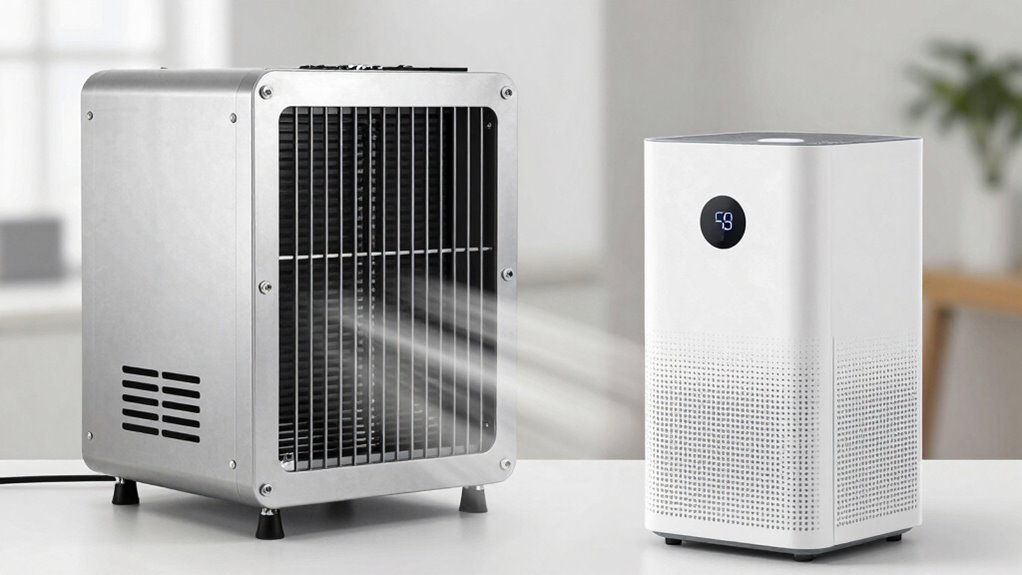
Air scrubbers are specialized devices designed to remove contaminants from the air, making indoor environments safer and healthier. They work by drawing in polluted air and passing it through advanced filtration systems, such as HEPA filters, which trap tiny particles like dust, pollen, and mold spores. Many air scrubbers also feature chemical absorption capabilities, allowing them to neutralize or remove airborne chemicals, odors, and volatile organic compounds (VOCs). This combination guarantees thorough air cleaning, especially in environments with chemical fumes or pollutants. As air passes through these filters, contaminants are captured and contained, preventing their recirculation. Filtration systems play a crucial role in ensuring the effectiveness of air scrubbers by targeting a broad range of pollutants, offering a cleaner, healthier indoor space. Additionally, the use of air quality monitoring can help assess the performance and efficiency of these devices in real-time. Proper maintenance of filtration components is essential to sustain optimal air cleaning performance over time. Regularly replacing or cleaning filters ensures the air scrubber’s efficiency remains high and maintains optimal air quality. Ensuring proper humidity management can also enhance the effectiveness of air scrubbers by reducing the growth of mold and bacteria that can compromise air quality.
Key Differences Between Air Scrubbers and Air Purifiers
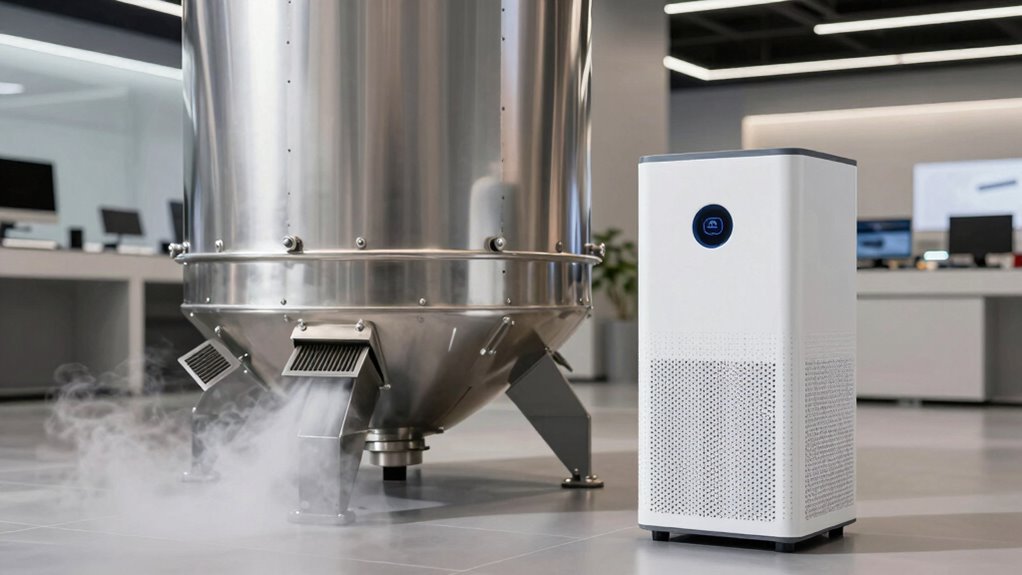
While both air scrubbers and air purifiers aim to improve indoor air quality, they serve different functions and are suited for different needs. Air filtration is a key difference: air purifiers mainly filter out airborne particles like dust, pollen, and pet dander using HEPA filters. Air scrubbers, on the other hand, often use activated carbon and specialized filters to remove gases, odors, and volatile organic compounds (VOCs). Device maintenance also varies; air purifiers typically require frequent filter changes, while air scrubbers may need regular cleaning of their larger filtration systems. Additionally, airborne particle removal is generally the primary focus of air purifiers, making them ideal for allergy sufferers. Understanding these differences helps you choose the right device for your specific indoor environment, ensuring effective air filtration without unnecessary upkeep or misapplication. Proper device selection is essential for optimizing indoor air quality and maintaining a healthy living space, especially when considering the specific needs of your environment. Recognizing the importance of testing accuracy can also help ensure you select the most effective air quality solutions.
When Should You Use an Air Scrubber Versus an Air Purifier?
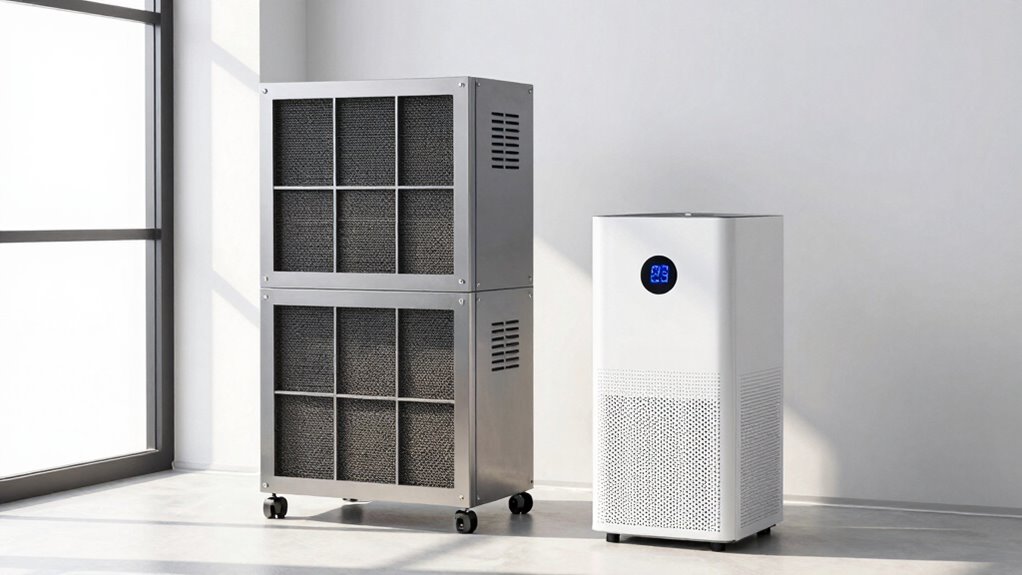
Choosing between an air scrubber and an air purifier depends on your specific indoor air quality concerns. Use an air scrubber for industrial use or when you need to remove larger pollutants like smoke, dust, or chemical fumes from the air. They’re effective in environments requiring allergen removal at a larger scale, such as warehouses or construction sites. An air purifier is better suited for everyday allergy relief, targeting common allergens like pet dander, pollen, and mold spores in your home. If your goal is to improve indoor air quality by removing fine particles and allergens, an air purifier is usually sufficient. However, for heavy-duty cleaning, especially involving industrial pollutants or large contaminant loads, an air scrubber provides more extensive results. Understanding the differences can help you make the best choice for your needs. Additionally, consider the size of the space and the specific pollutants you aim to eliminate to select the most effective device. For optimal results, it’s important to match the device to the type of pollutants present in your environment. Proper air filtration techniques are essential for maintaining a healthy indoor environment, especially in settings with high pollutant levels.
Common Myths and Misconceptions About Air Cleaning Devices

Many people believe that simply running an air purifier or scrubber will completely eliminate indoor pollutants, but this is a common misconception. While devices with HEPA filters can capture particles like dust and allergens, they don’t remove gases or odors. Similarly, some believe ozone generation air cleaners are safe, but ozone can irritate your lungs and worsen respiratory issues. Additionally, understanding the limitations of HEPA filters is crucial because they do not eliminate all types of airborne contaminants. It’s also important to consider proper maintenance and placement of these devices to maximize their effectiveness. Proper device operation and understanding are essential for achieving the best results and avoiding ineffective use. The correct installation and maintenance of these devices also play a significant role in their effectiveness. To ensure comprehensive air quality, it’s important to recognize the proper use and limitations of air cleaning devices, rather than relying solely on one type of equipment.
Choosing the Right Air Quality Solution for Your Space

Selecting the right air quality solution depends on your specific needs and the unique characteristics of your space. Consider factors like filter maintenance and noise levels. If you prefer quiet operation, an air purifier with low noise output might be ideal. For spaces needing extensive air cleaning, an air scrubber could be more effective, but check how often filters require replacement. Here’s a quick comparison:
| Feature | Air Purifier | Air Scrubber | Both |
|---|---|---|---|
| Filter Maintenance | Regular filter changes needed | Less frequent, depends on model | Both require upkeep for optimal performance |
| Noise Levels | Usually quiet, suitable for bedrooms | Can be louder, suited for industrial spaces | Varies based on model |
| Coverage Area | Best for small to medium rooms | Better for large or contaminated spaces | Can complement each other |
Additionally, understanding air filtration is crucial for selecting the right device for your environment. It’s important to evaluate whether your space requires air cleaning at a higher capacity or just general air quality improvement. Properly assessing your space’s air quality needs can help you make a more informed decision. Regularly inspecting and maintaining your device ensures it continues to perform effectively, especially when dealing with filter replacement schedules. Maintaining awareness of air quality standards can also guide you in choosing the most suitable device. Choose based on your size, noise tolerance, and maintenance willingness.
Frequently Asked Questions
Can Air Scrubbers Remove Gases and Chemical Odors Effectively?
Yes, air scrubbers can effectively remove gases and chemical odors. They use chemical filtration to trap and neutralize harmful gases, fumes, and odors, making your environment safer. Gas removal is a key feature of many air scrubbers, especially those designed for industrial or heavily polluted spaces. By actively filtering the air, you’ll notice a notable reduction in chemical smells and airborne contaminants, improving overall air quality considerably.
Do Air Purifiers Eliminate Bacteria and Viruses From the Air?
Think of your air purifier as a vigilant guard dog, actively hunting down bacteria and viruses. It does eliminate bacteria and virus filtration by trapping or destroying airborne pathogens. While it’s effective at bacteria removal, it may not catch every virus. For thorough protection, look for models with HEPA filters, which considerably improve your chances of reducing bacteria and viruses, keeping your indoor air safer and healthier.
Are Portable Air Scrubbers Suitable for Residential Use?
Yes, portable air scrubbers are suitable for residential use. These units effectively reduce airborne pollutants, allergens, and odors, providing tangible residential benefits like cleaner indoor air and improved breathing. You can easily move portable units between rooms, making them practical for your home. They’re especially helpful if you have allergies or want to enhance your indoor environment. Just make certain you choose a unit with the right filtration system for your specific needs.
How Often Should I Replace Filters in an Air Purifier?
You should replace your air purifier filters every 6 to 12 months, depending on usage and air quality. Regular filter replacement is essential for proper air purifier maintenance and guarantees it works efficiently. Check your manufacturer’s filter replacement schedule, as some models may need more frequent changes, especially if you have pets or allergies. Staying on top of filter swaps keeps your air clean and prolongs your device’s lifespan.
Can Both Devices Operate Simultaneously for Better Air Quality?
Yes, you can operate both devices simultaneously to boost air quality, especially if you have indoor plants that naturally improve air quality metrics. Combining an air scrubber and purifier creates a powerful defense against pollutants, allergens, and odors. Don’t let worries about energy use hold you back—improving your environment’s air quality is worth it. This synergy can make your home healthier and more comfortable, giving you peace of mind.
Conclusion
Now that you know the differences between air scrubbers and air purifiers, you can choose the right device for your needs. Remember, each has its unique strengths—so don’t just pick one blindly. Are you ready to breathe cleaner air and create a healthier environment? Whether you’re battling dust, odors, or airborne contaminants, understanding these tools helps you make smarter decisions. Take charge of your air quality today—because your health deserves it.