Beware of dangerous cleaning myths online, like mixing bleach with ammonia or other chemicals, which can release toxic fumes and harm your health. Using natural remedies like vinegar and baking soda on delicate surfaces can cause damage if misunderstood, and applying harsh oven cleaners improperly can lead to corrosion or fumes. Many tips ignore manufacturer instructions or safety guidelines, risking surface damage or injury. Keep informed to avoid these risky hacks—if you continue exploring, you’ll discover safer alternatives.
Key Takeaways
- Mixing bleach with ammonia or other chemicals releases toxic fumes that can harm respiratory health.
- Using natural ingredients like vinegar or baking soda on surfaces they can damage, such as marble or delicate finishes.
- Applying harsh oven cleaners improperly or leaving them on too long can cause corrosion and release harmful fumes.
- Relying solely on DIY hacks without understanding chemical or surface limitations may lead to damage or safety hazards.
- Ignoring manufacturer instructions and lacking proper guidance increases the risk of irreversible surface damage and health issues.
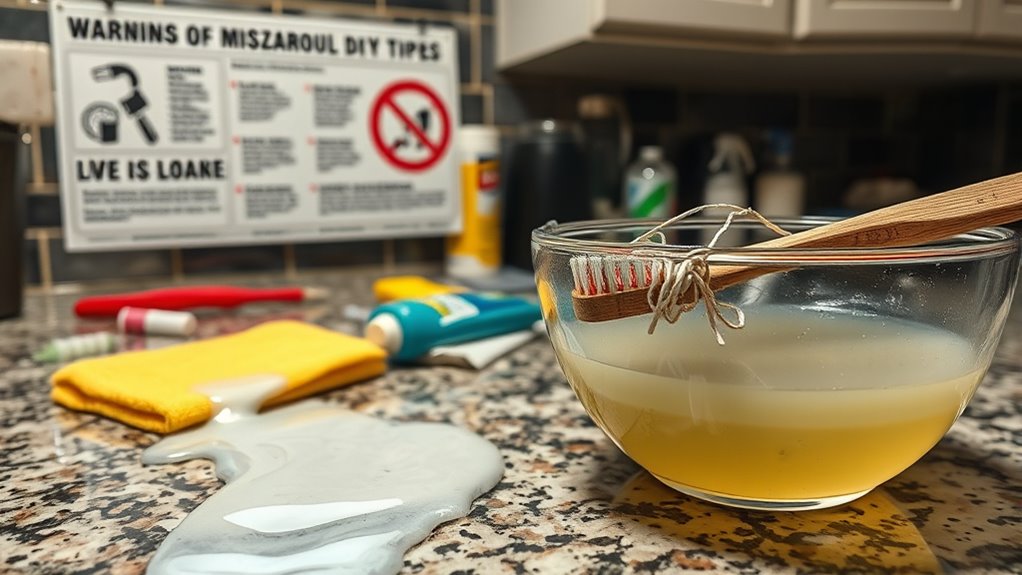
The internet is full of cleaning advice, but not all tips are safe or effective. As you browse through countless DIY hacks promising to make your chores easier, it’s easy to fall into traps that can do more harm than good. Many of these hacks are based on myths or outdated methods, and some pose serious risks, especially when it comes to chemical dangers. Relying on unverified tips can leave you with damaged surfaces, lingering odors, or even health hazards. It’s essential to recognize which advice to ignore and why.
One common myth is using bleach or other harsh chemicals for every cleaning task. While bleach can be effective for disinfecting, overusing it or combining it with other cleaners like ammonia creates dangerous fumes. This is a prime example of chemical dangers lurking behind seemingly simple DIY hacks. Many online tutorials suggest mixing products to boost cleaning power, but this can produce toxic gases that harm your respiratory system. If you’re not careful, you might end up inhaling fumes that cause irritation or worse. It’s imperative to understand the proper use of cleaning chemicals and stick to manufacturer instructions. Avoiding unnecessary chemical exposure is the first step toward safe cleaning.
Using bleach improperly can release toxic fumes and harm your health. Always follow manufacturer instructions.
Another widespread misconception is that vinegar and baking soda can solve all cleaning problems. While these natural ingredients are versatile, they aren’t miracle cures. Vinegar, for instance, can damage natural stone surfaces like marble or granite, causing etching and discoloration. Baking soda is abrasive and might scratch delicate surfaces. Relying solely on these DIY hacks without understanding their limitations can lead to surface damage or ineffective cleaning. It’s tempting to think natural solutions are safer, but they still require proper application and knowledge. Knowing when to use them and when to opt for commercial cleaners is key to avoiding costly mistakes.
Some internet tips recommend using oven cleaner on stovetops or other appliances not designed for harsh chemicals. These suggestions are dangerous because many oven cleaners contain strong alkalis that can corrode surfaces or cause skin burns. Applying them improperly or leaving them on too long can also release harmful fumes. Moreover, using products not intended for specific surfaces can result in irreversible damage. Before trying any DIY hack, ask yourself if it’s suitable for your appliance and whether it’s worth risking damage or chemical exposure.
Additionally, relying solely on DIY cleaning hacks without consulting manufacturer guidelines or professional advice can lead to unintended damage or safety issues.
Frequently Asked Questions
Are Any Internet Cleaning Hacks Safe for Children or Pets?
Some internet cleaning hacks can be safe for children and pets if you choose pet-friendly options and prioritize child safety. Look for natural ingredients like vinegar, baking soda, or lemon, which are non-toxic and effective. Always read labels and avoid harsh chemicals. Keep cleaning products out of reach of kids and pets, and ventilate the area well. With careful selection, you can keep your home clean without risking their safety.
How Can I Identify Truly Harmful Cleaning Myths?
Did you know that about 60% of cleaning myths are false? To spot harmful myths, question their source and check for scientific backing. A common myth is using bleach on everything, but harmful ingredients can cause health issues and damage surfaces. Always verify tips with reputable cleaning sites or experts, and avoid products with unlisted ingredients. Staying informed helps you steer clear of dangerous cleaning practices.
Do Professional Cleaners Recommend Avoiding These Tips?
Yes, professional cleaners recommend avoiding these tips. They rely on expert advice and validate myths through experience and research. You should trust their guidance because it’s based on proven methods that guarantee safety and effectiveness. When you follow expert advice, you prevent damage, avoid harmful chemicals, and achieve better cleaning results. Always seek validated tips from trusted sources rather than falling for internet myths that could do more harm than good.
Are There Any Cleaning Tips That Actually Work Despite Being Myths?
Myth verification reveals that some myths surprisingly support effective cleaning. For example, using vinegar to clean glass works well because it’s a natural degreaser. While not every myth is true, a few contain kernels of practicality. You should still scrutinize every tip critically, but don’t dismiss all myths outright. Instead, test them cautiously to see if they deliver dependable, efficient cleaning results without risking damage or waste.
What Are the Best Safe Cleaning Practices Recommended by Experts?
You should follow expert recommendations for safe cleaning practices by using eco-friendly solutions and natural disinfectants. These options are effective and minimize chemical exposure, protecting your health and the environment. Always read labels, avoid harsh chemicals, and opt for natural ingredients like vinegar, baking soda, or essential oils. Regular cleaning with these methods keeps your space safe, fresh, and eco-friendly, ensuring a healthier home for you and your family.
Conclusion
Avoid falling for these bad cleaning tips like a moth to a flame. They’re often as tempting as they are harmful, leading you to damage surfaces or waste time. Remember, the internet isn’t always your friend when it comes to cleaning advice. Stick to proven methods and trusted sources. Think of bad tips as quicksand—easy to get stuck in, but hard to escape. Stay informed, stay safe, and keep your home shining without risking damage.