To keep your floors spotless, vacuum high-traffic areas at least twice a week, while less-used rooms can be cleaned once weekly. If you have pets or allergy sufferers, aim for 3-4 times weekly. Schedule professional deep cleanings every 6 to 18 months depending on foot traffic and household needs. Prompt stain treatment and utilizing smart cleaning tools can boost your routine. Stick with these tips, and you’ll discover more ways to maintain pristine carpets effortlessly.

Get cleaning gear delivered free — and shop member deals
- Fast, free delivery on millions of items
- Access to Prime Big Deal Days deals on October 6–7
- Prime Video, Amazon Music and more included
Key Takeaways
- Vacuum high-traffic areas at least twice weekly; less-used rooms once a week.
- Address spills immediately with blotting and suitable cleaning solutions to prevent stains.
- Deep clean carpets professionally every 12-18 months, more often for busy households.
- Increase vacuuming frequency to 3-4 times weekly if you have pets or allergies.
- Utilize smart cleaning devices for consistent maintenance and proactive stain management.
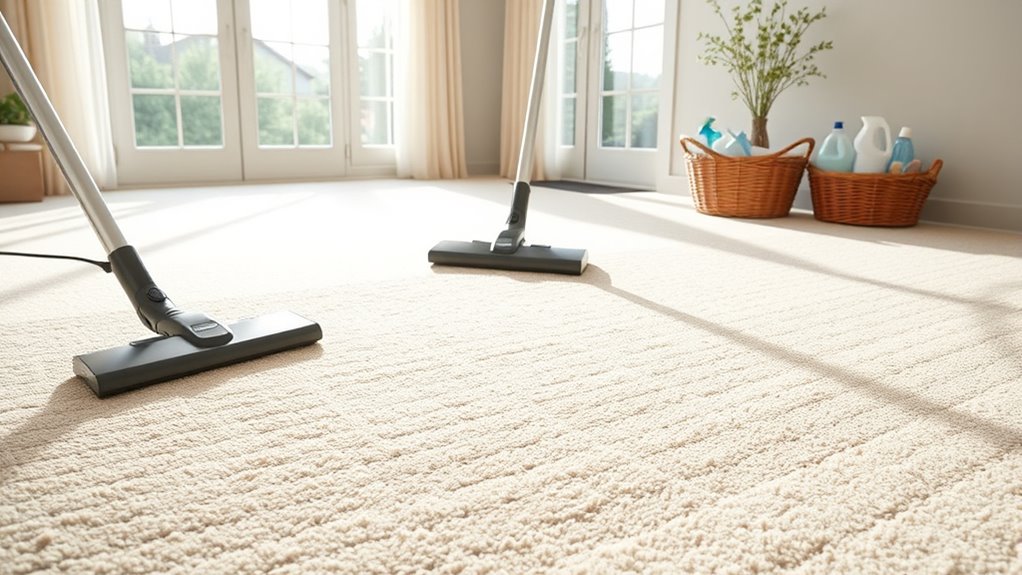
Establishing a regular carpet cleaning schedule is essential to maintain a healthy and clean home. The key to achieving this lies in understanding how often you should vacuum and how to handle stains promptly. Your vacuum frequency plays a critical role in preventing dirt, dust, and allergens from settling deep into your carpet fibers. Ideally, you should vacuum high-traffic areas at least twice a week, while less-used rooms can be done once a week. Consistent vacuuming lifts surface debris and prevents buildup that can lead to permanent stains or fiber damage over time. If you have pets or family members with allergies, increasing vacuum frequency to three or four times a week might be necessary to keep the indoor environment healthy.
Alongside regular vacuuming, developing a stain treatment schedule is indispensable for keeping your carpets looking fresh. The moment a spill occurs, you should act swiftly—blotting the spot with a clean cloth or paper towel to absorb as much liquid as possible. Avoid rubbing, which can push the stain deeper or spread it further. Using a gentle cleaning solution tailored to your carpet type can make a significant difference; always test it on a hidden area first. Consistently addressing stains as they happen prevents them from setting and becoming permanent. For stubborn or older stains, you might need to repeat the treatment or consider professional cleaning. Additionally, understanding the importance of AI and automation in maintaining cleanliness can help optimize your cleaning routines by using smart devices or automated cleaning systems.
In addition to spot treatments, scheduling deep cleaning sessions every 12 to 18 months helps remove embedded dirt and allergens that regular vacuuming can’t reach. These professional cleanings can restore your carpets’ appearance and prolong their lifespan. For households with children, pets, or heavy foot traffic, more frequent deep cleanings might be necessary—every 6 to 12 months. Maintaining a stain treatment schedule also involves keeping cleaning supplies handy and knowing which products work best for your specific carpets. This proactive approach allows you to respond quickly to accidents, reducing the risk of permanent stains and odors.
best handheld vacuum for pet hair
As an affiliate, we earn on qualifying purchases.
As an affiliate, we earn on qualifying purchases.
Frequently Asked Questions
How Do I Remove Pet Stains From Carpets Effectively?
For effective pet stain removal, start by blotting the stain with a clean cloth to absorb excess moisture. Then, apply a mixture of equal parts white vinegar and water, or use a commercial enzymatic cleaner designed for pet stains. Let it sit for 10-15 minutes before blotting again. Repeat if necessary, and finish by rinsing with water and drying thoroughly to guarantee your carpet stays fresh and clean.
Can I Clean Carpets Myself Without Professional Equipment?
A stitch in time saves nine, so you can definitely tackle DIY cleaning without professional equipment. With home remedies like baking soda, vinegar, and a scrub brush, you can effectively clean your carpets. Just vacuum thoroughly first, then apply your homemade solutions to stains or dirt, and scrub gently. This way, you keep your floors fresh and clean without spending a fortune or waiting for professionals.
What Are the Signs My Carpet Needs Cleaning Sooner?
You’ll notice your carpet needs cleaning sooner if you see persistent stains or odors that won’t go away. Stain identification helps you determine if a spill or dirt buildup is deep-seated. If odor elimination becomes difficult or unpleasant smells linger, it’s a sign your carpet needs professional cleaning. Address these signs promptly to maintain a fresh, healthy environment and prevent damage from dirt and grime buildup.
How Does Carpet Material Affect Cleaning Frequency?
If you have a high-traffic wool carpet, you should clean it more frequently, like every 6-12 months, due to its delicate fiber that traps dirt easily. For synthetic carpets, a cleaning schedule of every 12-18 months usually suffices. Carpet fiber markedly impacts cleaning frequency because softer fibers like wool need gentler, more regular care to keep them looking their best. Adjust your cleaning schedule accordingly to maintain your floors.
Are There Eco-Friendly Cleaning Options for Carpets?
You can choose eco-friendly cleaning options like natural solutions and biodegradable products for your carpets. These greener methods effectively remove dirt without harsh chemicals, making them safer for your family and the environment. Regularly using these eco-conscious products helps maintain a clean, healthy home while reducing your ecological footprint. Always look for labels that specify natural ingredients or biodegradable formulas to guarantee you’re making the most sustainable choice for your carpet cleaning routine.
professional carpet cleaning machine
As an affiliate, we earn on qualifying purchases.
As an affiliate, we earn on qualifying purchases.
Conclusion
Just like a timeless song keeps your spirits high, sticking to a regular carpet cleaning schedule keeps your home welcoming and your family healthy. Think of your carpets as the silent guardians of your sanctuary—worthy of care and attention. When you stay consistent, you’re not just cleaning; you’re preserving comfort and memories. Remember, a spotless home isn’t just a goal, it’s the foundation of a happy, healthy life—your personal haven, shining bright with care.
As an affiliate, we earn on qualifying purchases.
As an affiliate, we earn on qualifying purchases.
Fall Picks
fall essentials
As an affiliate, we earn on qualifying purchases.