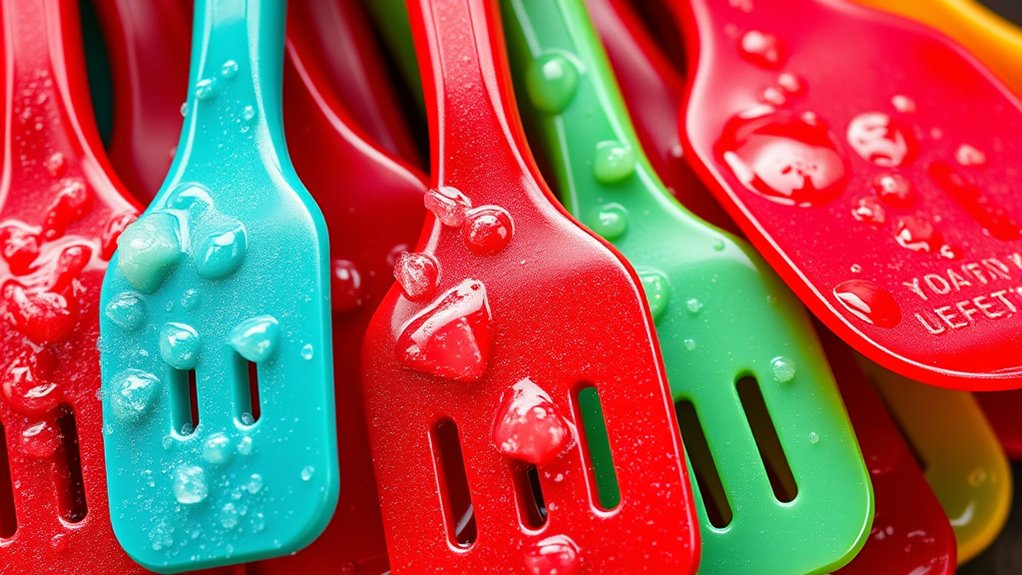

To remove the sticky grease film from silicone utensils, soak them in warm, soapy water for at least 15 minutes and scrub gently with a soft sponge or brush. For stubborn spots, apply a mixture of baking soda and water, or boil the utensils in water with a splash of vinegar to loosen grease naturally. Using these simple steps helps maintain your utensils’ condition, and there’s more to keep them in top shape efficiently.
Key Takeaways
- Soak utensils in warm, soapy water for at least 15 minutes to loosen grease buildup.
- Use a soft brush or non-abrasive sponge with mild dish soap to gently scrub away grease.
- Apply a baking soda and water paste to stubborn spots, then rinse thoroughly.
- Deep clean by boiling utensils in water with a splash of vinegar to break down grease and disinfect.
- Avoid harsh chemicals and abrasive pads to prevent surface damage and maintain silicone integrity.
Have you ever struggled with sticky silicone utensils that cling to food or become difficult to clean? If so, you’re not alone. Over time, silicone utensils can develop a greasy, tacky film that makes them feel less than fresh. Thankfully, there are effective cleaning techniques to restore their original condition, and understanding alternative materials can help you decide whether silicone is the best choice for your kitchen.
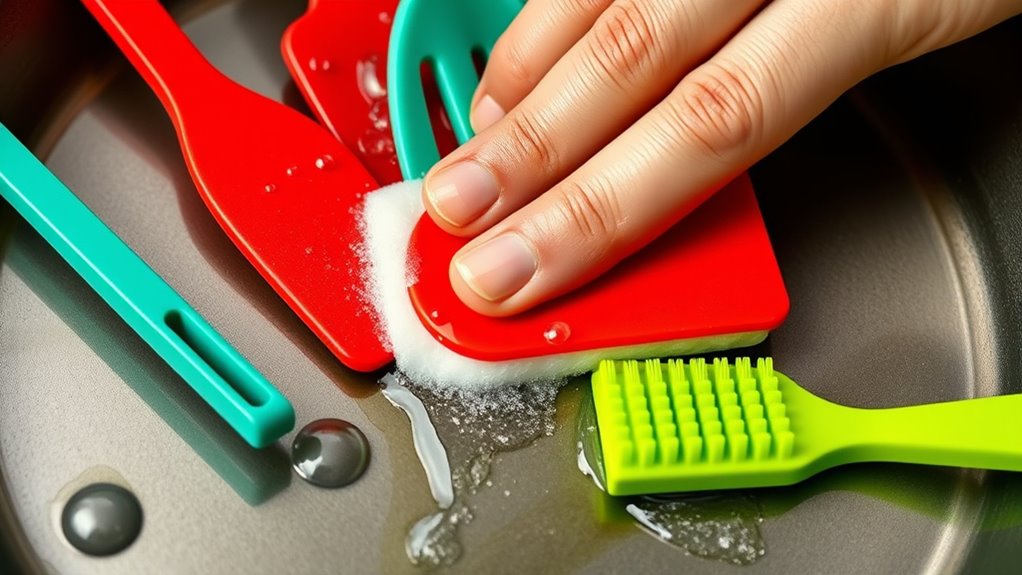
First, tackling the grease film requires a simple but thorough approach. Start by soaking your utensils in warm, soapy water for at least 15 minutes. Use a mild dish soap that cuts through grease without damaging the silicone. After soaking, take a soft-bristled brush or a non-abrasive sponge and scrub gently to remove any residue. For stubborn spots, you can dip the brush in a mixture of baking soda and water, creating a gentle abrasive that lifts grease without scratching the surface. Once scrubbed, rinse thoroughly with warm water and dry with a clean towel. If the film persists, try boiling your utensils in water with a splash of vinegar for a few minutes, which can help break down grease and disinfect at the same time.
Soak, scrub with baking soda, rinse, and boil with vinegar to remove grease from silicone utensils.
It’s also important to note that some cleaning techniques are more effective than others, and over time, silicone utensils might benefit from occasional deep cleaning. Avoid using harsh chemicals or abrasive pads, as they can damage the silicone’s surface and worsen sticky issues. Instead, opt for natural solutions like baking soda, vinegar, or a mixture of lemon juice and water, which can effectively remove grease and restore shine.
While silicone is popular for its heat resistance and flexibility, it isn’t always the best material for everyone. Alternative materials like stainless steel or wood might be better suited if you find that silicone develops persistent stickiness or odors. Stainless steel tools are durable, easy to clean, and don’t harbor grease as silicone sometimes does. Wooden utensils, on the other hand, absorb less grease and are less prone to creating a greasy film, though they require different cleaning methods.
In the end, maintaining your silicone utensils involves a combination of proper cleaning techniques and understanding their limitations. Regular cleaning will keep them in good shape, and exploring alternative materials can help you find the best options for your cooking needs. Whether you stick with silicone or switch to other materials, knowing how to remove the grease film ensures your utensils stay functional and hygienic, making cooking more enjoyable and less frustrating.
As an affiliate, we earn on qualifying purchases.
Frequently Asked Questions
Can I Use Abrasive Cleaners on Silicone Utensils?
You shouldn’t use abrasive cleaners on silicone utensils because they can cause silicone damage. These cleaners are too harsh and may scratch or weaken the material, reducing its lifespan. Instead, opt for gentle scrubbing with warm soapy water or a soft sponge. Regular cleaning keeps your silicone utensils in good shape without risking damage, ensuring they stay non-stick and safe for food contact.
How Often Should I Replace Silicone Utensils?
You should replace your silicone utensils every 12 to 18 months to prevent potential health risks, but if you notice cracks, warping, or a persistent sticky residue, it’s time sooner. Remember, durability considerations matter—over time, silicone can degrade, risking contamination. Think of it as upgrading your kitchen gear to keep your cooking safe and enjoyable. Regular replacement keeps your utensils performing their best and ensures your meals stay toxin-free.
Are Silicone Utensils Dishwasher Safe?
Silicone utensils are generally dishwasher safe, making them convenient for cleaning. Their durability means they can withstand the high heat and water pressure in dishwashers without damage, maintaining their longevity. Just guarantee you place them on the top rack to avoid direct contact with sharp or heavy items. This dishwasher compatibility helps preserve their silicone utensil durability, keeping them in good condition and ready for your next cooking session.
Do Silicone Utensils Stain Easily?
Silicone utensils are generally stain-resistant, so they don’t stain easily if you clean them properly. To keep them looking new, wash with warm soapy water or use a mixture of baking soda and water for stubborn stains. Avoid harsh abrasives, which can damage their surface. Regular cleaning with these methods helps maintain their stain resistance and prolongs their lifespan, ensuring your utensils stay vibrant and functional.
Can Silicone Utensils Be Used With Non-Stick Cookware?
Yes, silicone utensils are safe to use with non-stick cookware because of their material safety and heat resistance. They won’t scratch or damage your non-stick surface, making them ideal for gentle cooking. Just guarantee your utensils are high-quality and heat-resistant to avoid melting or degradation. Always follow manufacturer guidelines for temperature limits, and you’ll enjoy safe, effective, and damage-free cooking with your silicone tools.
baking soda cleaning paste for silicone utensils
As an affiliate, we earn on qualifying purchases.
As an affiliate, we earn on qualifying purchases.
Conclusion
Imagine your silicone utensils gleaming like a mirror, free from that stubborn grease film. With a simple scrub and a gentle rinse, you’ll transform sticky, dull tools into smooth, shiny helpers in your kitchen. The next time you reach for them, they’ll feel sleek and fresh in your hand, ready to tackle your culinary creations. Say goodbye to residue and hello to utensils that look as good as they perform—clean, shiny, and inviting.
vinegar boiling silicone utensils
As an affiliate, we earn on qualifying purchases.
As an affiliate, we earn on qualifying purchases.
non-abrasive silicone scrub sponge
As an affiliate, we earn on qualifying purchases.
As an affiliate, we earn on qualifying purchases.