
To wash pollen off your window screens without causing sagging, choose durable frames like aluminum or fiberglass that resist warping. Opt for mesh materials such as fiberglass, aluminum, or stainless steel, which stay firm and resist dirt buildup. Gently rinse your screens with a soft cloth or spray to remove pollen while maintaining their shape. Properly maintained, these screens keep pollen out and stay taut after cleaning—see how selecting the right materials makes a difference.
Key Takeaways
- Choose durable screen frames made of aluminum or fiberglass to resist warping and maintain tautness after washing.
- Select mesh materials like fiberglass or stainless steel that resist sagging and shape loss during cleaning.
- Use gentle rinsing with a hose or soft brush to remove pollen without applying excessive pressure.
- Avoid harsh chemicals that could degrade mesh or weaken frame material over time.
- Regular maintenance and using high-quality, weather-resistant screens extend lifespan and keep screens effective.

Have you ever wondered how to keep bugs out of your home without sacrificing fresh air? The secret lies in choosing the right window screens that can stand up to the elements while allowing you to enjoy a cool breeze. When it comes to selecting a screen, one of the most important factors is screen frame durability. You want a frame that’s sturdy enough to resist warping, bending, or sagging over time, even with frequent use or exposure to weather. A durable frame ensures your screen remains taut and effective, providing a tight seal that keeps insects out while letting fresh air flow in freely. Materials like aluminum or fiberglass are popular choices because they combine strength with lightweight flexibility, helping your screens stay in shape season after season.
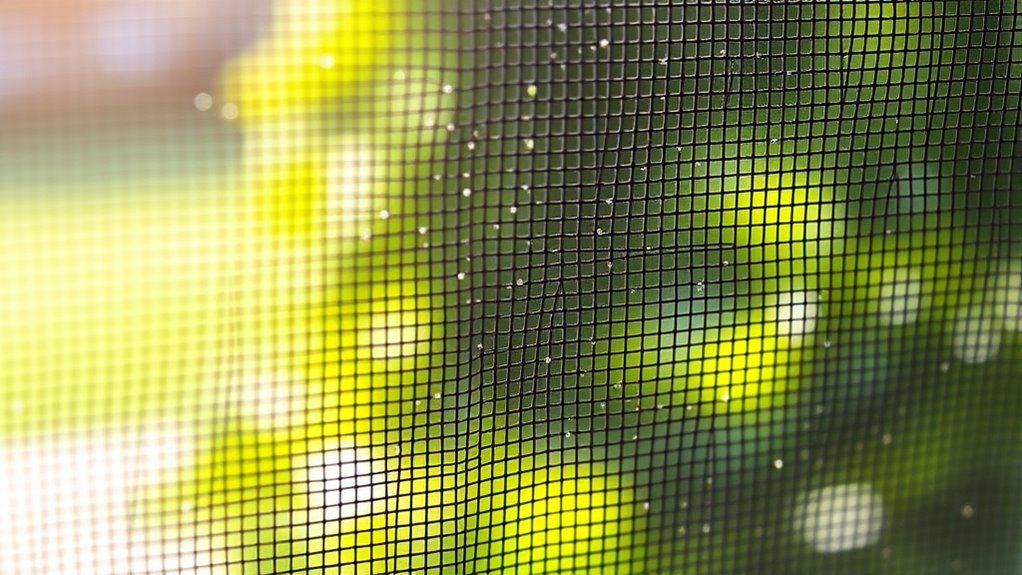
Along with frame durability, mesh material options are critical in making your window screens both functional and long-lasting. You’ll find a range of mesh materials, each suited for different needs. Standard fiberglass mesh is affordable and flexible, making it easy to install and resistant to rust. However, it can be prone to tearing if handled roughly. Aluminum mesh offers greater durability and is less likely to rip, but it might be slightly stiffer. For those seeking extra protection, stainless steel mesh provides superior strength and longevity, especially if you live in an area with high wind or heavy pollen. Additionally, some mesh options are designed to filter out pollen and even tiny particles, making them ideal for allergy sufferers. These specialized meshes can help wash away pollen effectively without sagging or losing their shape, ensuring your screens remain tight and functional for years. Understanding mesh material options can help you select the best screen for your specific environment and needs.
Mesh options like fiberglass, aluminum, and stainless steel enhance durability and allergy protection in window screens.
Choosing the right mesh material also means considering maintenance and cleaning. A good-quality screen resists dirt buildup and is easy to rinse off, keeping your view clear and your home fresh. When you combine a sturdy frame with an appropriate mesh material, you get a window screen that can handle the rigors of outdoor exposure while maintaining its shape and protective qualities. This combination ensures that your screens won’t sag or warp over time, even after washing or exposure to weather.
In the end, investing in screens with excellent frame durability and the best mesh material options helps you enjoy fresh air without the nuisance of bugs or pollen. You get a solution that’s resilient, easy to maintain, and effective at keeping unwanted visitors outside—allowing you to bask in the breeze with confidence.
Frequently Asked Questions
How Often Should I Replace My Window Screens?
You should replace your window screens every 8 to 12 years, depending on their screen durability and exposure to weather. Regular inspections help you spot tears, rust, or sagging early. If screens become damaged or start sagging, it’s time for a replacement to guarantee peak airflow and protection. Keeping an eye on the replacement frequency and maintaining your screens prolongs their lifespan and keeps your windows looking and functioning great.
Are There Eco-Friendly Cleaning Options for Window Screens?
Yes, you can use eco-friendly cleaning options for your window screens. Opt for biodegradable cleaners that break down naturally and avoid harsh chemicals. Pair these with reusable scrub pads to gently remove dirt and pollen without damaging the screens. This approach not only keeps your windows clean but also minimizes your environmental impact, making your cleaning routine more sustainable and effective.
Can I Install Window Screens Myself or Need Professional Help?
Did you know that over 60% of homeowners successfully complete DIY window screen installations? You can definitely install window screens yourself with basic tools and some patience. However, if your window frames are tricky or you want a perfect fit, professional assistance might be the better choice. DIY installation is cost-effective and satisfying, but don’t hesitate to seek help if you’re unsure—your screens will thank you!
Do Different Screen Materials Impact Pollen Filtering?
Yes, different screen materials impact pollen filtering. A screen material comparison shows that fine mesh screens, like those made of fiberglass or aluminum, typically offer higher pollen filtering efficiency than standard screens. You should choose a fine mesh for better pollen blockage, especially if allergies bother you. Installing these screens is straightforward, and their material affects how well they keep pollen out while still allowing airflow.
What Are the Best Storage Methods During Winter?
Did you know that proper seasonal storage can extend your window screens’ lifespan by up to 50%? During winter, you should clean your screens thoroughly and let them dry completely. Store them in a cool, dry place, preferably in a breathable container like a cardboard box or cloth bag. This screen maintenance prevents damage, keeps them in good shape, and makes installation easier when spring arrives.
Conclusion
Now that you know how to keep your window screens clean without them sagging, why not give it a try? Regularly washing away pollen and dirt not only keeps your screens looking fresh but also guarantees better airflow and a healthier home environment. Don’t let dirty screens block your view or invite allergens inside. Isn’t it worth the effort to enjoy clear, pollen-free windows all season long? Take action today and enjoy the benefits of spotless screens!