If your glassware looks cloudy, hard water minerals like calcium and magnesium are likely the cause. You can fix this using simple pantry remedies: soak your glasses in white vinegar for 15 minutes to dissolve mineral buildup, or run a vinegar cycle in your dishwasher. Baking soda also works as a gentle scrub. Regularly cleaning your dishwasher and preventing mineral accumulation helps keep your glassware sparkling. Keep going to discover more effective tips to restore clarity.

Get cleaning gear delivered free — and shop member deals
- Fast, free delivery on millions of items
- Access to Prime Big Deal Days deals on October 6–7
- Prime Video, Amazon Music and more included
Key Takeaways
- Use white vinegar to dissolve mineral deposits by soaking or running a vinegar cycle in your dishwasher.
- Soak glasses in vinegar for 15 minutes to loosen hard water mineral residues.
- Regularly clean your dishwasher’s filter and spray arms to prevent mineral buildup.
- Rinse glasses thoroughly after vinegar or baking soda treatments to remove any residues.
- Maintain the dishwasher and glassware by using vinegar-based cleaners for stainless steel parts and interior surfaces.
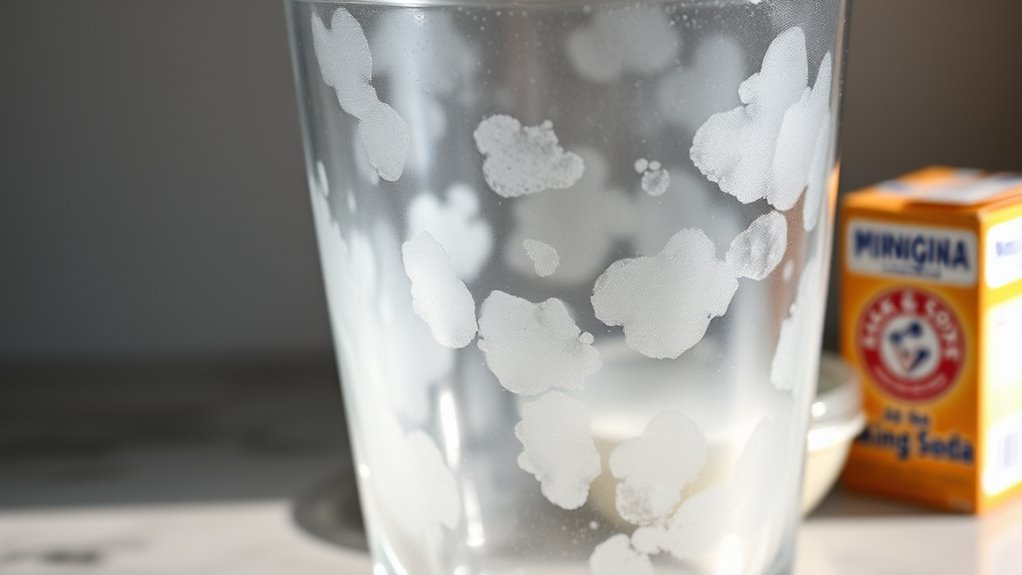
Have you ever noticed your glassware turning cloudy despite washing? It’s a common frustration that can stem from hard water deposits, which leave behind mineral residues that cling stubbornly to your dishes. Before reaching for pricey cleaning products, you might want to explore some simple solutions from your pantry. Interestingly, fixing this issue can be as straightforward as understanding how to tackle mineral buildup and maintaining your dishwasher properly.
Cloudy glassware? Hard water minerals cause stubborn deposits—try vinegar or baking soda from your pantry to restore clarity.
When it comes to stubborn cloudiness, hard water minerals—mainly calcium and magnesium—are usually the culprits. These minerals don’t dissolve well in water, so they leave behind a film on glassware after washing. To combat this, you can use common pantry ingredients like white vinegar or baking soda, which are highly effective at breaking down mineral deposits. For example, running a cycle with a cup of white vinegar in your dishwasher can help dissolve mineral buildup, restoring clarity to your glassware. Alternatively, soaking your cloudy glasses in a vinegar solution for about 15 minutes before washing can loosen stubborn deposits. Just remember to rinse thoroughly afterward to avoid any vinegar smell or residue.
Maintaining your dishwasher is essential if you want to keep your glassware sparkling. Regular dishwasher maintenance involves cleaning the filter and spray arms to ensure water flows freely and doesn’t leave deposits on your dishes. It’s also wise to run a cleaning cycle with dishwasher cleaner or a vinegar rinse once a month to prevent mineral buildup on internal parts. This upkeep not only prolongs the life of your dishwasher but also guarantees it performs at its best, reducing the chances of cloudy glassware in the future. Additionally, choosing a high contrast ratio dishwasher can improve the visibility of water spots and mineral residues, making it easier to spot when cleaning is needed.
Another key aspect is stainless steel cleaning. Many dishwasher components and parts of your sink are made of stainless steel, which can tarnish or develop spots if not cleaned properly. Using a gentle, vinegar-based cleaner or a baking soda paste keeps stainless steel surfaces shiny and free of mineral residues. Regularly wiping down your dishwasher’s interior with these solutions helps prevent mineral deposits from transferring onto your glassware during the wash cycle.
white vinegar for glassware cleaning
As an affiliate, we earn on qualifying purchases.
As an affiliate, we earn on qualifying purchases.
Frequently Asked Questions
Can Hard Water Stains Damage Glassware Over Time?
Hard water stains can damage your glassware over time, leading to surface corrosion and glass etching. The mineral deposits from hard water gradually wear down the glass surface, causing it to become cloudy or scratched. To prevent this, you should clean your glassware regularly, especially if you notice stubborn stains. Using vinegar or a commercial cleaner helps remove mineral buildup, protecting your glass from long-term damage and preserving its clarity.
Are There Natural Alternatives to Vinegar for Cleaning Cloudy Glass?
Yes, there are natural alternatives to vinegar for cleaning cloudy glass. You can try using baking soda mixed with water to create a gentle scrub that removes mineral deposits. Lemon juice is also an eco-friendly solution, thanks to its natural acidity that breaks down hard water stains. These natural cleansers are safe, effective, and environmentally friendly, helping restore your glassware without harsh chemicals.
How Often Should I Clean My Glassware to Prevent Cloudiness?
Did you know that regularly cleaning your glassware can extend its clarity and lifespan? To prevent cloudiness, aim for a cleaning frequency of at least once a week, especially if you have hard water. Proper glassware maintenance involves promptly rinsing after use and avoiding abrasive scrubbers. This routine keeps your glassware sparkling and reduces the buildup of mineral deposits, ensuring you always enjoy crystal-clear glasses.
Will Hard Water Deposits Affect the Taste of Beverages?
Hard water deposits can indeed affect the taste of your beverages, giving them a mineral taste that might be unpleasant. These deposits can alter the beverage flavor, making drinks less fresh and more metallic or chalky. To prevent this, regularly clean your glassware and consider using a water softener or filtered water for your drinks. This way, you’ll enjoy pure flavors without any unwanted mineral taste.
Is It Safe to Use Baking Soda on Delicate Glassware?
Yes, baking soda safety makes it safe to use on delicate glassware when used properly. You should mix it with water to create a gentle cleaning paste and avoid abrasive scrubbing, which can scratch fragile surfaces. Test a small area first to verify it doesn’t cause any damage. When used carefully, baking soda is an effective, natural cleaner that safely restores clarity to your delicate glassware without risking harm.
hard water mineral remover for dishwasher
As an affiliate, we earn on qualifying purchases.
As an affiliate, we earn on qualifying purchases.
Conclusion
Don’t let cloudy glassware ruin your dinnerware collection. With simple pantry remedies like vinegar or baking soda, you can restore its shine and clarity in no time. Imagine pouring that crystal-clear glass of water or wine, knowing it sparkles just like new. Even if you think it’s too stubborn, these natural fixes work wonders—so next time, instead of tossing it out, give your glassware a quick, budget-friendly refresh.
As an affiliate, we earn on qualifying purchases.
dishwasher mineral buildup cleaner
As an affiliate, we earn on qualifying purchases.
As an affiliate, we earn on qualifying purchases.
Fall Picks
fall essentials
As an affiliate, we earn on qualifying purchases.