
Switching to eco-friendly cleaning with natural ingredients helps reduce your household’s environmental impact. Use items like vinegar, baking soda, and plant extracts to disinfect surfaces effectively without harmful chemicals. Choosing biodegradable packaging and products with eco-certifications further minimizes waste and pollution. These simple swaps decrease chemical exposure, protect wildlife, and support sustainability efforts. Keep exploring to discover more practical steps that make your cleaning routine safer for the planet and your family.

Get cleaning gear delivered free — and shop member deals
- Fast, free delivery on millions of items
- Access to Prime Big Deal Days deals on October 6–7
- Prime Video, Amazon Music and more included
Key Takeaways
- Natural ingredients like vinegar, baking soda, and plant extracts effectively disinfect surfaces without harming the environment.
- Using biodegradable packaging minimizes landfill waste and reduces plastic pollution.
- Eco-friendly disinfectants avoid harsh chemicals, lowering water pollution and chemical exposure at home.
- Combining natural cleaning agents with sustainable packaging supports overall waste reduction and environmental health.
- Choosing eco-conscious products promotes long-term sustainability and safer living environments for families.

Have you ever considered how your cleaning habits impact the environment? Small choices you make daily can add up, influencing the health of our planet. Switching to eco-friendly cleaning products isn’t just about reducing chemical exposure; it’s about making a positive difference for the environment. One simple step is choosing products that come in biodegradable packaging. Unlike traditional containers that can take centuries to break down in landfills, biodegradable packaging decomposes naturally, minimizing waste and pollution. When you opt for these environmentally friendly containers, you help reduce plastic waste that often ends up polluting oceans and harming wildlife. This small switch sends a powerful message that you prioritize sustainability in your cleaning routine.
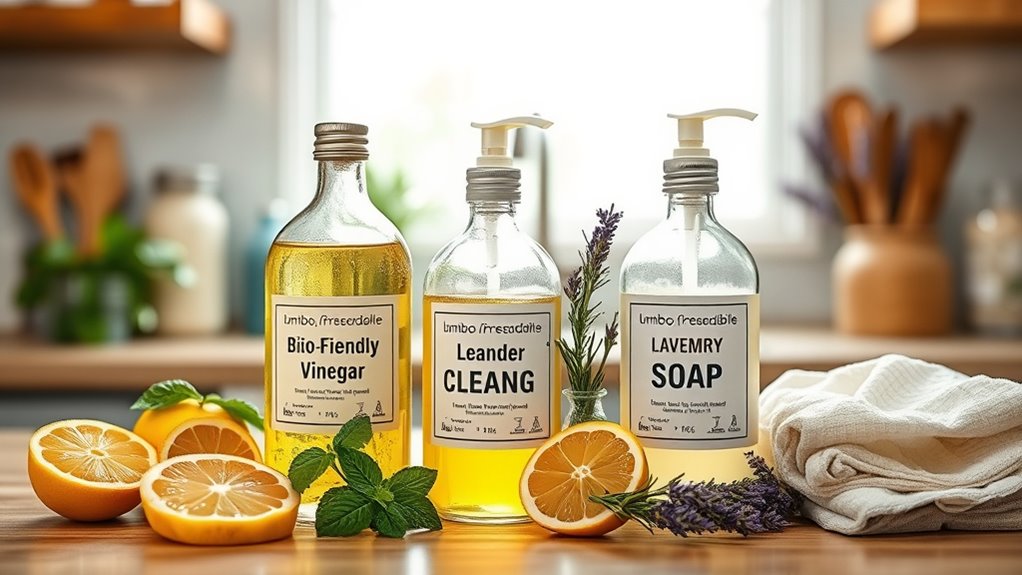
In addition to packaging choices, it’s essential to select cleaning agents that are non toxic disinfectants. Conventional disinfectants often contain harsh chemicals that can linger in your home, pollute waterways, and harm aquatic life once washed down the drain. Non toxic disinfectants, on the other hand, use natural ingredients like vinegar, baking soda, or plant-based extracts to effectively sanitize surfaces without releasing harmful substances into the environment. These alternatives are not only safer for your family and pets but also lessen the chemical load on ecosystems. By integrating non toxic disinfectants into your cleaning routine, you reduce your carbon footprint and support the shift toward greener, safer cleaning methods.
Your choice of cleaning supplies can also influence how often you need to use them. Natural ingredients tend to be versatile and effective on various surfaces, meaning you might use less product overall. This reduces waste and the demand for manufacturing more bottles, further decreasing environmental impact. Combining these practices with biodegradable packaging ensures that your cleaning routine aligns with eco-friendly principles from start to finish. It’s about creating a cycle that minimizes waste and toxic chemicals while maximizing cleanliness and safety.
Adopting eco-friendly cleaning habits doesn’t require drastic changes. Start by researching brands that offer biodegradable packaging and non toxic disinfectants. Look for certifications or labels indicating eco-friendliness, and read reviews to ensure product effectiveness. Over time, these small adjustments can noticeably decrease your household’s environmental footprint. Remember, every choice you make—whether it’s the packaging you choose or the disinfectants you use—contributes to a healthier planet. By being mindful of these details, you’re not only protecting your loved ones but also helping preserve the environment for generations to come.
eco-friendly disinfectant spray natural ingredients
As an affiliate, we earn on qualifying purchases.
As an affiliate, we earn on qualifying purchases.
Frequently Asked Questions
Are Natural Cleaning Ingredients as Effective as Chemical Cleaners?
Yes, natural cleaning ingredients can be just as effective as chemical cleaners. Their chemical efficacy often depends on ingredient potency, which varies by substance. For example, vinegar and baking soda effectively remove grime and odors. While some chemical cleaners may work faster, natural options provide powerful cleaning without harsh toxins. With proper use and concentration, you’ll find natural ingredients can deliver the same cleaning results while being safer for the environment and your health.
How Long Do Eco-Friendly Cleaning Products Typically Last?
Eco-friendly cleaning products usually last between 6 months to a year, depending on ingredients and storage. To maximize shelf life, store them in a cool, dark place, tightly sealed, and away from direct sunlight. Proper storage prevents spoilage and preserves effectiveness. Always check for changes in smell, color, or consistency before use. Following these storage tips guarantees your eco-friendly cleaners stay effective longer, saving you money and reducing waste.
Can Natural Cleaners Remove Heavy Stains and Grime?
You might be surprised, but natural cleaners can effectively tackle heavy stains and grime. With the right ingredients like baking soda, vinegar, and lemon, you can achieve impressive stain removal and grime elimination. These eco-friendly options work well on tough messes when used properly, often requiring a bit of patience and pre-soaking. So yes, natural cleaners can be powerful enough to handle stubborn stains and grime, helping you clean sustainably.
Are Eco-Friendly Cleaning Products Safe for Pets and Children?
Yes, eco-friendly cleaning products are generally safe for pets and children because they prioritize pet safety and use ingredients with low toxicity. You can confidently use them around your loved ones, knowing they’re free from harmful chemicals that can cause ingredient toxicity. Always check labels for specific safety information, but most natural cleaners are designed to be gentle yet effective, making your home safer for everyone.
How Do Natural Ingredients Compare in Cost to Conventional Cleaners?
Sure, natural ingredients often cost more upfront, but think of it as an investment in your health and the planet. When you compare the cost, you might find conventional cleaners seem cheaper—until you factor in potential health issues and environmental damage. Budget considerations may sway you, but in the long run, natural cleaners can be more economical by reducing medical bills and cleaning supplies. Who knew saving money could be so eco-chic?
As an affiliate, we earn on qualifying purchases.
Conclusion
Now that you’ve learned about natural ingredients that can cut down your environmental impact, imagine what could happen if everyone made the switch. The future of our planet depends on small choices like these. Are you ready to take the first step toward a cleaner, greener world? Don’t underestimate the power of your actions—what you do today could change everything tomorrow. The question is, will you seize the opportunity before it’s too late?
natural surface cleaner vinegar baking soda plant extracts
As an affiliate, we earn on qualifying purchases.
As an affiliate, we earn on qualifying purchases.
non toxic household disinfectant
As an affiliate, we earn on qualifying purchases.
As an affiliate, we earn on qualifying purchases.
Fall Picks
fall essentials
As an affiliate, we earn on qualifying purchases.