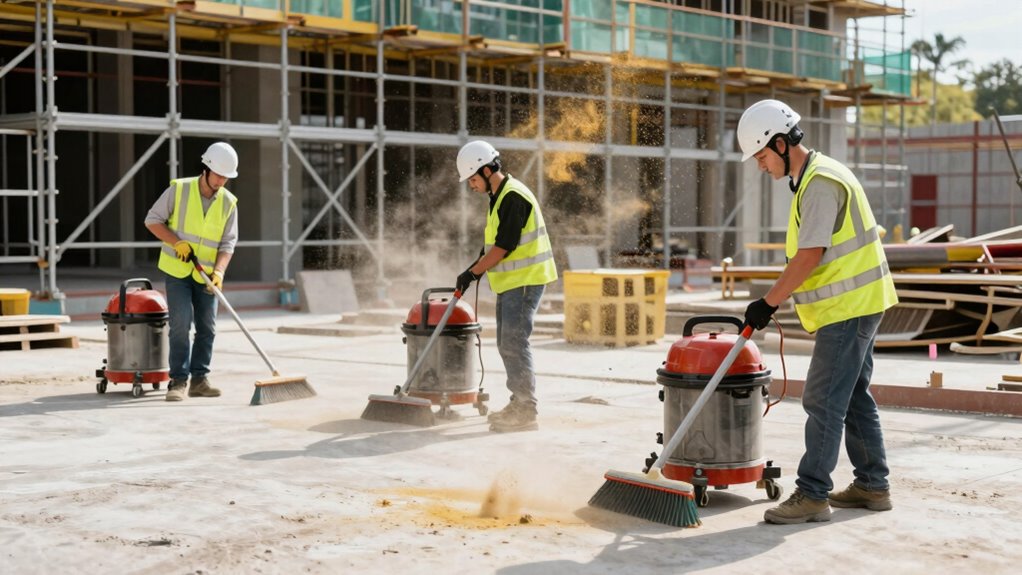
To effectively clean construction dust, start by setting up air filtration systems and wearing appropriate safety gear like respirators and gloves. Begin cleaning from the top surfaces downward with damp cloths or mops, and use HEPA vacuums for porous materials. Conduct inspections, identify areas needing touch-ups, and maintain regular upkeep to prevent dust buildup. Following this step-by-step process helps guarantee safety and compliance—keep going, and you’ll discover more expert tips for long-term dust control.
Key Takeaways
- Set up air filtration systems and personal protective equipment before starting cleanup.
- Begin dust removal from high surfaces downward, using damp cloths or mops.
- Use HEPA-filter vacuums and microfiber tools tailored to different materials.
- Conduct a thorough inspection with checklists to identify missed areas or residues.
- Implement ongoing dust control measures and scheduled maintenance for long-term cleanliness.
Why Proper Construction Dust Cleanup Is Critical for Safety and Compliance
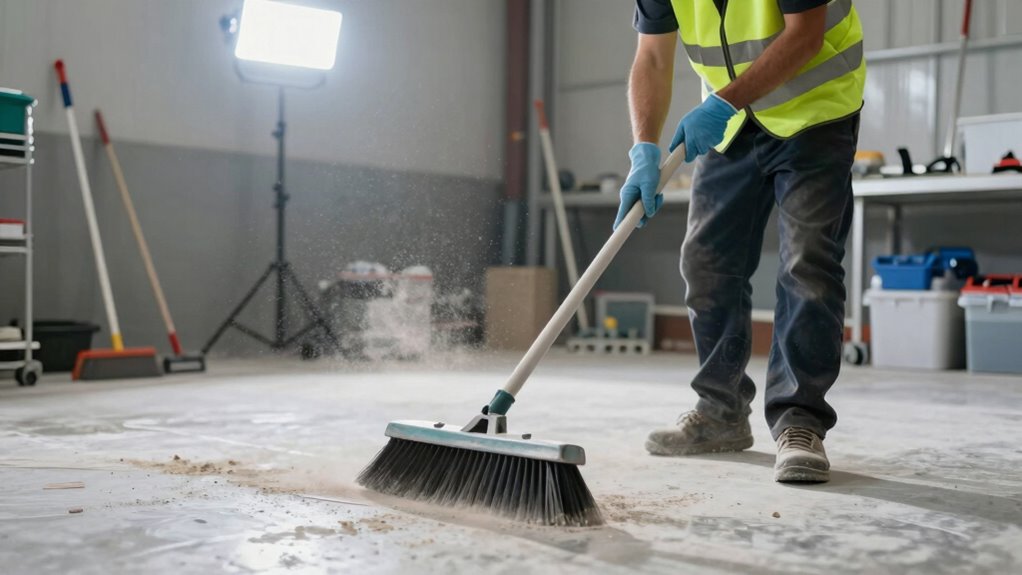
Proper construction dust cleanup is essential because dust particles can pose serious health and safety risks if left unchecked. Poor air quality caused by dust can lead to respiratory issues, allergies, and other health problems for workers and occupants. Additionally, failing to meet regulatory standards can result in fines, project delays, and legal liabilities. Ensuring thorough dust cleanup helps you maintain compliance with local and federal regulations that govern air quality during construction. It also creates a safer work environment by reducing slip hazards and airborne contaminants. Proper cleanup supports regulatory compliance, helping you avoid costly penalties and project setbacks. Understanding the impact of dust particles on indoor air quality further underscores the importance of meticulous cleanup. Implementing effective cleanup procedures is crucial for maintaining a safe construction site and ensuring occupant health. By prioritizing proper cleanup, you protect everyone on-site and demonstrate your commitment to safety and regulatory adherence. Additionally, incorporating proper cleaning techniques can significantly enhance overall dust removal effectiveness. Ultimately, a clean site supports healthier air quality and helps you avoid costly penalties.
How to Prepare Your Site With the Right Tools and Safety Gear
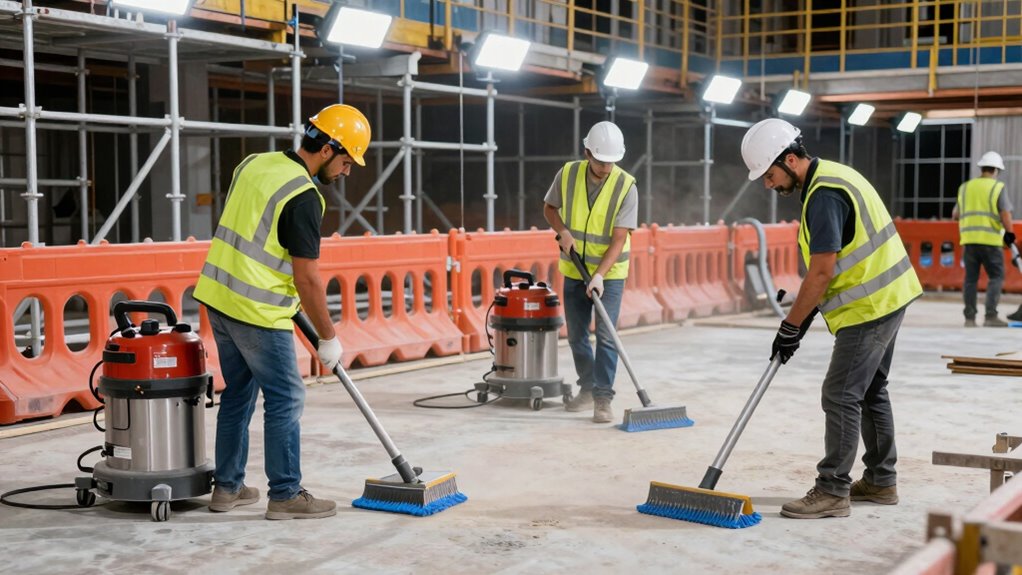
Before starting construction dust cleanup, you need to outfit your site with the right tools and safety gear to guarantee efficient and safe work. Proper protective clothing is essential to shield your skin and eyes from dust particles. Make sure your equipment is well-maintained to prevent malfunctions and ensure safety. Here are key items to have on hand:
- Respirators or dust masks to filter airborne particles
- Durable gloves and coveralls for full-body protection
- Properly maintained vacuum systems and dust extractors
Regular equipment maintenance reduces breakdowns and increases efficiency during cleanup. Wearing the right protective clothing keeps dust exposure minimal, safeguarding your health. Additionally, understanding Gold IRA Markets can provide insight into investment options for future financial planning. Maintaining dust extraction systems ensures that airborne particles are effectively contained and removed from the work environment. Furthermore, selecting appropriate safety gear tailored to the specific site conditions can significantly reduce health risks. Also, ensuring proper fit and usage of safety gear is crucial for maximizing protection and minimizing discomfort during prolonged work periods.
Ensuring all safety gear fits properly and is used correctly is vital for worker safety and overall site safety. Prioritizing these preparations ensures your team works safely and effectively throughout the dust removal process.
The Step-By-Step Process for Effective Dust Removal
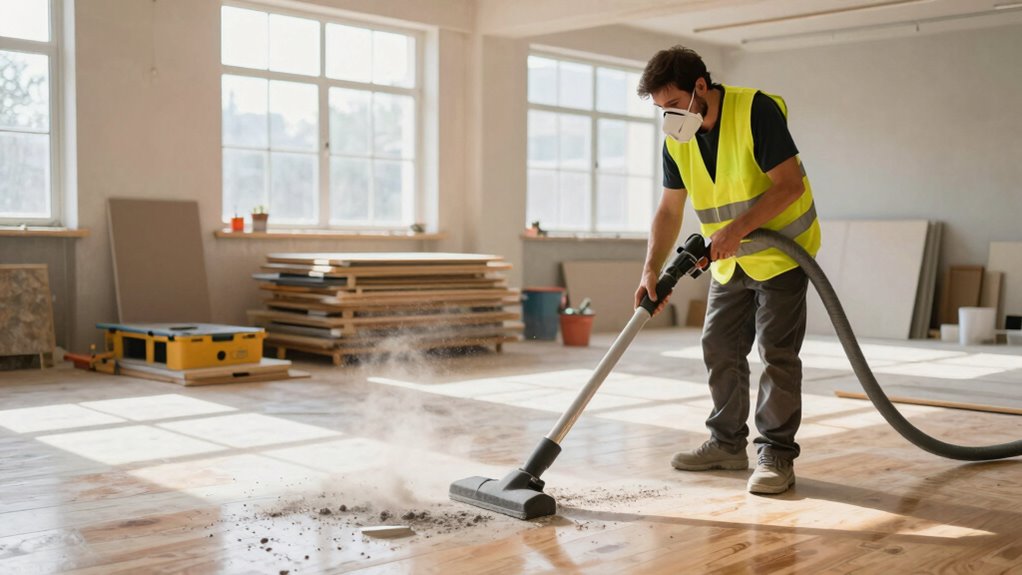
Once your site is equipped with the right tools and safety gear, you can begin the dust removal process. Start by setting up air filtration systems to capture airborne dust particles, ensuring cleaner air and better worker safety. Begin cleaning from the top surfaces, like ceilings and beams, working your way down to floors. Use damp cloths or mops on surfaces to prevent dust from becoming airborne. Regularly replace air filters to maintain effectiveness. Always wear your safety gear to protect against residual dust exposure. Keep the workspace well-ventilated during cleaning to avoid dust buildup in confined areas. Incorporating proper ventilation considerations can help in assessing the quality of the environment’s lighting conditions, ensuring that dust and debris are properly identified and cleaned. Additionally, maintaining a consistent cleaning routine helps prevent dust accumulation over time. Using air quality testing can provide valuable feedback on the effectiveness of your dust removal efforts. By following this step-by-step approach, you minimize dust spread, improve air quality, and ensure a safer environment for everyone involved.
Best Practices for Cleaning Different Surfaces and Materials
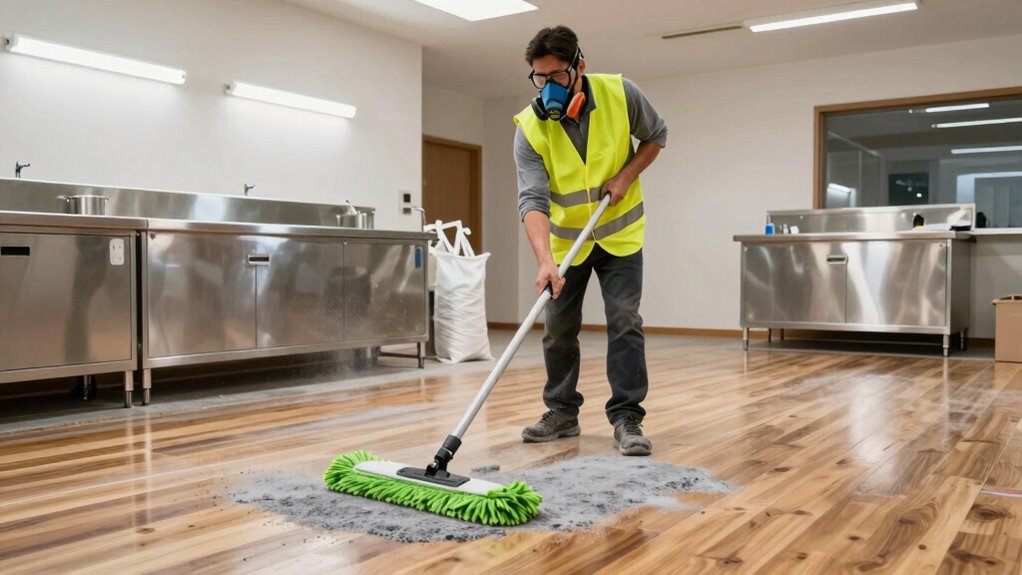
Different surfaces and materials require tailored cleaning approaches to effectively remove construction dust without causing damage. Surface-specific cleaning ensures you choose the right methods and tools for each material. For delicate surfaces like glass or polished wood, use soft cloths and gentle dusting. For porous materials such as drywall or concrete, a slightly firmer approach with vacuums or damp mops works best. Material considerations are key to avoiding scratches, discoloration, or degradation. To protect your vehicle’s finish and interior, consider appropriate cleaning techniques that are designed for each material type. Employing air purifier maintenance practices can also help improve indoor air quality during cleanup. Using specialized cleaning tools tailored to the surface can further enhance cleaning efficiency and safety. Employing microfiber cloths on smooth surfaces and vacuums with HEPA filters on carpets remains a best practice. Damp dust with a microfiber mop or cloth on textured or porous surfaces. Additionally, understanding material-specific cleaning methods can help prevent potential damage during the dust removal process. Tailoring your cleaning to each material guarantees a thorough clean without damage.
Conducting Final Inspections and Maintaining Dust Control Long-Term
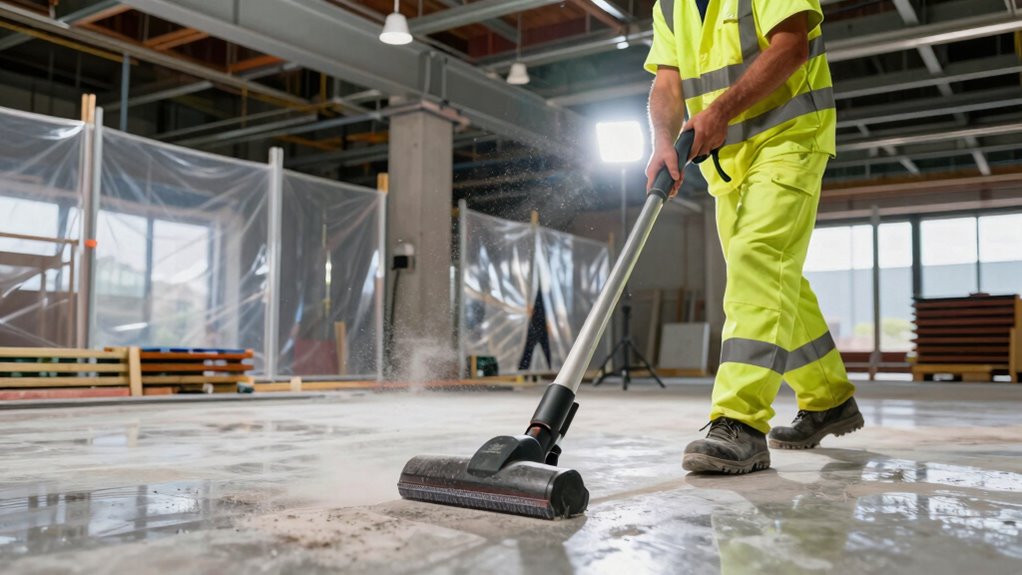
Conducting final inspections is essential to guarantee that all construction dust has been thoroughly removed and the work area is safe for occupancy. Use an inspection checklist to verify that surfaces are clean, filters are properly installed, and dust has not settled in hidden spots. During this inspection, identify any areas needing touch-ups or additional cleaning. Once the site passes the checklist, focus on ongoing maintenance to keep dust levels low over time. Regular sweeping, HEPA vacuuming, and filter replacements help prevent dust buildup. Establish a routine schedule for inspections and cleaning, especially in high-traffic zones. Consistent attention ensures the work area remains safe, healthy, and dust-free long after construction ends. This proactive approach minimizes future issues and maintains a clean environment. Understanding the importance of affiliate disclosures and transparency can help ensure trust and compliance in your cleaning practices. Incorporating effective dust control measures during construction can further reduce long-term cleanup efforts and improve indoor air quality, especially when using professional cleaning techniques. Additionally, staying informed about dust management best practices empowers you to implement more efficient and effective cleaning strategies.
Frequently Asked Questions
What Are the Common Health Risks Associated With Construction Dust?
You face occupational hazards from construction dust, which can cause serious respiratory issues like asthma, bronchitis, and other lung problems. Inhaled dust particles irritate your airways, leading to long-term health risks. Protect yourself by wearing proper masks and ensuring good ventilation. Staying aware of dust levels and practicing safety measures can substantially reduce your risk of developing respiratory issues and other health complications related to construction dust exposure.
How Often Should Construction Dust Cleanup Be Performed During a Project?
You should perform dust cleanup at least twice a week during a project, as dust accumulation can double every few days if left unchecked. Maintaining a regular cleanup frequency helps prevent health risks and keeps your workspace safe. Ignoring dust buildup can lead to respiratory issues, so staying proactive guarantees a cleaner environment. Schedule frequent cleanups to manage dust effectively, especially during high-activity phases, and protect everyone involved.
What Are the Environmental Regulations Related to Dust Disposal?
You need to guarantee environmental compliance by following local, state, and federal regulations regarding dust disposal. This often means obtaining the necessary regulatory permits before disposal and adhering to specific guidelines on dust containment and transport. Proper documentation and reporting are essential to avoid penalties. By staying informed about these environmental regulations, you help protect the environment and keep your project compliant with all legal requirements.
Can DIY Dust Cleanup Methods Be Effective for Large Construction Sites?
A chain is only as strong as its weakest link, so DIY methods for large-scale cleaning can fall short. While simple tools may work for small spots, they often aren’t effective for large construction sites. For big areas, professional equipment and techniques are essential to guarantee thorough dust removal. Relying solely on DIY methods risks leaving hazardous dust behind, which can compromise safety and air quality.
What Are the Signs Indicating That Dust Cleanup Has Been Adequately Completed?
You’ll know dust cleanup is complete when dust accumulation visibly decreases and surfaces look clean and free of debris. Check for lingering dust on horizontal surfaces and hidden spots, like corners or vents. Make certain all debris removal is thorough and that no dust particles remain on floors, furniture, or fixtures. When everything appears spotless, and you no longer see dust settling, you’ve successfully completed the cleanup.
Conclusion
By following these steps, you turn your construction site from a dusty chaos into a clean, safe space—like a master chef perfecting a recipe. Proper dust cleanup isn’t just about compliance; it’s about protecting everyone’s health and ensuring future projects run smoothly. Stay vigilant, stick to the process, and keep dust at bay like a shield of clarity. Your commitment transforms chaos into control, making safety and cleanliness your ultimate masterpiece.